1. Germany and Schweinshaxe: The Heartwarming Warmth of Time and Care
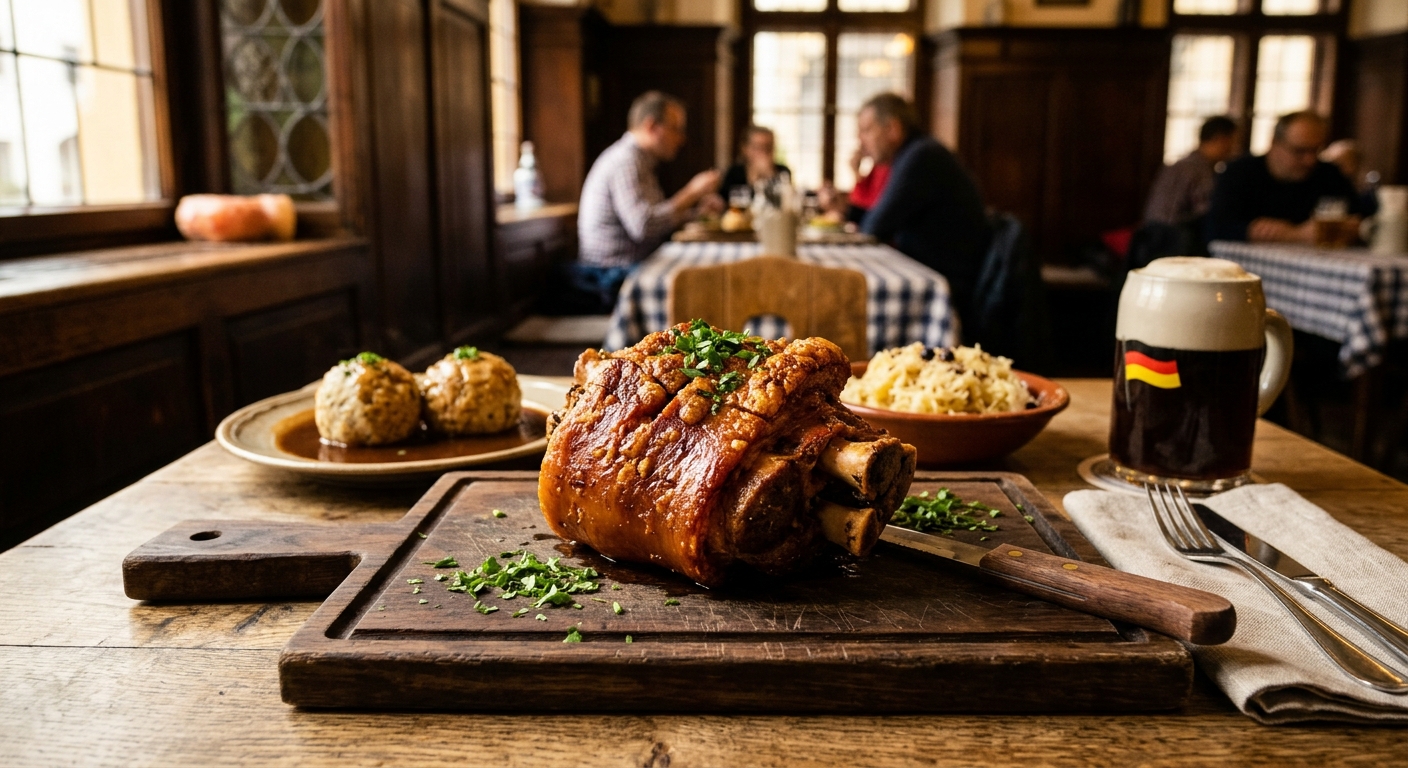
In the late European autumn, when chill air hugs the cobblestone pavements and mist rolls through silent alleys, a deep and savory aroma of roasting meat drifts from neighborhood taverns across Germany. Stepping across the threshold, shedding a heavy coat against the cold, one is immediately enveloped by the sturdy scent of aged timber, the convivial roar of conversation, and an embracing wall of radiant heat. At the very center of this comforting scene sits a commanding culinary centerpiece, steaming gently on a massive platter: Schweinshaxe, the roasted pork knuckle. Far more than a mere source of sustenance, Schweinshaxe is an enduring cultural pillar that has anchored German communal life through bitter winters and changing epochs.
For Germans, sharing a meal is an intentional pause in the day—a sacred interlude where burdens are lifted and kinship is affirmed. Originating in the fertile traditions of Bavaria and now cherished across the land, this dish is the quintessential embodiment of Gemütlichkeit—that untranslatable German concept of coziness, heartfelt hospitality, and belonging. With its rugged exterior resembling an unyielding boulder, yet guarding an ocean of tender, fragrant juices within, Schweinshaxe mirrors the authentic spirit of the German character: quiet and stoic at first glance, but unfailingly warm, generous, and earnest at heart. Gathering around this rustic feast transforms any wooden bench into the most comforting sanctuary in the world.
"As the knife edge breaches that crisp, golden crust, releasing a billowing cloud of aromatic steam, one tastes centuries of peasant ingenuity and the timeless grace of generous hospitality."
2. History and Origins: Wisdom Born from the Rugged Soil
Tracing the genealogy of Schweinshaxe leads not to the opulent banqueting halls of aristocracy, but into the modest hearths of rural folk who labored under wide, demanding skies. In medieval Europe, the pig was an indispensable lifeline ensuring survival through lean winter months. Following the late autumn slaughter, the choice cuts of tender tenderloin and loin were invariably dispatched to wealthy estates or urban markets. What remained for the farming households were the tough, sinewy cuts—most notably the dense, bone-heavy pork knuckles. Veined with thick collagen, gristle, and dense skin, these portions defied quick preparation. Yet, instead of despairing over these unyielding cuts, resourceful cooks turned necessity into an art form.
While the northern regions of Germany developed Eisbein, curing the knuckle in brine and gently simmering it with aromatics into melting tenderness, the pastoral heartland of Bavaria embraced a dual mastery of fire. They chose to first gently braise the knuckle to dissolve its stubborn connective tissues, and then subject it to the searing heat of a blazing hearth until the thick skin blistered into an airy, crackling shield. This marked the birth of Schweinshaxe. Born of hardship and perfected by patience, transforming humble offcuts into a triumphant centerpiece was a testament to the resilient creativity of common people. At village gatherings and harvest celebrations, sharing these grand roasted shanks offered warmth, joy, and collective pride against the creeping frost.
3. Traditional Recipe: The Slow Alchemy of Fire and Patience
The traditional preparation of Schweinshaxe stands in defiant opposition to the hurried rhythms of modern convenience. It is an art form rooted in discipline, requiring hours of deliberate simmering followed by the intense kiss of roaring heat. The soul of the dish is a prime, hefty pork knuckle from the hind leg, where the muscle is deep and wrapped in an intact mantle of subcutaneous fat and rind. The cook begins by delicately scoring the rind in a diamond lattice pattern, taking meticulous care to slice only through the skin and fat without piercing the precious meat beneath. These shallow incisions become channels through which rendering fats escape and blistering convection heat enters during roasting.
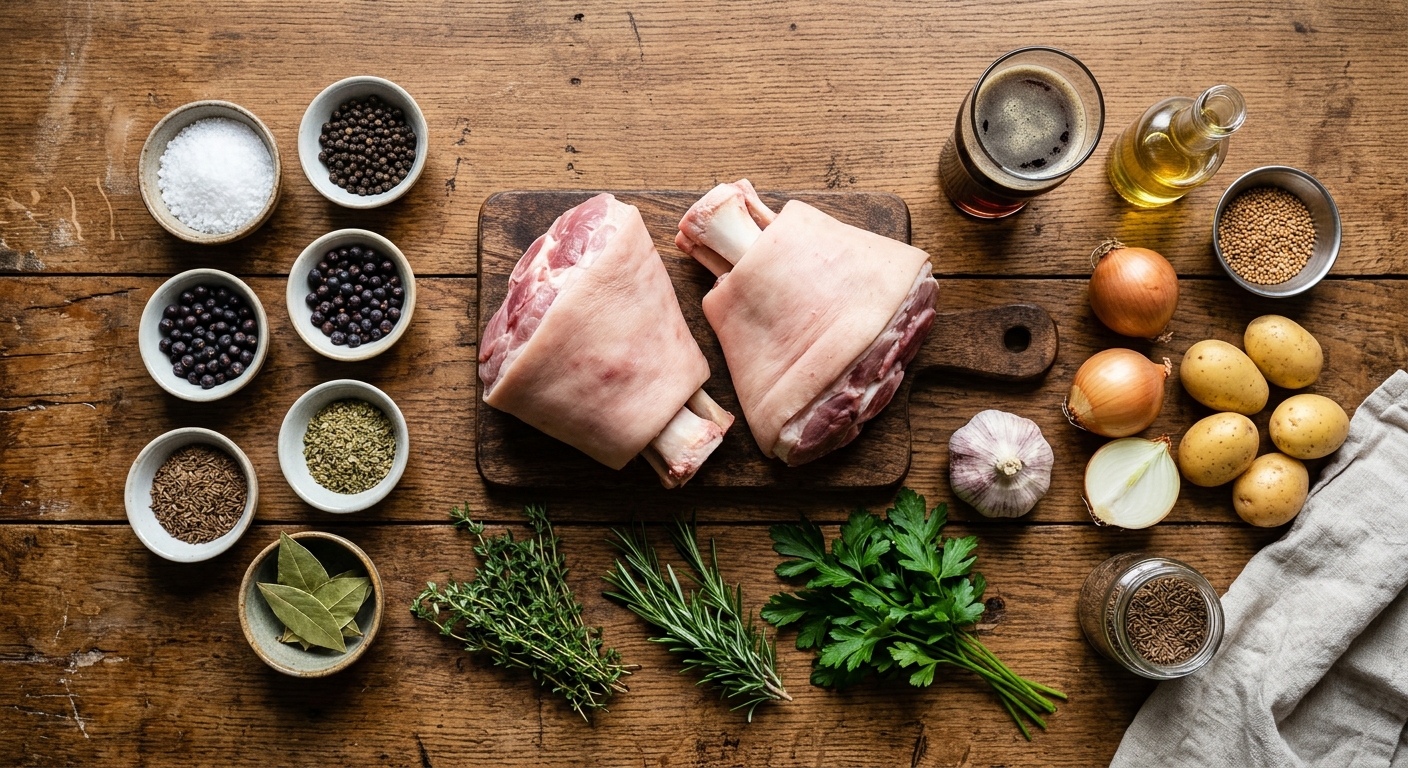
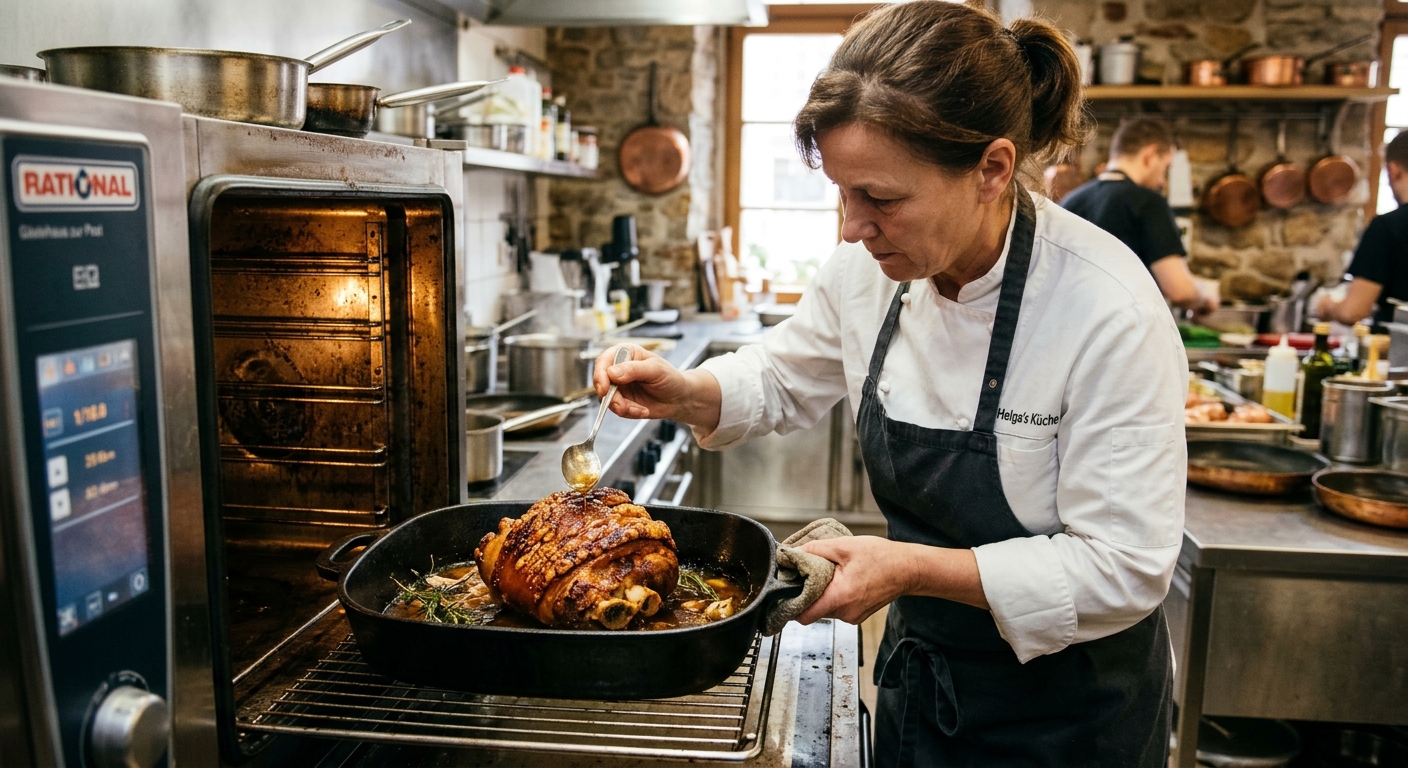
In authentic Bavarian tradition, the meat is never thrust raw into an oven. It is first submerged in a gently rolling cauldron filled with root vegetables—sweet carrots, leeks, onions, and celery—alongside whole black peppercorns, fragrant bay leaves, piney juniper berries, and generous pinches of caraway seed (Kümmel), the definitive herbaceous note of German pork craft. After simmering quietly for several hours until the connective collagen turns velvety and the meat yields effortlessly to the touch, the shank is lifted from the broth and thoroughly air-dried. Only when the surface is entirely devoid of moisture is it roasted in a scorching oven. As it bakes, the cook diligently bastes the rind with a mixture of dark malt beer and salted water. The sugars and minerals interact under intense thermal radiation, causing the skin to erupt in microscopic bubbles and bloom into a breathtaking, crackling golden carapace.
"Only meat that has absorbed the quiet rhythm of the simmering broth and the fierce embrace of the oven yields that sublime tenderness that falls effortlessly from the bone."
4. How Locals Enjoy It: Shared Laughter Around Sturdy Wooden Tables
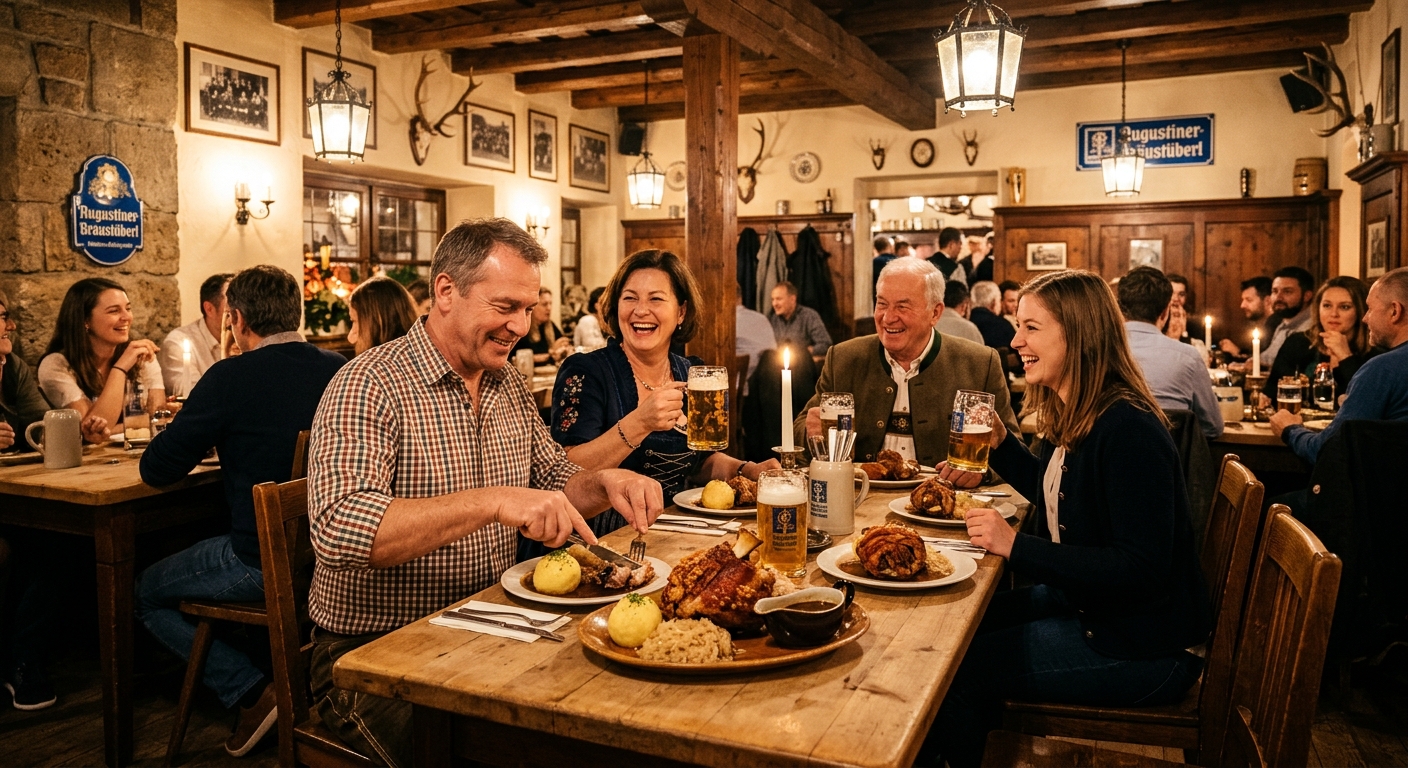
To partake of Schweinshaxe in its native land is to participate in a vibrant, communal ritual. Whether nestled beneath the sprawling canopy of ancient chestnut trees in an open-air beer garden or sitting beneath the vaulted arches of a historic beer hall, the dish arrives as an imposing mountain of nourishment. Flanking this roasted monolith are its indispensable companions: a generous heap of warm, tangy sauerkraut braised with juniper, and round, glossy potato dumplings known as Kartoffelknödel, prized for their elastic, sauce-catching texture.
Locals approach the feast without pretension or timid hesitation. Brandishing a heavy steak knife, one presses into the blistering skin, eliciting an audible, satisfying crunch that turns heads and sparks smiles across the communal table. Slices of succulent, steam-trailing pork are paired with a dollop of sharp, sweet Bavarian mustard, while the bright acidity of the fermented cabbage cleanses the palate with refreshing clarity. A deep draft from a heavy glass stein balances the unctuous richness of the pork with crisp maltiness. Conversing freely with strangers seated along the same long bench, the clinking of glasses and the sharing of carving duties dissolve all distances, welcoming the traveler into an intimate circle of fellowship.
5. Sensory Profile: A Symphony of Blistering Crunch and Melting Tenderness
The sensory allure of Schweinshaxe begins well before the first bite, announcing itself through an irresistible acoustic overture. The blistered skin, puffed and taut like spun amber glass, shatters under the pressure of the knife with a crisp, resonant fracture that quickens the pulse. Placed upon the tongue, this crackling delivers an exquisite contrast: gossamer-thin crispness giving way to rich, deeply savory roasted fats, laced with the haunting sweetness of caramelized malt and the herbal, peppery warmth of toasted caraway.
Yet the true crescendo unfolds just beneath this brittle rampart. Having surrendered its toughness to hours of gentle heat, the rosy meat pulls apart into glistening, succulent strands. Each bite releases a surge of savory broth and natural juices, rich with unhurried depth and mellowed pork essence. Near the bone, ribbons of rendered gelatin offer a silky, luxurious mouthfeel that coats the palate, effortlessly cut by the rustic salinity of the crust. It is a masterclass in culinary texture—an intoxicating dance between brittle crackle and velvet softness, rich unction and sharp herbal brightness, leaving an indelible imprint of comfort on the memory.
6. Making It at Home: Bringing Bavarian Aromas into Your Own Kitchen
While domestic kitchens may lack massive rotisseries or wood-fired masonry ovens, you can achieve an extraordinarily authentic Schweinshaxe at home through a few foundational culinary principles. The absolute secret to achieving the coveted glass-like crackling lies in the careful management of moisture. Begin with a fresh, bone-in pork knuckle with its skin intact. Score the rind lightly in crosshatch diamond patterns, taking care not to nick the underlying muscle. Submerge the knuckle in a deep pot with onions, garlic, carrots, bay leaves, peppercorns, a pinch of caraway seeds, and sea salt, allowing it to simmer gently on low heat for roughly ninety minutes until tender.
Once removed from the fragrant broth, pat the knuckle completely dry with paper towels. Place it uncovered on a wire rack inside your refrigerator for several hours or overnight; this circulating cold air dehydrates the skin, ensuring it blisters rather than steams when roasted. Before placing it into an oven preheated to 180°C (350°F), rub coarse sea salt thoroughly into the diamond crevices. Roast gently for an hour until the meat is heated through, then crank the heat to 230°C (450°F) for the final twenty minutes, brushing the rind with dark beer. As the skin snaps, crackles, and erupts into a radiant golden mosaic, your home will be filled with an intoxicating aroma that carries the unmistakable soul of a Bavarian tavern straight to your dinner table.
Looking for a place nearby? Search “슈바인스학세” on Naver Map.