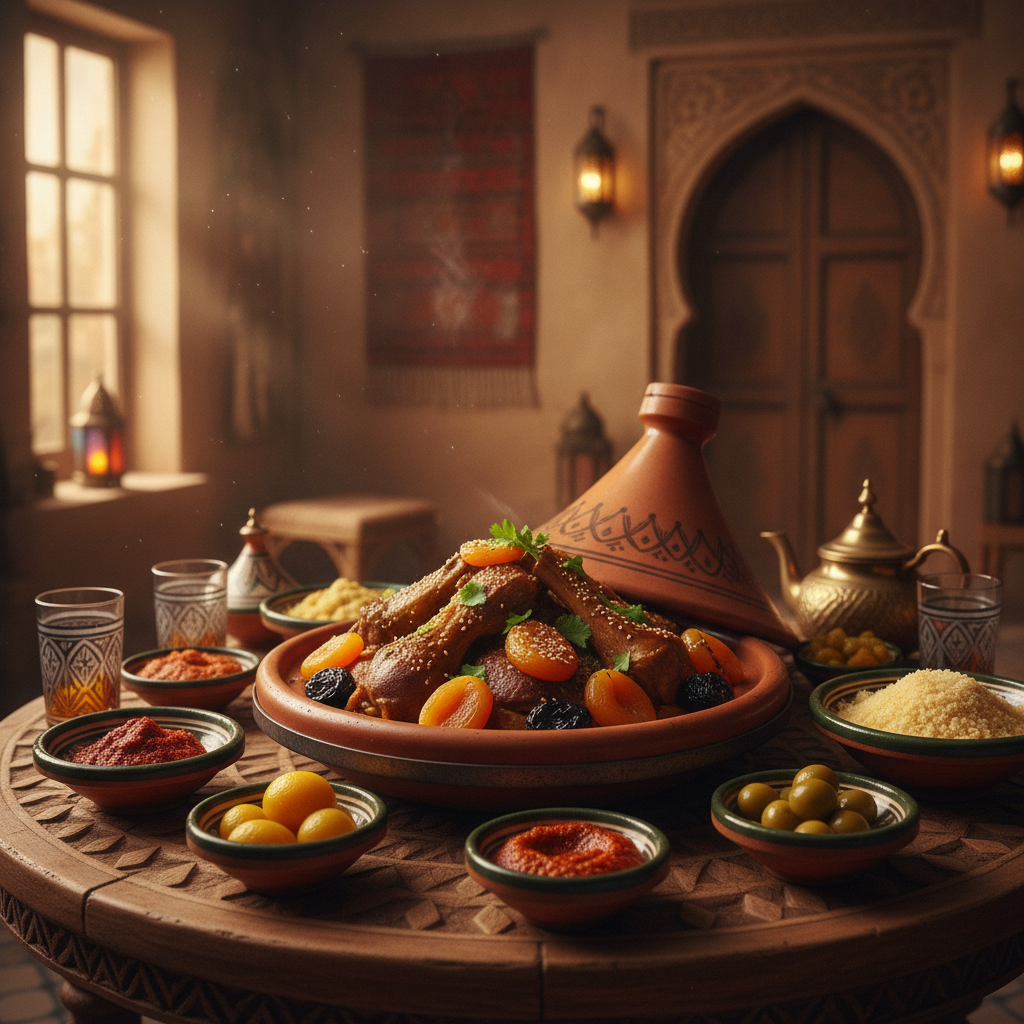
Morocco and Tagine: An Art of Living
Walking through the red dust-filled alleys of Morocco, your steps will inevitably halt at the sweet, exotic aroma of spices wafting through the air. The source of this fragrance is none other than 'Tagine'. For Moroccans, tagine is not just a meal; it's a philosophy of life and the essence of their culture. The sight of ingredients slowly cooking beneath a clay-crafted conical lid is as mysterious as time itself, condensed. The act of family and friends gathering around a table to share a single tagine is a significant ritual that strengthens community bonds and a warm expression of wishing each other well. As you stroll through the Medina of Morocco, the rising steam from tagines intertwines with the cheerful laughter of people amidst the mud-brick buildings, creating a picturesque scene. Here, tagine symbolizes the wisdom, patience, and richness of life of those who live under the scorching sun. Amidst the bustling noise of the market, the serene atmosphere of restaurants, and the warm dining tables of homes, tagine always beats like the heart of Morocco, hot at its center. Through this dish, we can feel Morocco's history, spirit, and their warm hospitality with all our senses. Tagine is the most delicious and beautiful way to understand Morocco.

History and Origin of Tagine: Wisdom of the Desert
The history of tagine is as deep and diverse as Morocco's long history itself. The name of this unique cooking vessel and dish originates from the wisdom of the ancient North African Berbers. Archaeological studies suggest that cooking pots similar to today's tagine existed as early as the Roman era, believed to have been introduced to North Africa by the Romans. However, the current form of tagine with its conical lid is an ingenious method developed by the Berbers to cook food with minimal water in the dry desert climate. This special design creates a 'self-circulating' effect where steam condenses inside the lid and drips back onto the food, preserving moisture and concentrating flavors and aromas. This was a highly efficient cooking method in a region where water was scarce. With the Arab invasion in the 7th century, various spices and cooking methods were introduced, making tagine even richer in flavor. Especially during the Middle Ages, with the delicate culinary techniques brought by the Moors from Andalusia and the spice culture of Persia, tagine evolved into its current sophisticated and diverse form. At that time, intellectuals even praised tagine as 'the alchemy of taste'. Thus, tagine is not just a vessel for food, but a living heritage that fully encompasses the survival wisdom of the Berbers who found prosperity in life even amidst the harsh desert environment, and the history of gastronomy born from the exchange of various civilizations.
Traditional Recipe: The Aesthetics of Time and Devotion
An authentic tagine is not simply a dish where ingredients are mixed and boiled. It is an aesthetic cooking process that requires time, devotion, and a deep understanding of spices. The key ingredients can be divided into three main categories. First, the protein source (lamb, beef, chicken) or fish. Second, seasonal vegetables (potatoes, carrots, onions, pumpkin, tomatoes, olives). Third, the spices that breathe life into the tagine (turmeric, ginger, paprika, cumin, saffron, cinnamon, etc.). The cooking process begins by drizzling olive oil at the bottom of the tagine pot and layering thinly sliced onions to establish the flavor base. Then, prepared meat is placed on top and generously seasoned with salt, pepper, and 'Ras el Hanout', a unique Moroccan spice blend. This spice blend contains unique family recipes and is a crucial factor in determining the taste of the tagine. Harder vegetables like potatoes, carrots, and pumpkin are placed over the meat, followed by soft tomatoes, olives, and preserved lemons. A little water is added, the conical lid is securely closed, and the tagine is slowly cooked over low heat for a long time. During this process, the condensed steam inside the lid envelops all ingredients, drawing out deep flavors. Some tagines also add dried fruits (prunes, apricots) or honey for sweetness. The cooking time ranges from 1.5 hours to over 3 hours, and this waiting period is the secret to creating tagine's deep and rich flavor. Not rushing and waiting for the natural flavors of the ingredients and the harmony of spices to perfectly blend is the essence of an authentic tagine.
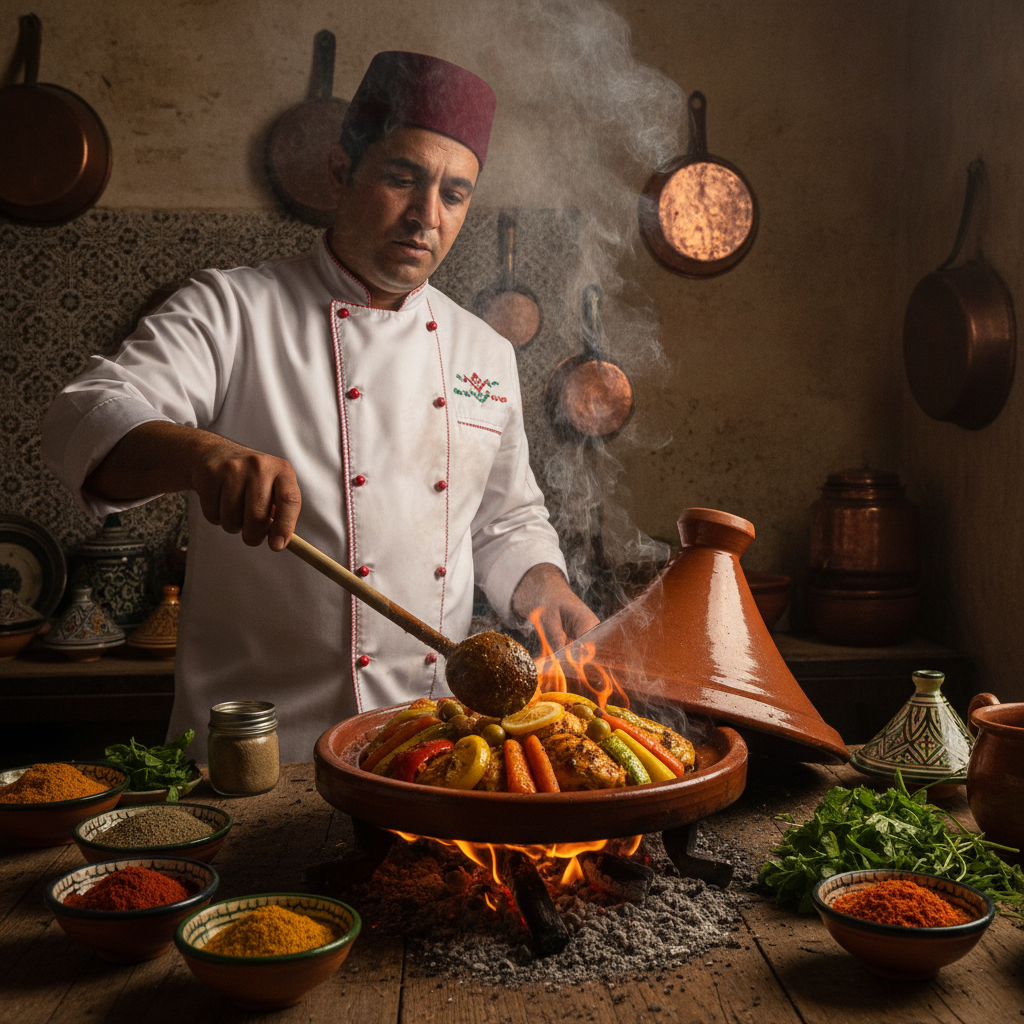
How to Enjoy Locally: The Community Table
In Morocco, enjoying tagine is more than just a meal; it's a ritual. Locals typically enjoy tagine for lunch, with family or friends gathering around a circular table to share a large tagine pot placed in the center. While individual plates are sometimes used, often each person holds a baguette or 'Khobz', traditional Moroccan bread, and directly scoops food from the tagine pot. As steam rises from the hot tagine pot, they first pick up meat or vegetables with a piece of bread, then generously dip the bread into the sauce to savor the flavor. This is more than just filling one's stomach; it's an important time to share stories and strengthen bonds by sharing food. For drinks accompanying tagine, sweet mint tea is the most common. It neutralizes the rich flavors of the hot tagine and refreshes the palate. Before and after the meal, it's important to wash hands thoroughly, and eating with the right hand is common etiquette. Also, during the meal, it's customary to eat the portion directly in front of you without mixing the ingredients. Moroccan restaurants may offer individual tagines for tourists, but if you want to experience the true local taste and culture, look for places where multiple people share a large tagine. Tagine tasted in small market eateries or homes will offer a deeper impression than any upscale restaurant. A bowl of tagine shared with a warm heart will become an unforgettable memory of your trip to Morocco.
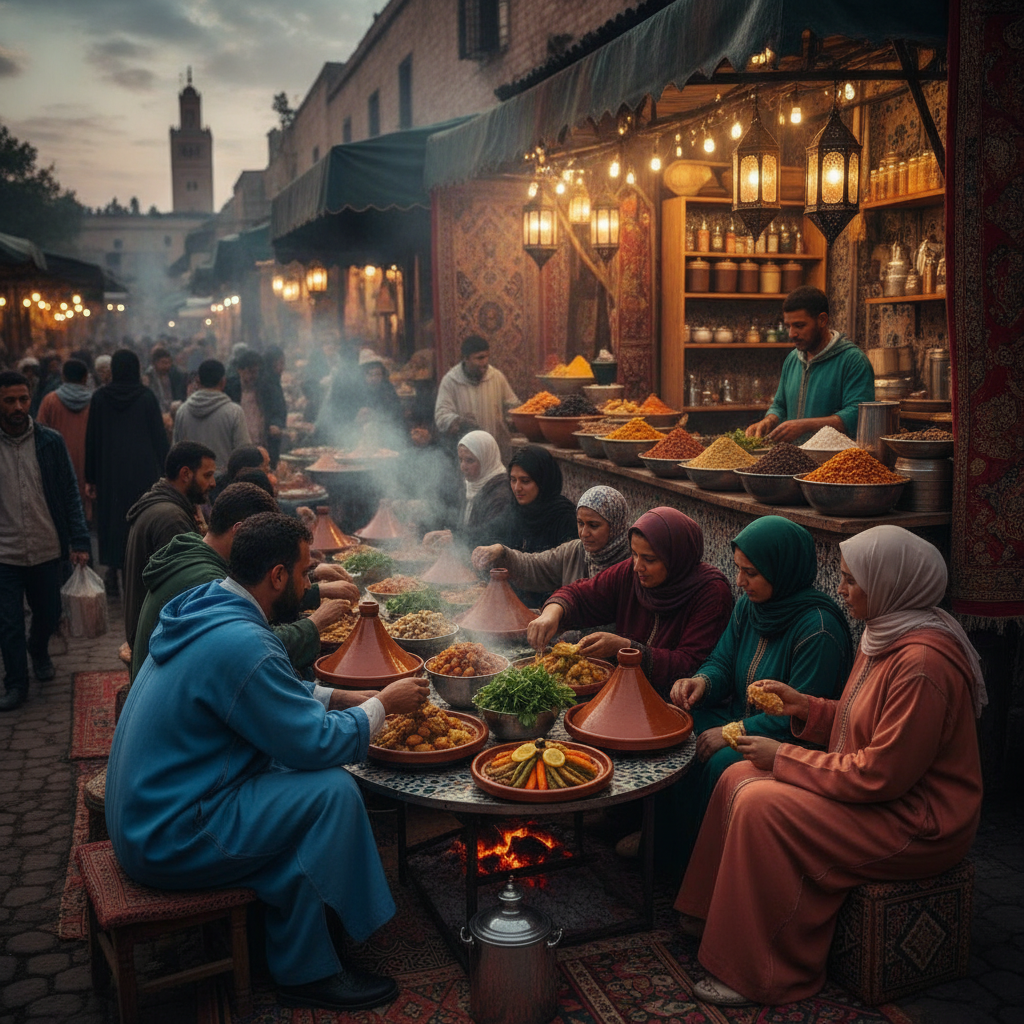
Taste Profile: A Feast for the Senses
The taste of tagine is a feast for the senses, difficult to define in a single word. After enduring the aesthetics of patience under its conical lid for a long time, the tagine begins its ecstasy the moment the lid is lifted. The first thing that tickles the nose is the sweet yet spicy exotic aroma of spices. The warmth of turmeric, the freshness of ginger, the subtle sweetness of paprika, and the deep fragrance of cinnamon blend together, offering a mysterious aroma like a desert breeze. The first bite reveals the tender texture of meat that melts in your mouth. Cooked over low heat for a long time, the meat becomes as soft as cotton candy, melting in the mouth and releasing rich juices. The flavors of spices infused within the meat are not just a simple stimulation but spread throughout the mouth like a delicate dance. Vegetables retain their individual character while perfectly harmonizing with the flavors of meat and spices. The heartiness of potatoes, the natural sweetness of carrots, and the salty flavor of olives layer up, adding depth to the diverse taste. Especially, tagines with preserved lemons or dried fruits add a sweet and sour taste, exuding a subtle yet addictive charm. The broth is not sticky but boasts a deep, rich, concentrated flavor. Dipping bread generously into the broth, the warm and rich taste envelops the whole body, providing deep satisfaction. The taste of tagine is not just something felt by the tongue; it is an 'experience' itself, condensed with the sunshine, wind, and warm hearts of Morocco. A single bowl of tagine will transport you to the heart of Morocco.
Taste in Korea: A Little Morocco in Seoul
The fact that you can experience the exotic flavors of Morocco in Seoul is a great joy for gourmets. There are excellent Moroccan restaurants in Seoul and the metropolitan area that strive to recreate the authentic taste of tagine. Here are a few recommendations:
-
Ramadan - Itaewon
Located in Itaewon, 'Ramadan' presents authentic tagine with an interior that exudes the atmosphere of local Morocco. Lamb tagine and chicken tagine are particularly popular, with delicate flavors harmonizing saffron, olives, and preserved lemons. Accompanied by Khobz bread and warm mint tea, it creates the illusion of being in a local Moroccan restaurant. This place is highly recommended for those who want to truly experience the deep flavor of spices, even for tagine beginners.
-
MoroccoCo - Hongdae
'MoroccoCo', situated in the bustling area of Hongdae, is a casual space that beautifully captures the Moroccan spirit. It's popular among younger generations as it offers various types of tagine at reasonable prices. Especially unique menus like seafood tagine or vegetable tagine broaden the choice. The advantage is that you can adjust the intensity of the spices to your preference. Besides tagine, you can also enjoy other traditional Moroccan dishes like couscous.
-
Istanbul - Konkuk University Station (Turkish/Moroccan Fusion)
Strictly speaking, it's a Turkish restaurant, but 'Istanbul' covers a wide range of Middle Eastern and North African cuisine and offers excellent Moroccan-style tagine. The tagine here is more approachable with a popular taste, yet it maintains the traditional harmony of spices, leading to high satisfaction. It's especially characterized by generous portions and rich ingredients. Recommended for those who want to enjoy both Turkish dishes and Moroccan tagine at the same time.
While the experience of tasting tagine in Korea may not be perfectly identical to that in Morocco, you can sufficiently feel the warm hospitality and essence of Moroccan flavors through the uniqueness and efforts of each restaurant. Remember, tagine is not just food; it is culture.
Making It at Home: Your Own Tagine Magic
While authentic tagine takes a long time, you can easily enjoy Moroccan flavors at home. If you don't have a tagine pot, you can use a thick-bottomed pot, cast-iron pot, or a slow cooker. The key is to cook it 'low and slow'. Here are some simple home-cooked recipe tips:
-
Prepare Ingredients
Chicken (thighs or drumsticks are tender), onion, potatoes, carrots, tomatoes, olives, preserved lemons (or a little