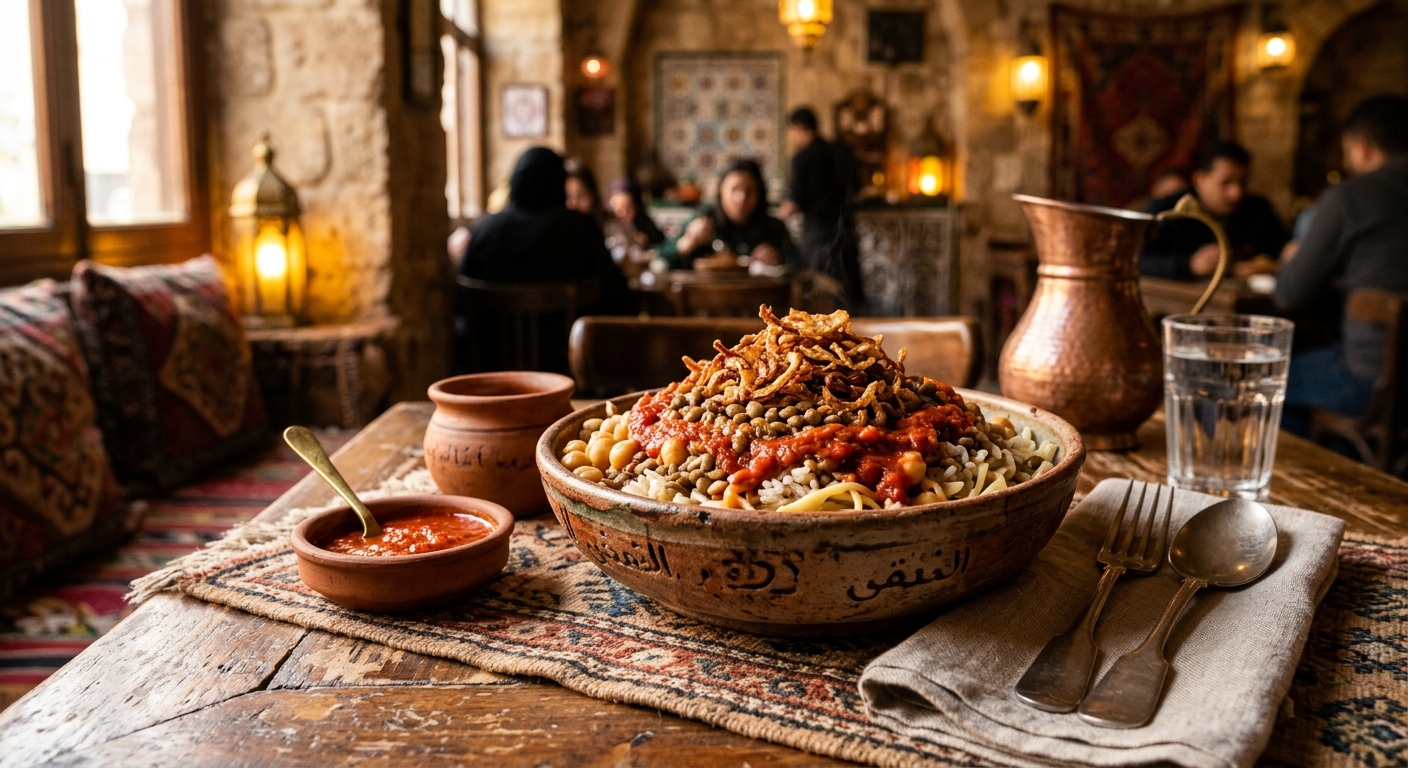
1. Egypt and Koshari: Warm Consolation Across the Arid Sands
As dusk settles over Cairo and the gentle currents of the Nile shimmer under an amber sky, an unmistakable symphony of sizzling oil, roasted cumin, and fragrant garlic drifts through the winding alleyways. Following this alluring aroma leads directly to bustling street corners where cooks skillfully dance before massive steaming cauldrons, surrounded by locals patiently waiting with stainless steel bowls in hand. To Egyptians, koshari is far more than mere daily sustenance; it is a sacred culinary sanctuary that shelters weary souls from the burdens of arduous labor and harsh desert dust. It is the ultimate equalizer, welcoming laborers, students, and bustling families alike to sit shoulder to shoulder in genuine fellowship.
Though entirely devoid of expensive meats or flamboyant luxuries, this carbohydrate-rich, protein-packed bowl encapsulates the untamed vitality and generous spirit of the Egyptian motherland. Through political transformations, economic hardships, and the relentless march of time, koshari has remained a dependable anchor of affordable comfort. Within its modest and unpretentious layers lies the shared history of a resilient people who have learned to thrive along the riverbanks, finding beauty, solidarity, and boundless warmth in the simplest gifts of the earth.
"To taste a bowl of koshari is to savor the perseverance, the humble laughter, and the generous heart of the Egyptian people."

2. History and Origins: A Tapestry Woven at Civilization's Crossroads
The fascinating genesis of koshari reflects Egypt's timeless role as an open crossroads between East and West. The foundational practice of cooking grains alongside lentils can be traced back across ancient trade routes to the Indian subcontinent's traditional dish, 'khichdi.' Brought into Egypt during the 19th century amidst British colonial influence and maritime commerce, this humble mixture found fertile soil in the rich agricultural beds of the Nile Delta, quickly adapting to the crops and tastes of the local population.
A second major cultural layer arrived during the late 19th and early 20th centuries, as vibrant communities of Italian merchants, builders, and cooks settled across the bustling ports of Alexandria and Cairo. They introduced their beloved short macaroni, varied pasta shapes, and slow-simmered tomato passata to the local diet. Rather than keeping these foreign ingredients separate, the innovative cooks of Cairo married them directly with the native lentils, chickpeas, and rice. The result was an astonishing multicultural triumph: Indian culinary philosophy, Mediterranean pasta traditions, and quintessential Middle Eastern pulses harmonized inside a single Egyptian street vessel, embodying the nation's remarkable capacity to embrace the wider world and make it wholly its own.
3. Traditional Recipe: Layers of Craft, Patience, and Earthy Aromas
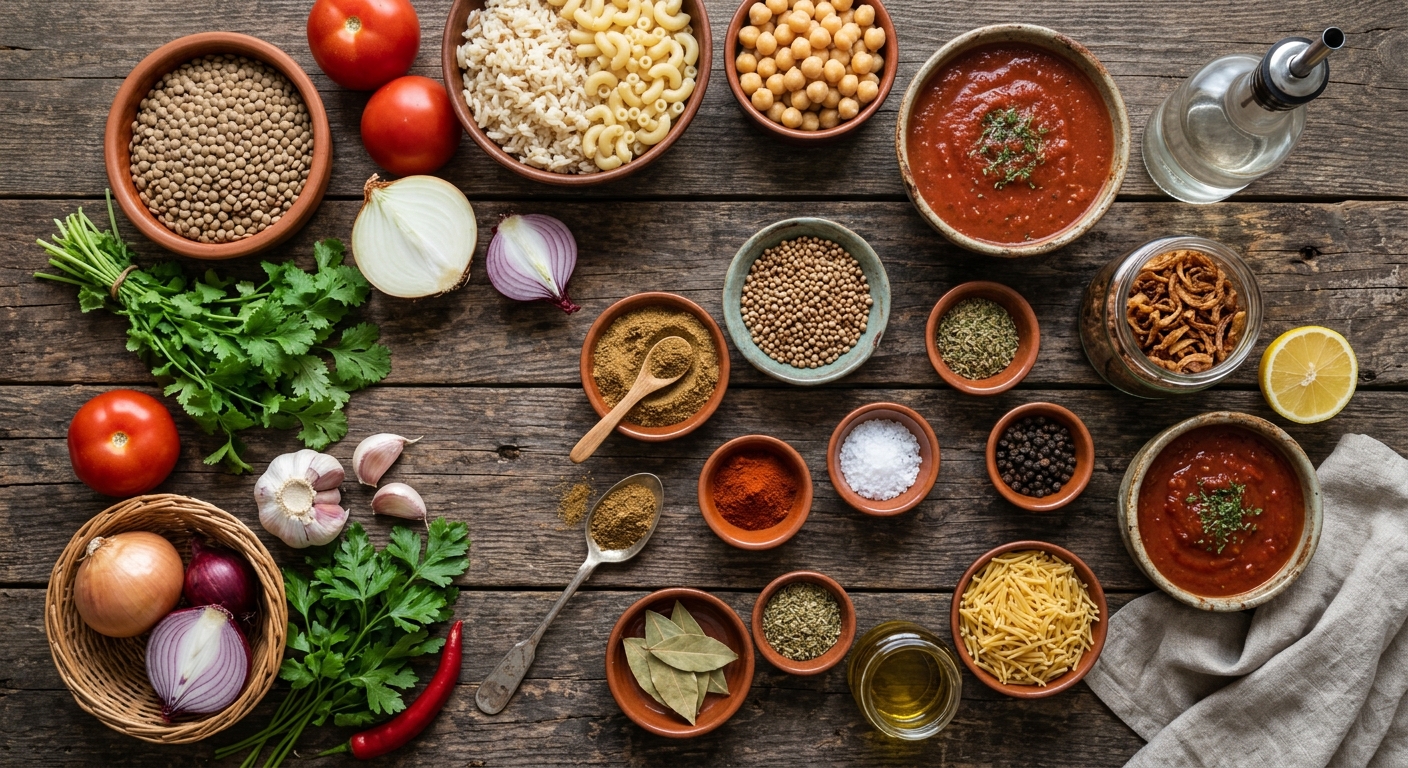
Crafting authentic koshari is an intentional art of preparing each distinct element with reverence before bringing them into seamless unison. The bedrock of the dish is a fragrant composite grain bed consisting of brown or brown-green lentils, short-grain rice, and crushed golden vermicelli. In authentic kitchens, the earthy cooking broth derived from boiling the lentils is carefully preserved and used as the liquid to steam the rice and toasted vermicelli, imbuing every grain with a deep, savory foundation and a warm dusky hue.
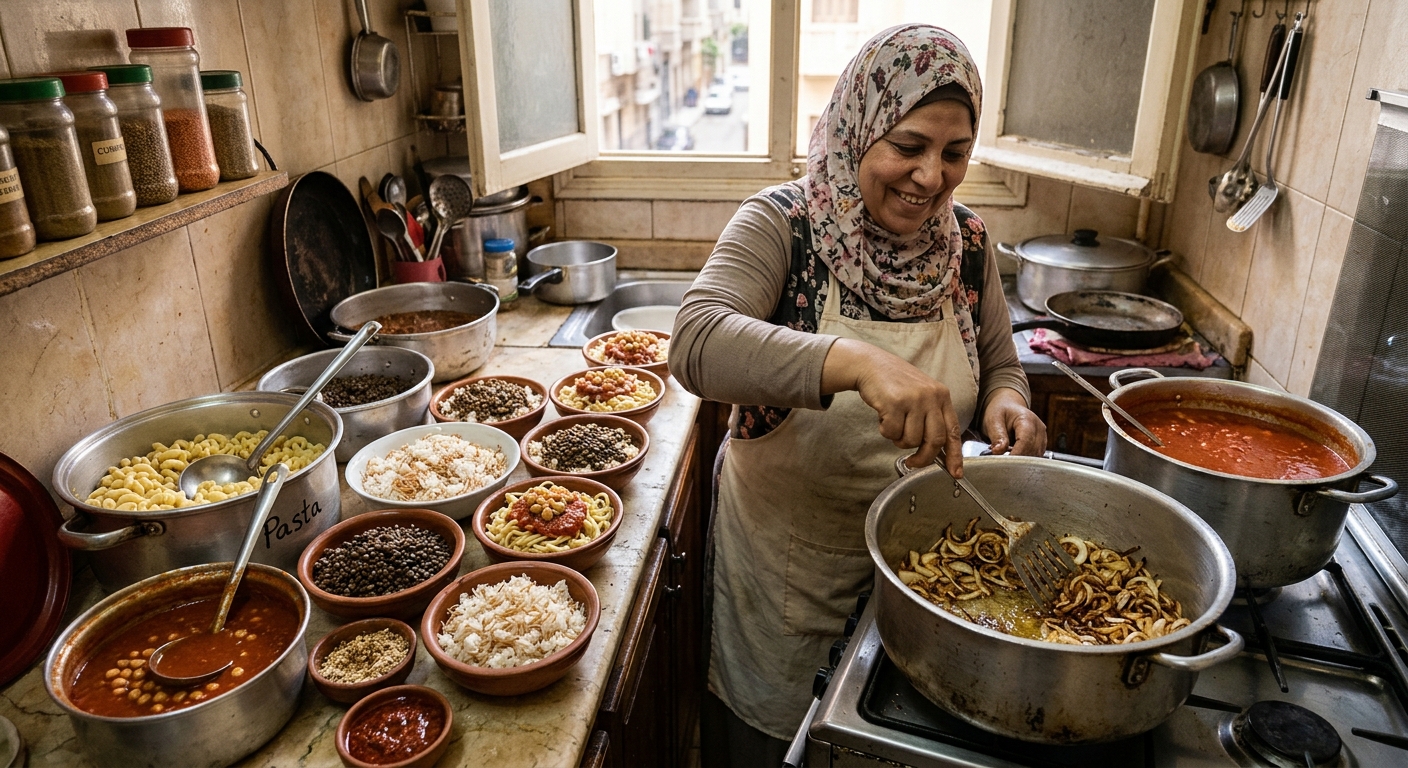
In parallel vessels, ditali or elbow macaroni alongside broken spaghetti strands are boiled until perfectly al dente, strained, and lightly tossed in fragrant aromatic oil to prevent clumping. Tender chickpeas, soaked patiently overnight and gently simmered until creamy, are lightly dusted with salt and ground cumin. The soul of the dish resides in its vibrant sauce: minced garlic is gently bloomed in oil, splashed with white vinegar to awaken the senses, and melded with crushed plum tomatoes, cumin, and ground coriander before simmering down to a silky, piquant consistency. Finally, mounds of thinly sliced onions, dusted lightly in flour, are slowly fried in clean oil until deeply caramelized, crisp, and golden brown. When these disparate layers are assembled in structured harmony, the dish awakens with majestic presence.
4. Enjoying It Like a Local: The Rhythmic Clatter and Tangy Elixirs
Stepping into a traditional dining room or pulling up a stool beside a street cart immerses you in a captivating sensory overture. The rhythm of metal spoons clattering against deep bowls echoes off tiled walls as the cook layers the lentil-infused rice, piles high the glistening pasta, scatters creamy chickpeas, ladles a steaming crimson pool of spiced tomato sauce, and crowns the creation with a generous handful of crackling fried onions. Resting on every communal table are two indispensable glass bottles that hold the true secret to the koshari experience: 'dakka,' a zesty garlic-vinegar infusion steeped with cumin, and 'shatta,' a fiery chili oil crafted for the brave.
Local connoisseurs know precisely what to do without hesitation. They generously ladle several spoonfuls of the tart dakka across the bowl to pierce through the heavy starch, introduce ribbons of spicy shatta according to personal fortitude, and plunge their heavy spoons deep into the bowl, folding every disparate layer into an aromatic mosaic. Accompanied by crisp pickled turnips, brined carrots, or a chilled diced cucumber salad, each bite is savored with gusto. Eating koshari amidst the hum of Cairo is not a quiet, timid meal; it is an energetic ritual of spice, acidity, and warmth that connects diners straight to the living pulse of the city.

5. Flavor Profile: An Operatic Symphony of Textures and Spices
The initial mouthful of koshari delivers an astounding textural complexity rarely encountered in world gastronomy. The firm, distinct chew of the seasoned rice and the earthy tenderness of the brown lentils form a comforting baseline. Cutting across this foundation comes the buoyant, slippery spring of the al dente pasta, punctuated by the buttery, velvety pop of whole chickpeas. Just as the palate settles into the luxurious comfort of the starches, the crackling crispness of the caramelized onions shatters pleasantly between the teeth, releasing a gentle wave of natural sweetness.
The flavor landscape is equally mesmerizing in its dynamic counterpoints. The heavy richness of the grains is brilliantly elevated by the bright, tangy acidity of the vinegary tomato coulis, while the aromatic bite of garlic keeps every spoonful remarkably fresh. Ground cumin casts an unmistakable desert spell across the senses—warm, smoky, and evocative of ancient spice bazaars. A lingering kiss of chili heat warms the throat, beckoning you immediately back for the next bite. It is a masterclass in culinary balance, transforming commonplace pantry staples into a grand sensory performance that lingers long in the memory.
6. Cooking at Home: Recreating the Nile’s Warmth in Your Kitchen
Even if thousands of miles separate your home kitchen from the sun-drenched banks of the Nile, you can easily channel the comforting spirit of koshari using everyday ingredients. For an accessible home version that minimizes dirty cookware, consider preparing the grains in a single pot. Sauté a handful of crushed angel hair pasta or vermicelli in oil until golden brown, stir in thoroughly washed rice and pre-cooked brown lentils, season with a generous pinch of cumin and sea salt, and cook with water or vegetable stock until fluffy and aromatic.
While the grains steam, boil elbow macaroni until tender and rinse a can of pre-cooked chickpeas. To prepare the signature tomato dressing, gently sizzle two tablespoons of minced garlic in olive oil, splash with two tablespoons of white vinegar, and pour in crushed canned tomatoes seasoned with ground coriander, cumin, black pepper, and salt, allowing it to bubble gently until rich and glossy. For the crowning glory, slice two yellow onions into thin rings, toss lightly with cornstarch, and pan-fry in a shallow layer of hot oil until they achieve a gorgeous mahogany crunch. To serve, spread a generous mound of lentil rice across a wide platter, ring it with tender pasta and chickpeas, drape with the warm tomato sauce, and blanket generously with the crispy onion strands. Mix a quick splash of lemon, vinegar, and crushed garlic to drizzle at the table, and let the soulful comfort of Egypt fill your home.
Looking for a place nearby? Search “코샤리” on Naver Map.