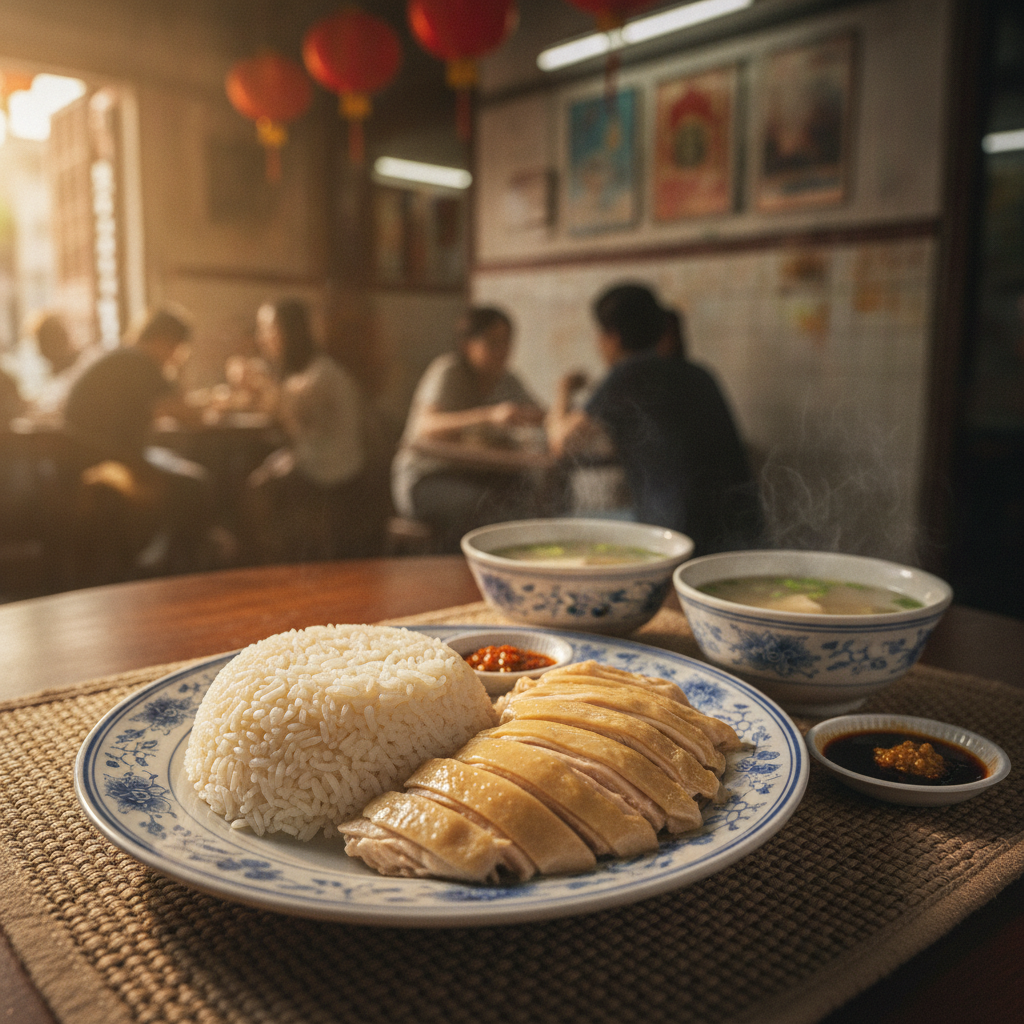
A Plate Holding Singapore's Soul, Chicken Rice
When you unfold Singapore's gastronomic map, the first name that pops up is 'Chicken Rice.' This single plate of food is more than just a meal; it's a cultural heritage that fully embodies Singapore's multicultural identity and history. Even in Singapore's hot and humid climate, chicken rice halts the footsteps of people, offering an exotic taste exploration to foreign travelers and a warm comfort of childhood memories to locals. From street hawker stalls to upscale restaurants, chicken rice can be found everywhere in Singapore, much like the air that permeates every alley and every life, being natural and essential. The perfect harmony created by tenderly cooked chicken, fragrant rice cooked in chicken broth, and a variety of sauces—spicy-sour chili sauce and rich dark soy sauce—provides an unforgettable culinary experience for those traveling to Singapore, allowing them to feel the vibrant energy of this small city-state with every bite. Chicken rice is one of the most beloved and proud dishes of Singaporeans, and through this dish, one can understand Singapore's diverse culture and way of life.
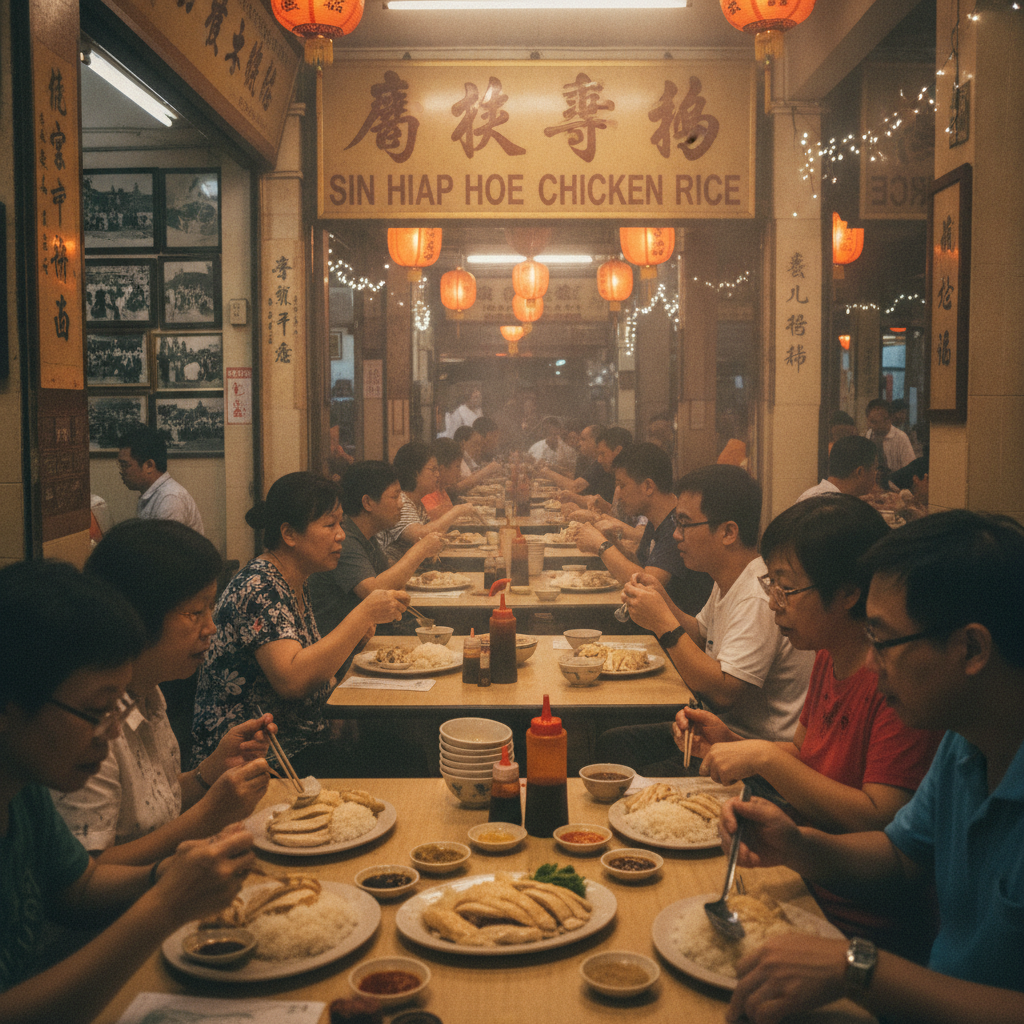
History and Origin
The history of chicken rice is deeply intertwined with the lives of immigrants who came from Hainan Island, China, during Singapore's British colonial era. Originally derived from 'Wenchang Chicken' (文昌雞) in the Hainan region, this dish was a simple meal of boiled chicken served with rice. From the late 19th to early 20th century, as Hainanese immigrants moved to Singapore, their traditional food culture was transplanted, and gradually evolved into the current form of chicken rice, combining local ingredients and culture. In particular, cooking rice with chicken broth and serving it with various sauces became a distinct feature of Singaporean chicken rice. Initially, it was a humble street food sold cheaply and generously by hawkers, but its taste and convenience quickly made it popular among the masses. In the 1950s, a famous Singaporean restaurant called 'Foo Kin' played a significant role in popularizing chicken rice, and since then, numerous chicken rice specialty restaurants have emerged, firmly establishing it as Singapore's representative dish. This dish is not just about filling an empty stomach; it is also a valuable legacy that embodies the joys and sorrows, and the hopes of immigrants trying to establish roots in a new land.
Traditional Recipe
The authentic recipe for Singaporean chicken rice involves a more delicate and intricate process than it might seem. The key lies in the perfect harmony of 'chicken,' 'rice,' and 'sauces.' First, fresh spring chicken or a chicken suitable for samgyetang (Korean ginseng chicken soup) is used. The chicken is placed whole into boiling water with spring onions, ginger, and garlic, then slowly cooked over low heat to maximize tenderness and juiciness. It's crucial not to overcook the chicken to prevent it from becoming tough; instead, remove it at the right time and immerse it in ice water to maintain the skin's elasticity and the meat's moistness. The rice is another protagonist of chicken rice. It's cooked with the broth from boiling the chicken, along with garlic, ginger, pandan leaves, and chicken fat. In this process, each grain of rice absorbs the deep umami and fragrance of the chicken broth, resulting in glossy and savory rice. The sauces are the finishing touch that completes the flavor of chicken rice. Typically, three types of sauces are provided: first, a spicy and sour chili sauce (made with chili, garlic, ginger, and lime juice); second, a rich, sweet, and savory dark soy sauce (soy sauce, sugar, sesame oil, etc.); and third, a fresh ginger sauce made from grated ginger. These three sauces are mixed and dipped according to preference, allowing for a diverse array of flavors.
"Chicken rice is not just food. It's a symphony embodying Singapore's soul, where the tenderness of chicken, the fragrance of rice, and the diversity of sauces come together." - World Food Travel Writer
How to Enjoy Locally
Enjoying chicken rice in Singapore is a cultural experience in itself. You can enjoy chicken rice for breakfast, lunch, or dinner, and especially during lunchtime, you'll see a long queue of office workers and students at hawker centers or food courts. Locals often choose specific parts of the chicken. Some prefer the juicy thigh meat, while others favor the leaner breast meat. The chicken is usually deboned and cut into bite-sized pieces, served on a plate with rice. Accompaniments include fresh cucumber slices and a warm soup made from the broth used to cook the chicken. This soup enhances the flavor of the chicken rice and cleanses the palate. Locals customize their meal by adding chili sauce, dark soy sauce, and ginger sauce to their plate, either drizzling them over the chicken or rice, or mixing the three sauces in a golden ratio to create their own signature sauce. All these steps transform chicken rice from a simple meal into a delightful sensory experience. Even amidst a busy daily life, taking a moment to savor the relaxation and happiness that a bowl of chicken rice brings is a way of life for locals.
Flavor Profile
The taste of Singaporean chicken rice is the epitome of delicacy and harmony. First, the chicken meat boasts a silky smooth texture. With each bite, the savory juices burst into the mouth, delivering a clean yet deep umami flavor. The skin is thin and chewy, while the meat is moist and tender, melting in the mouth in an almost ecstatic way. The rice, cooked in chicken broth, is glossy, with each grain infused with a profound aroma. As you chew, the subtle chicken fragrance blends with the exotic scent of pandan leaves, creating a savory and aromatic taste. The rice grains are sticky yet fluffy, perfectly complementing the chicken and sauces. The accompanying sauces add diverse variations to the chicken rice's flavor. The spicy and sour chili sauce cuts through the richness of the chicken and adds a refreshing zest, while the rich, sweet, and savory dark soy sauce provides deep flavor and gloss. The fresh ginger sauce enhances the chicken's clean taste and offers a refreshing note. All these elements come together to create a rich and balanced symphony of flavors, leaving an unforgettable impression. Much like Singapore's multicultural spectrum, the taste of chicken rice possesses a diverse and complex charm.
Making It at Home
If you wish to make Singaporean chicken rice at home, keep a few key tips in mind. While it might be challenging to replicate the exact local taste, you can certainly create a delicious homemade version.
Simple Home Cook Version Recipe Tips:
- Preparing the Chicken: Clean a whole chicken (around 1kg) and prepare it. Pour enough water to submerge the chicken into a pot, add 5-6 cloves of whole garlic, 3-4 slices of ginger, and about 2 white parts of spring onion, then bring to a boil. Once boiling, add the chicken, cover, and simmer over medium-low heat for about 20-30 minutes. When the chicken is cooked, immediately remove it and immerse it in ice water to cool; this will make the skin chewier and the meat juicier. Debone or slice the cooked chicken into bite-sized pieces.
- Cooking Rice with Chicken Broth: Do not discard the broth left from boiling the chicken; use it as cooking water for the rice. Wash 2 cups of rice thoroughly and put it into a rice cooker. Add 2 cups of chicken broth (the same amount as regular rice water). Add 1 tablespoon of minced garlic, 1/2 tablespoon of minced ginger, 1/2 piece of chicken stock cube (optional), and a little chicken fat from boiling the chicken (or a bit of cooking oil if none) and cook the rice. This will result in fragrant chicken rice. If you have pandan leaves, adding one will enhance the flavor.
- Making the Sauces:
- Chili Sauce: Mix 2 finely chopped red chilies, 1 tablespoon minced garlic, 1/2 tablespoon minced ginger, 1 tablespoon sugar, 1 tablespoon vinegar, 1 tablespoon lime juice (or lemon juice), and a pinch of salt.
- Soy Sauce: Mix 3 tablespoons soy sauce, 1 tablespoon sugar, 1/2 tablespoon sesame oil, and 2 tablespoons chicken broth.
- Ginger Sauce: Grate 1 piece of ginger (thumb-sized), mix with 1/2 teaspoon minced garlic, 1 teaspoon sesame oil, and a pinch of salt.
- Plating: Place sliced chicken on warm chicken broth rice and garnish with cucumber slices. Serve with the prepared sauces to create a wonderful homemade chicken rice.
Homemade chicken rice will offer a unique and special memory, distinct from the taste of Singapore. Enjoy the flavors of Singapore with your loved ones!
Looking for a place nearby? Search “치킨라이스” on Naver Map.