Ethiopia and Injera: A Piece of Soul on the Red Earth
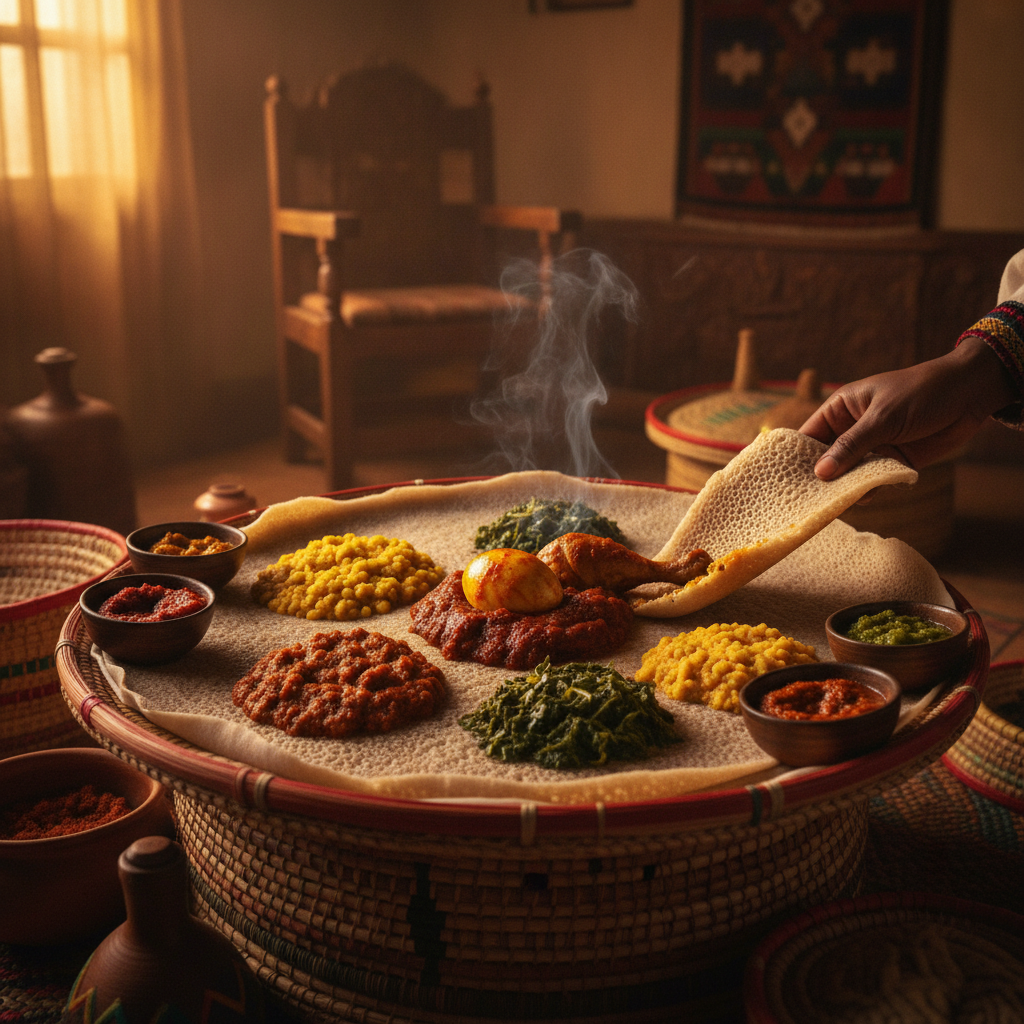
Imagine the vast landscapes of Ethiopia, the Horn of Africa. Ancient civilizations whisper along roads dusty with red earth, and the faces of its people reflect a profound peace alongside the marks of time. At the heart of this intense yet peaceful land lies a food called 'Injera.' Injera transcends merely filling the stomach; it is a symbol of the Ethiopian way of life, community spirit, and deep hospitality. More than just a piece of bread, Injera unfurls like a canvas, upon which vibrant stews and vegetables are artfully arranged. People gather around this symbolic circular table, sharing food with their hands and engaging in conversation. For travelers to Ethiopia, Injera is the first and most deeply etched experience, the initial step towards understanding their soul. This unique bread, chewy yet soft, sour yet savory, encapsulates Ethiopia's history and culture. Like the vitality held within the red earth, Injera is deeply rooted in the lives of Ethiopians, playing a crucial role in shaping their identity. The act of sharing Injera together is more than just a meal; it's a sacred ritual akin to opening hearts and embracing one another. Within this single sheet of Injera, the scorching sun of Ethiopia, its fertile land, and the warm hearts of its people are all contained.
History and Origin: Teff's Gift from Ancient Times
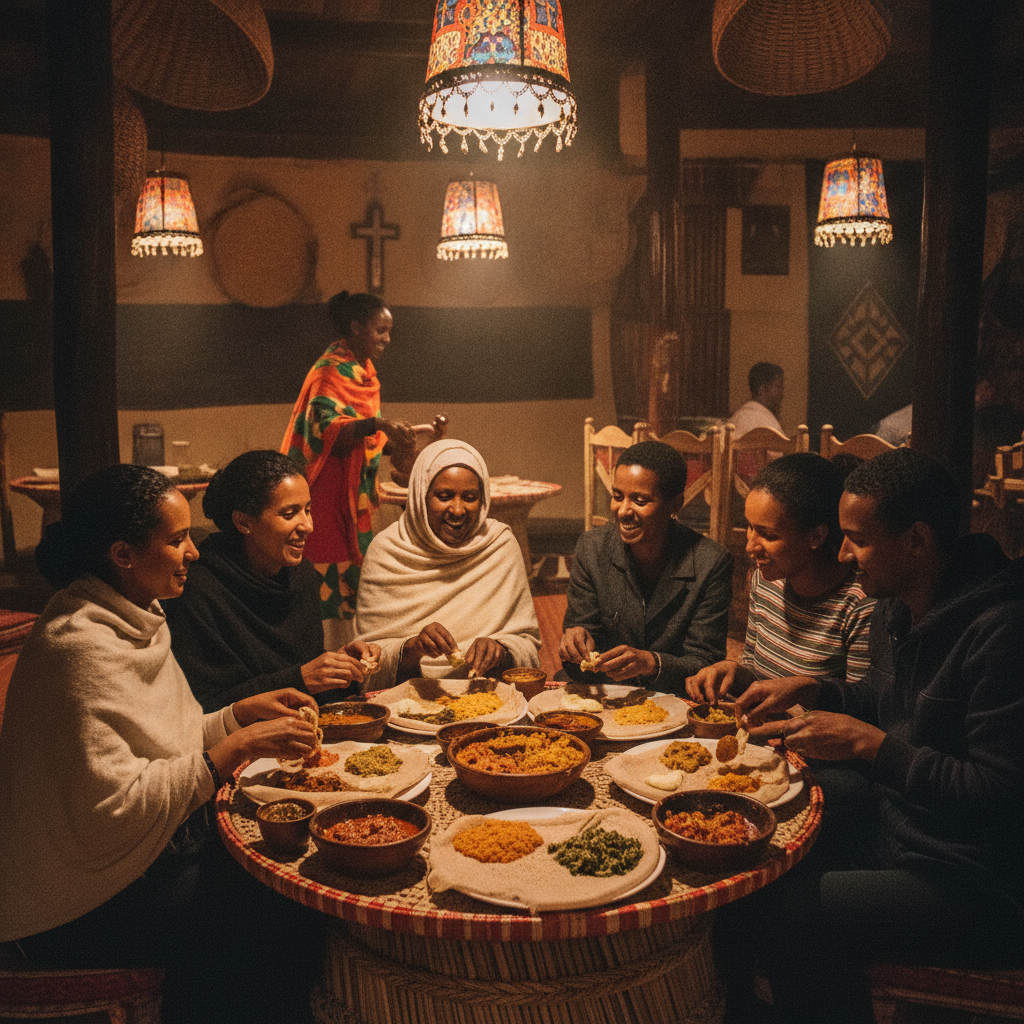
The history of Injera is as deep and ancient as Ethiopia itself. At its core is 'Teff,' an ancient grain. Teff is one of the world's smallest grains, an indigenous crop cultivated in the Ethiopian highlands for over 4,000 years. Legend has it that Teff was also consumed by ancient Egyptians to gain strength while building the pyramids. Indeed, Teff is gluten-free, rich in iron, calcium, and protein, making it a highly acclaimed superfood in modern times. While the exact date Injera began to be made in its current form is not precisely recorded, it is believed that its early form emerged almost simultaneously with the beginning of Teff cultivation. Ancient Ethiopians learned to grind Teff, mix it with water to form a batter, ferment it, and then bake it into a flatbread. This would have been similar to ancient Egyptian breads or rotis from the Indian subcontinent. The fermentation process gives Injera its distinctive sour taste and soft texture, a clever method that also extended its shelf life for a long time. Thus, Injera is a living history of Ethiopia itself, born from the wisdom of ancient ancestors and the gifts of nature. It is truly remarkable that such a small grain as Teff has bloomed into such a vast culinary culture. Beyond merely sustenance, Teff and Injera have played a crucial role in preserving Ethiopia's independent culture and identity.
Traditional Recipe: The Aesthetics Forged with Time and Devotion
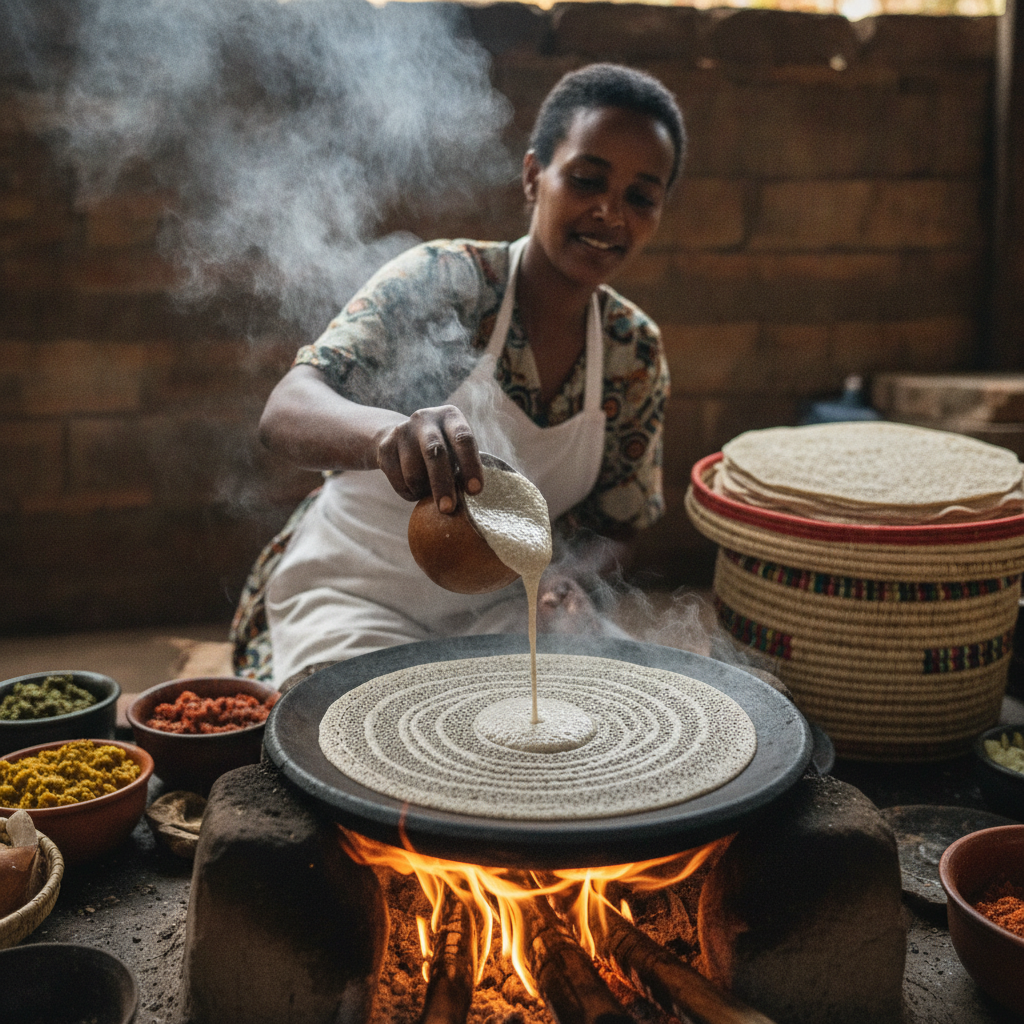
Making authentic Injera, though seemingly simple, actually demands considerable time, dedication, and skilled technique. The core ingredient, of course, is 'Teff flour.' This tiny grain determines Injera's unique flavor and nutritional value. First, Teff flour is mixed with water to create a thin batter. Crucially, a fermented starter called 'Ersho' is used. Ersho is leftover from a previous Injera batter and, much like a Western sourdough starter, plays a role in fermenting the new batter. This batter is then left to naturally ferment at room temperature for at least 2-3 days, sometimes even over a week. During this period, the batter slowly rises and emits its characteristic sour aroma. Once sufficiently fermented, the batter reaches a consistency similar to thin crepe batter. Now, the fermented batter is thinly poured onto a hot, round clay griddle called a 'Mogad' or an electric griddle. As the batter cooks, numerous small holes, or 'Eyes,' appear on the surface. These 'eyes' are crucial as they determine Injera's softness and its ability to absorb sauces. Covering it to steam-cook ensures a moist and tender Injera. Each sheet of Injera, carefully cooked, is not just food, but a work of art created through the harmony of time, nature, and human touch. This process symbolizes the patience and wisdom of Ethiopian women, allowing one to feel the warm love blossoming from their fingertips.
How to Enjoy Locally: A Table of Community and Hospitality
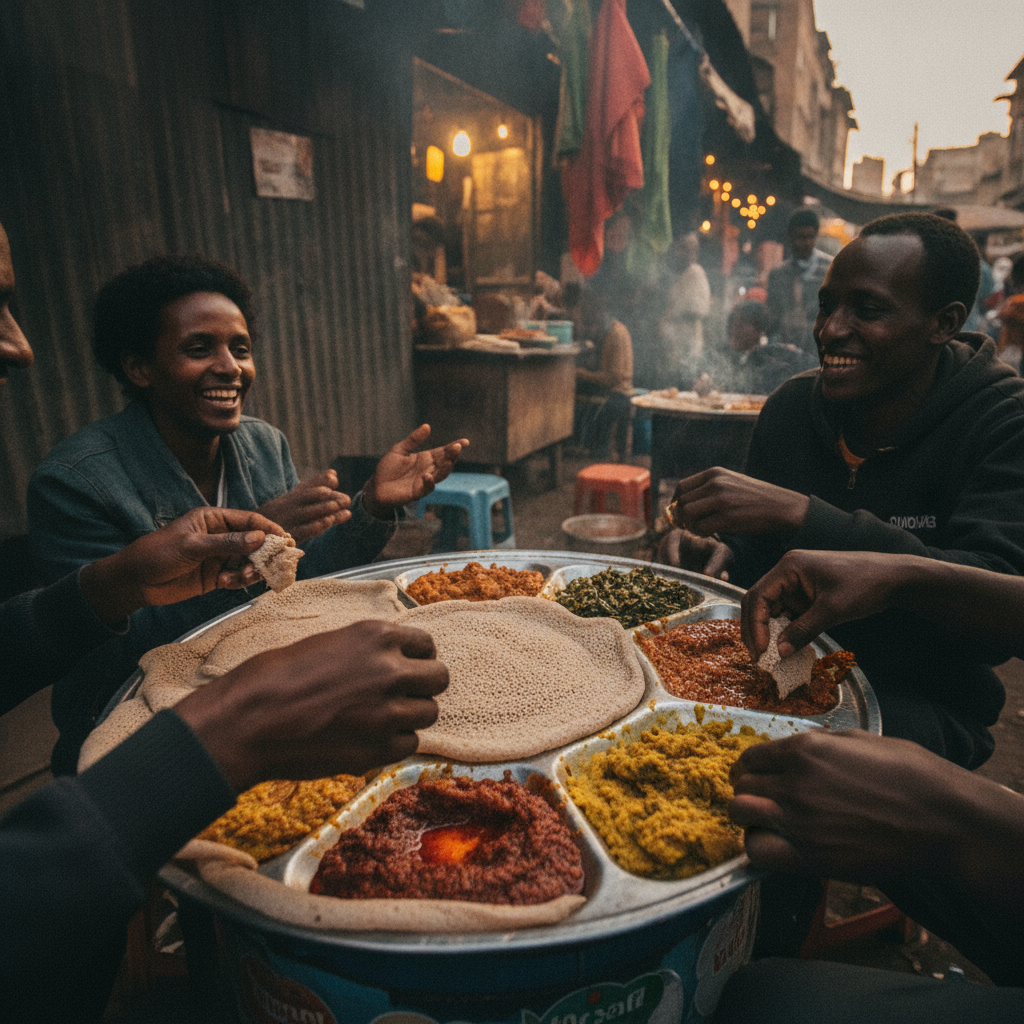
The way Injera is enjoyed in Ethiopia fully reflects their spirit of community and culture of hospitality. Upon entering a restaurant, the first thing that catches the eye is the large, round platter of Injera, adorned with a variety of colorful 'Wots.' Wot are spicy stews made primarily with meat (beef, lamb, chicken) or vegetables, and they come in many varieties. Representative wots include 'Misir Wot,' a spicy red lentil stew; 'Shiro Wot,' a creamy chickpea stew; and 'Doro Wot,' a chicken stew. The Injera is spread out wide like a plate, and various wots and salads are attractively arranged on top. Forks or knives are not used. People tear off a piece of Injera with their right hand and use it to scoop up the wot, wrapping it around the food. This method might feel a bit awkward at first, but it quickly fosters a deep connection with the food and a sense of camaraderie with those sharing the meal. In particular, the custom of 'Gursha' is the pinnacle of Ethiopian hospitality. It is the act of a family member or friend directly feeding a piece of Injera-wrapped food into another's mouth, the warmest way to express deep love, respect, and intimacy. Eating Injera locally is more than just filling one's stomach; it's an immersive experience into the lives and culture of the Ethiopian people. The sight of several people sharing a single Injera and conversing clearly demonstrates the strength of their community spirit.
Taste Characteristics: A Diverse Feast Blossoming in Sourness
The taste of Injera can be quite striking for those encountering it for the first time. The most prominent characteristic is its 'sourness.' This sourness arises from the long natural fermentation of the Teff batter, bearing a unique flavor profile that is somewhat similar to the sourness of Western sourdough bread or Korean makgeolli, yet distinct. This tartness creates a fantastic harmony with the spicy wots, which might otherwise feel heavy. Much like well-fermented kimchi or pickles cut through rich dishes, Injera's acidity elevates the flavors of Ethiopian cuisine. The texture is also very unique. It is thin and soft, yet has a chewy elasticity that makes it easy to tear by hand, and it absorbs the broth of the wot like a sponge, keeping it moist. Upon entering the mouth, it melts softly, while a subtle, distinctive grain aroma of Teff gently wafts through. The aroma is also complex. The delicate yeast scent from fermentation blends with the savory grain aroma of Teff itself, giving off a warm, comforting feeling akin to freshly baked bread. While it might feel unfamiliar at first, after a few tastes, one can't help but be captivated by this distinctive sourness, soft texture, and its perfect harmony with the wot. Injera offers more than just a taste; it provides a sensory experience, as if tasting the very vitality given by Ethiopia's hot sun and fertile land.
Taste in Korea: A Small Ethiopia in Seoul
For food enthusiasts, the fact that authentic Injera can be tasted in downtown Seoul, without having to travel all the way to Ethiopia, is a great joy. Ethiopian restaurants have opened, primarily in areas with large foreign populations like Itaewon and Dongdaemun, offering an exotic culinary experience in Korea. Notable establishments include 'Ethiopian Restaurant' and 'Addis Ababa' in Itaewon. 'Ethiopian Restaurant' boasts a long history and authentic flavors recognized by locals, offering a variety of wots and injera. The spicy Doro Wot and Misir Wot are especially recommended. 'Addis Ababa' provides a more modern and clean atmosphere to enjoy Ethiopian food, and it also features a well-stocked menu for vegetarians. In addition, high-quality Ethiopian cuisine can be experienced at places like 'Nyala' near Dongdaemun. These restaurants typically offer generous portions of Injera along with various wot samplers, allowing you to enjoy multiple flavors at once. After your meal, you can experience 'Bunna,' the traditional Ethiopian coffee ceremony, and delve into Ethiopia's profound coffee culture. Embark on a special culinary journey in a small Ethiopia within Seoul, and feel the heart of Africa through a piece of Injera.
Ethiopian Restaurant
- Address: 21 Usadan-ro 10-gil, Yongsan-gu, Seoul (Itaewon)
- Features: Long tradition and authentic taste recognized by locals. Doro Wot, Misir Wot recommended.
Addis Ababa
- Address: 42 Usadan-ro, Yongsan-gu, Seoul (Itaewon)
- Features: Modern and clean atmosphere. Diverse menu for vegetarians.
Nyala
- Address: 321 Toegye-ro, Jung-gu, Seoul (Dongdaemun)
- Features: A place to enjoy authentic Ethiopian cuisine with various wots.
Making It At Home: A Mini Culinary Journey with Teff Flour
While perfectly replicating authentic Injera at home can be challenging, you can make a simple home-cooked version using Teff flour. The first step is to acquire Teff flour, which can usually be found at international grocery stores or online.
Ingredients:
- 1 cup Teff flour
- 1.5-2 cups warm water (adjust consistency as needed)
- A pinch of salt
- (Optional) 1/2 teaspoon baking powder or a pinch of yeast (to shorten fermentation time and adjust sourness)
Instructions:
- Make the Batter: Place Teff flour in a large bowl and gradually add warm water, mixing well with a whisk. Adjust to a consistency slightly thinner than pancake batter. Add a pinch of salt and mix thoroughly.
- Ferment: Cover the batter with a cloth and let it ferment at room temperature for at least 12-24 hours. (Optionally, adding baking powder or yeast can shorten fermentation time and adjust the flavor. If using yeast, dissolve it in lukewarm water first.) The batter is well-fer