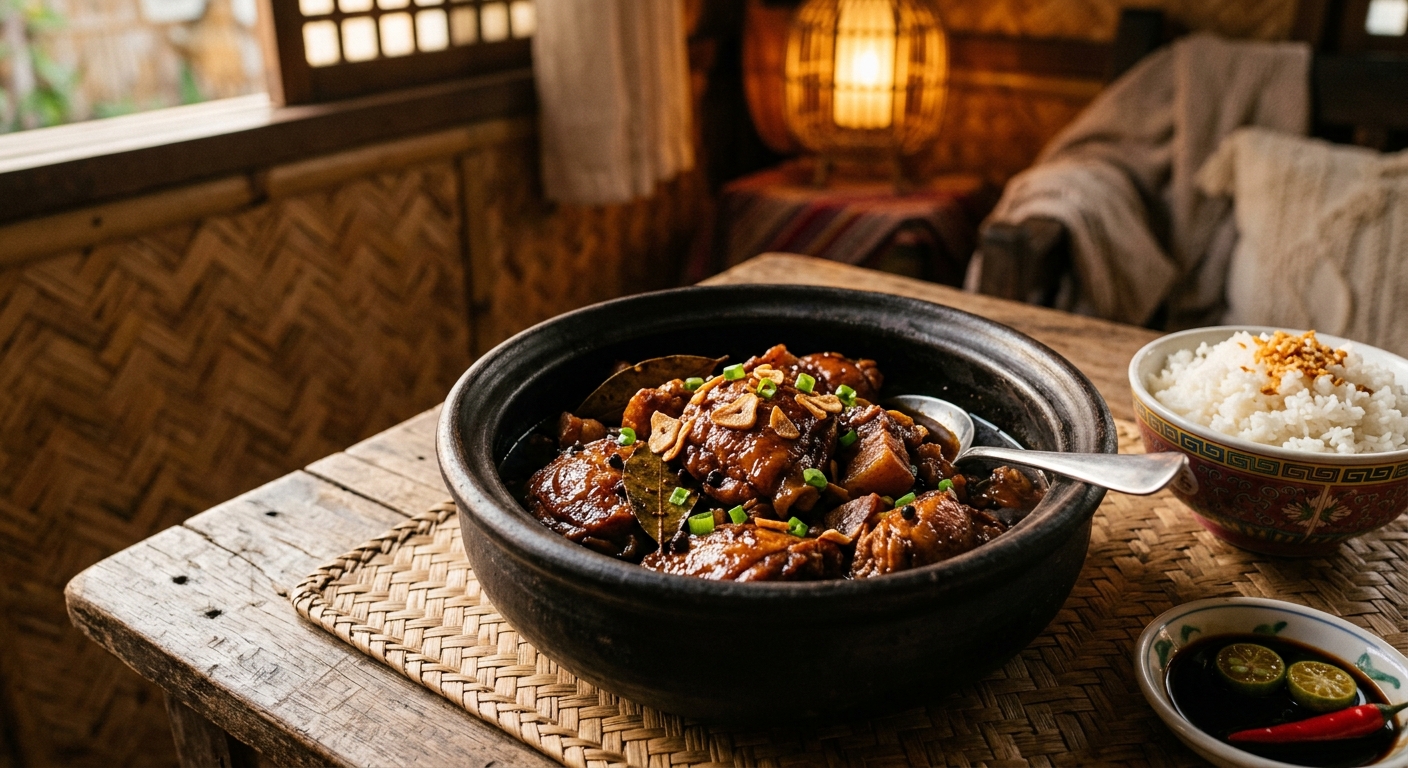
1. The Philippines and Adobo: A Warm Embrace of Soul and Cultural Identity
As tropical breezes rustle the coconut palms and golden dusk paints the tranquil horizon of Manila Bay, an irresistible and intoxicating aroma drifts through the neighborhood alleyways. It is the signature bouquet of Philippine Adobo—a savory, tangy, and deeply aromatic fragrance of vinegar, soy sauce, and crushed garlic sizzling gently in a well-seasoned pot. Across thousands of islands, this familiar scent signals the end of the working day, calling families back home to gather around the dining table.
In the Philippines, Adobo is not merely a recipe; it is the very heartbeat of Filipino heritage and familial devotion. Spanning an archipelago of over seven thousand islands, each province, village, and household cherishes its own distinct interpretation of this iconic dish. Passed down tenderly from grandmothers to mothers and children, Adobo represents a living chronicle of family history. Whether it is the nostalgic memory of coming home from school to a bubbling pot, the comforting warmth shared during stormy monsoon nights, or the homesick longing of overseas Filipinos, Adobo remains the supreme culinary symbol of love and comfort.
"Adobo is more than a culinary technique; it is a universal love language spoken across thousands of islands, uniting hearts with its comforting warmth."
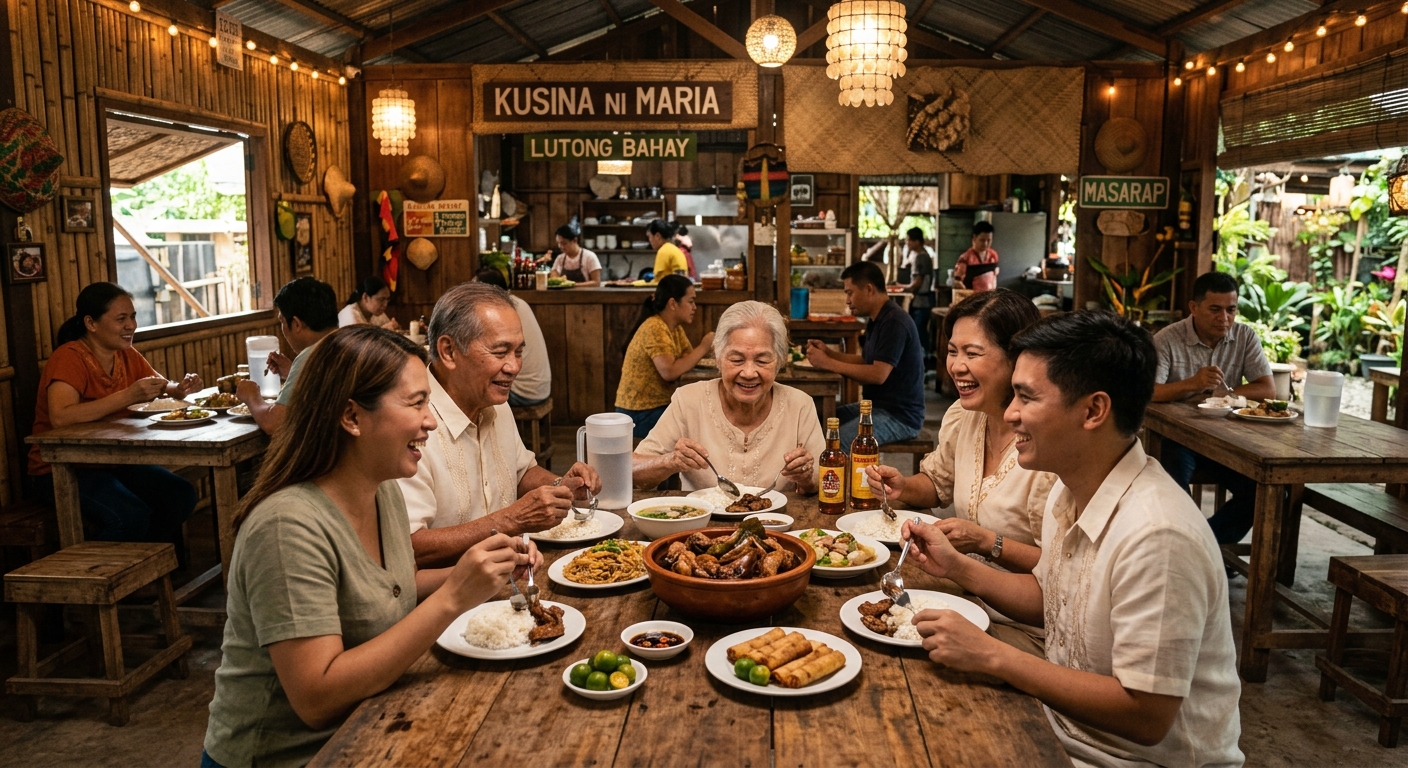
From lavish celebratory feasts and festive barangay gatherings to humble daily dinners, Adobo is ever-present. Prepared luxuriously with chicken and pork, or simply simmered with hard-boiled eggs and local vegetables during leaner times, its essence never wavers. Adaptable yet steadfast, Adobo beautifully mirrors the resilient, warm, and optimistic spirit of the Filipino people.
2. History and Origins: A Flavorful Journey Through Centuries and Oceans
To trace the origin of Adobo, one must journey back to the pre-colonial era long before Spanish galleons set anchor in the Philippine archipelago. In a sweltering tropical climate without refrigeration, indigenous inhabitants discovered an ingenious preservation technique: stewing meats and seafood in naturally fermented palm or cane vinegar with sea salt, crushed wild garlic, and peppercorns. The strong acidity of the vinegar inhibited spoilage, while native spices masked gaminess and imparted vibrant flavor.
When Spanish colonizers arrived in the late 16th century, they observed this practical indigenous method of marinating and stewing. They referred to it using their native word adobar—meaning to marinate or pickle in sauce—giving birth to the name Adobo. However, while the name carries a Spanish linguistic root, the soul, technique, and essence of the dish were entirely indigenous to the native Filipinos.
"Beneath its Spanish-derived name lies the ancient wisdom of tropical preservation, enriched by centuries of maritime trade and cultural exchange."
Centuries later, trade with Chinese merchants introduced fermented soy sauce to the islands. Adding rich soy sauce to what was traditionally a clear, salt-based stew—known as Adobo Puti (White Adobo)—transformed the dish into the dark, glossy, umami-rich masterpiece celebrated worldwide today. Adobo stands as a living cultural tapestry, reflecting the resilience of indigenous wisdom harmonized with maritime cross-cultural influences.
3. Traditional Recipe: The Art of Time, Simmering, and Balance
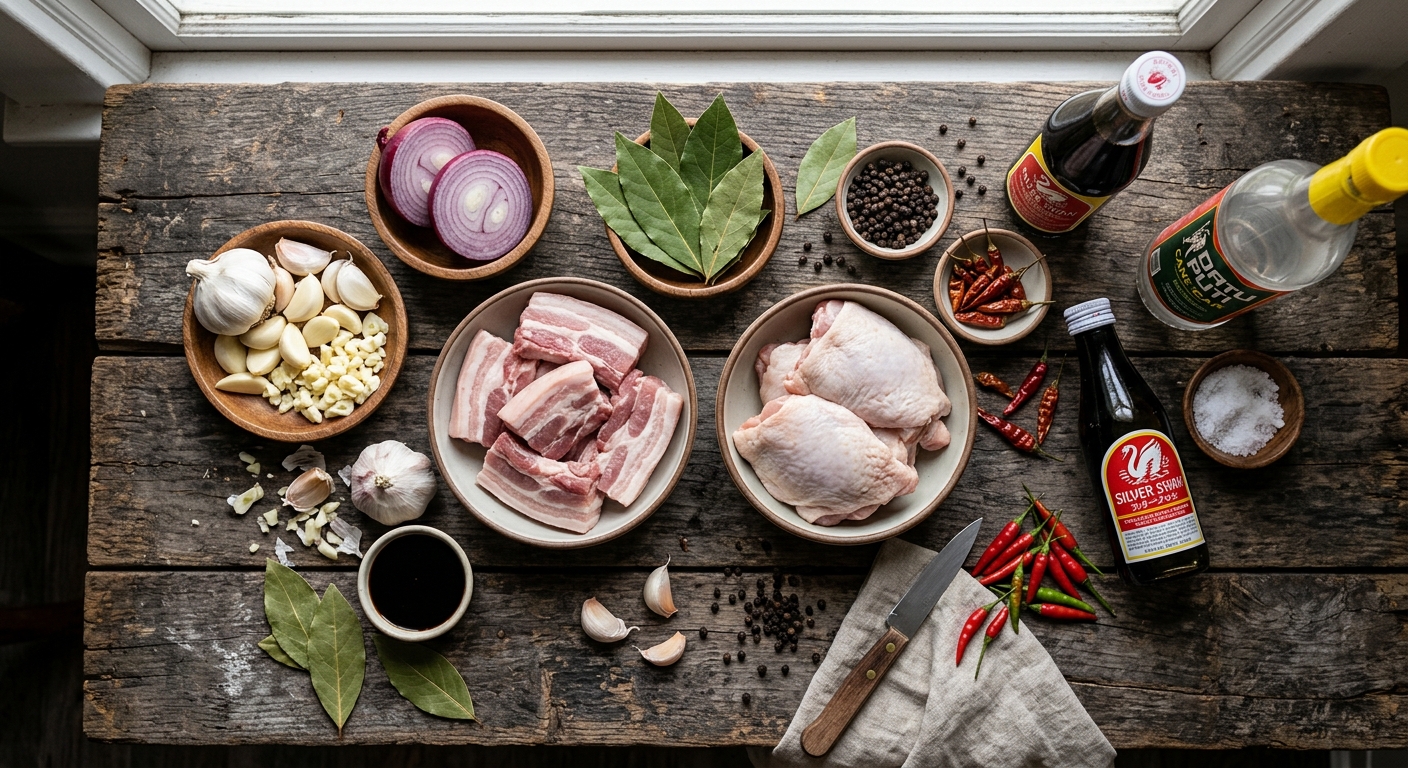
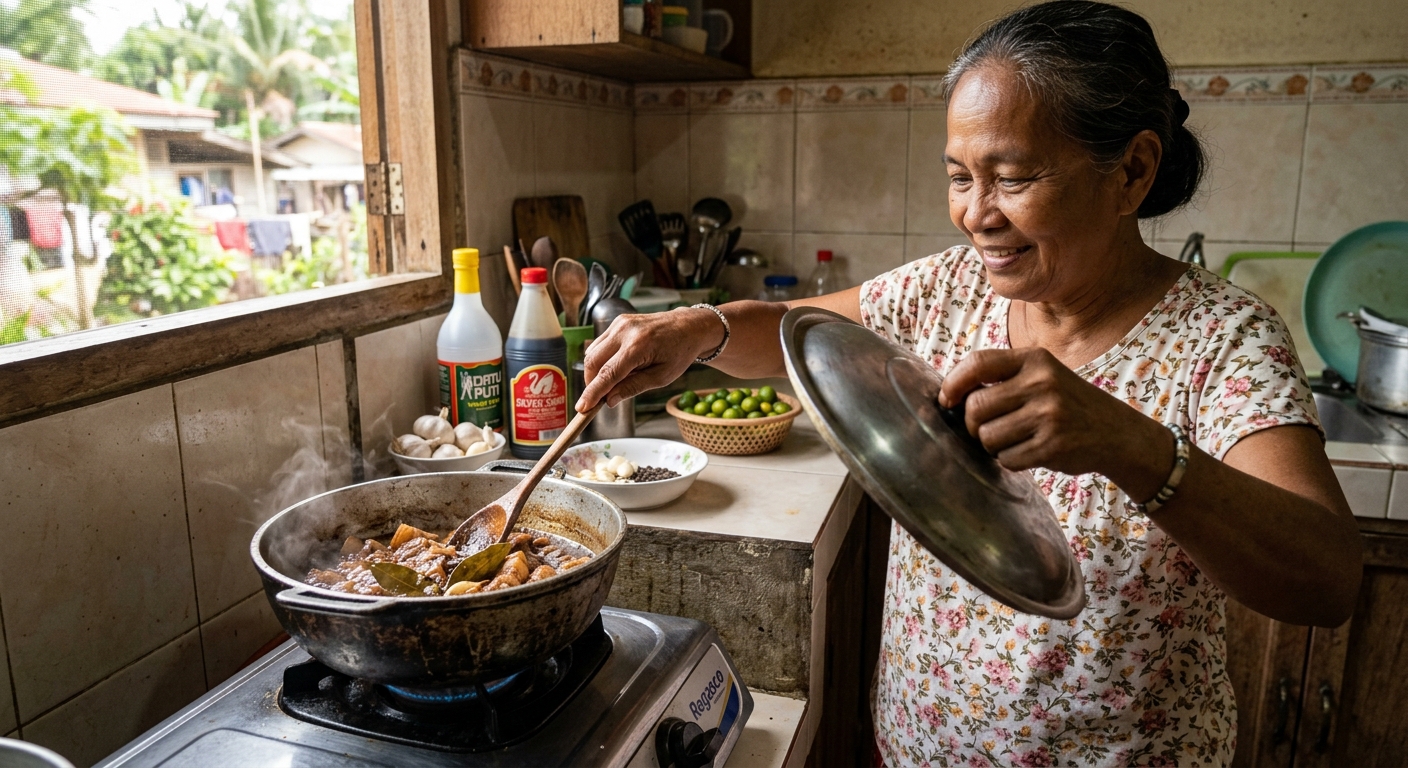
Crafting an authentic Filipino Adobo is an exercise in patience and culinary intuition. The most beloved and timeless variation is Adobong Manok at Baboy, combining succulent chicken thighs and rich pork belly. The lean tenderness of poultry paired with the savory richness of pork fat creates an unmatched symphony of flavors within a single clay or cast-iron pot.
Essential Ingredients
The foundation of genuine Adobo relies on five indispensable elements: naturally fermented cane vinegar (yielding a clean, bright tang), rich dark soy sauce (providing deep color and umami), generous handfuls of crushed fresh garlic cloves, dried bay leaves (imparting an earthy botanical aroma), and whole black peppercorns (offering warm, pungent bursts of spice).
The Authentic Three-Step Method
The cooking process unfolds through three essential stages. The first is marination: generous chunks of meat are steeped in vinegar, soy sauce, cracked garlic, bay leaves, and peppercorns for at least thirty minutes to several hours, allowing the acids and salts to tenderize the muscle fibers deeply.
The second stage is the gentle simmer: the meat and marinade are transferred to a heavy pot and brought to a simmer over medium heat. Here lies a golden rule revered by traditional home cooks: never stir the pot immediately after adding vinegar. Leaving the pot uncovered allows the harsh, raw alcohol vapors of the vinegar to evaporate naturally, leaving behind only mellow, nuanced acidity.
The final step is the sear and glaze: once fork-tender, the meat pieces are retrieved and seared in a hot pan with a touch of oil until golden-brown and lightly crisp around the edges. The simmering sauce is then poured back in and reduced over high heat until it forms a luscious, glistening glaze that hugs every tender morsel.
4. How Locals Enjoy It: Simplicity, Rice, and Hearty Fellowship
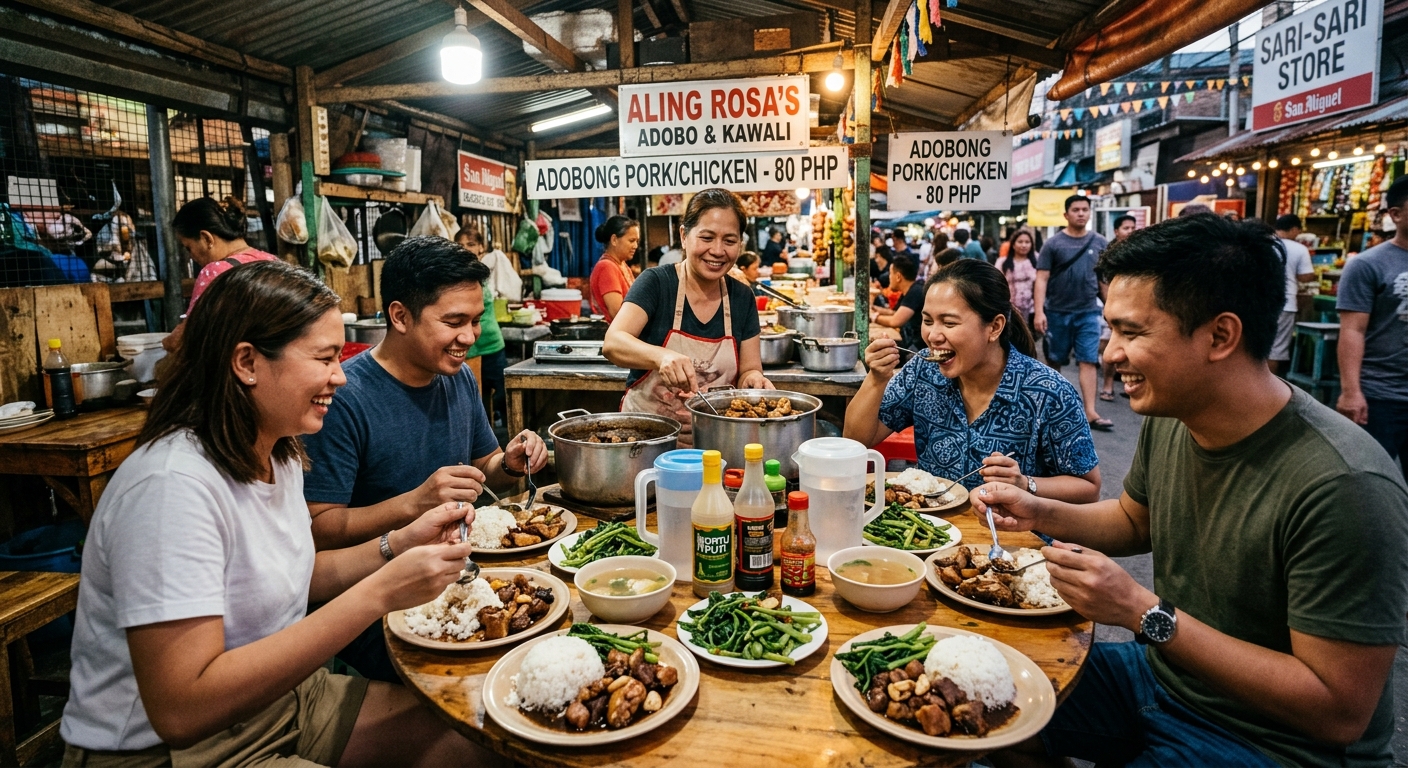
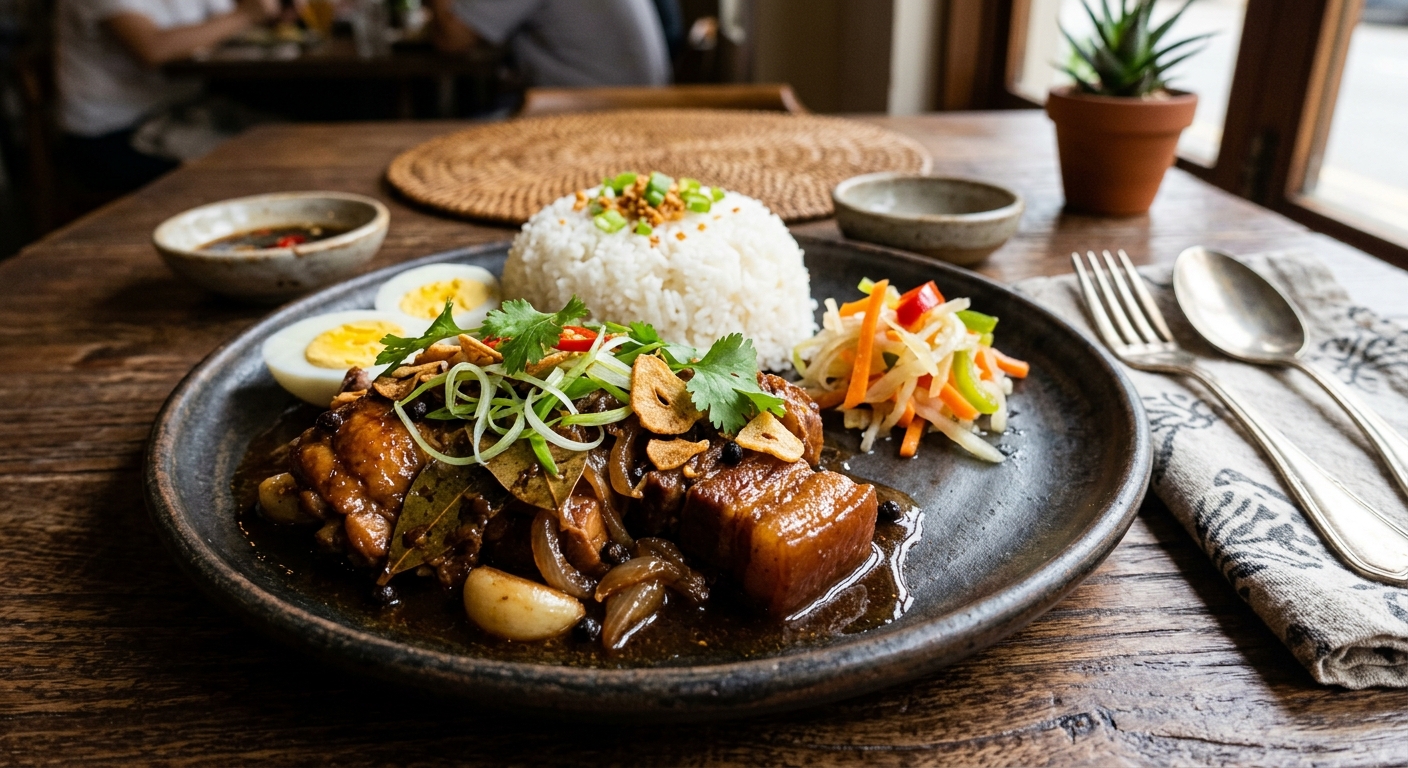
To experience Adobo like a true local, there is one non-negotiable companion: a mountain of piping-hot, fluffy white rice. Filipinos do not treat Adobo merely as a piece of meat on a plate. The dark, concentrated savory-sour sauce is spooned generously over the rice, allowing every grain to soak up the rich, aromatic juices. Combining a spoonful of sauce-drenched rice with a tender shred of savory meat delivers pure comfort and soul-stirring satisfaction.
In the morning, leftover Adobo transforms into a legendary breakfast. Shredded finely and crisped in a skillet alongside heaps of fragrant garlic fried rice (Sinangag) and a sunny-side-up egg (Itlog), it becomes the beloved breakfast combo known as Adobosilog. The runny egg yolk blends with the savory garlic rice and crispy meat shreds, providing an invigorating start to the tropical day.
"When enjoyed in the traditional Kamayan feast—eating with bare hands off fresh banana leaves—Adobo connects the diner intimately to the earth, the community, and heritage."
To balance the richness of the meat, local tables are invariably accompanied by Atchara—a crisp, sweet-and-sour pickled green papaya relish. A refreshing bite of Atchara cuts cleanly through the richness, enlivening the palate for the next delicious mouthful, washed down with fresh calamansi juice or chilled coconut water.
5. Flavor Profile: A Grand Symphony of Tang, Salt, and Umami
The magic of Adobo begins with its multi-layered aroma. The initial burst is a clean, appetizing tang of simmered vinegar, immediately followed by the comforting aroma of toasted garlic, the herbal elegance of bay leaves, and the spicy warmth of cracked black pepper. It is a fragrance that awakens the senses instantly.
On the palate, the texture is nothing short of sublime. Having surrendered to a long, gentle simmer, the pork belly melts effortlessly, releasing rich, savory juices, while the chicken pulls apart into tender, succulent strands. The delicate crispness achieved during the final pan-searing provides a delightful textural contrast against the melt-in-the-mouth interior.
The true genius of Adobo lies in its masterful equilibrium: the sharp acidity of vinegar is tempered and rounded out by the deep, earthy salinity of fermented soy sauce and natural meat juices. It is robust yet remarkably smooth, bold yet infinitely comforting. Each bite finishes with a warm hum of black pepper and sweet garlic that lingers pleasantly on the palate.
6. Cooking Adobo at Home: Bringing Manila's Warmth to Your Kitchen
You do not need specialized tropical equipment or hard-to-find ingredients to recreate the magic of authentic Filipino Adobo in your own kitchen. With pantry staples and fresh meat, you can fill your home with the heartwarming aromas of the Philippines.
Simple Home-Cook Ingredients
- Protein: 600g chicken thighs/drumsticks, pork belly/shoulder, or a combination of both.
- Sauce & Aromatics: 5 tbsp regular soy sauce, 5 tbsp apple cider vinegar or white rice vinegar (1:1 ratio), 8-10 cloves of fresh garlic (lightly crushed), 1 cup water or unsalted broth, 2-3 dried bay leaves, 1/2 tbsp whole black peppercorns, 1 tbsp sugar (optional, for balance), 1 tbsp cooking oil.
Step-by-Step Home Cooking Guide
Step 1: Marinate and Simmer Undisturbed
In a bowl, combine meat with soy sauce, vinegar, crushed garlic, bay leaves, peppercorns, and sugar. Let marinate for 20-30 minutes. Transfer everything with 1 cup of water into a pot over medium heat. Once it reaches a boil, refrain from stirring for the first 3-5 minutes to let harsh vinegar vapors dissipate.
Step 2: Gentle Braising
Cover the pot, lower the heat to low, and let it braise gently for 25 to 30 minutes until the meat becomes tender and absorbs the flavorful sauce.
Step 3: Sear and Glaze
Remove the meat pieces and sear them in a lightly oiled skillet over medium-high heat for 2-3 minutes until golden-brown. Pour the remaining braising liquid into the skillet and reduce over high heat until syrupy and glossy. Serve hot over a generous bed of steamed jasmine rice and enjoy your comforting culinary escape to the tropical islands!
Looking for a place nearby? Search “아도보” on Naver Map.