Austria and Schnitzel
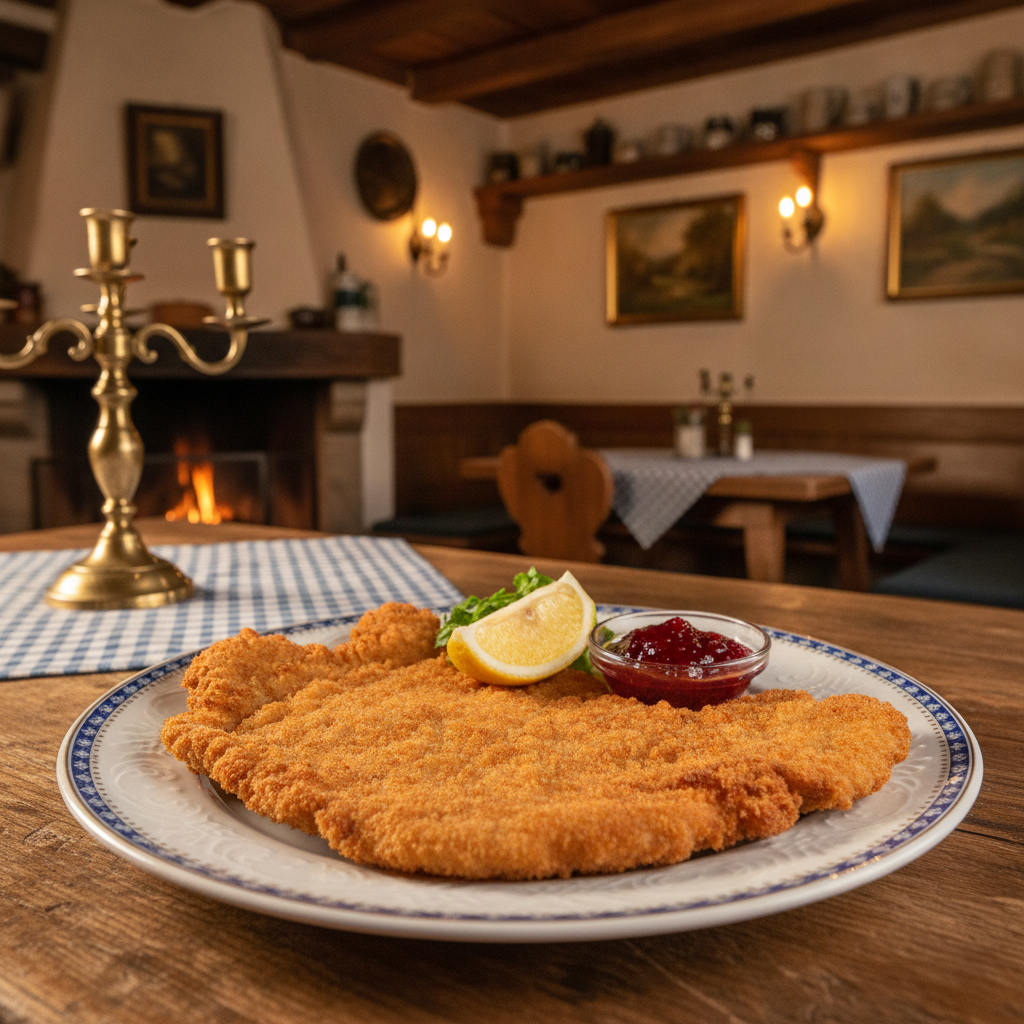
Austria, a country where the grandeur of the Alps coexists with the tranquility of the Danube. The golden temptation that dominates their dining tables, Schnitzel, is more than just a dish; it's a symbol representing the life and culture of Austrians. From historic restaurants in Vienna to small rest stops in the foothills of the Alps, Schnitzel resonates everywhere like the heartbeat of Austria. On festive days, families gather to share Schnitzel, and when cherished guests arrive, Schnitzel is the first dish served to extend warm hospitality. Just as Kimchi Jjigae is a soul food for Koreans, Schnitzel offers comfort, joy, and pride to Austrians. Each bite of the tender meat within the crispy crust conveys the rich history and generous spirit of Austria. For travelers, Schnitzel is the first step to experiencing Austria with all five senses, and for locals, it's an unforgettable memory reminding them of unchanging tradition and the taste of love. A single piece of Schnitzel encapsulates the clear Alpine air, the gentle ripples of the Danube, and the glorious history of the Habsburg monarchy.
History and Origin
The history of Schnitzel is filled with intriguing stories that pique the curiosity of gourmands. Its origins can be traced back to the 12th century, when a dish called 'Cotoletta alla Milanese' was prepared in the Lombardy region of northern Italy, where meat was thinned and fried. This dish made its way to Austria in the mid-19th century when General Radetzky tasted it in Milan and introduced it to the Emperor. Gracing the tables of the Habsburg monarchy, Schnitzel rose to the ranks of aristocratic cuisine and gradually spread throughout Austria, gaining widespread popularity. 'Wiener Schnitzel,' in particular, established its authenticity in 1870 when Austrian law mandated the exclusive use of veal. Thus, Schnitzel became deeply rooted in the lives of Austrians, encompassing a history of war, peace, and cultural exchange, beyond merely being a dish. Over time, various variations emerged, such as 'Schweineschnitzel' made with pork, but the unique prestige of Wiener Schnitzel still stands at the pinnacle of Austrian gastronomy. Each bite of Schnitzel feels like a thousand years of history crumbling crisply, making it a living history textbook in itself.
Traditional Recipe
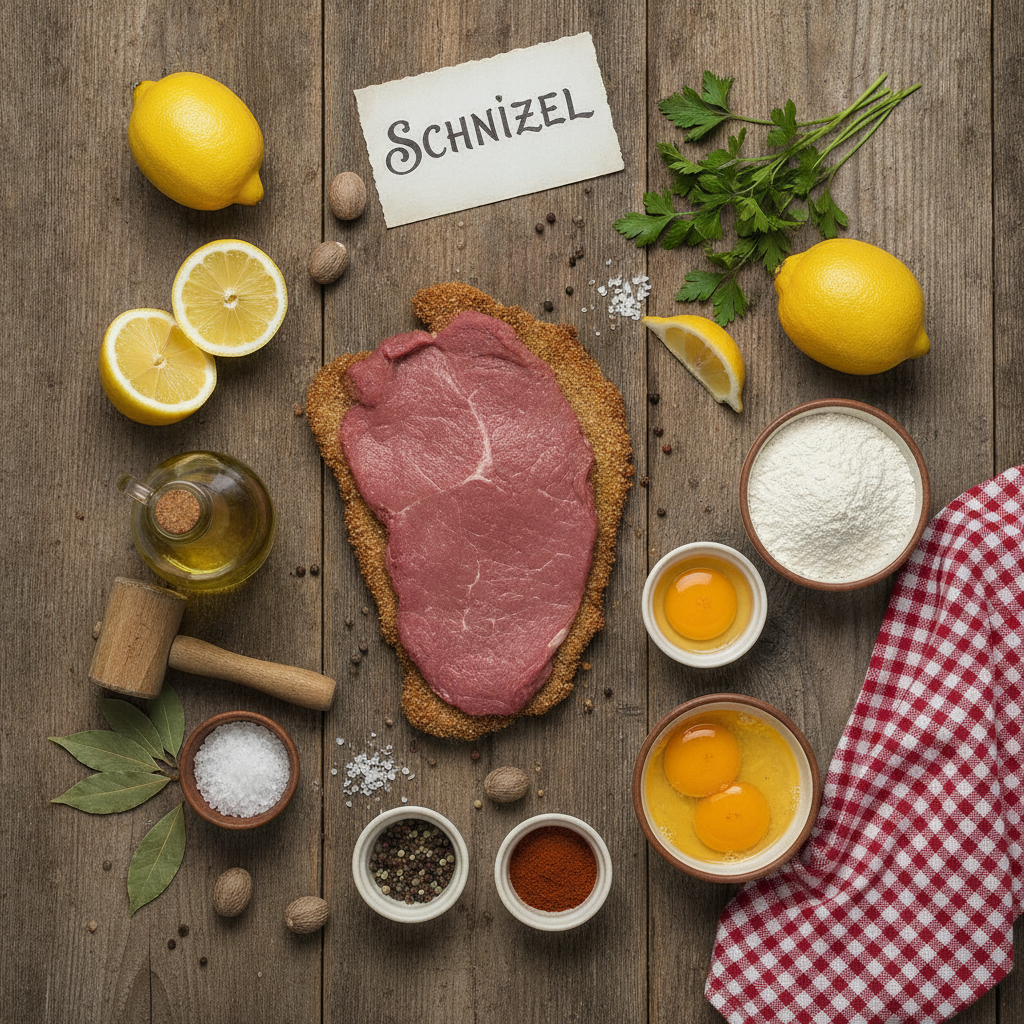
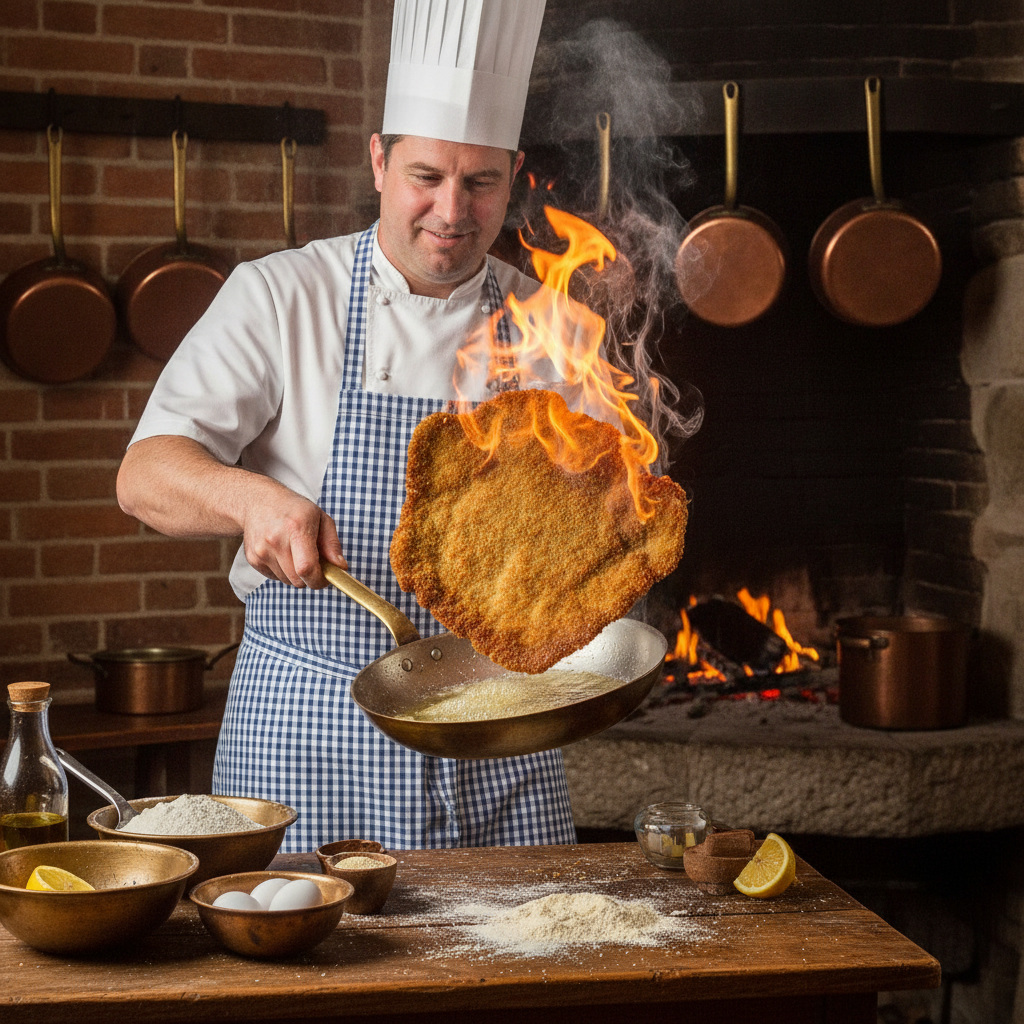
Authentic Wiener Schnitzel may seem simple, but it embodies the delicate craftsmanship and extensive experience of an artisan. The key lies in the selection of ingredients and the precision of the cooking process. First, it is crucial to carefully select the finest veal tenderloin (Kalbsnuss or Kalbsfilet) and flatten it thinly. The meat must be pounded to an even thickness of 2-4mm, requiring delicate skill to prevent tearing. Once flattened, the meat is lightly seasoned with salt and pepper, then coated in flour, egg wash, and, most importantly, breadcrumbs. The secret to a crispy texture is to use coarse, fresh breadcrumbs rather than finely ground ones. The breaded meat is then fried in hot clarified butter or vegetable oil. The oil temperature must be maintained consistently at 170-180 degrees Celsius, and the Schnitzel should be completely submerged in ample oil. It is finished when both sides turn golden brown and puff up crisply. Throughout this process, meticulous care is required to preserve the meat's juiciness and prevent the breading from absorbing too much oil. The freshly fried Schnitzel is briefly placed on a paper towel to drain excess oil, then immediately plated and served warm. The golden Schnitzel, born from delicate craftsmanship, can truly be called a work of art.
How to Enjoy Locally
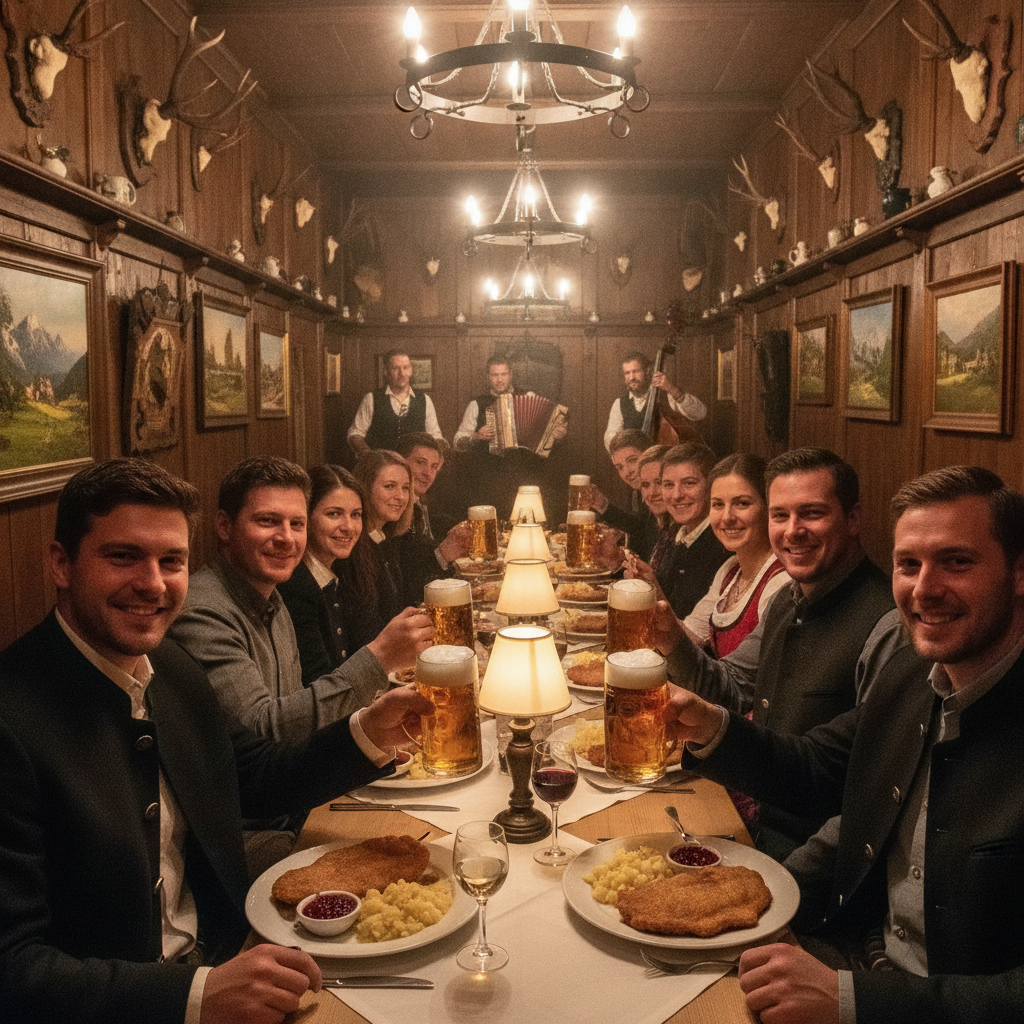
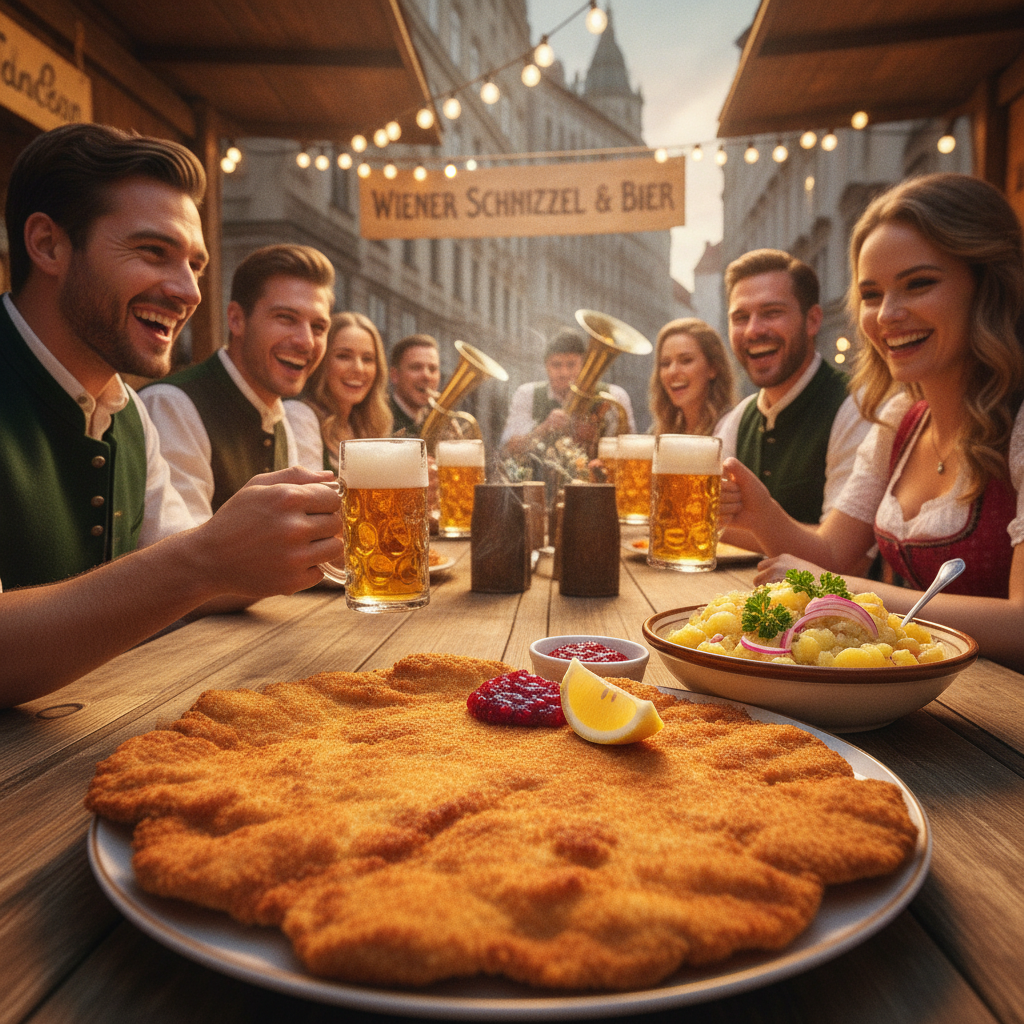
In Austria, enjoying Schnitzel is closely intertwined with their daily lives. The most traditional way is to serve it with a lemon wedge. Squeezing fresh lemon juice over the hot Schnitzel adds a refreshing acidity that cuts through the richness, offering a fuller and cleaner taste. Accompaniments typically include sweet and tart lingonberry jam (Preiselbeeren) or cranberry sauce, and potato salad (Erdäpfelsalat). The potato salad is characterized by its light and refreshing taste, made with a vinegar and oil base rather than mayonnaise. Additionally, buttered potatoes with chopped parsley (Petersilkartoffeln) or mashed potatoes (Kartoffelpüree) also make excellent pairings. Many Austrians enjoy Schnitzel with a refreshing Austrian beer or wine. White wine, in particular, is a perfect partner that enhances the flavor of Schnitzel. At home, families gather around, sharing a large plate of Schnitzel and engaging in warm conversations. In restaurants, a large Schnitzel fills the plate, with charmingly arranged side dishes adding to the visual delight. The moment you take a bite of Schnitzel and a sip of cold beer, you feel completely assimilated into the leisurely and abundant Austrian way of life. This truly is the pinnacle of the authentic Austrian culinary experience.
Taste Characteristics
The taste of Schnitzel is, in a word, 'ecstasy.' You can first perceive its crispiness with your eyes. The golden-brown crust gleams, with tiny air bubbles rising to the surface, resembling delicate crêpes. A gentle press with a fork produces a crisp 'snap,' and the sensation of the thin crust crumbling captures the auditory senses even before stimulating the taste buds. Upon entering the mouth, the crispness of the crust is felt first, followed by the soft and juicy veal, filling the mouth with its succulence. The meat, thinly pounded, offers a melt-in-your-mouth tenderness that barely requires chewing. The perfect harmony of 'crispy on the outside, juicy on the inside' is Schnitzel's greatest charm. The subtle flavor of the meat itself, combined with the savory richness of the crust, creates a deep and complex taste. When a squeeze of lemon juice is added, it cuts through any richness, leaving a clean finish and making you anticipate the next bite. The sweet and sour taste of lingonberry jam creates a unique balance of flavors amidst the savory notes, awakening the palate. Schnitzel is more than just a delicious dish; it offers a special experience that satisfies all five senses. A single piece of Schnitzel perfectly recreates Austria's rich dining table with its golden crust, crisp sound, tender juiciness, and refreshing lemon zest.
Homemade Schnitzel Tips
While authentic Schnitzel can be somewhat complex, you can certainly make a delicious homemade version. Instead of veal, you can use thinly pounded pork loin or tenderloin. After patting the meat dry with paper towels, place it between two sheets of plastic wrap and pound it to a thickness of 2-3mm using a meat mallet or an empty bottle. Be careful not to tear the meat. Season the thinly pounded meat with salt and pepper, then coat it in flour, egg wash, and breadcrumbs in that order. For the breadcrumbs, using freshly grated store-bought bread will yield a fresher and crispier texture. Heat a generous amount of cooking oil in a pan to 170-180 degrees Celsius, then fry the breaded meat until golden brown on both sides. Be careful not to let the oil temperature get too low, as this can cause the Schnitzel to absorb too much oil and become soggy. Once fried, place the Schnitzel on a paper towel to drain excess oil, then serve it warm on a plate with lemon wedges and lingonberry jam or cranberry sauce. As an alternative to potato salad, you can serve simple boiled potatoes mashed and sautéed in parsley butter, or a fresh green salad. Making Schnitzel at home will be a wonderful opportunity to experience the taste of Austria with your family and create special memories. Enjoy the pleasure of creating your own Schnitzel recipe!
Looking for a place nearby? Search “슈니첼” on Naver Map.