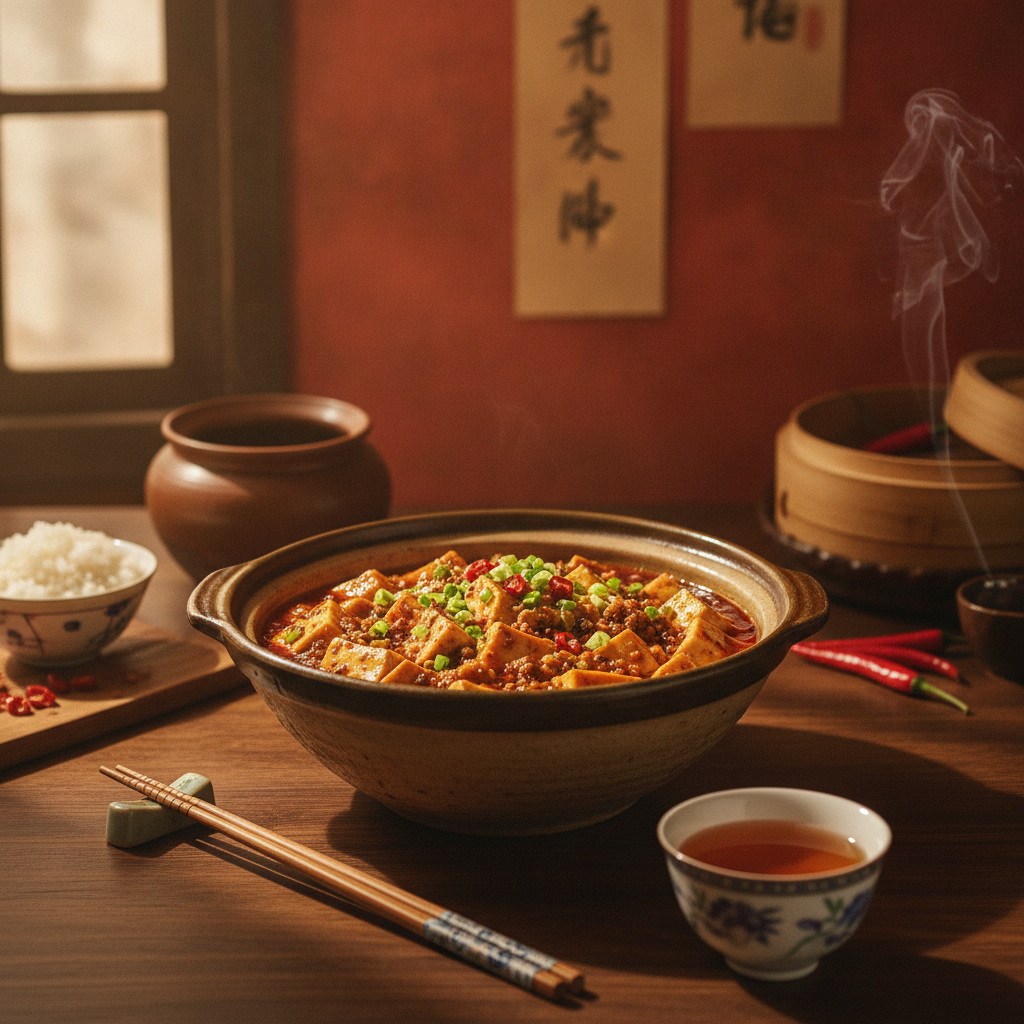
China and Mapo Tofu: The Fiery Heart of Life
Traveling across the vast land of China, you encounter dishes that perfectly encapsulate the climate and lives of the people in each region. Among them, the name Sichuan (四川) invariably brings to mind images of hot and intense flavors. At the heart of this is Mapo Tofu (麻婆豆腐). Mapo Tofu is more than just a dish to fill your stomach; it's a vessel that holds the perseverance and passion, as well as the joys and sorrows, of the Sichuan people. The soft tofu pieces gently swaying in red chili oil resemble the misty mountains and fertile plains of Sichuan, while the numbing (麻) and spicy (辣) sensations on the tongue seem to represent the historical turbulences they've endured and their unwavering resilience. This dish holds the status of a beloved "national side dish" for Chinese people, from humble family tables to grand banquets, anytime and anywhere. Especially on cold winter days, a hot plate warms the body, strengthening family bonds and offering comfort and vitality to those who've had a difficult day. Mapo Tofu is more than just a taste; it's a living culture imbued with the daily lives, joys, and sorrows of the Chinese, symbolizing the pulsating energy of life, much like a fiery heart.
"Mapo Tofu is the soul of Sichuan, an indispensable fiery heart on the Chinese dining table."
History and Origin: A Legend Born from a Grandmother's Touch
The history of Mapo Tofu dates back to the Tongzhi Emperor's era in the Qing Dynasty, the 19th century. Near Wanfu Bridge in Beijiao, Chengdu, Sichuan Province, there was a small restaurant named 'Chen Xingsheng' (陳興盛). The owner of this restaurant was an old woman with pockmarks on her face, known as 'Chen Mapo' (陳麻婆), meaning "Old Woman Chen with Pockmarks." At that time, it was a popular spot for porters who transported oil in the vicinity. They would bring fresh tofu and inexpensive beef to Chen Mapo, asking her to prepare a spicy and warm dish. Chen Mapo skillfully stir-fried the tofu, beef, and unique Sichuan spices, creating a dish with an exquisite flavor. Word of this dish spread among the porters, and people began to call it 'Chen Mapo Tofu' (陳麻婆豆腐), meaning "Tofu made by Old Woman Chen with Pockmarks." Over time, the 'Chen' surname was dropped, and it became widely known as 'Mapo Tofu' as we know it today. This story is even more special because a simple dish, born from the hands of an ordinary grandmother, became a legend and is now loved by people worldwide. Mapo Tofu can be described as a great legacy created by the harmony of simple ingredients, a warm heart, and a numbing flavor.
Traditional Recipe: A Harmonious Feast of Seven Flavors
The traditional Mapo Tofu recipe goes beyond the prejudice of merely being spicy and salty, aiming for a perfect harmony of 'Seven Flavors' (七味). These seven flavors are 'Ma (麻, numbing)', 'La (辣, spicy)', 'Tang (燙, hot)', 'Xian (鮮, fresh)', 'Nen (嫩, tender)', 'Xiang (香, aromatic)', and 'Su (酥, crispy)'. Only when these seven flavors blend together can one truly experience the authentic taste of Mapo Tofu. Key ingredients include soft silken tofu or soft tofu, minced beef (or pork), Sichuan chili peppers (strong aroma and spicy), huajiao (花椒, Sichuan peppercorns that provide the numbing sensation), doubanjiang (豆瓣醬, fermented broad bean paste with chili), chili oil, garlic, ginger, and green onions. The cooking process is as follows: First, cut the tofu into bite-sized pieces and briefly blanch them in salted water to remove excess moisture and add firmness. Heat oil in a pan and stir-fry the minced beef until crispy to bring out its savory flavor. Add minced garlic, ginger, and Sichuan chilies to infuse their aroma, then add doubanjiang and stir-fry until it turns reddish and develops a deep flavor. Next, pour in broth and add the blanched tofu, simmering gently. Finally, sprinkle a generous amount of huajiao powder, add a slurry of starch to thicken, drizzle with chili oil for sheen, and garnish with chopped green onions. Throughout this process, the freshness of ingredients, precise heat control, and the delicate use of each spice are crucial factors in determining the taste of Mapo Tofu.
How Locals Enjoy It: A Rice Thief, and a Companion in Life
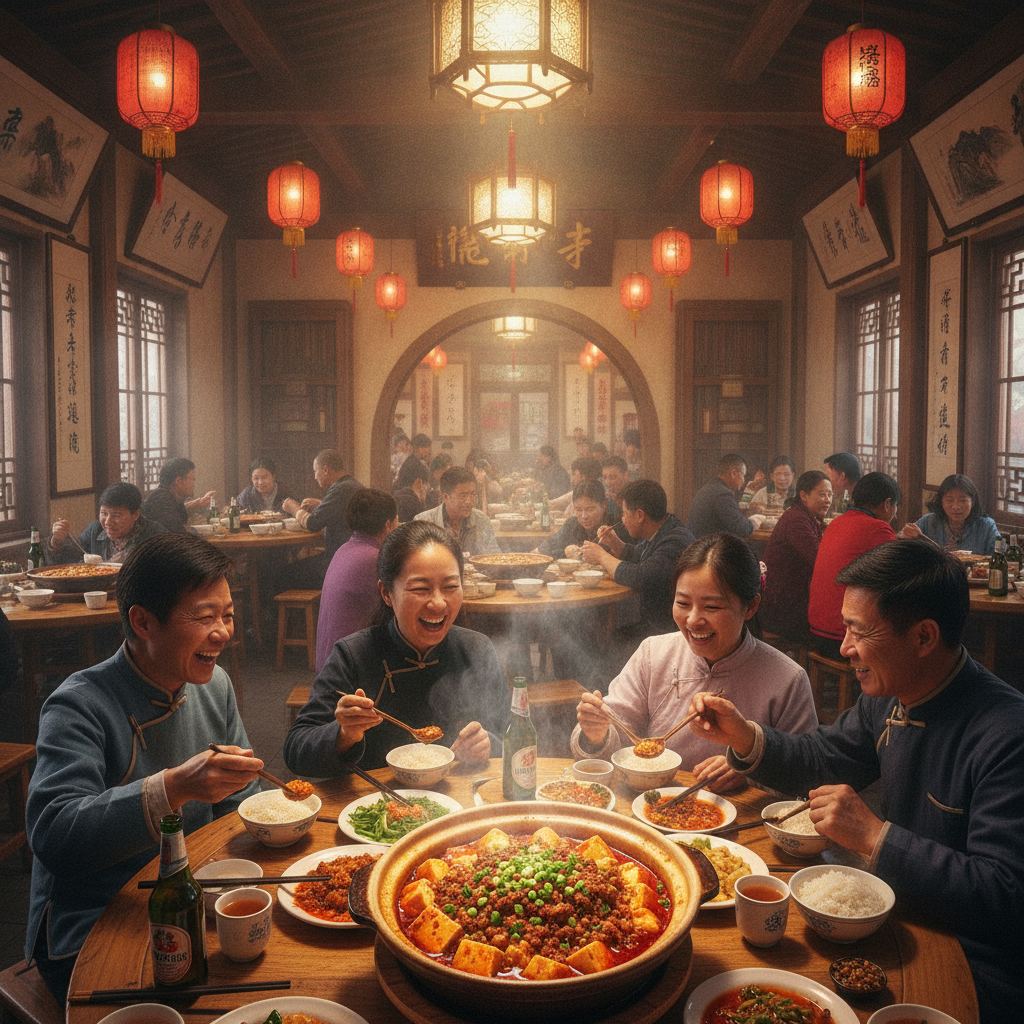
In Sichuan, Mapo Tofu is not just a dish; it's the 'star' and 'rice thief' of the dining table. Locals enjoy Mapo Tofu with hot white rice. A generous spoonful of red and numbing Mapo Tofu placed on steaming rice allows the spicy and numbing sauce to permeate every grain, creating a fantastic harmony. One bite brings an exhilarating sensation that spreads throughout the body, causing beads of sweat to form, yet the subsequent refreshing feeling and deep umami make it impossible to stop eating. As accompanying dishes, locals typically order plain and refreshing egg drop soup or stir-fried vegetables to balance the intense flavor of Mapo Tofu and enjoy a well-rounded meal. They might also drink sweet Chinese desserts or cool tea to soothe the characteristic spiciness of Sichuan cuisine. For those who enjoy alcohol, the numbing Mapo Tofu also serves as an excellent appetizer. Friends gathered around a table, sharing stories over Mapo Tofu with baijiu (白酒) or beer, is a common sight in Sichuan. For locals, Mapo Tofu is more than just filling their stomachs; it's an important medium for connecting with people, gaining vitality in life, and sharing the fiery emotions of Sichuan, like a true companion.
Flavor Characteristics: A Fiery Aesthetic Experienced Through the Senses
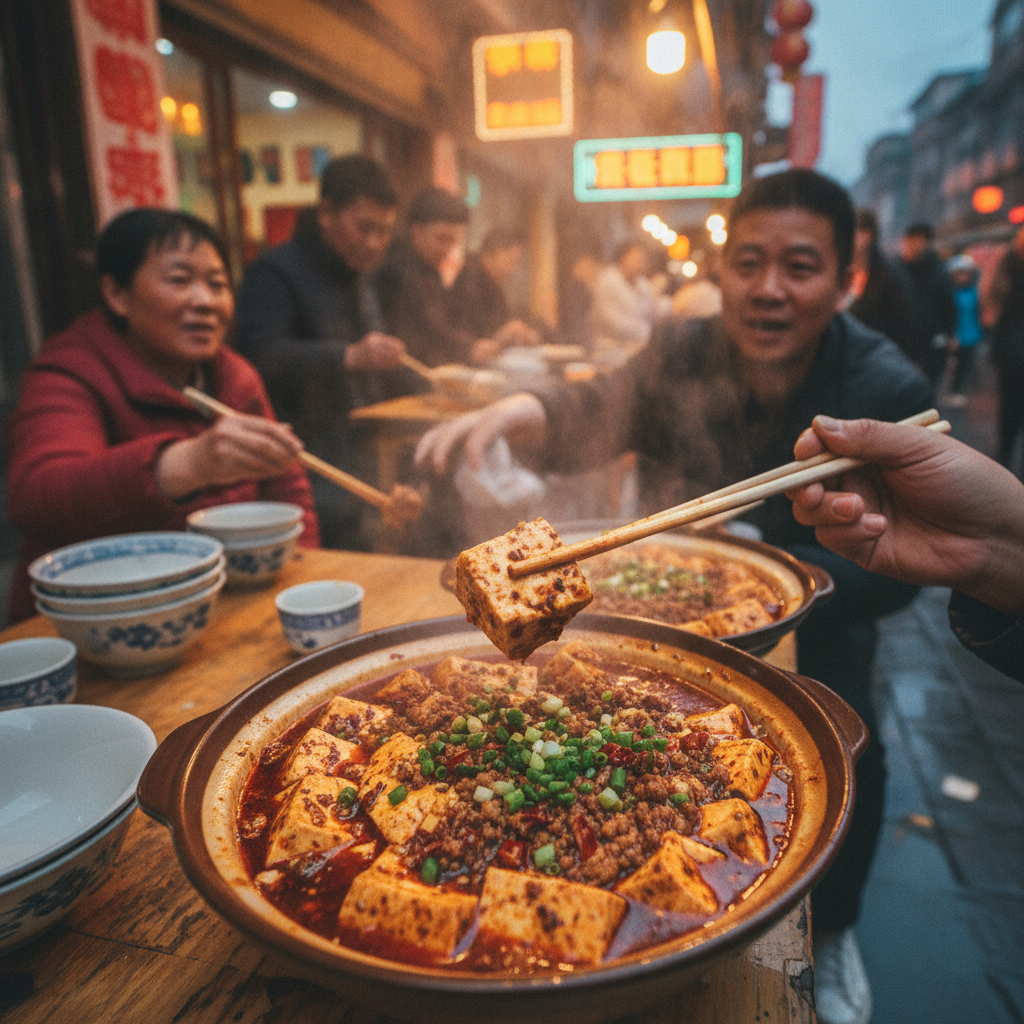
It's difficult to describe the taste of Mapo Tofu in a single word, as it's a complex experience that stimulates all the senses. Visually, the red chili oil coats the tofu pieces, topped with green onions, presenting a vibrant and appetizing color. From the steaming bowl, the nose catches a captivating aroma, a blend of huajiao's unique refreshing yet pungent scent mixed with the savory and spicy fragrance of doubanjiang. The moment a spoonful enters the mouth, the first sensation is the incredibly soft texture of the tofu. It melts like cotton candy, allowing the spicy sauce to permeate and tickle the tongue. Then comes the 'Ma' sensation from huajiao, an intense numbing feeling that seems to paralyze the tongue. This numbing is not just pain, but an alluring stimulus that awakens the taste buds and whets the appetite. Following this, the 'La' spiciness of the chili explodes, filling the mouth with a fiery warmth. Yet, amidst all this intensity, the deep umami of doubanjiang, the savory richness of the minced meat, and the fragrant notes of garlic and ginger create a balanced and complex layered flavor. Finally, the warmth traveling down the throat invigorates the body, and the lingering numbing and spicy aftertaste in the mouth after the meal naturally tempts one to another spoonful. Mapo Tofu is not just about spiciness; it's a perfect aesthetic experience combining warmth, numbing, spiciness, tenderness, savoriness, and fragrance.
Tasting in Korea: Authentic Mapo Tofu Restaurants in Seoul/Gyeonggi Area
For those who can't forget the fiery taste of Sichuan, or who haven't experienced it yet, here are some places in Seoul/Gyeonggi where you can savor the essence of authentic Mapo Tofu. These establishments are renowned for their efforts to replicate the local flavors, so you won't regret visiting.
1. Laohuagongfu (라화쿵부)
Laohuagongfu is famous for its Malatang, but their Mapo Tofu is also highly praised for authentically reproducing the taste of Sichuan. The rich doubanjiang, the numbing sensation of huajiao, and the aroma of chili oil blend harmoniously, making it an excellent 'rice thief'. The soft tofu and minced meat also offer a superb texture. With many branches across Seoul, it's easily accessible.
2. Sacheon Jip (사천집)
Located in Mangwon-dong, Sacheon Jip is a relatively new popular restaurant that offers dishes based on a deep understanding of Sichuan cuisine. Their Mapo Tofu aims for a deep and subtle spiciness and numbing sensation rather than being overtly stimulating. With carefully selected ingredients and meticulous preparation, it boasts a taste level that even locals would approve of. It's particularly well-balanced for eating with rice.
3. Pabula (파불라) in Cheongdam-dong
If you're looking for an authentic Sichuan dining experience in a more upscale atmosphere, I recommend Pabula in Cheongdam-dong. Here, a Sichuan-born chef personally prepares the dishes, delicately replicating local flavors. Their Mapo Tofu is also exquisite, with a deep flavor and a clean finish. It's also great for enjoying as part of a course meal with other Sichuan dishes.
"Even in the heart of Seoul, there are places where you can feel the fiery heart of Sichuan. Be brave and embark on a journey into a new world of taste."
Making it at Home: Tips for Your Own Mapo Tofu Recipe
While it's not easy to perfectly replicate the taste of authentic Mapo Tofu at home, with a few tips, you can certainly create a satisfying 'homemade Mapo Tofu'. The key lies in good ingredients and bold use of spices.
Ingredients to prepare:
- Tofu (silken tofu or soft tofu, even firm tofu for stew is fine)
- Minced pork (beef is good too, but pork is richer)
- Doubanjiang (the key ingredient! Use good quality doubanjiang)
- Huajiao (Sichuan peppercorns, both whole and ground)
- Sichuan chili peppers (dried form, easily found in supermarkets)
- Minced garlic, minced ginger, green onions
- Chili oil (store-bought is fine, but homemade offers better flavor)
- Cooking oil, soy sauce, sugar, cornstarch slurry, chicken stock (or broth)