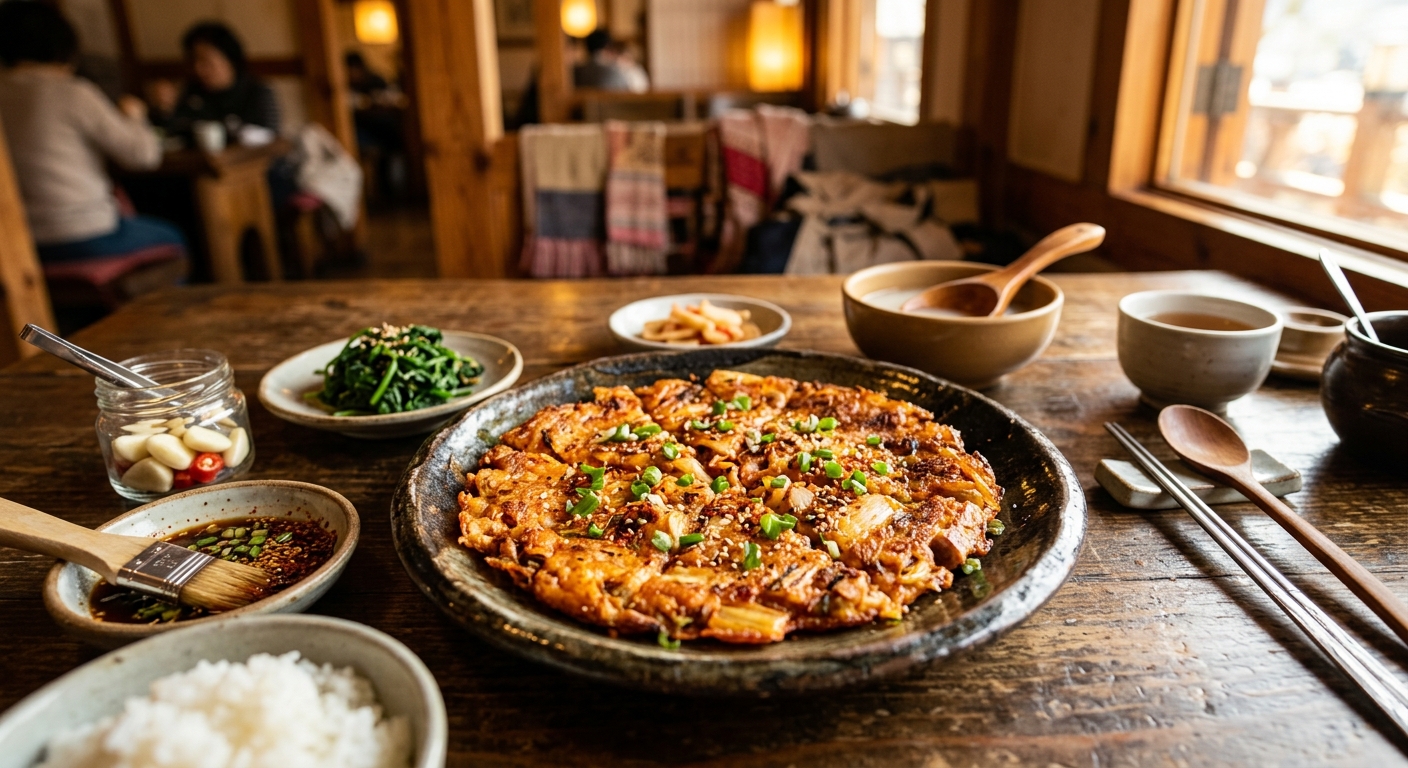
The Sound of Rain, the Crispy-Chewy Kimchi-Jeon: An In-Depth Guide
1. History and Origin of Kimchi-Jeon
Kimchi-Jeon is more than just a delicious pancake; it embodies the life and emotions of the Korean people. While its exact origins are hard to pinpoint, forms of jeon (pancakes) made from grains existed even before wheat flour became a staple. Particularly, after wheat flour became available as a relief crop following the Imjin War, various jeon dishes began to develop. As spicy and refreshing kimchi became a common sight on the tables of ordinary people, it's presumed that kimchi-jeon naturally emerged as a way to utilize kimchi.
Kimchi-Jeon is a representative dish that showcases the wisdom and frugality of Koreans. It was a delicious way to revive old kimchi, especially sour kimchi that was difficult to eat plain, rather than discarding it. It truly reflects the ancestral way of life, striving for flavor and nutrition even with limited ingredients. The sizzling sound of kimchi-jeon being cooked on a rainy day, accompanied by the sound of rain, feels especially comforting, perhaps due to this warm historical context. It is a dish that encapsulates the joys and sorrows of a nation that has overcome difficult times together, indeed occupying a significant page in Korean food culture. Unlike the elaborate jeon served at holidays or feasts, kimchi-jeon is synonymous with the most Korean 'soul food,' offering simple yet certain happiness in everyday life.
Furthermore, Kimchi-Jeon has evolved and developed with the times. In the past, it was simply made with kimchi and wheat flour, but as the economy developed and ingredients became abundant, it evolved to include various ingredients like pork, squid, and tuna, creating richer flavors. This demonstrates that Kimchi-Jeon is not a fixed recipe but an open dish that can be freely varied according to each household's refrigerator situation and preferences. Beyond a simple pancake, Kimchi-Jeon has shared the joys and sorrows of Korean life and will continue to grace our tables for a long time, carrying on its significance.
2. Authentic Recipe
The charm of Kimchi-Jeon lies in its ability to deliver deep flavors without complex ingredients or techniques. Here, I introduce a recipe for authentic Kimchi-Jeon using the most basic ingredients.
Ingredients List:
- 200g well-fermented aged kimchi (the sourer, the better)
- 1/2 cup (approx. 100ml) kimchi juice
- 1 cup (approx. 100g) Korean pancake mix (buchim-garu)
- 1/2 cup (approx. 50g) frying powder (twigim-garu)
- 1 cup (approx. 200ml) cold water
- 1/4 onion (finely chopped or thinly sliced)
- 1/2 green onion (sliced)
- 1 Cheongyang pepper (optional, sliced)
- 1/2 teaspoon sugar (to neutralize kimchi's sourness and enhance umami)
- Generous amount of cooking oil
Detailed Cooking Steps:
- Prepare Kimchi: Remove the seasoning from the aged kimchi, rinse lightly with water, squeeze out excess water, and then chop finely. It's better to chop it so that some texture remains, rather than mincing it too finely.
- Make Batter: In a large bowl, combine pancake mix, frying powder, and sugar. Gradually add kimchi juice and cold water, mixing well with a whisk. Adjust consistency so it flows smoothly, not too thick. Adding frying powder helps achieve a crispier texture.
- Combine Ingredients: Add the prepared kimchi, chopped onion, sliced green onion, and Cheongyang pepper (optional) to the batter and mix well. Be careful not to overmix, as this can develop gluten and make the jeon tough.
- Frying: Heat a frying pan over medium heat and add a generous amount of cooking oil. Once the pan is sufficiently hot, ladle the batter onto the pan and spread it thinly. Frying too thick will prevent it from cooking through and reduce crispiness, so spreading it thinly is crucial.
- Flip: When the edges turn golden brown and the top of the batter is slightly cooked, carefully flip it with a spatula. Adding a little more oil to the pan at this point will help it fry even crispier.
- Finish: Continue flipping until both sides are golden brown and crispy. Control the heat to prevent burning, and once thoroughly cooked, transfer to a plate and enjoy immediately while warm.
Chef's Tip: Instead of frying Kimchi-Jeon quickly over high heat, cook it patiently over medium heat until it's crispy on the outside and moist on the inside. Patience makes delicious Kimchi-Jeon!
3. Flavor Characteristics
A freshly cooked slice of Kimchi-Jeon is a feast for the senses. First, the savory aroma of oil sizzling on a hot pan, mingling with the spicy and sour fragrance of kimchi, tickles the nose. This aroma evokes childhood memories of mothers frying kimchi-jeon on rainy days, bringing forth warm and comforting feelings.
The first sensation upon taking a bite is the 'crispiness' of the outer layer. This crunchy texture, created as the thin batter turns golden in hot oil, defines the first impression of Kimchi-Jeon. Following this is the 'chewiness' of the interior. The perfect ratio of pancake mix and frying powder creates this delightful chewiness, adding depth to the dish beyond a simple pancake. This perfect harmony of crispiness and chewiness