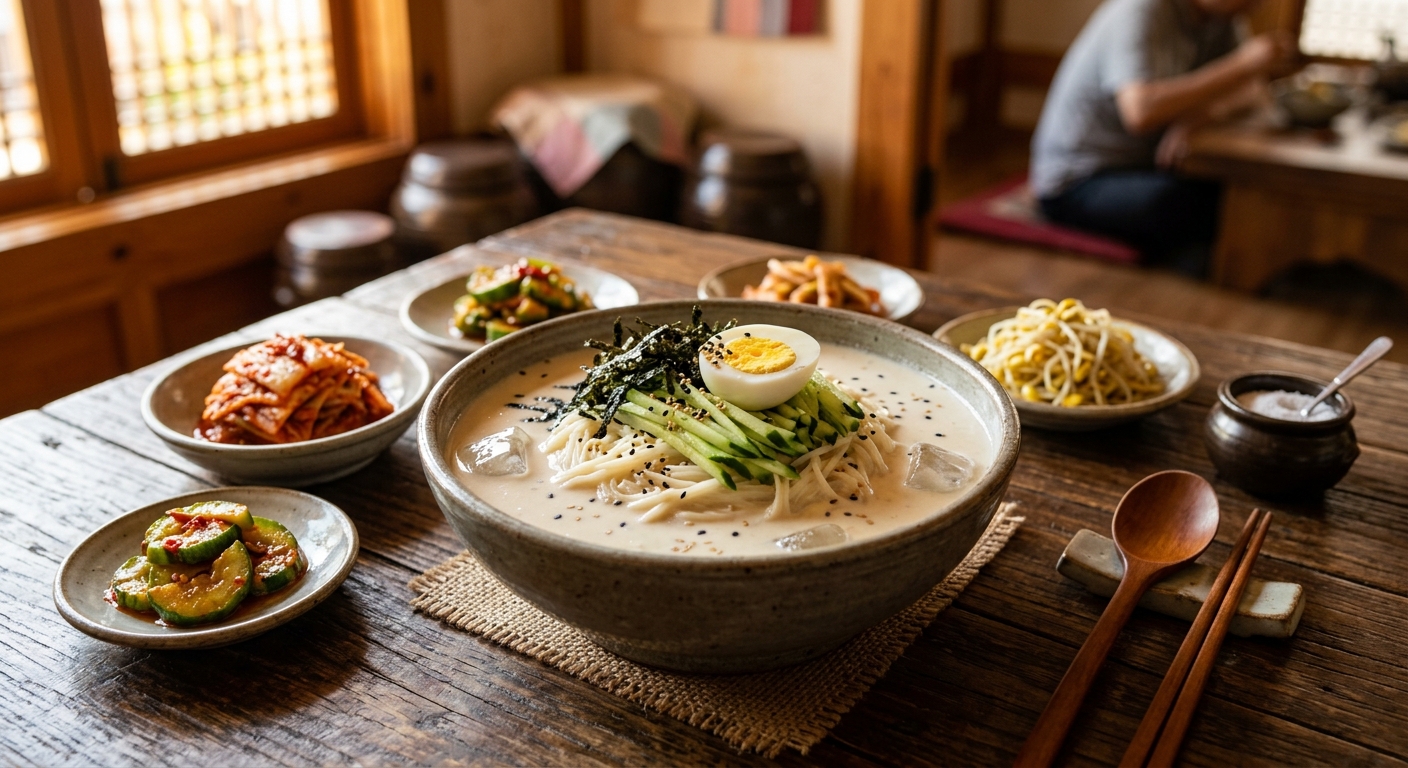
1. History and Cultural Heritage of Kongguksu: Wisdom and Comfort of Korean Summer
When the sweltering heat engulfs the Korean peninsula, traditional culinary wisdom turns to the purest gifts of nature for nourishment and restorative vitality. Kongguksu is a quintessential traditional Korean summer dish consisting of fresh noodles immersed in a chilled, velvety broth made from finely ground, freshly boiled soybeans (Baektae). Revered historically as the "beef from the field," soybeans provided essential plant proteins, minerals, and sustenance to the common people across centuries when meat and white rice were precious luxuries.
Historical documentation of this beloved dish can be traced back to 『Siuijeonseo (是議全書)』, an influential late 19th-century Joseon Dynasty cookbook. The text records variations of ground sesame and soybean noodles, demonstrating that Kongguksu was already widely enjoyed as both a noble delicacy and a revitalizing staple for commoners during the peak of summer. Long before modern refrigeration existed, our ancestors harnessed natural cooling techniques—drawing deep, cold well water or fetching winter-harvested ice from royal storehouses (Binggo)—and seasoning the soup with mineral-rich sea salt to replenish lost electrolytes.
In Korean food culture, Kongguksu represents far more than seasonal sustenance; it is an evocative symbol of rural nostalgia, communal bonding, and agrarian harmony. Gathering on the wooden veranda (Toetmaru) after exhaustive farm labor in the sixth and seventh lunar months to share a bowl of frosty, creamy soybean soup captures the warm, welcoming spirit of Korean hospitality. It stands as a timeless testament to the philosophical core of Korean culinary art: celebrating the unadorned, pure essence of wholesome ingredients.
2. Authentic Kongguksu Recipe: Precision, Purity, and Culinary Devotion
An exceptional bowl of Kongguksu demands patience, sensory awareness, and strict mastery of temperature. Here is the authentic master recipe designed to eliminate raw legume bitterness and maximize rich, nutty sweetness.
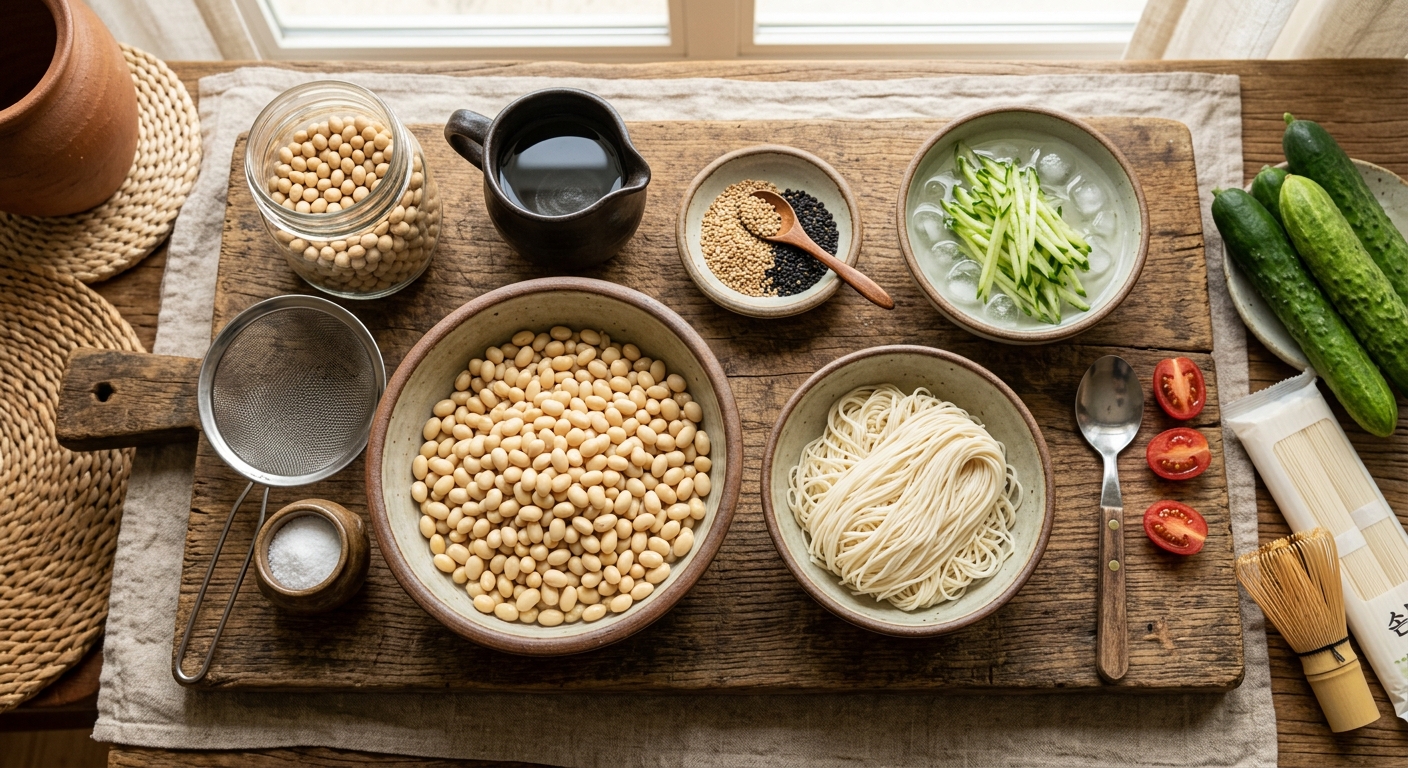
Ingredients (Serves 4)
- Soybean Soup Base: 300g dried white soybeans (Baektae), 2 tbsp toasted white sesame seeds, 2 tbsp toasted pine nuts or peeled roasted peanuts, 1.2–1.5L cold filtered water (for soaking and blending), fine Korean sea salt to taste.
- Noodles: 400g fresh Korean wheat noodles (Jungmyeon or Somyeon), boiling water, generous ice water bath.
- Garnishes: 1/2 Korean cucumber (finely julienned), 1/2 ripe tomato (cut into wedges), 2 hard-boiled eggs (halved), toasted sesame seeds for sprinkling, clean ice cubes (optional).
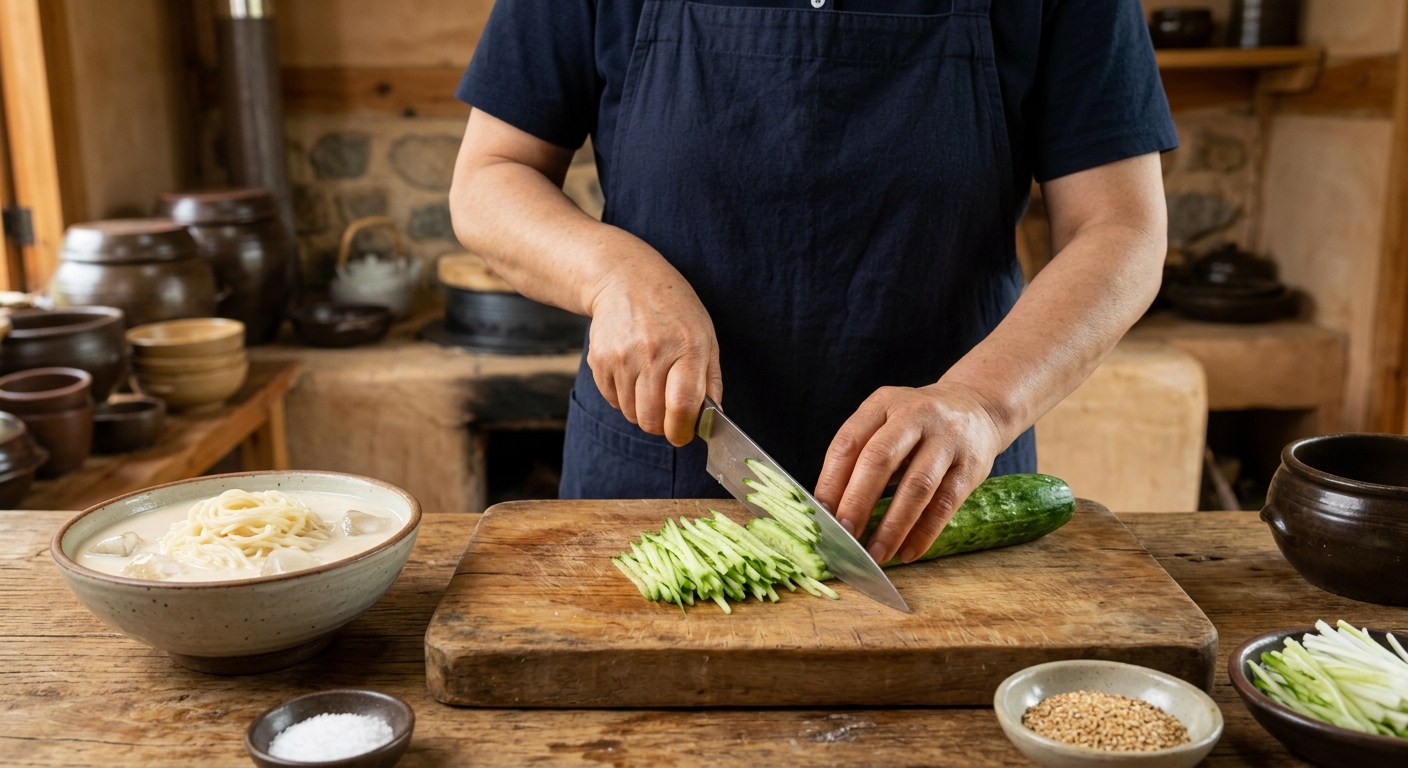
Step-by-Step Cooking Instructions
- Step 1 - Sorting & Soaking: Inspect the soybeans carefully, removing any discolored or split beans. Wash gently under cold water three to four times until the rinse water runs clear. Soak the beans in ample cold water for 5 to 6 hours during summer (or 8 to 10 hours in cooler weather) until they swell uniformly and yield softly when pressed.
- Step 2 - The Critical Boiling Stage: Transfer the soaked beans to a heavy-bottomed pot and submerge them with fresh water. Bring to a boil over high heat uncovered. As foam rises, skim it off immediately and lower heat to medium. Boil for precisely 7 to 8 minutes from the moment it starts bubbling vigorously. Under-boiling causes an unpleasant raw bean odor, while over-boiling results in a fermented paste scent. The bean should taste sweet, creamy, and nutty without any raw crunch.
- Step 3 - Cooling & De-skinning: Immediately drain the hot beans and plunge them into an ice-cold water bath to halt cooking. Rub the beans gently between your palms underwater; the translucent skins will detach and float to the surface. Skim off and discard all skins to ensure an exquisitely silk-smooth emulsion.
- Step 4 - Master Blending & Chilling: Place the de-skinned beans, toasted nuts, and toasted sesame seeds into a high-powered blender. Add cold filtered water (approx. 2.5 to 3 times the volume of the beans). Blend on high for at least 2 to 3 minutes until completely emulsified and frothy. For a pristine restaurant-grade texture, pass through a fine sieve, then refrigerate the soup in an airtight container for at least 2 hours.
- Step 5 - Boiling the Noodles: In a large pot of boiling water, cook the noodles according to package instructions (approx. 3.5 to 4 minutes), adding a splash of cold water whenever the water boils over to shock the gluten. Immediately plunge the cooked noodles into ice-cold water, vigorously washing away excess starch until water is clear. Drain thoroughly and twist into neat portions.
- Step 6 - Plating & Assembly: Mound the chilled noodle nests into chilled deep ceramic or brass bowls. Gently pour the chilled, thick soybean broth around the noodles. Crown with julienned cucumber, tomato slices, half a boiled egg, and a light dusting of crushed toasted sesame seeds.
3. Sensory Profile and Flavor Aesthetics: Harmony in Pure White
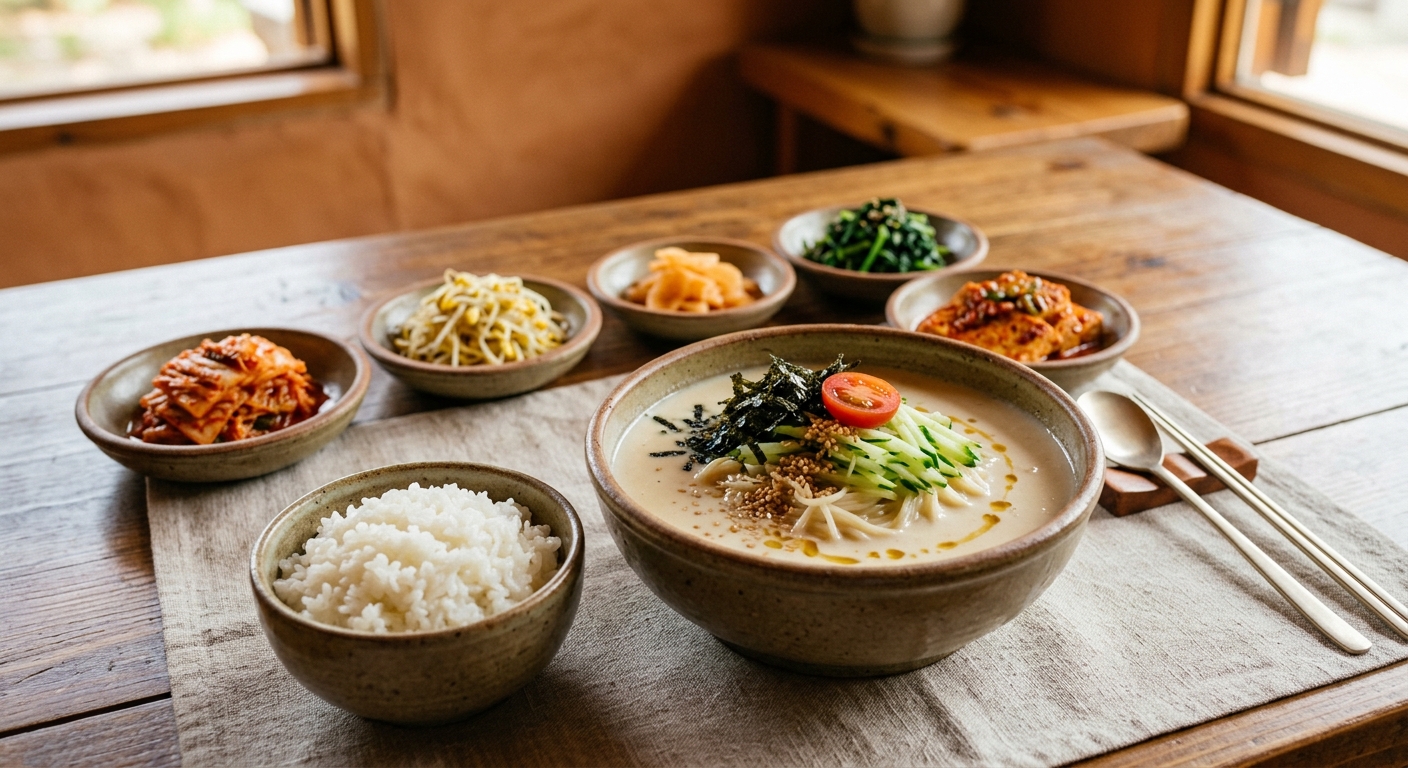
Approaching a freshly prepared bowl of Kongguksu offers an immediate visual tranquility. The pure, ivory-white broth resembles freshly drawn milk, calm and pristine, creating an immaculate canvas that elevates the vibrant green of julienned cucumber and the crimson red of ripe tomato. Leaning closer, one is greeted by the gentle, warm aroma of roasted grains interwoven with the clean, natural sweetness of slow-cooked legumes.
On the palate, the broth delivers a remarkably dense, velvety mouthfeel. Micro-milled soybean particles glide gracefully across the tongue, unveiling an initial burst of rich, buttery nuttiness followed by a lingering, refreshing botanical sweetness. Paired with springy, elastic noodles that have been rigorously shocked in ice water, every bite yields a satisfying contrast between chewiness and creamy indulgence.
The crisp, refreshing crunch of cucumber cuts through the unctuous density of the soy broth, resetting the palate with each mouthful. When a subtle pinch of mineral sea salt (or a teaspoon of cane sugar, celebrated in the Jeolla province tradition) is introduced, it acts as an amplifier, awakening the deep, savory umami dormant within the beans. Free from artificial flavorings or fiery spices, Kongguksu embodies the supreme elegance of Korean minimalist gastronomy.
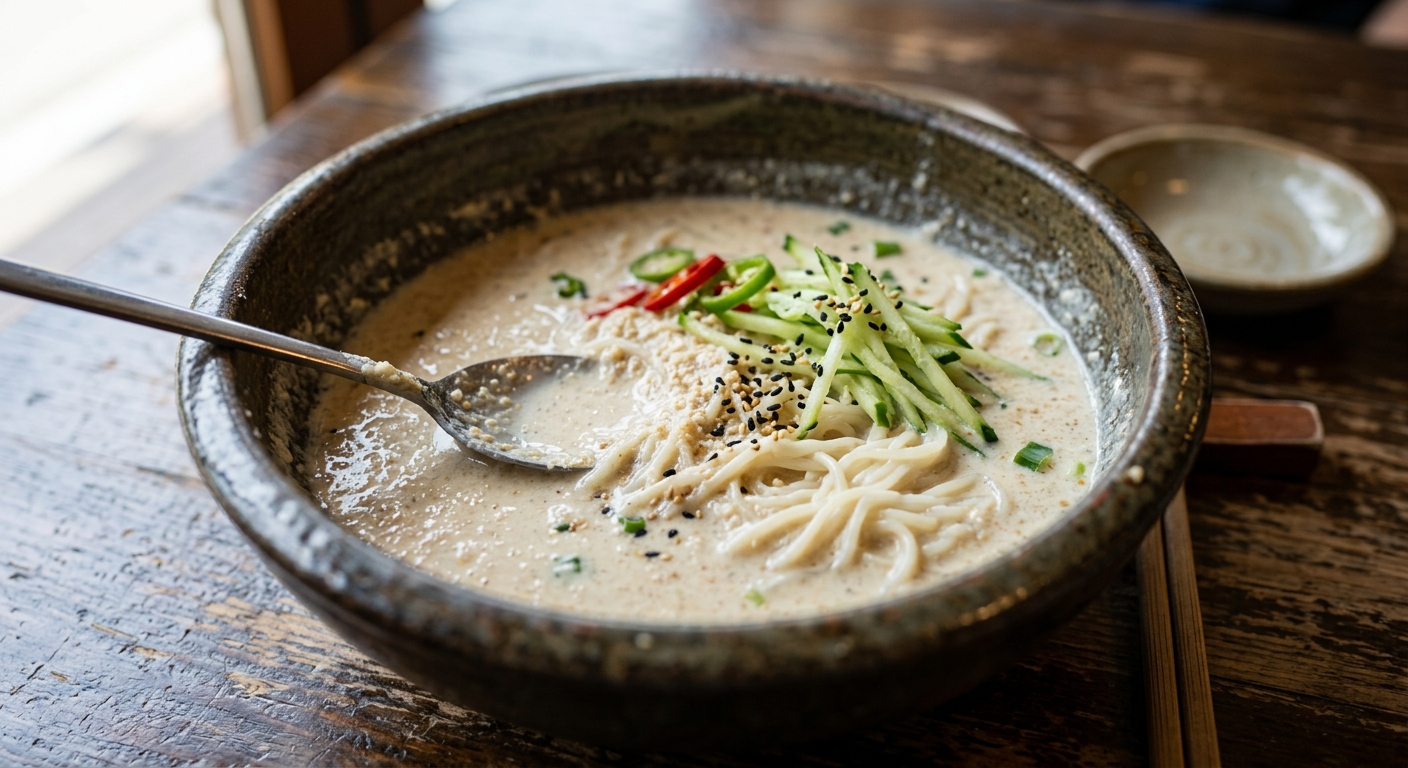
4. Professional Secrets and Foolproof Cooking Tips
"The soul of Kongguksu rests upon two pillars: split-second precision in boiling the legume, and unwavering temperature control."
Master these professional chef secrets to guarantee flawless results at home:
- Mastering the Open-Pot Boil: Always boil the soaked beans uncovered. This allows the volatile lipoxygenase compounds responsible for raw legume odors to evaporate freely into the air. Setting a precise kitchen timer and shocking the boiled beans in ice water immediately ensures you capture the peak nutty profile.
- The Secret Nut Blend: While pure soybean broth is traditional, incorporating 10% toasted pine nuts, roasted peanuts, or pre-soaked raw cashews introduces healthy fats that stabilize the water-bean emulsion, resulting in an ultra-creamy, cream-like texture without dairy.
- Ice Dilution Management: Adding excessive ice directly into the serving bowl will melt quickly and dilute the delicate richness of your broth. Instead, chill the broth in the coldest part of your refrigerator or freezer until soft slush forms before pouring it over the drained noodles.
- Season Only at the Table: Never add salt to the bulk batch of soybean broth ahead of time. Saline ions trigger protein coagulation and cause the emulsion to separate and spoil prematurely. Always present fine sea salt and sugar separately at the table.
5. Modern Variations and Fusion Interpretations
While honoring classical traditions, contemporary Korean cuisine has embraced exciting variations of Kongguksu to suit diverse modern palates and fast-paced lifestyles.
1) Black Bean & Black Sesame Kongguksu (Heukimja Seoritae)
Utilizing black soybeans (Seoritae) with their skins intact along with heavily roasted black sesame seeds (Heukimja), this version yields an alluring charcoal-gray broth. Packed with powerful anthocyanins and deep, earthy undertones, it is traditionally paired with handmade buckwheat (Memil) noodles for a rustic, antioxidant-rich power bowl.
2) 10-Minute Tofu & Soy Milk Quick Kongguksu
For those craving instant comfort without hours of soaking and boiling, blend one block of fresh silken or firm Korean tofu (300g), 300ml of unsweetened soy milk, 2 tablespoons of toasted sesame seeds, 1 tablespoon of smooth natural peanut butter, and a half-teaspoon of salt. The peanut butter replicates the boiled bean lipid profile with breathtaking fidelity.
3) Avocado Basil Kongguksu Fusion
A sophisticated East-meets-West interpretation blending chilled soybean broth with half a ripe avocado, fresh sweet basil leaves, and cold-pressed extra virgin olive oil. Poured over al dente capellini (angel hair) pasta and garnished with balsamic-marinated cherry tomatoes, it transforms into an upscale vegan culinary centerpiece.
6. Accompaniments, Pairings, and Table Setting
The understated elegance of Kongguksu shines brightest when complemented by intentional banchan (side dishes) and harmonious beverage pairings.
Essential Side Dishes
- Fresh Spicy Baechu Geotjeori (Fresh Cabbage Kimchi): The quintessential partner. Freshly salted Napa cabbage tossed in pungent red chili flakes, garlic, and fermented anchovy sauce provides a bright, fiery counterpoint that cuts through the rich, creamy soy broth.
- Yeolmu Mulkimchi (Young Summer Radish Water Kimchi): Tangy, naturally effervescent, and crisp, this chilled fermented water kimchi cleanses the palate between spoonfuls, ensuring every bite feels as revitalizing as the first.
- Gochu Doenjang Muchim (Crisp Peppers in Soybean Paste): Crunchy, non-spicy green peppers tossed with artisanal fermented soybean paste and toasted sesame oil celebrate the multifaceted wonders of soy culture on a single table.
Tableware and Beverage Pairings
Serve Kongguksu in traditional Korean bronzeware (Yugi) or thick white porcelain bowls. Bronzeware possesses exceptional thermal retention properties, keeping the noodle broth refreshingly chilled until the final drop is savored. To create a full feast, accompany the meal with freshly pan-fried Haemul Pajeon (Seafood Scallion Pancake), crisp Gamjajeon (Potato Pancake), or tender slices of Suyuk (Boiled Pork Belly).
For beverage pairing, avoid overpowering spirits. Instead, opt for a glass of artisanal, unpasteurized Premium Fresh Makgeolli (Korean Rice Wine) with natural sweetness and subtle carbonation, or a clean, refined Yakju (Clear Herbal Rice Wine). The gentle grain foundation of Korean traditional liquors harmonizes seamlessly with the velvety notes of the soybean soup, culminating in a deeply satisfying dining experience.