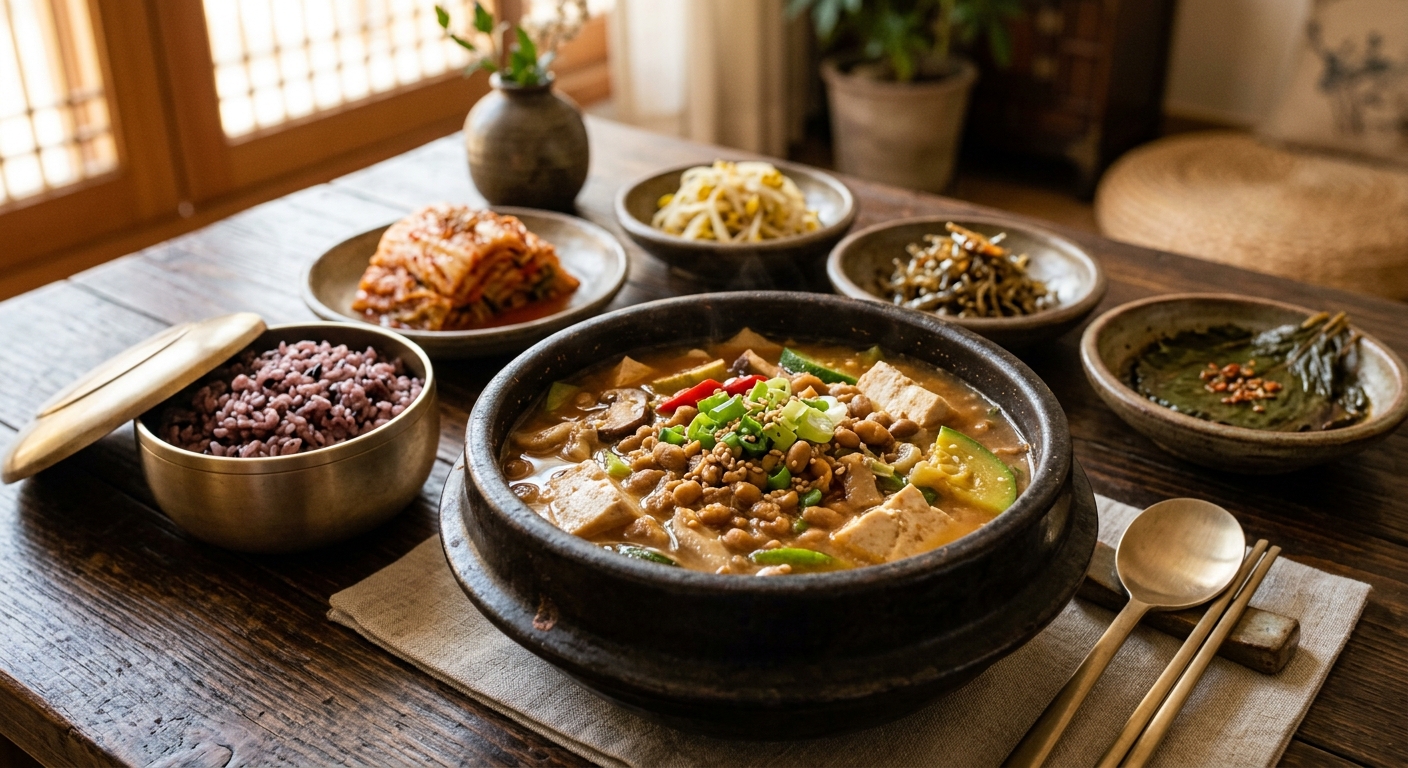
1. History and Origins: Ancestral Wisdom Fermented Through Warmth and Time
As the chilling late-autumn winds rattle paper window frames, the savory, deep aroma of Cheonggukjang stew gently rising from a Korean kitchen is an irreplaceable emblem of home and a mother’s comforting embrace. While traditional Doenjang (soybean paste) requires patient aging over months or years, Cheonggukjang is an ingenious quick-fermented soybean delicacy that unlocks the rich nutritional density and deep umami of soybeans in just two to three days.
Historical legends suggest that Cheonggukjang originated as tactical field rations for the swift cavalrymen of ancient Goguryeo and Balhae traversing Manchuria. Boiling soybeans, packing them into cloth sacks, and securing them beneath horse saddles allowed the animals' natural body heat and the Bacillus subtilis residing in rice straw to ferment the beans spontaneously into a dense, high-protein emergency food. Known historically as Jeongukjang (war paste) and later documented thoroughly in late Joseon agricultural encyclopedias such as Jeungbo Sallim Gyeongje, it has long stood as an indispensable seasonal lifeline that sustained Korean households through harsh, scarce winters.
"Boil washed soybeans thoroughly, bundle them with rice straw, and leave them in a warm floor room for three days; as translucent sticky strings form, crush with salt and pepper to prepare stews year-round." — Historical Recipe Excerpt
2. Traditional Recipe: Celebrating the Pure Texture and Essence of Soybeans
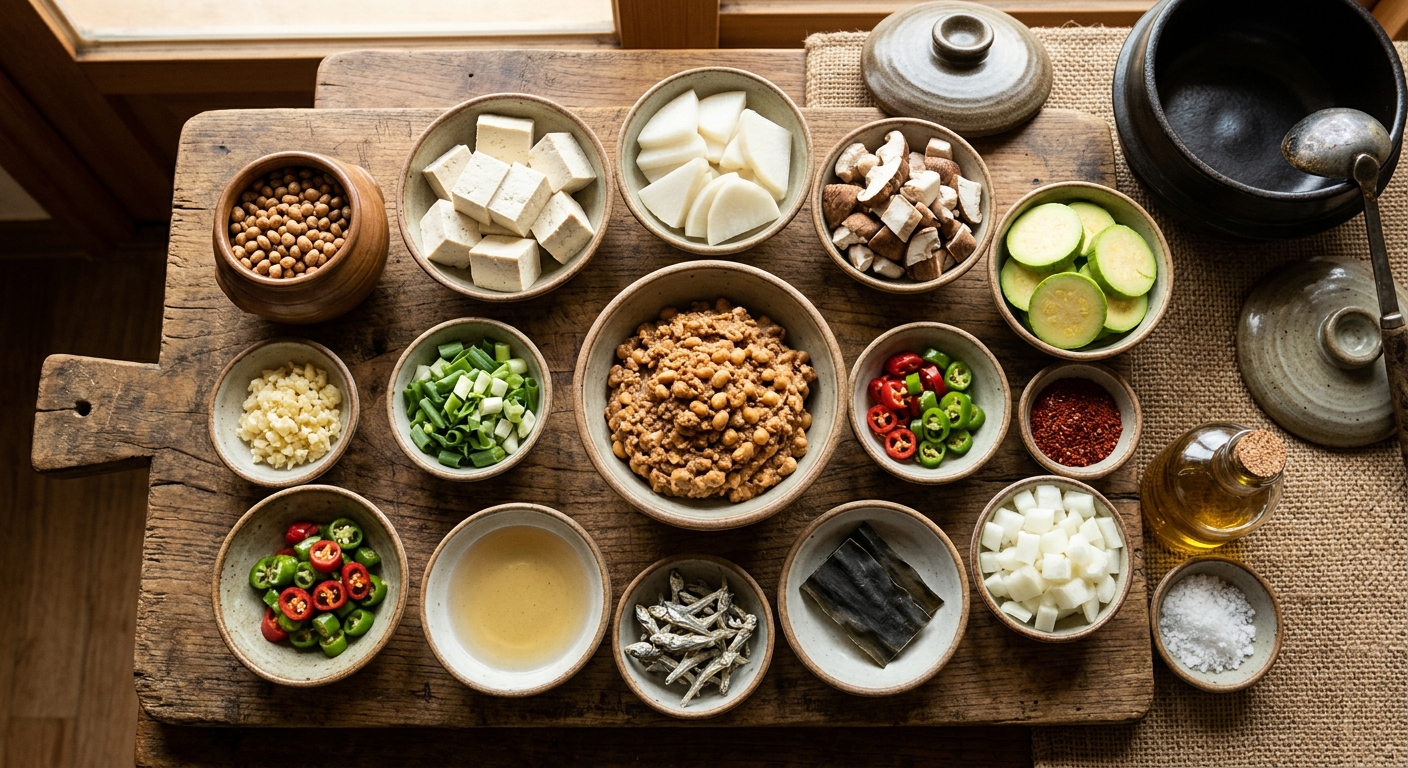
Ingredients (Serves 3-4)
- Core Ingredients: 200g artisanal fresh Cheonggukjang, 1 block (300g) firm stew tofu, 150g aged Kimchi (Muk-eun-ji), 120g pork shoulder or belly
- Vegetables: 1/3 zucchini (80g), 1/2 yellow onion (100g), 2 shiitake mushrooms, 1 scallion stalk, 1 fresh green chili, 1 red chili
- Anchovy-Kelp Stock: 3 dried dipori (large herring), 10 dried soup anchovies, 1 piece dried kelp (5x5 cm), 100g Korean radish sliced, 900ml filtered water
- Seasoning: 1 tbsp minced garlic, 1/2 tbsp coarse Korean red chili flakes (Gochugaru), 1 tbsp toasted perilla oil, 1/2 tsp traditional Doenjang, dash of soup soy sauce
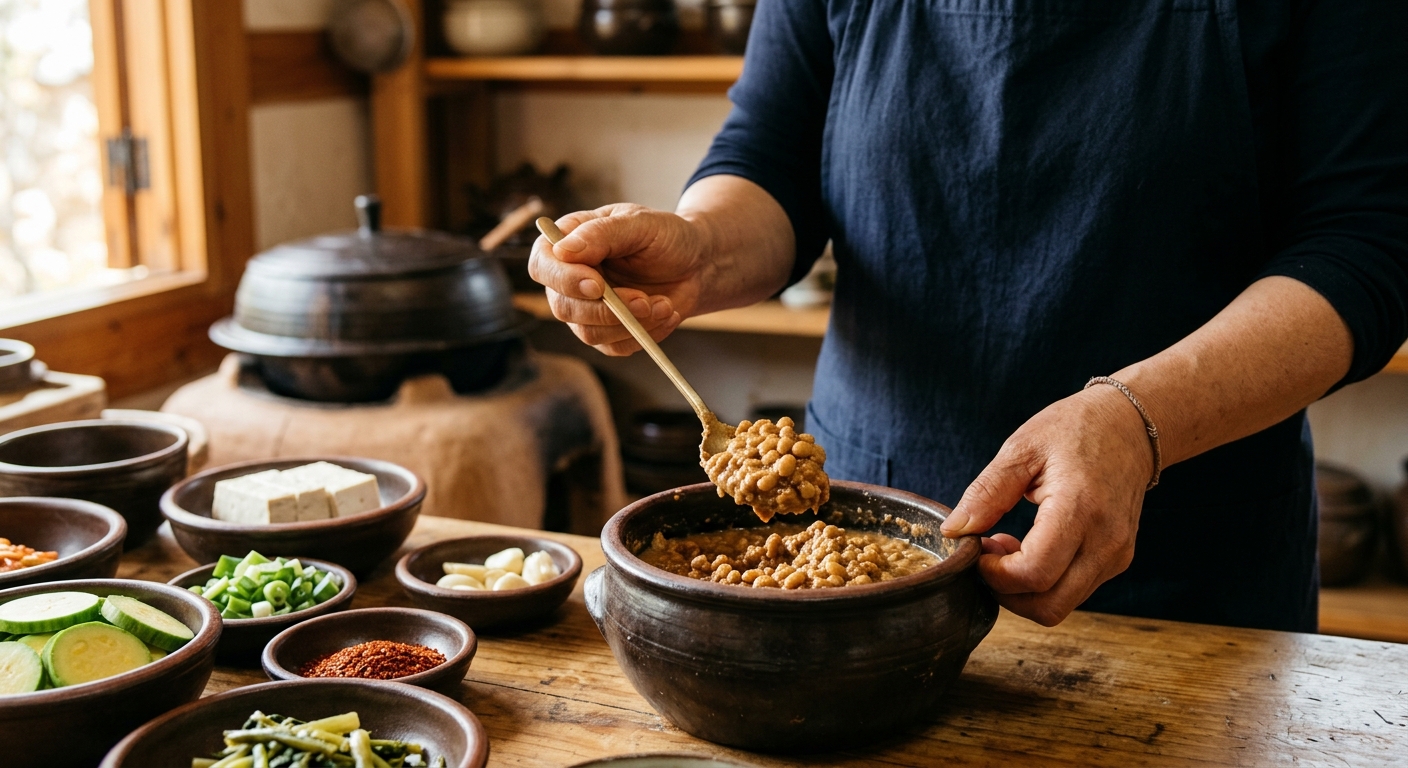
Step-by-Step Culinary Method
Step 1: Simmering Golden Broth
Lightly toast dried anchovies and dipori in a dry pot over medium-low heat to eliminate fishiness. Pour in 900ml water, sliced radish, dried shiitake stems, and kelp. Bring to a boil, discard kelp after 5 minutes, simmer on low heat for 15 minutes, then strain to obtain clean, golden broth.
Step 2: Preparing Ingredients
Shake off excess seasonings from well-fermented aged Kimchi and slice into bite-sized lengths. Cut tofu into chunky cubes, slice zucchini and onions into thick half-moons for retained bite, slice shiitake mushrooms, and bias-cut the scallions and chilies.
Step 3: Sautéing Base in Earthenware Pot
Heat a heavy earthenware pot (Ttukbaegi), add 1 tablespoon of fragrant toasted perilla oil, and sauté the pork with half of the minced garlic over medium heat. When the pork turns pale, add sliced Kimchi and continue sautéing patiently until the kimchi turns translucent and absorbs the rendered pork juices.
Step 4: Simmering Vegetables with Stock
Pour 600ml of warm anchovy broth over the sautéed base. Bring to a rapid rolling boil, lower to medium heat, add zucchini, onions, shiitake mushrooms, and red chili flakes. Simmer gently for approximately 5 minutes until vegetables soften halfway.
Step 5: Introducing Cheonggukjang and Gentle Finishing
Gently slide in cubed tofu, then reduce heat to low and fold in 200g of fresh Cheonggukjang. Gently dissolve clusters with a wooden spoon without vigorous boiling to preserve live probiotics. Scatter sliced scallions, chilies, and remaining garlic. Simmer gently for only 2 to 3 minutes, season with a hint of traditional paste if desired, and remove from heat immediately.
3. Sensory Profile: A Harmony of Rich Earthiness and Comforting Textures
Authentic, well-crafted Cheonggukjang greets the senses not with harsh pungency, but with a warm, nutty aroma reminiscent of freshly roasted grains and aged cheeses. When Bacillus subtilis breaks down soybean proteins, it creates rich glutamic acids that manifest as deep, grounding umami.
On the palate, every spoonful delivers dynamic contrasts: the creamy, velvety broth coats the tongue while soft, whole soybeans burst with savory juices. The gentle acidity of well-sautéed kimchi cuts cleanly through the earthy richness, balanced by tender tofu, supple mushrooms, and the refreshing, sharp kick of scallions and hot chilies at the finish.
4. Master Secrets: The Professional Chef's Nuance
- Secret 1: Add Cheonggukjang at the Final Act
Beneficial Bacillus bacteria and digestive enzymes perish under prolonged boiling. Never boil Cheonggukjang continuously from the beginning; always incorporate it 2-3 minutes before taking the pot off the stove. - Secret 2: Pre-Sauté Kimchi with Perilla Oil
Perilla oil mellows pungent fermentation notes and turns harsh kimchi acidity into a luscious, sweet undertone that binds the stew cohesively. - Secret 3: The Half-Crush Technique
Crush roughly half of your Cheonggukjang beans with a pestle while keeping the remaining half whole. The crushed beans build a rich, thick stew body, while whole beans provide delightful bursts of texture. - Secret 4: Sweet Radish and Shiitake Broth
Simmering radish and shiitake alongside anchovies delivers natural sweetness and subtle earthy undertones, removing any need for artificial seasonings.
5. Modern Variations: Contemporary Reinterpretations for Every Lifestyle
1) Beef Brisket Cheonggukjang Hot Pot
A luxurious gathering dish where thinly shaved beef brisket is layered gracefully over napa cabbage, enoki mushrooms, and crown daisy inside a shallow pot. A light broth infused with Cheonggukjang paste is ladled over the top, yielding a succulent, buttery richness that converts even initial skeptics.
2) Raw Wellness Cheonggukjang Bibimbap
A no-cook probiotic powerhouse. Spoon 3 tablespoons of raw, unheated Cheonggukjang over a bowl of warm barley rice, accompanied by microgreens, finely chopped aged kimchi, a soft-poached egg, and a drizzle of artisanal sesame oil for a revitalizing breakfast.
3) East-Meets-West Cheonggukjang Cream Pasta
Silky heavy cream meets gently dissolved Cheonggukjang over al dente fettuccine, crisped bacon, and sautéed garlic. The fermented soybean functions just like an aged blue cheese or Pecorino, lending incredible savory complexity to the pasta sauce.
6. Table Setting & Pairings: Cultivating Warmth Around the Table
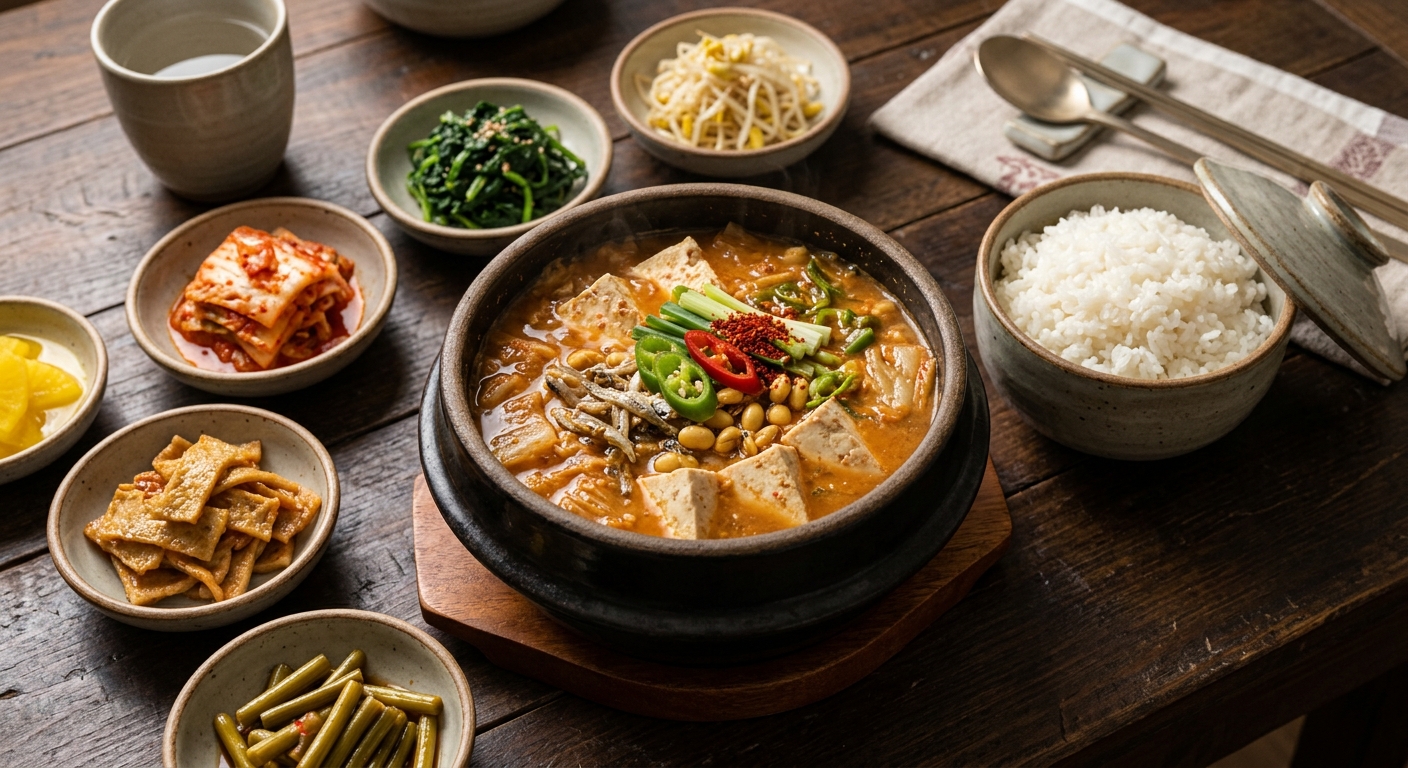
A bubbling clay pot of Cheonggukjang commands the heart of the dining table. The classic accompaniment is a generous bowl of steamed pearled barley rice (Kkongboribap). Spooning bubbling stew directly over hearty barley with a drop of sesame oil creates an incomparable rustic bibimbap.
Balance the deep warmth of the stew with crisp seasonal vegetable banchan: lightly blanched spinach namul, seasoned bracken, chilled Dongchimi radish water kimchi, and savory pan-fried mackerel or a golden rolled omelet. To complete this soulful Korean meal, pour a chilled cup of unpasteurized cloudy rice wine (Makgeolli), whose gentle effervescence and clean sweetness round out the comforting richness of Cheonggukjang.