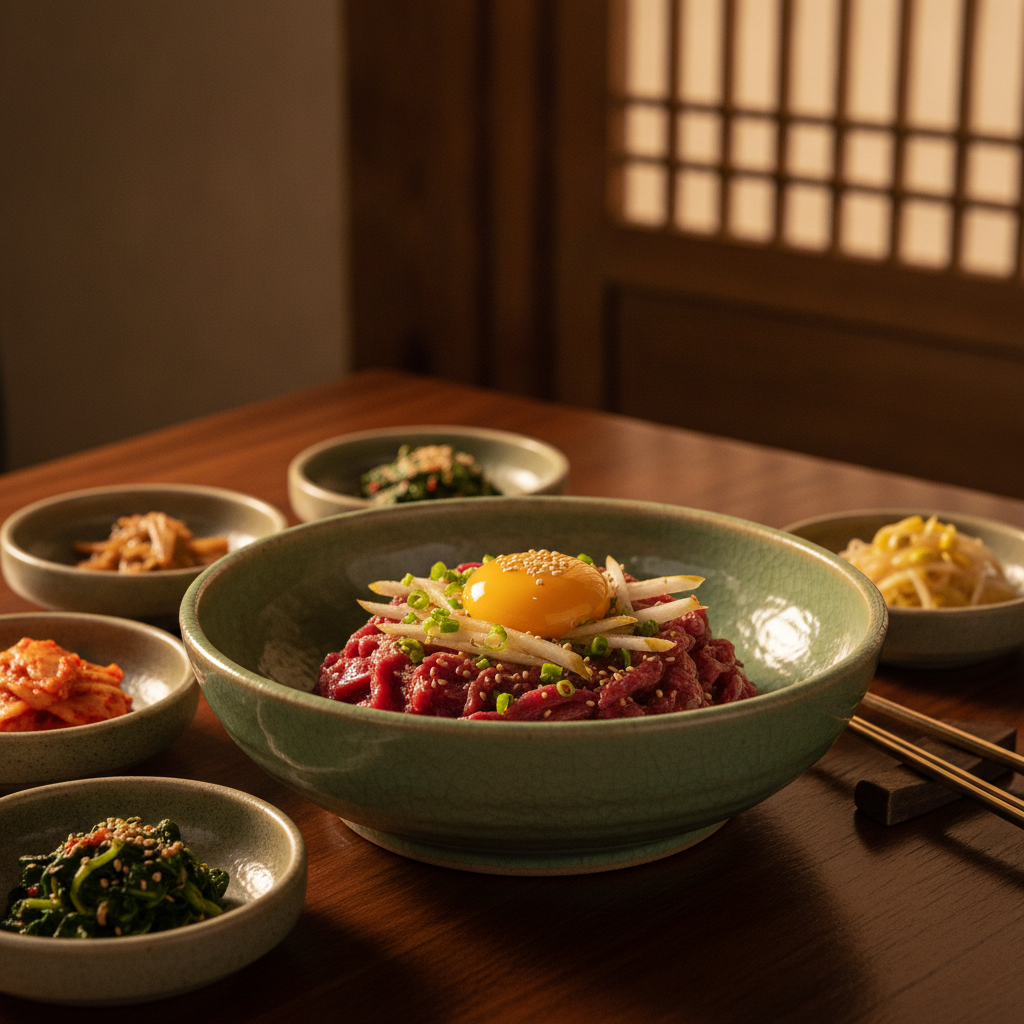
Yukhoe, The Crimson Jewel: A Traditional Korean Recipe Embodying Taste and Soul
Hello everyone, and thank you for joining me on this culinary journey through the profound flavors of Korean cuisine. Today, I want to talk about a special dish that has long been cherished at Korean tables, a dish that allows you to taste the essence of fresh beef: 'Yukhoe.' Yukhoe is more than just raw meat seasoned and eaten; it is a work of art that beautifully encapsulates the delicate palate and food culture of Koreans. Its vivid, blood-red color, the melt-in-your-mouth tenderness, and the deep flavor created by diverse seasonings offer an unparalleled charm. Today, let's deeply explore everything about this captivating Yukhoe, from its history to the authentic recipe, and even tips for enjoying it more deliciously.
1. History and Origin of Yukhoe
The name "Yukhoe" itself signifies "raw meat (肉) eaten like sashimi (膾)." The tradition of consuming raw meat has existed in Korea for a very long time, and beef, in particular, has always been considered a precious ingredient. The history of Yukhoe dates back to the Goryeo Dynasty, and it further developed into various forms during the Joseon Dynasty. Historical documents from the Joseon Dynasty record various types of raw fish and meat dishes such as 'Pohwae' (脯膾) and 'Eoyukhoe' (魚肉膾), among which Yukhoe is mentioned as a representative beef dish. At that time, Yukhoe was primarily served to esteemed guests at special occasions like feasts and ancestral rites, recognized as a high-class dish requiring fresh ingredients and delicate preparation.
In Korean food culture, Yukhoe holds a special significance beyond just being a dish. Cattle were extremely important in an agrarian society, making beef a precious ingredient not to be consumed carelessly. Therefore, Yukhoe was considered a delicacy only to be enjoyed when hosting important guests or during special celebrations. Moreover, consuming fresh meat raw implies a deep trust in the ingredients, coupled with the meticulous care and skill of the chef. Today, Yukhoe is hugely popular as an dining out option, and places like Majang-dong Meat Market are bustling with people eager to savor fresh Yukhoe. Yukhoe is a living history and essence of gastronomy that has evolved with the lives of Koreans.
2. Authentic Recipe
The authentic taste of Yukhoe begins with fresh ingredients and a golden ratio of seasoning. Here is a detailed recipe to bring this crimson jewel to your table.
Ingredients (for 2 servings)
- Beef sirloin (Udongsal) or top round (Hongdukkaesal): 300g (thinly sliced for Yukhoe)
- Korean pear: 1/4 (julienned)
- Egg yolk: 1
- Pine nuts: 1/2 tablespoon (for garnish)
- Toasted sesame seeds: a pinch (for garnish)
Seasoning Ingredients
- Soy sauce: 1 tablespoon
- Sugar: 1/2 tablespoon
- Minced garlic: 1/2 tablespoon
- Sesame oil: 1 tablespoon
- Sesame salt (toasted sesame seeds ground with salt): 1/2 tablespoon
- Black pepper: a pinch
Detailed Cooking Steps
- Prepare the Beef: Freshness is paramount for Yukhoe beef. Ask your butcher to slice it thinly for Yukhoe, or slice it yourself into thin strips. Gently press the sliced beef with a paper towel to remove excess blood. This step is crucial for eliminating any gamey taste and ensuring a clean flavor. Be careful not to squeeze too hard.
- Make the Seasoning Sauce: In a bowl, combine soy sauce, sugar, minced garlic, sesame oil, sesame salt, and black pepper. Mix well until the sugar completely dissolves.
- Season the Beef: Place the blood-drained beef in a large bowl and add about 2/3 of the prepared seasoning sauce. Gently mix by hand, ensuring the seasoning is evenly distributed without mashing the meat. You can add the remaining seasoning later, according to your preference.
- Chill and Plate: Place the seasoned beef in the refrigerator for about 10 minutes to allow the flavors to meld. Arrange the julienned Korean pear on a serving plate, then artfully mound the seasoned Yukhoe on top. Garnish with the egg yolk, pine nuts, and toasted sesame seeds.
- Serve: Serve immediately, perhaps with additional pear or cucumber strips if desired. As freshness is key, it's best to consume Yukhoe right after preparation.
3. Characteristics of Flavor
Yukhoe offers an aesthetic of complete sensory satisfaction. The vibrant red of fresh Yukhoe is visually appealing, stimulating the appetite even before the first bite. When a golden egg yolk is added, the color contrast becomes even more striking, providing a feast for the eyes. As you pick up a piece with chopsticks, the glossy sheen of the seasoned meat glistens invitingly, while the savory aroma of sesame oil and the pungent scent of garlic waft up, tantalizing your taste buds.
The moment it enters your mouth, the true essence of Yukhoe unfolds. The incredibly tender texture, melting away without much chewing, evokes the sensation of eating high-quality sashimi. The subtle sweetness and richness inherent in fresh beef are the first to register, followed by the savory depth created by soy sauce and sugar. The pungent kick of minced garlic, the nuttiness of sesame oil, and the savory notes of sesame seeds harmonize to create a complex symphony of flavors. When accompanied by crisp, refreshing pear, the pear's sweet juice enhances the beef's flavor and leaves a clean aftertaste, enticing you to reach for another bite. Yukhoe is not just about eating meat; it offers a sophisticated and enchanting experience, a testament to the refined palate of Koreans.
4. Cooking Tips and Secrets
To make Yukhoe even more delicious, there are a few expert secrets. Utilizing these tips will ensure your Yukhoe boasts an even deeper flavor and perfect texture.
- Selecting the Freshest, Highest Quality Beef: The freshness of the beef accounts for over 90% of Yukhoe's success. Sirloin (udongsal) or top round (hongdukkaesal) are suitable cuts for Yukhoe; choose lean meat with a tender texture. It's best to purchase fresh beef slaughtered on the same day from a butcher and ask them to slice it thinly for Yukhoe. Look for meat that has a vibrant red color and a glossy sheen.
- Thorough Blood Removal: Removing blood from the meat is essential to eliminate any gamey taste and ensure a clean flavor. Gently press the beef with a paper towel to meticulously remove blood. Be careful not to squeeze too hard, as this can drain the meat's juices and make it tough.
- Maintaining the Right Meat Temperature: Yukhoe is best enjoyed cold. It's crucial to keep the meat chilled by placing it in the refrigerator briefly before and after seasoning. A cool temperature preserves the meat's freshness and improves its texture.
- The Golden Ratio of Seasoning: In addition to the basic seasoning, adding a small amount of honey instead of sugar can impart a subtle sweetness and a beautiful sheen. Adjust the amount of minced garlic to your preference for pungency, and use fresh, aromatic Korean sesame oil for the best results. Sesame oil plays a vital role in maximizing the nutty flavor.
- The Role of Pear and Egg Yolk: Pear is undoubtedly the best accompaniment to Yukhoe. Its crisp texture and cool, sweet taste neutralize the richness of the beef and refresh the palate. The egg yolk adds to the tenderness of the Yukhoe and doubles its savory flavor. Breaking the egg yolk and mixing it with the Yukhoe results in an even smoother and richer taste.
- Season Just Before Serving: The freshness of Yukhoe diminishes and its taste can change if seasoned too far in advance. The secret to enjoying the most delicious Yukhoe is to season it just before serving to your guests.
5. Variation Recipes
While traditional Yukhoe is excellent, variations adapted to modern tastes and different situations are also appealing. From simplified versions to fusion styles, enjoy the endless transformations of Yukhoe.
1) Yukhoe Bibimbap (Simplified Version)
This is the most popular way to enjoy Yukhoe with rice. It's even better if the Yukhoe seasoning is made slightly spicy.
- Ingredients: Traditional Yukhoe (seasoned), warm rice, lettuce, perilla leaves, cucumber, carrot, and other fresh vegetables (julienned), gochujang (Korean chili paste