1. History and Origin of Sujebi: From Aristocratic Banquets to Soul Comfort
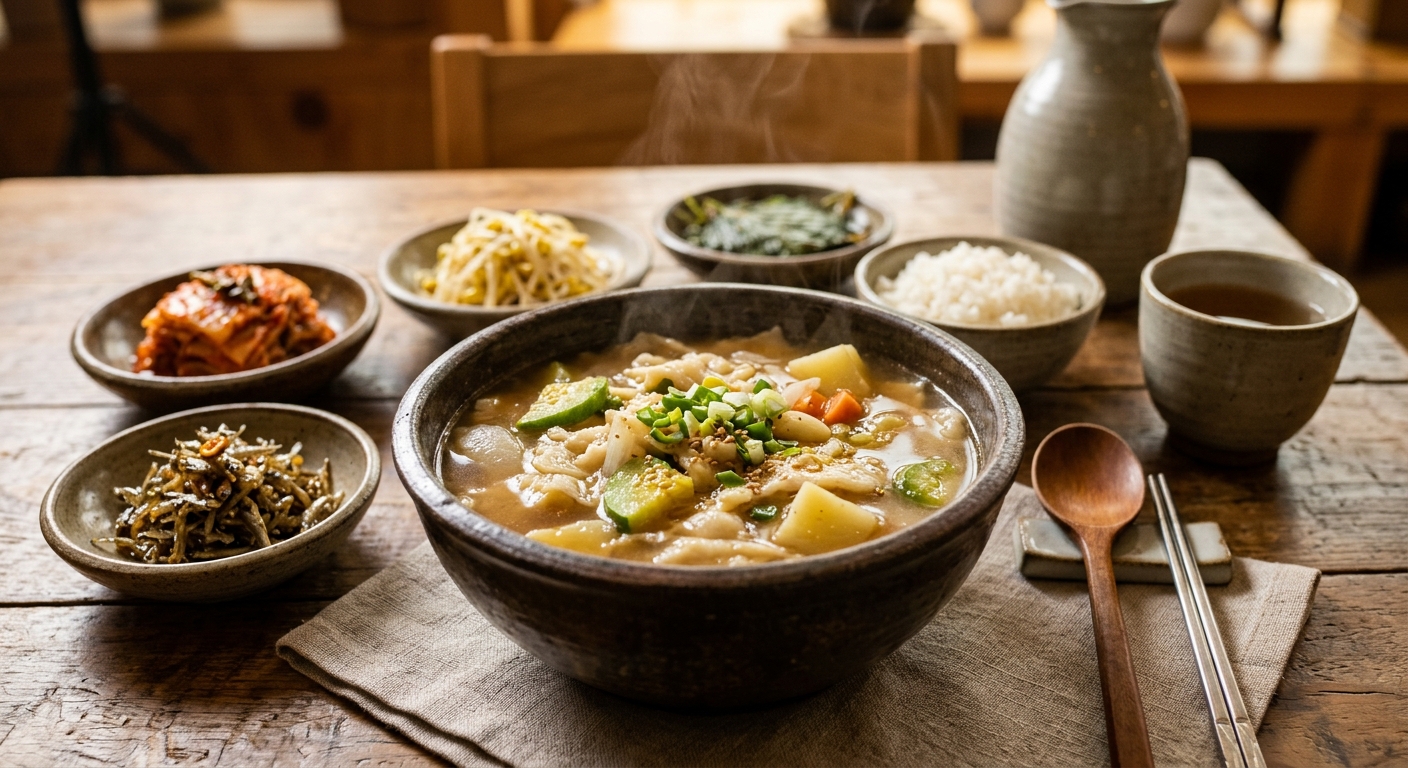
Sujebi is a traditional Korean soup consisting of tender, chewy pieces of hand-torn wheat flour dough boiled in a light, flavorful broth with seasonal vegetables. The poetic Korean name "Sujebi" traces back to "Su-jeop-i (手摺伊)," a compound of Chinese and native Korean linguistic roots meaning "folded by hand." Historical culinary records from the Joseon Dynasty, such as Suunjapbang and Yorok, document early iterations of this dish under names such as "Su-in-du," depicting the craft of kneading, flattening, and tearing dough into boiling court soups.
Historically, wheat was an exceptionally rare and prized grain in Korea, as local climatic conditions made wheat cultivation scarce. During early dynastic times, refined wheat flour was known as "Jin-mal" (meaning genuine flour), reserved almost exclusively for royal feasts, high-ranking aristocratic weddings, and special banquet celebrations. The historical ancestor of Sujebi was an opulent dish simmered with pheasant meat, chicken, clear aged soy sauce, and garnished with delicate seasonal mushrooms and egg ribbons.
However, modern Korean history transformed Sujebi into an iconic national comfort food. In the aftermath of the Korean War during the 1950s, the nation faced devastating food shortages. As relief wheat flour from the United States poured in as aid, flour rapidly evolved into the most accessible sustenance for working-class families. Resourceful mothers boiled large pots of broth flavored with dried anchovies from local markets, diced home-grown potatoes and zucchini, and torn scraps of dough to fill the bellies of their hungry children. Sharing a steaming, bountiful bowl of Sujebi around low floor tables during chilly, rainy days became an enduring symbol of familial love, resilience, and emotional healing across generations.
2. Authentic Recipe: Clear Savory Broth and Chewy Hand-Torn Dough
An authentic bowl of Sujebi strikes an exquisite balance between a crystalline, umami-rich anchovy and kelp stock and pillowy, chewy dough flakes. Here is the master recipe crafted for home cooks.
[Ingredients and Measurements (Serves 3-4)]
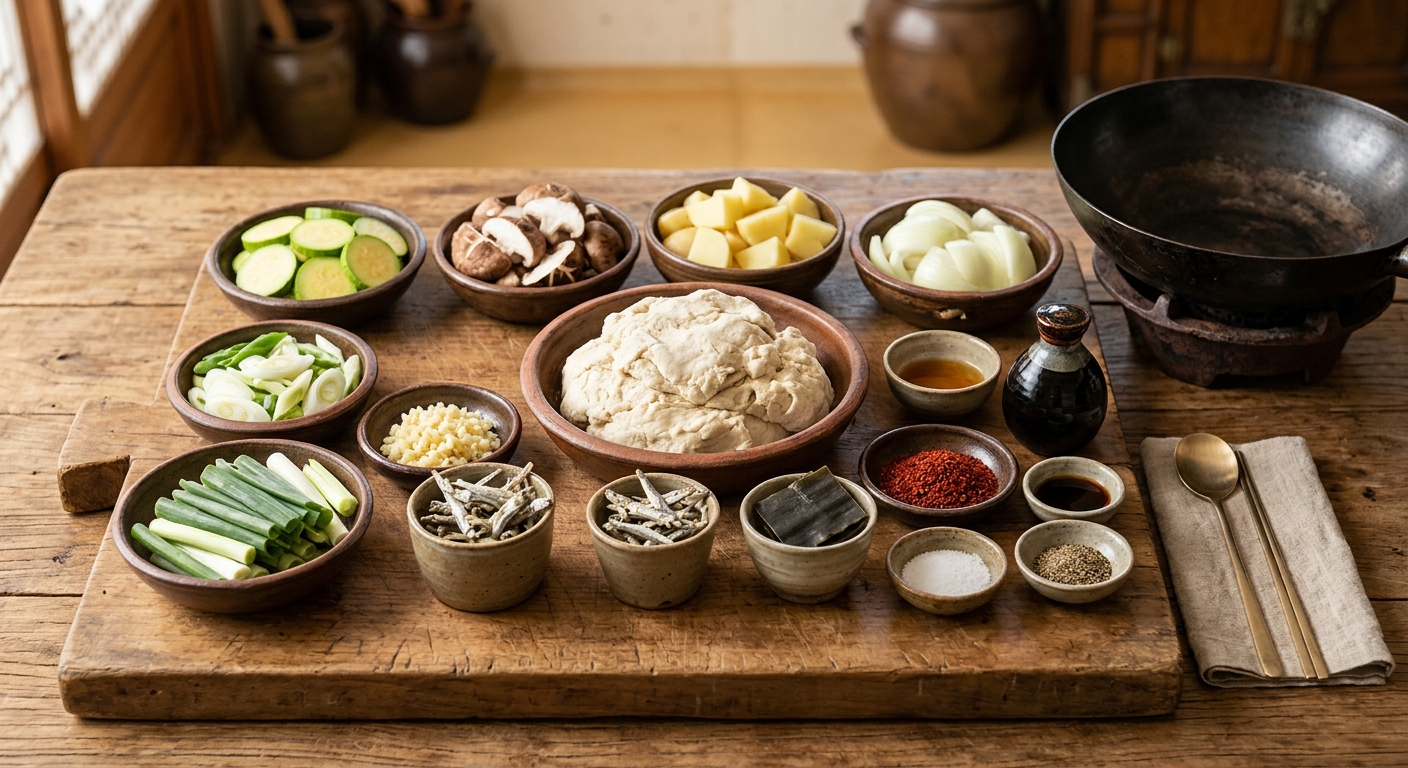
- Dough: 350g all-purpose flour, 2 tbsp potato starch (optional, for maximum springiness), 180-200ml room-temperature water, 1/2 tsp fine sea salt, 1 tbsp cooking oil.
- Golden Broth: 2 liters water, 25-30 large dried soup anchovies (heads and guts removed), 2 pieces dried kelp (Dashima, 5x5 cm), 150g Korean radish (thickly sliced), 1 whole scallion (with roots), 1/2 yellow onion.
- Vegetables: 2 medium potatoes, 1/2 Korean zucchini (Aehobak), 1/4 carrot, 1 scallion (sliced diagonally), 1-2 Cheongyang chili peppers (optional), 1/2 mild red chili.
- Seasoning: 2 tbsp Joseon guk-ganjang (Korean soup soy sauce), 1 tbsp minced garlic, 1 tbsp premium fish sauce or tuna sauce, fine sea salt to taste, ground black pepper.
[Step-by-Step Instructions]
- Step 1: Knead and Cold-Age the Dough - In a large bowl, whisk together the flour, potato starch, and salt. Gradually pour in water in 2-3 batches, stirring with a wooden spoon until loose flakes form. Add 1 tablespoon of cooking oil and vigorously knead with your hands for at least 10 minutes until the dough becomes silky, smooth, and resilient. Seal tightly inside a plastic food bag and rest in the refrigerator for at least 1 to 2 hours (overnight aging yields the finest texture).
- Step 2: Brew the Golden Anchovy Broth - Gut the dried anchovies and dry-roast them in a dry pot over medium heat for 1-2 minutes until fragrant and free of moisture. Pour in 2 liters of cold water, then add the radish slices, scallion, onion, and dried kelp. Bring to a rolling boil over high heat, skimming off impurities. After 5 minutes, discard the kelp to prevent bitterness. Reduce heat to medium-low, simmer gently for 15 minutes, then strain through a fine-mesh sieve to obtain a clear, golden broth.
- Step 3: Prepare Vegetables - Peel potatoes and slice into 0.7cm-thick half-moons; rinse briefly in cold water to remove excess surface starch. Slice the zucchini and carrot into matching bite-sized pieces. Thinly slice the scallions and chilies diagonally.
- Step 4: Season Broth and Pre-cook Potatoes - Return the strained broth to a boil. Season with soup soy sauce, minced garlic, and fish sauce. Add the sliced potatoes first, simmering for 3 minutes since they require the longest cooking time.
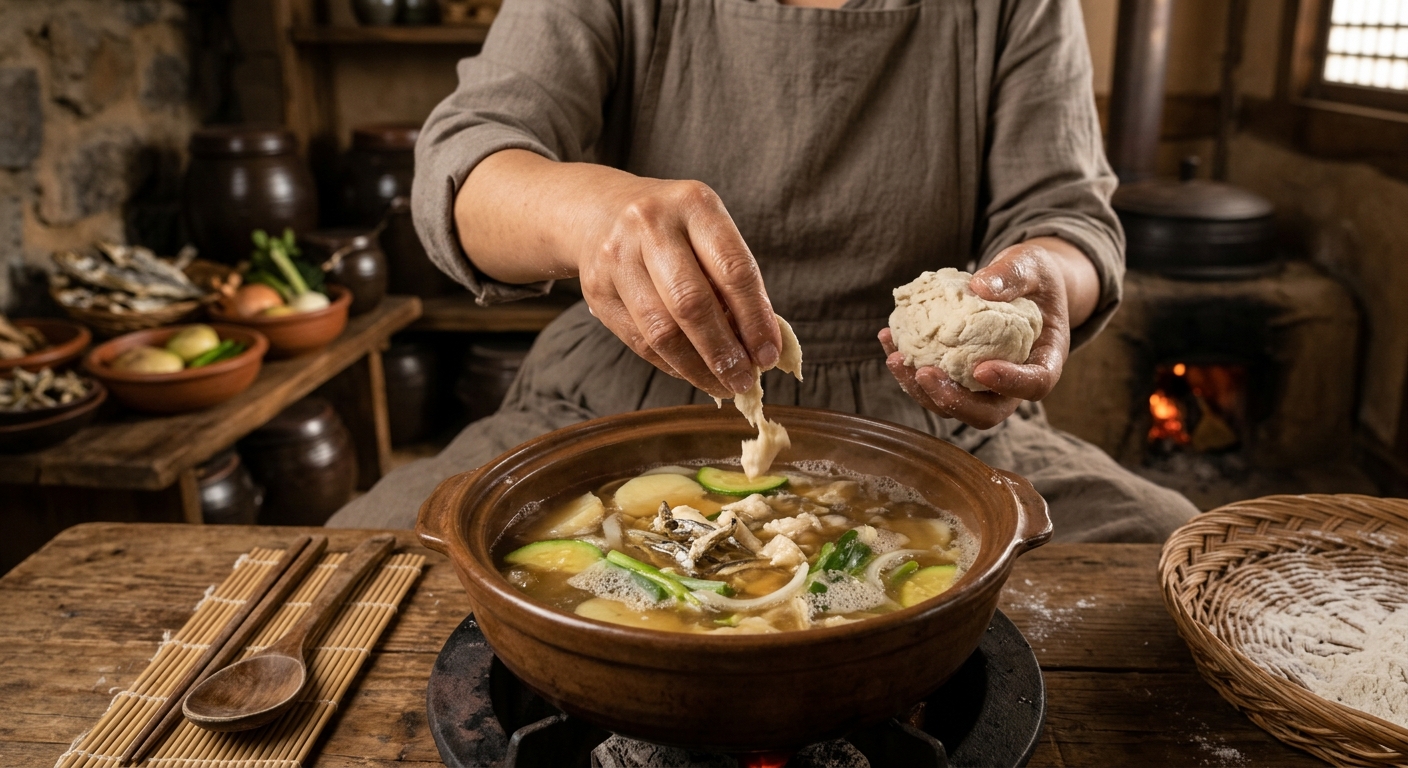
- Step 5: Tear the Dough Flakes - Dip your fingertips in cold water. Take a handful of chilled dough and stretch it out between both hands as paper-thin as possible. Swiftly tear off bite-sized pieces directly into the boiling soup. Stir gently with a ladle occasionally to prevent sticking.
- Step 6: Finish with Vegetables - Once the dough flakes float to the surface, add the zucchini and carrot slices, cooking for 2-3 minutes. Toss in the scallions and sliced peppers for a minute. Adjust final saltiness with fine salt, grind black pepper over the top, and ladle piping hot into deep ceramic bowls.
3. Sensory Profile: The Art of Rustic Elegance
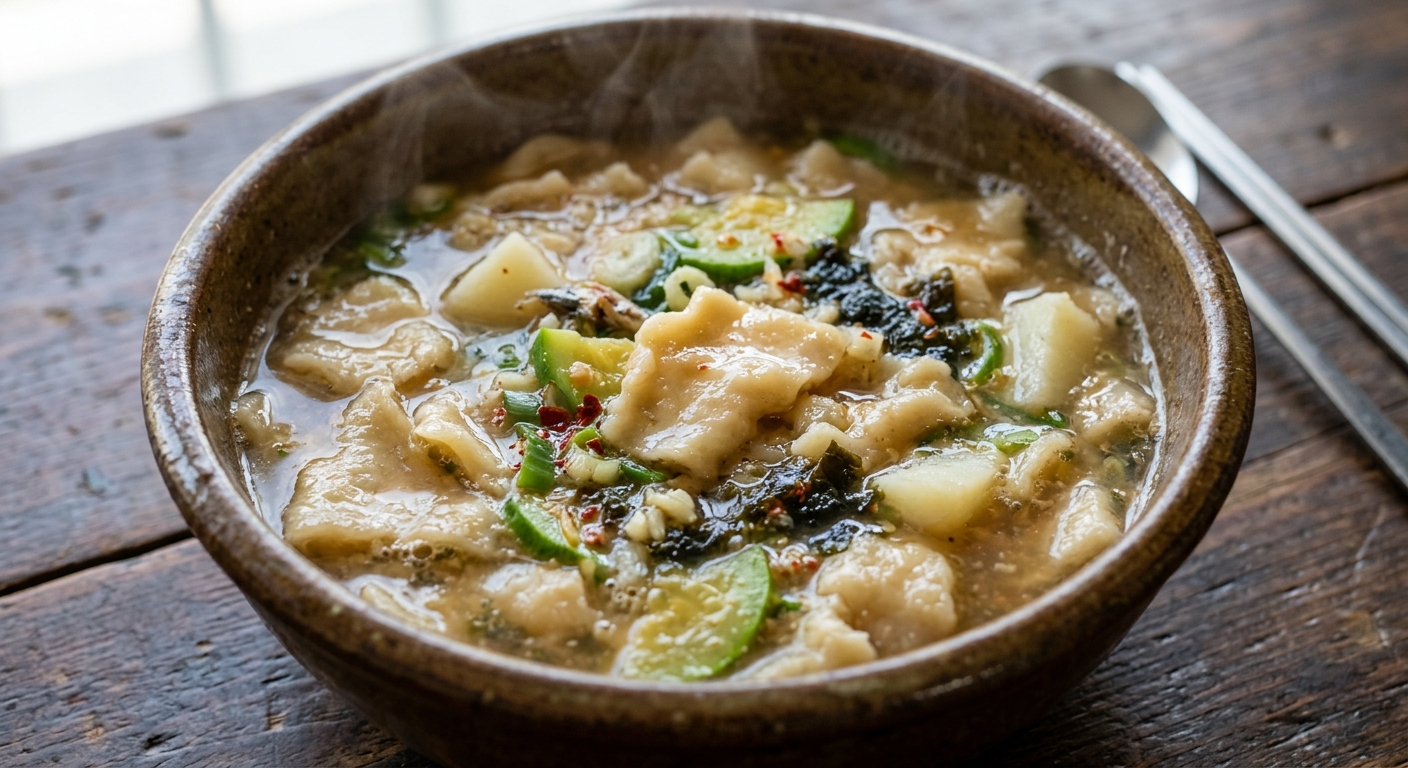
Sujebi captivates the senses through its charmingly rustic appearance and deceptively sophisticated symphony of textures. The defining element is the dynamic mouthfeel of the hand-torn dough. Because each piece is torn individually by human hands, the whisper-thin edges glide silkily across the tongue, while the slightly denser center offers an irresistible al dente bounce. This organic variation in thickness creates a playful, satisfying cadence that no mass-produced pasta can replicate.
The broth offers a deeply restorative aromatic profile: the mineral richness of the sea, extracted from slow-simmered dried anchovies and kelp, melds seamlessly with the natural earthy sweetness of Korean radish and zucchini. As the tender potato slices simmer, their starch gently thickens the broth into a soothing, velvet elixir. A mild hint of fresh chili pepper cleanly cuts through any starchiness, leaving an invigorating, refreshing finish. Each spoonful delivers warm comfort that nourishes the body and calms the soul.
4. Culinary Secrets: Pro Tips for Restaurant-Quality Sujebi
"The secret to extraordinary Sujebi lies in the cold-aging of the dough, tearing it paper-thin with wet hands, and building an impeccably clean broth foundation."
- Secret 1: Dissolved Salt Water and Oil Emulsion - Always dissolve your salt into the mixing water before pouring it into the flour. This evenly distributes salinity, tightening gluten networks for supreme elasticity. Incorporating a single tablespoon of cooking oil prevents surface dehydration and imparts a translucent, slippery gleam to each cooked flake.
- Secret 2: Cold Fermentation (Resting) - Never rush your dough into the pot immediately after kneading. Allowing the gluten strands to relax in cold refrigeration for 1 to 2 hours transforms stiff dough into a pliable, buttery-soft marvel that stretches effortlessly without tearing prematurely.
- Secret 3: The Wet-Finger Paper-Thin Stretch - Keep a small bowl of cold water beside the stove. Dampening your fingertips prevents sticking and lets you pull the dough paper-thin before pinching it into the bubbling broth. If you are slow at tearing, lower the heat to a gentle simmer so the first flakes do not overcook while you finish tearing the rest.
- Secret 4: Dry-Roast the Anchovies - Never skip dry-roasting your dried anchovies in a bare pan. This flash of heat evaporates lingering fishy odors, caramelizes natural amino acids, and guarantees an amber, pristine broth free from cloudiness or bitterness.
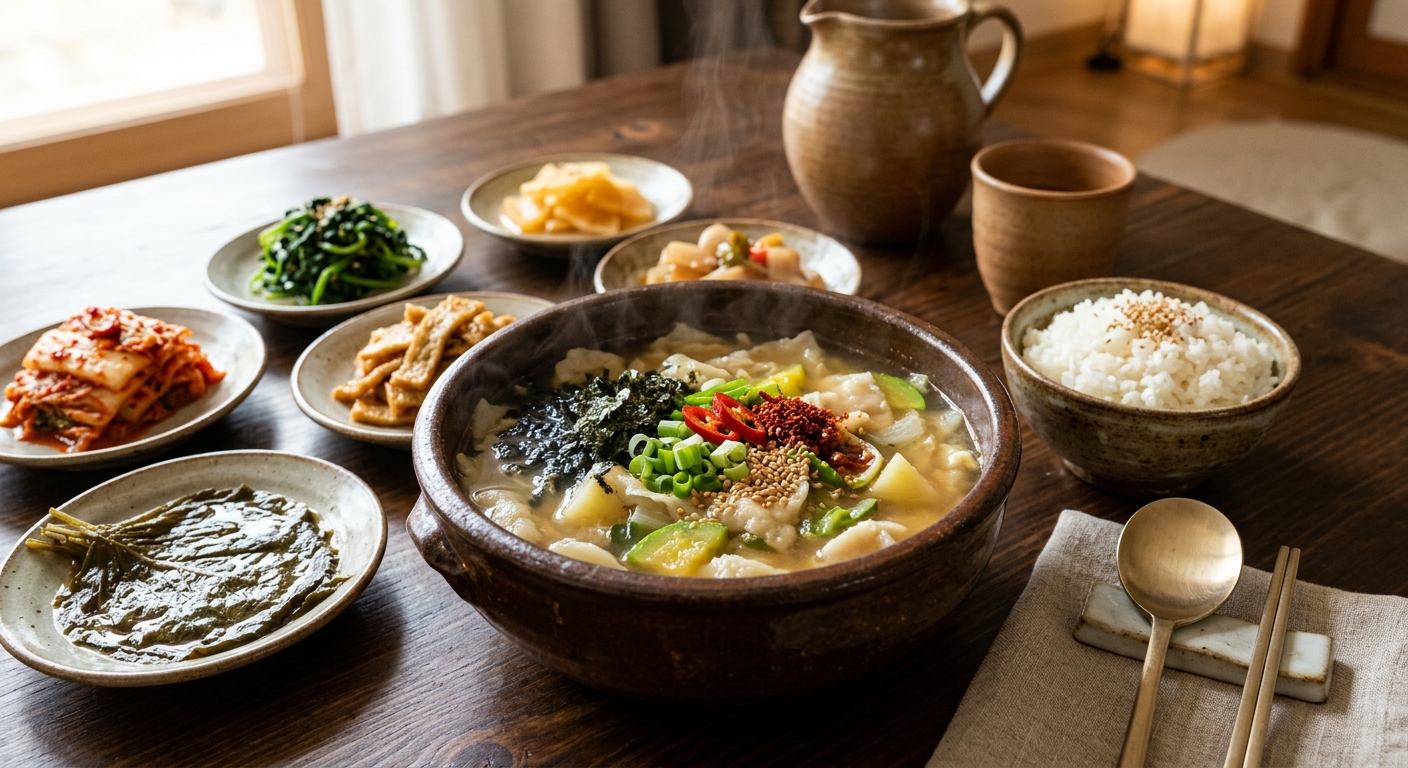
5. Contemporary Variations: Modern Twists on a Timeless Classic
While classic anchovy Sujebi remains timeless, Korean cuisine celebrates regional adaptations and inventive modern variations tailored for diverse palates.
1) Nutty and Creamy Wild Perilla Seed Sujebi (Deulkkae Sujebi)
A cherished restorative delicacy from Gangwon province, this variation transforms the broth into a rich, creamy, nutty haven. Toasted, hulled wild perilla seed powder (Deulkkae-garu) is blended with a splash of water and a spoonful of sweet rice powder, then stirred into a simmering shiitake mushroom or dried pollack broth alongside the dough flakes. The resulting velvety, ivory soup wraps around the chewy dumplings like a luscious Korean chowder.
2) Spicy Kimchi Hangover Sujebi (Kimchi Sujebi)
For chilly nights or mornings following celebrations, Kimchi Sujebi provides an electrifying wake-up call. Finely chopped, aged sour Kimchi is lightly sautéed in toasted perilla oil, followed by an aromatic anchovy stock spiked with Korean chili flakes (Gochugaru) and a touch of fermented red pepper paste (Gochujang). A handful of crisp soybean sprouts is tossed in at the end, producing a fiery, tangy, deeply cleansing broth that restores vitality.
3) The 3-Minute Rice Paper or Dumpling Wrapper Hack
For modern city dwellers craving instant comfort without flour on their hands, layer two or three sheets of Vietnamese rice paper, dip them briefly in water, cut them into rough squares with scissors, and drop them straight into simmering soup. Within 2 to 3 minutes, they turn into delightfully translucent, chewy bites resembling artisanal Sujebi. Commercial Korean dumpling wrappers sliced into rustic triangles also serve as a brilliant weeknight shortcut.
6. Table Setting and Pairings: Crafting the Perfect Korean Meal
While a bowl of Sujebi is an all-inclusive meal in itself, pairing it with complementary banchan elevates the dining experience into a festive celebration of Korean hospitality.
The paramount accompaniment is freshly made Baechu Geotjeori (Fresh Napa Cabbage Kimchi). The vibrant crunch of fresh cabbage leaves, dressed in sweet chili paste and aromatic fermented fish sauce, cuts through the mild starch of the dough and balances the soothing warm broth. A side of tart, well-fermented Kkakdugi (Radish Kimchi) provides an invigorating textural snap.
Set a small ceramic ramekin of Cho-Ganjang (Savory Chili-Soy Sauce) on the side, prepared with aged soy sauce, finely minced Cheongyang peppers, scallions, a sprinkle of toasted sesame seeds, and a drop of fragrant toasted sesame oil. Diners can spoon a few drops directly onto individual dough flakes or swirl a spoonful into their soup for an instant flavor boost.
To recreate Korea's beloved rainy day tradition, pair your Sujebi with a sizzling platter of Haemul Pajeon (Crispy Seafood Scallion Pancake) or golden shredded potato pancakes (Gamjajeon), accompanied by a chilled, cloudy bowl of Makgeolli (Korean sparkling rice wine). The gentle hiss of rain outside, the crisp crunch of the savory pancake, the soothing warmth of hand-torn Sujebi, and the tangy sweetness of Makgeolli unite to deliver the quintessential Korean dining experience.