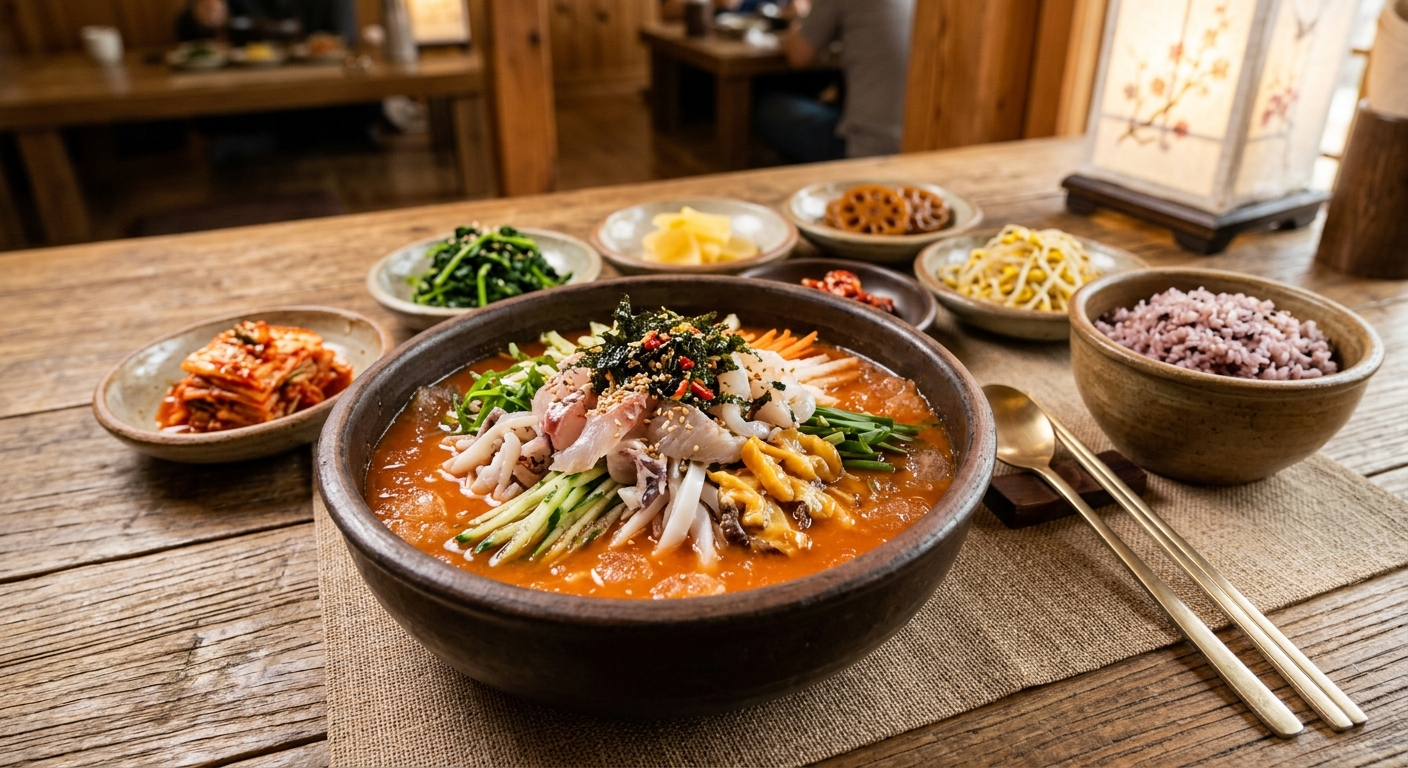
1. History and Origin of Mulhoe
On a sweltering summer day, nothing awakens a tired appetite quite like a bowl of Mulhoe. Mulhoe is a traditional Korean seafood dish made by combining fresh raw fish with crisp, julienned vegetables and pouring a chilled, spicy, sweet, and tangy broth over top. While it is now cherished year-round as a coastal delicacy and a must-try dish for travelers, its roots trace back to the humble, hardworking tables of East Coast fishermen battling rough waves.
In the past, fishermen along Korea's eastern coast—such as Pohang, Yeongdeok, and Sokcho—headed out to sea at dawn and had little time for leisurely meals. Lighting a fire to simmer soup or preparing side dishes on a rocking boat was nearly impossible. Instead, they would roughly slice freshly caught fish on the spot, place it in a bowl with soybean paste (doenjang) or red chili paste (gochujang) brought from home, and pour cold well water over it to eat quickly with rice. Born out of necessity and resilience, Mulhoe was a meal of wisdom designed to nourish the body swiftly before returning to work.
Born from the sweat of fishermen and their simple ingenuity, Mulhoe is a bowl of cool comfort that blossomed in the harshest of workplaces.
Over time, Mulhoe evolved differently across regions. In Pohang, a traditional style emerged where raw fish is first mixed with gochujang or savory doenjang before water is added. On Jeju Island, summer delicacies like Jari-mulhoe (made with damselfish) or Hanchi-mulhoe (cuttlefish) developed, featuring doenjang, vinegar, and Korean prickly ash powder (jepi) for a uniquely aromatic, zesty kick. Meanwhile, in Sokcho and Gangneung, thin slices of squid or flounder served in a bright red, slushy iced broth became widely beloved. Thus, Mulhoe is far more than a simple raw fish dish; it is a living culinary heritage reflecting the lives of Korean ancestors and the bounty of each regional sea.
2. Authentic Recipe
To recreate the deep, clean flavor of a seaside restaurant at home, the secret lies in the balance between a savory umami broth and a well-aged seasoning paste. By pairing fresh white fish and squid with a naturally sweet broth infused with pear and apple, you can serve an authentic bowl of Mulhoe that delights the whole family.
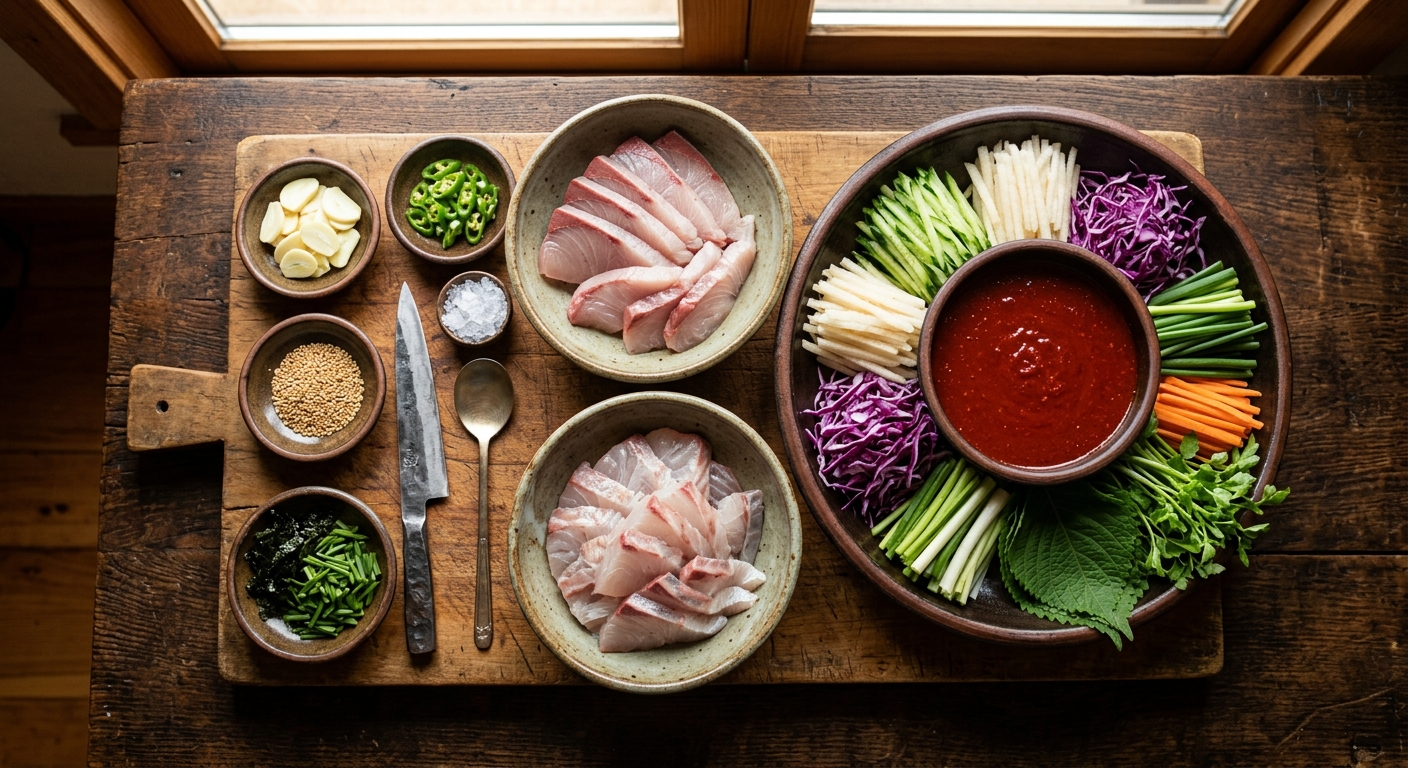
Ingredients (Serves 2)
- Main Seafood: 200g fresh raw white fish (flounder or rockfish), 1 cleaned squid (approx. 150g), 1 abalone (optional)
- Vegetables: 1/2 cucumber, 1/4 Korean pear, 1/4 onion, a small piece of carrot, 6 perilla leaves, 1 Cheongyang chili pepper, 2 scallions, a pinch of toasted sesame seeds
- Broth Base: 1 piece of dried kelp (5x5cm), 400ml water, 100ml lemon-lime soda (Chilsung Cider), 3 tbsp pear juice (or grated pear), 4 tbsp apple cider vinegar, 2 tbsp plum extract (maesil-cheong), 1 tbsp sugar, 1 tsp minced garlic, 1 tsp soup soy sauce, a pinch of salt
- Seasoning Paste (Yangnyeomjang): 3 tbsp gochujang (Korean chili paste), 1.5 tbsp gochugaru (chili flakes), 2 tbsp brewed vinegar, 1 tbsp oligosaccharide (or corn syrup), 1/3 tsp minced ginger, 1/2 tbsp sesame oil
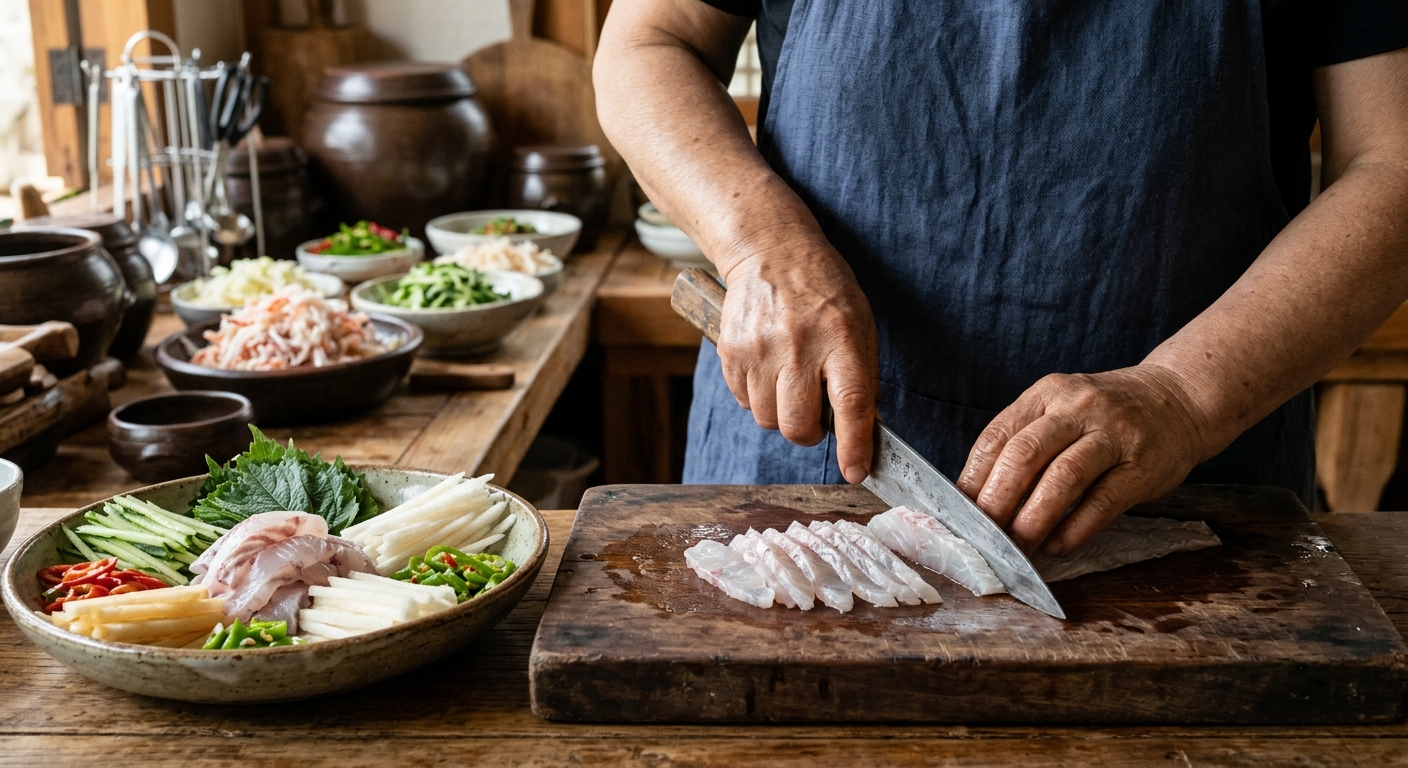
Step-by-Step Instructions
- Step 1: Simmer and cool the kelp base. Soak the dried kelp in 400ml of water for 20 minutes, then place over medium heat. Remove the kelp just before the water boils. Turn off the heat, season lightly with soup soy sauce and salt, and let it cool completely.
- Step 2: Prepare the tangy-sweet broth. To the cooled kelp stock, add the pear juice, apple cider vinegar, plum extract, sugar, minced garlic, and soda. Stir until the sugar dissolves. Transfer to an airtight container and freeze for about 2 hours until icy slush forms around the edges.
- Step 3: Mix the seasoning paste. In a small bowl, combine gochujang, gochugaru, brewed vinegar, oligosaccharide, and minced ginger. Save the sesame oil to drizzle just before serving for a fresh nutty aroma.
- Step 4: Prep the crisp vegetables. Finely julienne the cucumber, carrot, onion, and pear to a uniform thickness. Roll the perilla leaves and slice thinly, and finely chop the chili pepper and scallions. Soak the cut vegetables in ice-cold water for 5 minutes, then drain thoroughly to maximize crunchiness.
- Step 5: Slice the seafood. Cut the flounder or rockfish into bite-sized strips thick enough to preserve a chewy texture. Peel and thinly slice the squid. If using abalone, scrub it clean and slice thinly.
- Step 6: Assemble and serve. Pile the chilled vegetables generously into a pre-chilled deep bowl, and arrange the raw fish and squid neatly on top. Place a generous spoonful of seasoning paste in the center, sprinkle with sesame seeds, and pour the slushy iced broth gently around the edges.
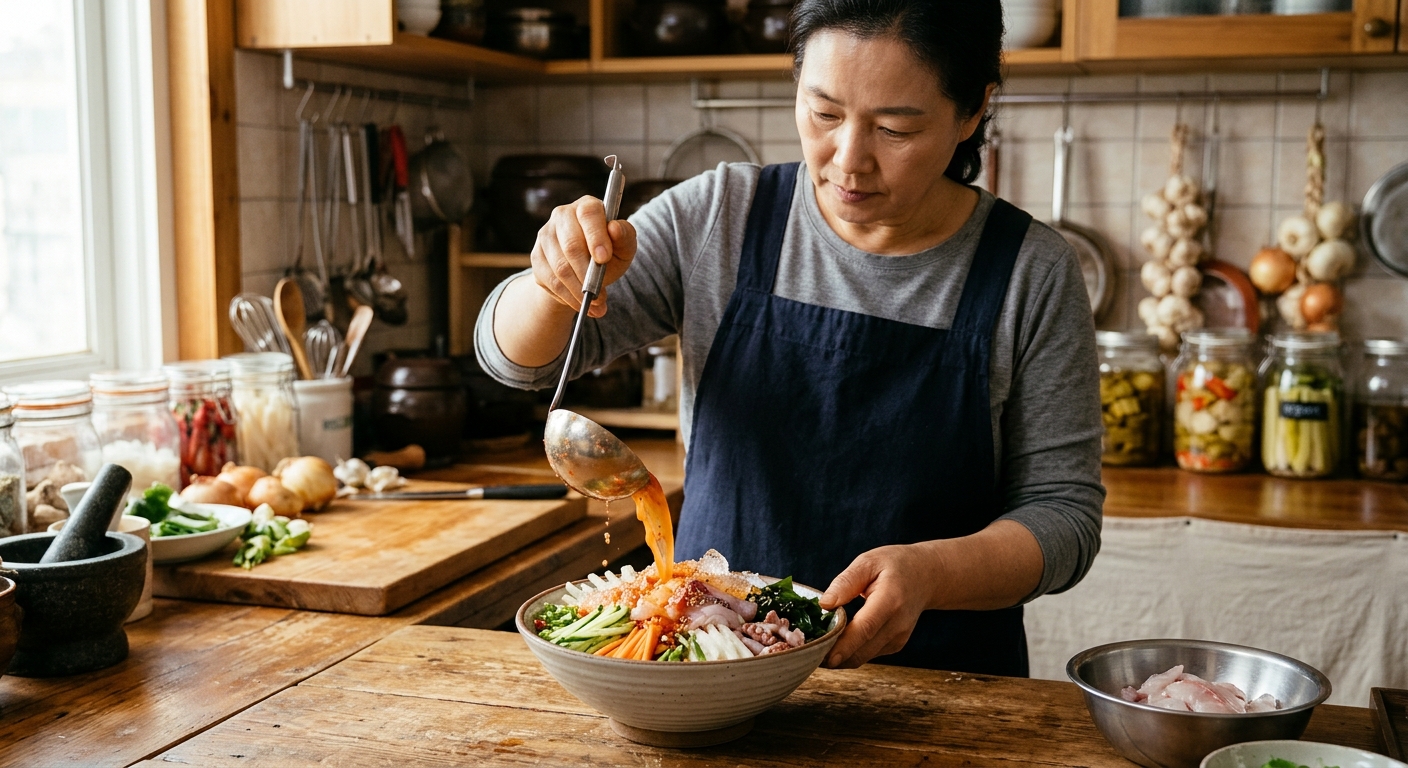
3. Flavor Profile
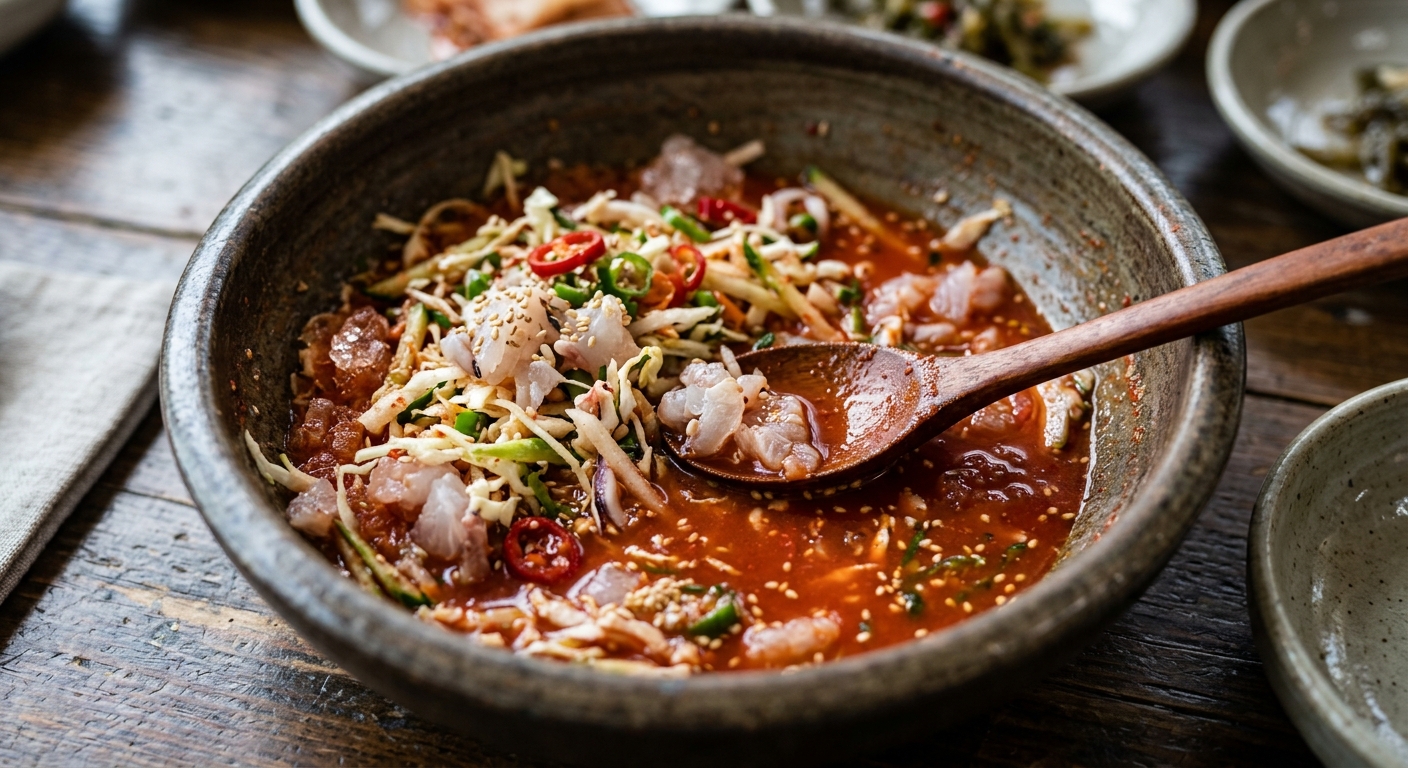
A well-crafted bowl of Mulhoe is a feast for the eyes before the first bite. Beneath a glistening layer of ruby-tinted icy slush, pearly white slices of fish, vibrant green cucumber and perilla leaves, and pale yellow pear strips come together like a watercolor painting. The moment you lift a spoonful of fish, vegetables, and broth to your lips, a wave of refreshing coolness rushes in, instantly reviving both body and spirit from the summer heat.
The first impression on the palate is a lively harmony of spice and bright acidity. The gentle tang of apple vinegar and plum extract awakens the taste buds, followed closely by the warm, earthy heat of gochujang and chili flakes. Natural sweetness from the Korean pear and a hint of soda round out the sharpness, creating an addictive, clean umami that keeps you reaching for another spoonful. On the finish, the herbal fragrance of perilla leaves and the subtle zing of garlic and ginger leave the mouth feeling remarkably clean.
The true magic of Mulhoe lies in the joyful symphony of textures: chewy, tender fish meeting crisp, juicy vegetables inside a broth as cold as mountain ice.
Above all, Mulhoe is a masterpiece of textural contrast. Between the firm, resilient chew of fresh flounder and the silky tenderness of squid, the julienned cucumber, pear, and onion snap cleanly with every bite. Tiny ice crystals melting on the tongue sharpen every flavor, leaving you with a deeply satisfying, cooling sensation down to the very last drop.
4. Cooking Tips and Secrets
Because Mulhoe involves minimal cooking, the quality of the ingredients, temperature control, and balance of seasoning make all the difference. Keep these professional culinary secrets in mind to achieve restaurant-caliber results in your own kitchen.
- Chill the serving bowls: Even the coldest broth will warm up quickly in a room-temperature bowl. Place your serving bowls in the freezer or refrigerator 30 minutes before plating so the dish stays icy cold until the very last bite.
- Keep the broth and paste separate until serving: Dissolving all the gochujang into the broth ahead of time can make the soup cloudy and heavy. Freeze the clear, tangy broth separately and place the seasoning paste on top just before serving so each diner can mix it to their preferred richness.
- Dry the vegetables thoroughly: Any excess water clinging to the washed vegetables will dilute the broth and dull its flavor. Use a salad spinner or pat the vegetables dry with paper towels before plating.
- Use pear juice and soda instead of heavy sugar: Relying solely on sugar for sweetness can leave a cloying aftertaste. Using fresh pear juice as a base with a splash of lemon-lime soda adds natural brightness, boosts refreshment, and naturally masks any fishiness.
- Add regional flair with jepi or perilla seed powder: For a Jeju-style twist, add a tiny pinch of jepi (Korean prickly ash) powder for a citrusy, peppery aroma. Alternatively, a sprinkle of ground toasted perilla seeds adds a comforting nuttiness.
5. Creative Variations
If preparing whole raw fish feels daunting, or if you want a quick weeknight version with a modern twist, Mulhoe adapts wonderfully to whatever you have on hand. As long as you keep the core broth ratio in mind, the possibilities are endless.
Quick & Easy Version: Squid Mulhoe with Store-Bought Naengmyeon Broth
When you are short on time to brew and chill kelp stock, reach for a pouch of store-bought dongchimi naengmyeon (cold noodle) broth. Simply whisk 2 tablespoons of gochujang, 1 tablespoon of vinegar, 1 teaspoon of sugar, and a touch of minced garlic into one pouch (approx. 300ml) of chilled broth. Toss in blanched squid, smoked salmon, or boiled octopus with crisp cucumber and lettuce, and you have a vibrant meal ready in 10 minutes.
Modern Fusion Version: Avocado Salmon Mulhoe
For younger palates or an impressive dinner party starter, try a fusion version featuring fresh salmon and creamy avocado. Arrange thick slices of sashimi-grade salmon, ripe avocado, and baby greens in a bowl, and swap the traditional gochujang base for a light, citrusy yuzu-soy broth made with yuja-cheong (yuzu marmalade), lemon juice, and soy sauce. Serve with a dab of wasabi on the side for an elegant marriage of Korean and Japanese flavors.
Vegan & Healthy Version: Tofu Noodle and Mushroom Mulhoe
Those who avoid seafood can still enjoy the refreshing thrill of Mulhoe. Blanch king oyster and enoki mushrooms briefly, rinse in cold water, and shred them into chewy strips. Pair them with tofu noodles and crisp vegetables in a chilled vegetable kelp broth dressed with the classic sweet-and-spicy paste for a remarkably satisfying, plant-based summer treat.
6. Accompaniments and Table Setting
While Mulhoe is a complete meal on its own, its icy nature benefits greatly from warm, comforting accompaniments that balance the temperature and round out the nutrition of the table.
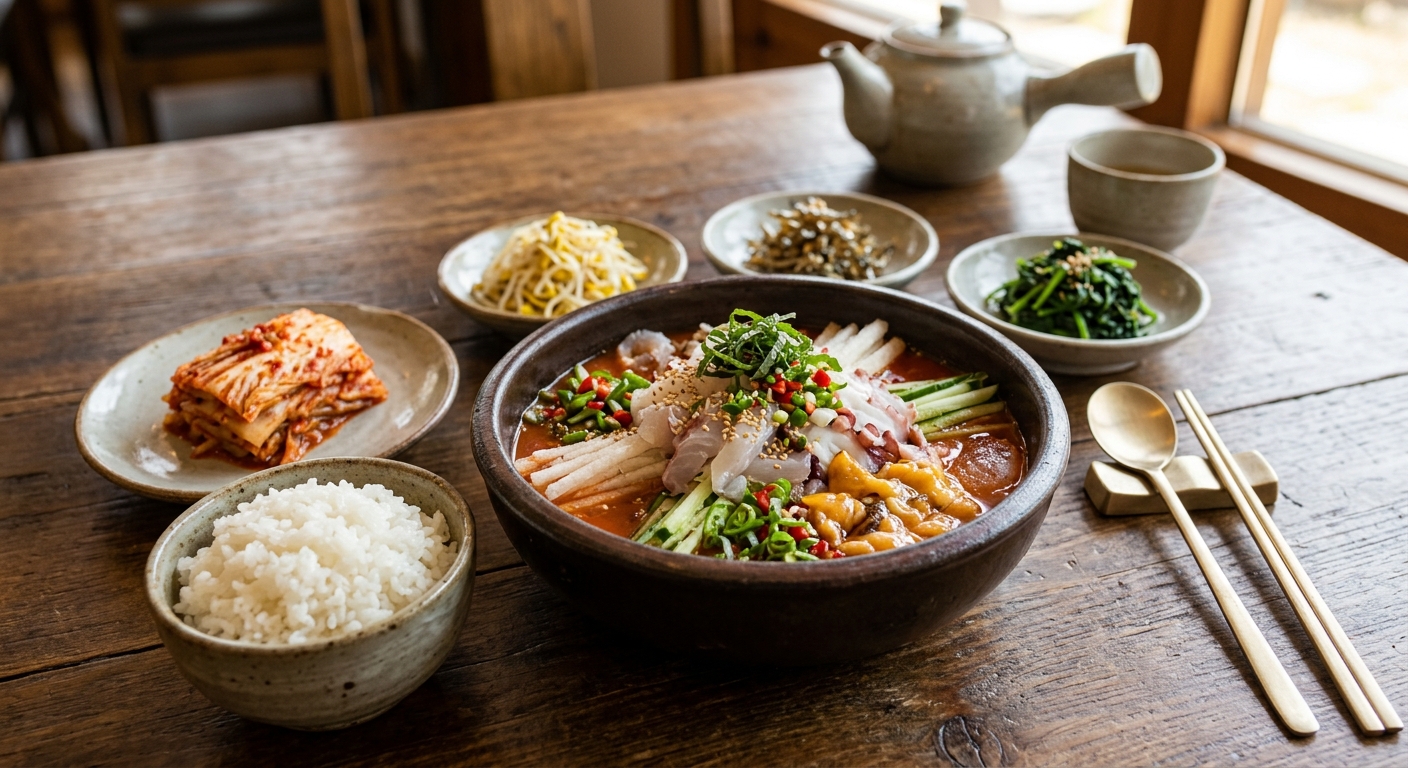
The quintessential companions to Mulhoe are somyeon (thin wheat noodles) and a bowl of warm steamed white rice. Once you have enjoyed most of the fish and vegetables, twirl a bundle of chilled, boiled somyeon into the remaining tangy broth—slurping up the seasoned noodles is widely considered the highlight of the meal. Afterward, spooning small bites of warm, fluffy rice into the leftover broth gently tempers the coldness, soothing the stomach while soaking up every last drop of umami.
A steaming bowl of seaweed soup and a plate of golden pan-fried jeon beside chilled Mulhoe are gentle gestures of care that bring warmth and balance to the table.
For side dishes, opt for warm, mild flavors that complement rather than compete with the bold broth. Small bowls of clear clam seaweed soup (miyeok-guk) or dried pollock soup help warm the palate. Crispy savory pancakes (jeon) made with chives or zucchini, or naturally sweet steamed sweet potatoes and corn, create a delightful contrast against the spicy-tangy soup. A couple of simple, crisp side dishes like fresh cabbage geotjeori or seasoned perilla leaves will complete a modest yet refined summer spread.
If you are serving drinks, choose clean, crisp traditional Korean beverages that highlight the freshness of the seafood. Well-chilled cheongju (refined rice wine), smooth distilled soju, or a light, sparkling unpasteurized makgeolli pair wonderfully with raw fish and crisp vegetables. For non-alcoholic options, finish the meal with a chilled glass of plum tea (maesil-cha) or five-flavor berry tea (omija-cha) to cleanse the palate. A thoughtfully set Mulhoe table brings both cooling relief and warm memories to any gathering.