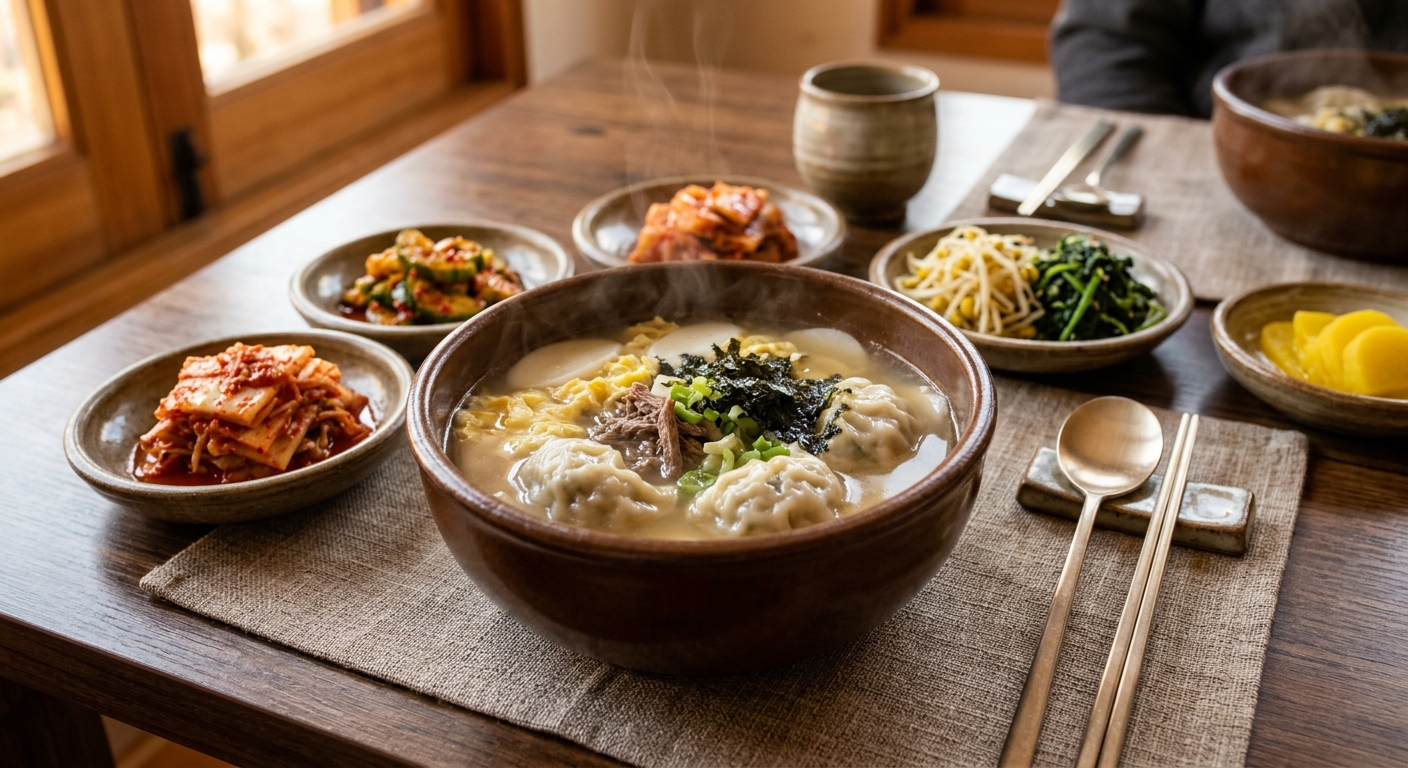
1. History and Cultural Significance of Mandutguk
When the cold winter breeze rattles the paper doorframes, memories arise of the soothing aroma of rich bone broth drifting from the kitchen and the gentle chatter of family gathered around to fold dumplings. Mandutguk, Korean dumpling soup, is an iconic dish of warmth and affection that has nourished both spirit and body through harsh winters for generations.
The historical origins of dumplings (mandu) in Korean culinary tradition date back to the Goryeo Dynasty (918–1392). The famous Goryeo folk ballad Ssanghwajeom refers to "ssanghwa," a type of steamed bun and dumpling introduced by Central Asian Uyghur merchants. Through diplomatic and cultural exchanges with the Yuan Dynasty, dumpling craftsmanship established itself firmly in royal court banquets and noble households. Classic culinary manuscripts from the Joseon era, such as Gyuhap Chongseo, Suunjapbang, and Eumsik Dimibang, feature extensive records on rolling buckwheat or wheat dough into fine wrappers and simmering stuffed dumplings in rich broths.
Mandutguk developed especially in northern provinces like Hwanghae-do and Pyeongan-do, where rice paddies were sparse and crops like wheat and buckwheat flourished. In these northern regions, grand dumplings—often as large as a fist—were prepared for New Year's Day (Seollal) rituals instead of rice cake soup (Tteokguk). The circular shape of mandu, carefully pinched and folded at both ends, traditionally symbolizes ancient currency and silver bullion, as well as a "bokjumeoni" (fortune pouch). Gathering to shape mandu and share a steaming bowl of Mandutguk represents a heartfelt ritual: shedding the hardships of the past year and wishing for longevity, health, and abundant blessings in the year ahead.
"What rests inside a single mandu is not merely seasoned meat and vegetables; it holds a mother's silent prayer and the collective warmth of family wishing for mutual fortune."
2. Authentic Mandutguk Recipe
The essence of Korean culinary wisdom lies in honoring natural flavors and harmonizing yin and yang. Here is the authentic method for preparing Mandutguk featuring tender, bursting dumplings simmered in a crystal-clear beef brisket broth.
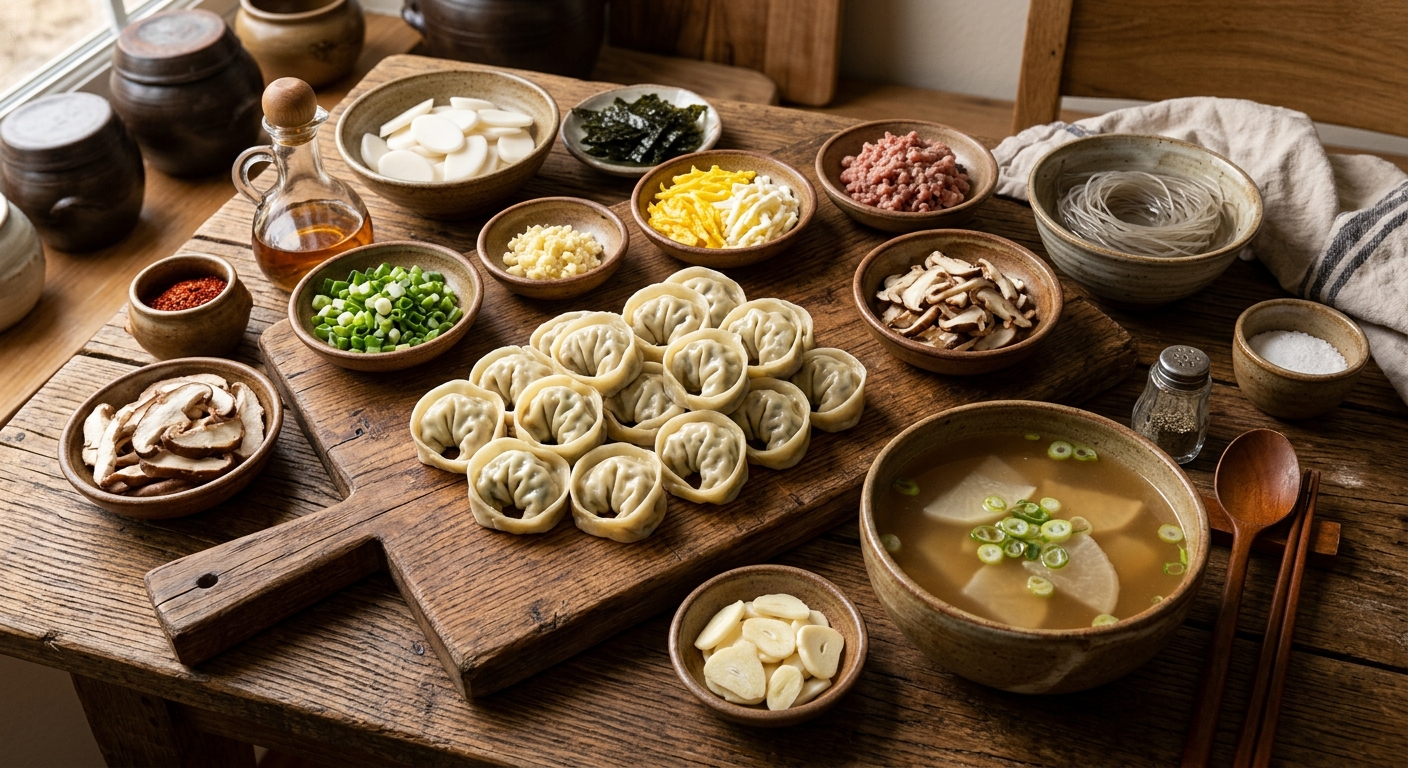
Ingredients (Yield: 4 Servings)
- Dumpling Wrappers: 3 cups all-purpose flour (approx. 360g), 3/4 cup lukewarm water, 1/2 tsp fine sea salt, 1 tsp toasted perilla oil (or vegetable oil).
- Dumpling Filling: 150g ground beef, 200g ground pork, 1 block firm tofu (350g), 250g well-fermented aged Baechu Kimchi, 150g mung bean sprouts (blanched), 1 large leek/scallion, 2 tbsp minced garlic, 1/2 tsp finely grated ginger, 1 tbsp Korean soup soy sauce (Guk-ganjang), 1 tbsp regular soy sauce, 2 tbsp toasted sesame oil, 1 tbsp toasted sesame seeds, a pinch of ground white pepper, 1/2 tsp salt.
- Broth Ingredients: 400g beef brisket (or shank), 3.5 liters water, 200g Korean radish (Mu), 1 scallion (with white roots), 8 whole garlic cloves, 1 sheet dried kelp/dashima (10x10cm), 2 tbsp Korean soup soy sauce, coarse sea salt to taste.
- Garnish & Finish: 2 eggs (separated for yellow and white jidan strips), 1/2 scallion thinly sliced, shredded red chili threads, toasted crushed seaweed (gim), a few drops of sesame oil.
Step-by-Step Cooking Method
- Step 1 - Simmering the Clear Broth: Soak the beef brisket in cold water for 1 hour to purge residual blood. In a large stockpot, combine 3.5 liters of water, brisket, radish, whole scallion, and garlic. Bring to a boil over high heat, skimming off impurities and foam. Add dried kelp, boil for 10 minutes, then discard the kelp. Lower heat to a gentle simmer for 1 hour until the broth turns richly fragrant. Strain through cheesecloth. Shred the cooked beef and lightly season with 1 tsp soup soy sauce, minced garlic, and sesame oil.
- Step 2 - Kneading & Resting Dough: Mix flour with salted water and perilla oil. Knead vigorously for 10 minutes until the surface is smooth and elastic. Wrap in plastic and rest at room temperature for at least 30 to 60 minutes to develop the gluten.
- Step 3 - Preparing the Filling: Mash the tofu with the flat of a knife, place in cheesecloth, and squeeze out all liquid thoroughly. Finely mince the aged kimchi and squeeze out excess brine. Blanch mung bean sprouts, drain, and chop finely. In a large mixing bowl, combine ground beef and pork with garlic, ginger, soy sauces, sesame oil, and seasonings. Knead the meat mixture vigorously until sticky and unified. Fold in the dry tofu, kimchi, sprouts, and scallions gently.
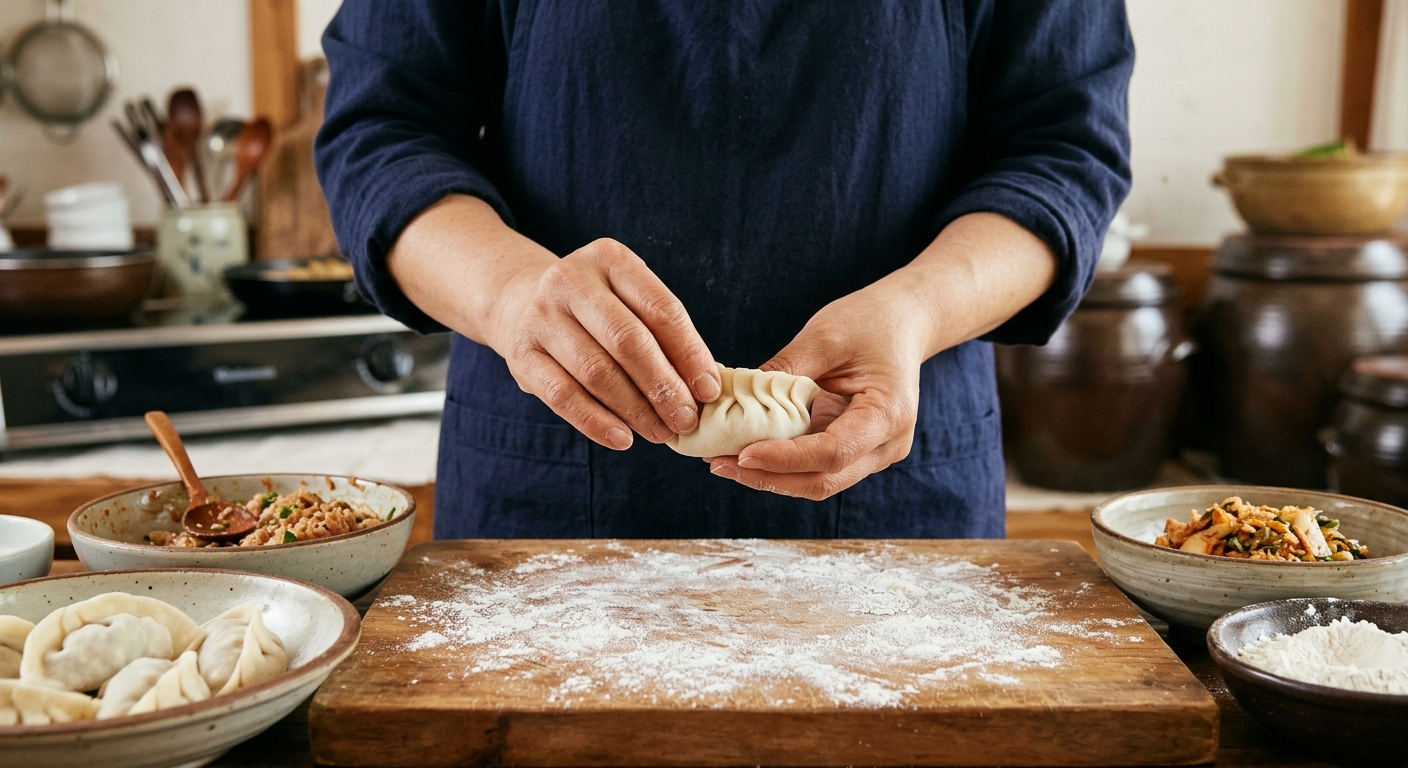
- Step 4 - Assembling the Dumplings: Roll the dough into a cylinder, cut into chestnut-sized pieces (15g each), and roll thinly into rounds with a rolling pin. Place a generous spoonful of filling in the center, lightly dab edges with water, fold into a half-moon, and seal tightly. Bring the two corners together and press firmly to create the traditional circular "fortune pouch" shape.
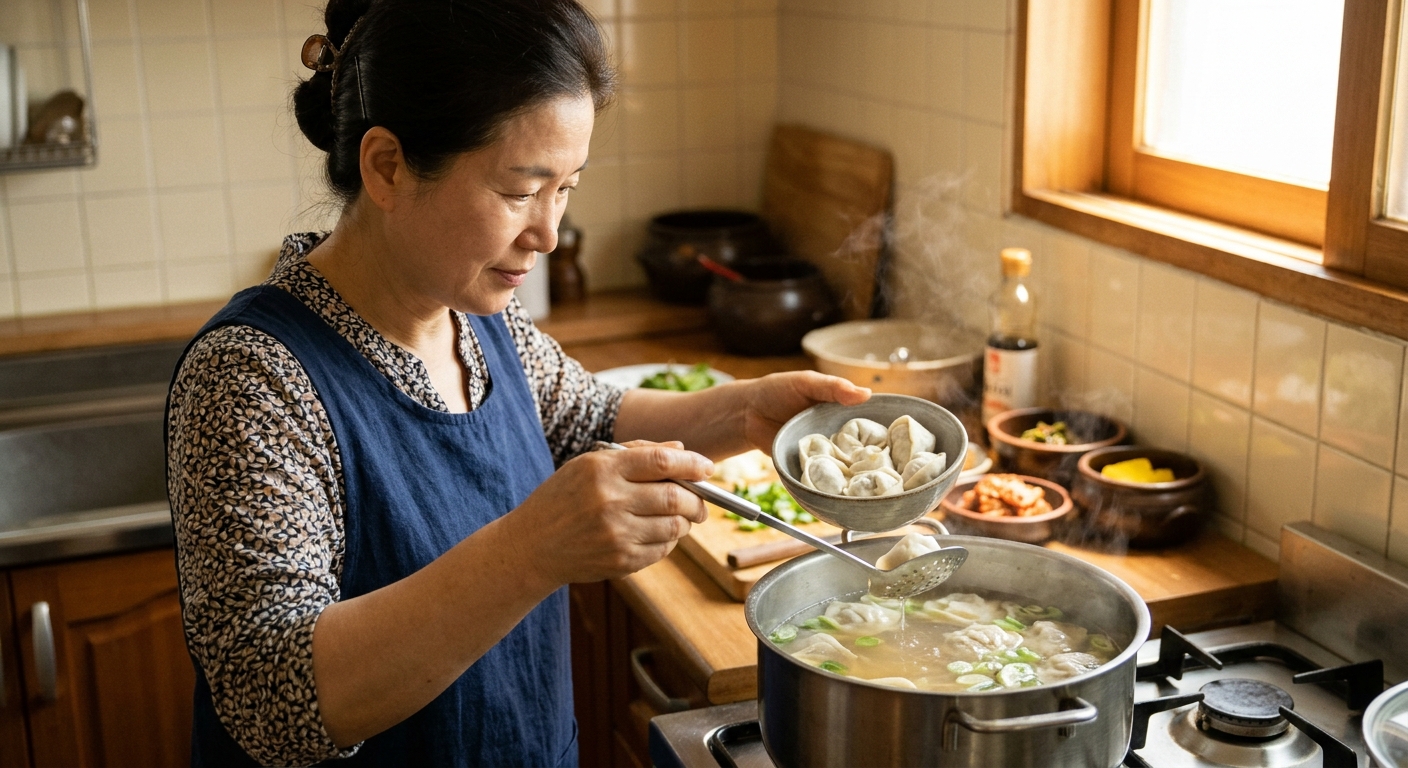
- Step 5 - Boiling the Soup: Bring the strained broth to a rolling boil and season gently with 2 tablespoons of soup soy sauce and coarse salt. Carefully slide in the mandu. Gently nudge them with the back of a ladle to prevent sticking. Once the dumplings float to the surface, continue cooking on medium heat for 2 to 3 minutes until the skins become translucent.
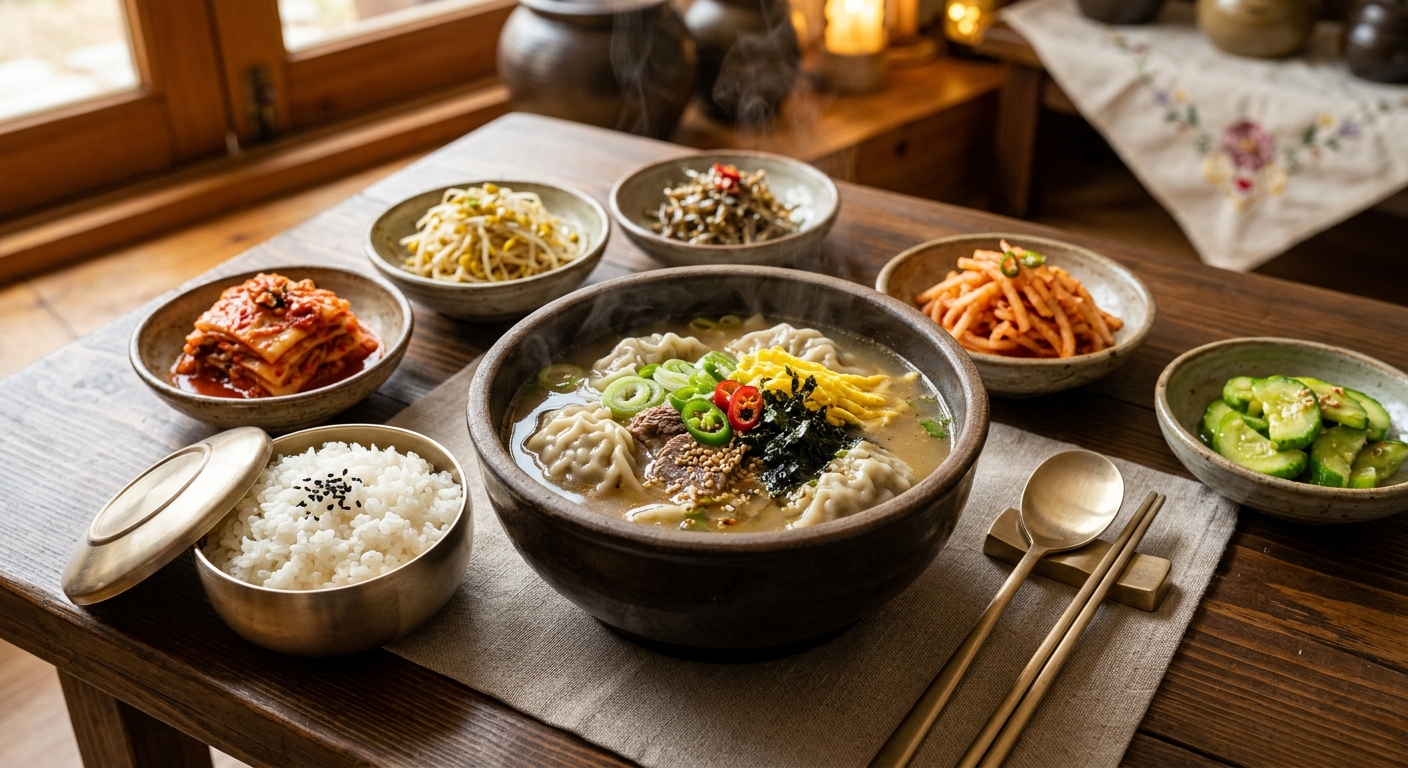
- Step 6 - Plating & Serving: Ladle the plump dumplings into warm ceramic soup bowls and pour the clear, golden broth over them. Crown neatly with seasoned shredded brisket, yellow and white egg garnishes, sliced scallions, chili threads, and a pinch of toasted seaweed.
3. Flavor Profile: A Sensory Harmony
A masterfully crafted bowl of Mandutguk is a multisensory symphony. As the steaming bowl is set before you, the clean, deep scent of simmered beef essence greets your senses, complemented by the nutty, toasted fragrance of sesame oil and delicate egg garnishes. In the translucent broth, the plump dumplings rest gracefully, radiating home-cooked comfort.
The first spoonful of broth reveals pure depth without any artificial heaviness. The brisket and radish render a naturally sweet, savory umami that warms the palate. When you take a bite of the dumpling, the thin wrapper yields with a tender chew, releasing an explosion of rich, savory juices.
The texture within the filling is a masterclass in culinary balance. Savory beef and succulent pork meld harmoniously with the creamy gentleness of pressed tofu. Crunchy mung bean sprouts provide a vibrant snap, while the tang of aged kimchi cuts cleanly through the richness of the meats. The whisper of ginger and garlic lingers pleasantly, creating a clean, refreshing, and deeply satisfying aftertaste.
4. Culinary Secrets and Chef's Tips
The most common pitfalls when making Mandutguk are soggy fillings and bursting wrappers that cloud the broth. Professional chefs rely on several subtle yet indispensable secrets:
- Absolute Moisture Elimination: Moisture is the enemy of structural integrity. Tofu and kimchi must be squeezed dry using a sturdy cheesecloth. Removing excess liquid prevents the filling from becoming wet and soggy, ensuring the delicate wrapper stays intact during boiling.
- The Two-Phase Emulsification: Never mix meat and vegetables together from the start. Season and knead the meat alone first until proteins bind and create a sticky emulsion. Only after the meat base is set should you fold in the tofu and vegetables; this protects vegetable crunch while ensuring juicy, cohesive meatballs.
- The Clear Broth Blanching Technique: Cooking raw dumplings directly in broth can make the soup starchy due to surface flour. For restaurant-grade clarity, gently blanch dumplings in a separate pot of boiling water until 80% cooked, then transfer them into the finished broth for the final simmer.
- Golden Seasoning Formula: Do not rely exclusively on dark soy sauces, which discolors the soup. Use traditional fermented soup soy sauce (Guk-ganjang) for baseline umami, and finalize the seasoning with premium sea salt to preserve a gleaming, amber clarity.
5. Modern Variations and Contemporary Adaptations
While traditional Mandutguk honors time and artisanal effort, modern lifestyles have inspired versatile twists on this beloved classic:
1) Tteok-Mandutguk (Rice Cake & Dumpling Soup)
The most popular sibling of Mandutguk incorporates diagonally sliced white rice cakes (tteokguk-tteok). The contrast between the chewy, velvety rice cakes and the savory, juicy dumplings creates a comforting balance of complex carbohydrates and proteins that sustains energy throughout the festive winter day.
2) The 15-Minute Everyday Mandutguk
Tailored for busy households and single living, this version pairs high-grade frozen dumplings with store-bought ox-bone broth (Sagol-gomtang). Dilute the bone broth slightly with water, bring to a boil, drop in frozen mandu with minced garlic, and stir in a spoonful of anchovy or sand lance fish sauce (aekjeot) for instant umami. Drizzle beaten eggs across the top and finish with black pepper for quick comfort.
3) Modern Spicy Chili Oil Mandutguk
A spicy fusion favorite among younger diners: blooming Korean chili powder in sesame oil to create a fiery broth base, accented with soybean sprouts and bok choy. The biting warmth pairs brilliantly with the rich meat dumplings, making it an invigorating restorative soup.
6. Table Setting and Perfect Pairings
Because Mandutguk contains grains in its wrapper, proteins in meat and tofu, and vital nutrients in its vegetable filling, it is a complete, self-sustaining meal. Accompaniments should elevate its comforting profile while cleansing the palate.
Essential Banchan (Side Dishes)
- Well-Ripened Kkakdugi (Cubed Radish Kimchi): The crisp snap and effervescent acidity of fermented radish provide a crisp counterpoint to the tender dumpling.
- Fresh Baechu Geotjeori (Fresh Cabbage Slaw): Tossed with fresh chili flakes and aromatic fish sauce, freshly made kimchi adds vitality and spicy brightness.
- Soy-Braised or Pickled Chili Peppers: A clean, savory pickle cleanses any residual fattiness, keeping every spoonful as enticing as the first.
Traditional Liquor and Dining Finale
For an authentic dining experience, serve Mandutguk in heavy, heat-retaining ceramic ware (Ttuksbaegi) or brass bowls (Bangjja Yugi). A small bowl of freshly cooked millet or multigrain rice can be served alongside; once the dumplings are savored, stirring a spoonful of warm rice into the remaining broth topped with radish kimchi represents the quintessential Korean comfort dining ritual.
When pairing with alcoholic beverages, opt for traditional Korean rice wines such as refined Cheongju (Yakju) or fresh, unpasteurized Makgeolli. The crisp, clean finish of Cheongju cuts through meat richness, while the creamy effervescence and lactic acidity of Makgeolli harmonize with the savory depth of the dumpling filling, transforming a simple meal into an unforgettable celebration of Korean culinary heritage.