A Bowl of Wishes for the New Year Morning - Authentic Tteokguk Recipe
1. History and Origin of Tteokguk
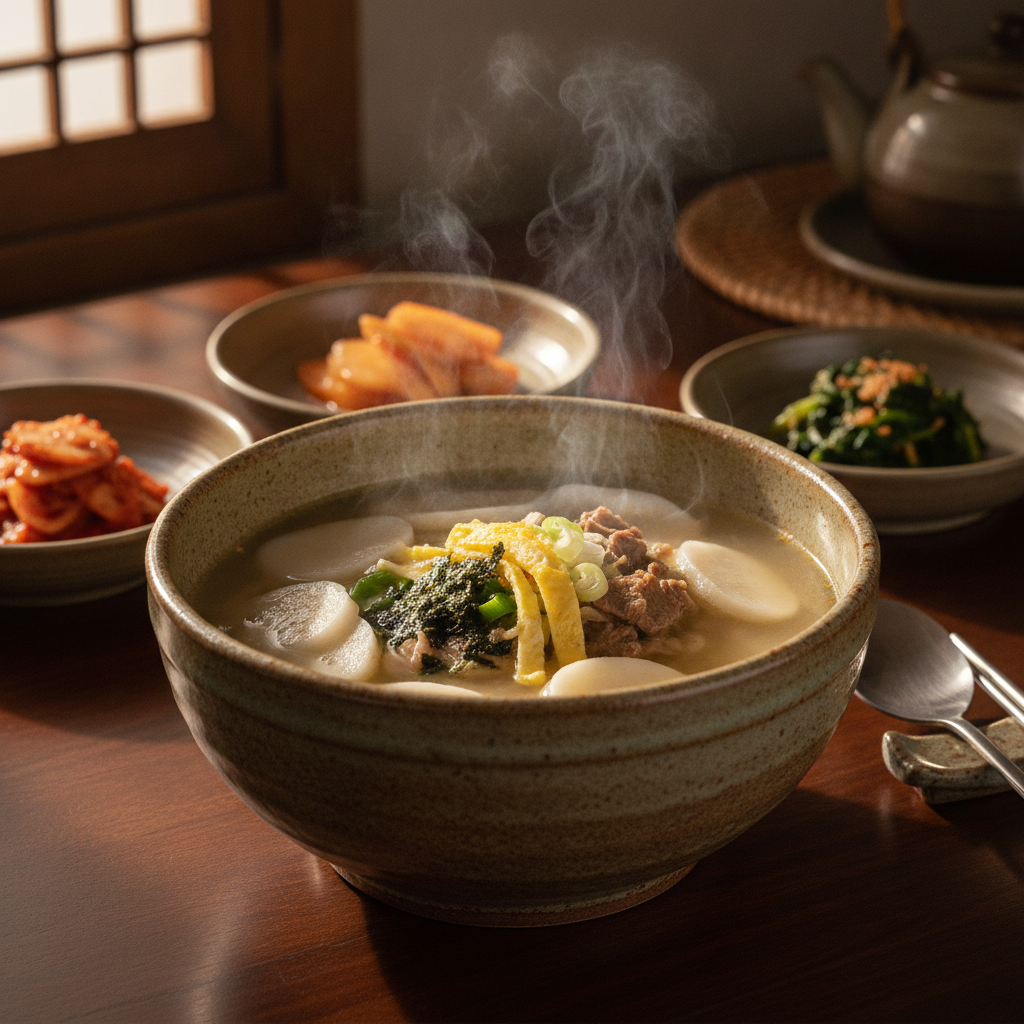
A bowl of white, chewy Tteokguk holds more than just the meaning of food for Koreans. Tteokguk is a representative seasonal dish traditionally eaten on New Year's Day, symbolizing gaining another year of age and bringing the whole family together. Its history is very deep, with records showing that Tteokguk was eaten on Seollal (Lunar New Year) as early as the Goryeo Dynasty. During the Joseon Dynasty, it became even more common, evolving into a holiday dish enjoyed by everyone from commoners to the king.
Garaetteok, the main ingredient of Tteokguk, is long and stretched, symbolizing wishes for longevity and wealth. The practice of slicing garaetteok into coin shapes is a wish for an abundance of wealth throughout the year. The white color of Tteokguk signifies purity and new beginnings, embodying the symbolic meaning of washing away the old year's grime and welcoming a fresh start. The toppings, such as jidan (egg garnish), gim (seaweed), and meat, add vibrant colors, not only enhancing visual beauty but also revealing the wisdom of our ancestors who sought harmony with the philosophy of Eumyangohaeng (Yin and Yang and Five Elements).
In particular, while the broth for Tteokguk varies slightly by region and household, beef brisket broth is the most common and plays a crucial role in creating a deep and rich flavor. In the cold winter, a warm bowl of Tteokguk has served as a precious medium to warm both body and soul, and to share affection among family members. As such, Tteokguk is more than just a dish; it is a profound food imbued with Korean history, culture, and the hopes and aspirations of welcoming the New Year.
2. Authentic Recipe
The most authentic Tteokguk is characterized by its deep and clean flavor, based on beef brisket broth. Prepare it with sincerity, as if cooking for the whole family gathered together.
Ingredients List:
- Garaetteok (rice cake): 600g (for 4 servings, pre-sliced for Tteokguk or sliced manually)
- Beef brisket: 300g
- Water: 2.5L (for broth)
- Gukganjang (Korean soup soy sauce): 3 tablespoons (adjust seasoning to taste)
- Minced garlic: 1 tablespoon
- Sesame oil: 1 tablespoon
- Salt: a pinch
- Eggs: 2 (for jidan garnish)
- Gim (roasted seaweed): 1 sheet (shredded)
- Green onion: 1/2 stalk (chopped)
- Black pepper: a pinch
- Cooking oil: a little (for jidan)
Detailed Cooking Steps:
- Making the Broth:
- Soak the beef brisket in cold water for about 30 minutes to remove blood.
- Place the brisket and 2.5L of water in a pot. Bring to a boil over high heat, then reduce to medium-low and simmer for 1 hour 30 minutes to 2 hours to make the broth. Skim off any foam that rises to ensure a clear broth.
- Once the broth is done, remove the brisket and strain the broth through a cheesecloth to clarify.
- Preparing the Meat:
- Let the cooked brisket cool slightly, then shred it along the grain or cut into bite-sized pieces.
- Season the shredded meat with 1 tablespoon of Gukganjang, 1/2 tablespoon of minced garlic, 1/2 tablespoon of sesame oil, and a pinch of black pepper. Mix well.
- Preparing the Tteok (Rice Cakes):
- Soak the Tteokguk rice cakes in cold water for at least 30 minutes to soften. (Be careful not to soak too long, as they can become too soft.)
- Drain thoroughly in a colander.
- Preparing the Garnish:
- Separate egg whites and yolks. Remove the chalazae and beat each well.
- Heat a lightly oiled pan over low heat and make thin egg white and yolk jidan. Once cooled, julienne them.
- Lightly toast the gim and shred it finely or crush it.
- Chop the green onion finely.
- Cooking Tteokguk:
- Pour the clarified broth into a pot and bring to a boil over high heat.
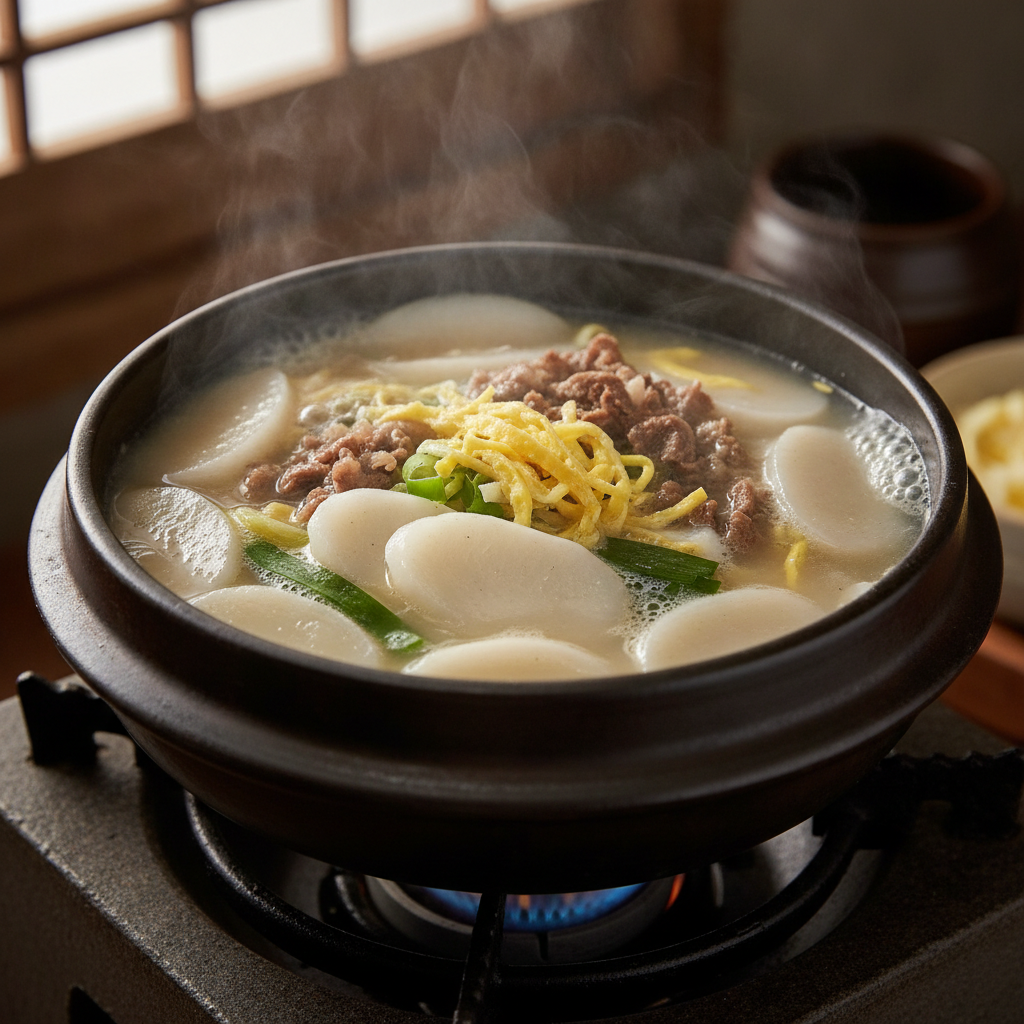
- Once the broth boils, add the soaked rice cakes, the seasoned beef, and the remaining 1/2 tablespoon of minced garlic. Cook until the rice cakes are soft.
- When the rice cakes are almost cooked, season with Gukganjang, and add salt to taste if needed.
- Finally, add the chopped green onion and bring to a quick boil to finish.
- Serving:
- Ladle the hot Tteokguk into bowls and top with the prepared egg jidan and gim garnish.
- Optionally, sprinkle with a little black pepper for enhanced flavor.
3. Flavor Characteristics
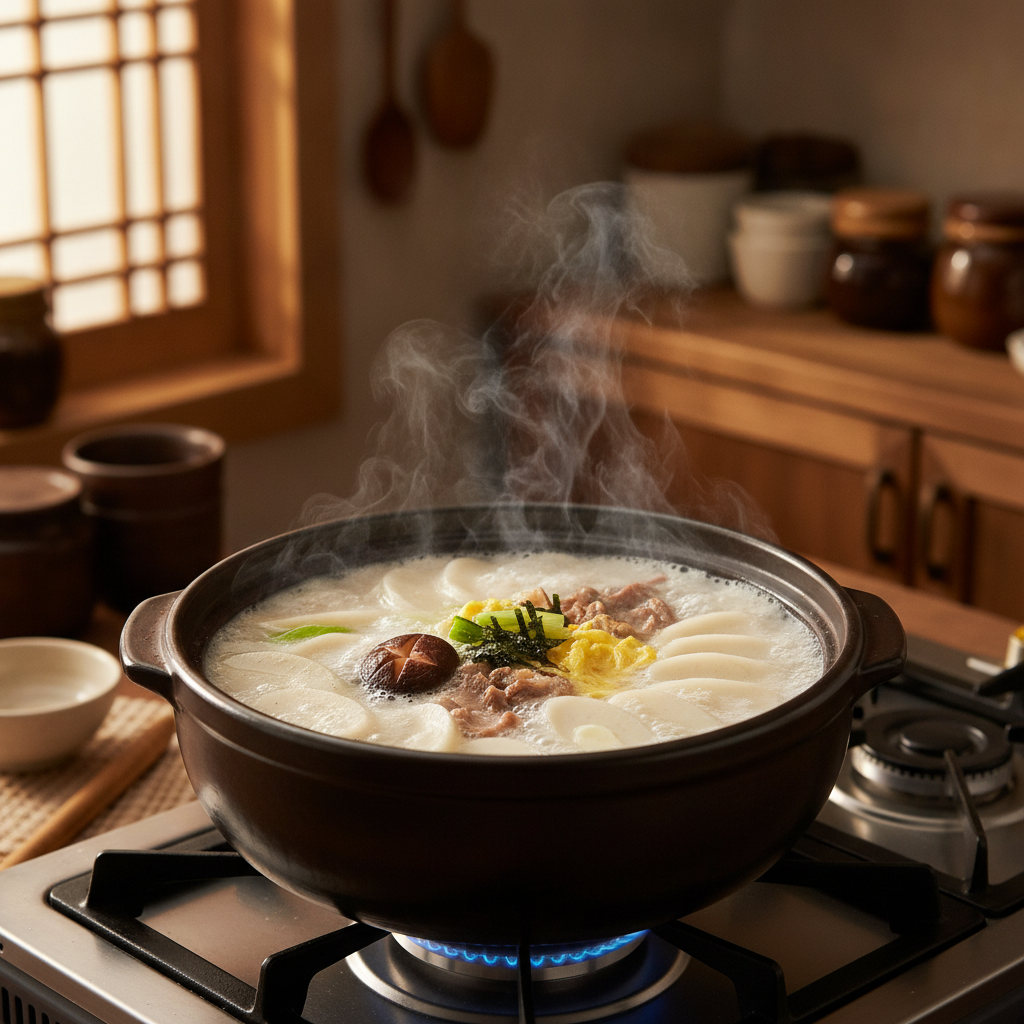
The taste of authentic Tteokguk can be described in one word: 'clean and deep.' The milky beef brisket broth delivers a profound and savory umami flavor the moment it touches the tongue, with a long-lasting warmth that envelops the entire body. The broth, simmered for a long time, is remarkably clean and refreshing, with minimal oiliness.
The Tteokguk rice cakes, the most crucial component, boast a chewy yet soft texture that grows with each bite. Cooked to perfection in the hot broth, the snow-white rice cakes stretch satisfyingly without being overly tough, making them enjoyable for all ages. The subtle rice aroma of the Tteok harmonizes with the deep flavor of the broth, creating an even richer taste.
The egg jidan garnish adds a smooth texture and visual delight with its yellow and white hues. The savory roasted gim flakes contribute a salty umami, and the shredded beef provides a pleasant chewiness, further enriching the broth's flavor. Finally, the finely chopped green onions add a subtle fragrance and a refreshing touch, invigorating an otherwise potentially monotonous soup.
All these ingredients come together to create a harmonious symphony of flavors in every mouthful. A steaming bowl of Tteokguk warms the body and soul on a cold winter day, offering magical comfort and deep satisfaction. Beyond a simple meal, it provides a special experience imbued with Korean sentiment and rich flavors.
4. Cooking Tips and Secrets
As a Korean food research chef, I'd like to share