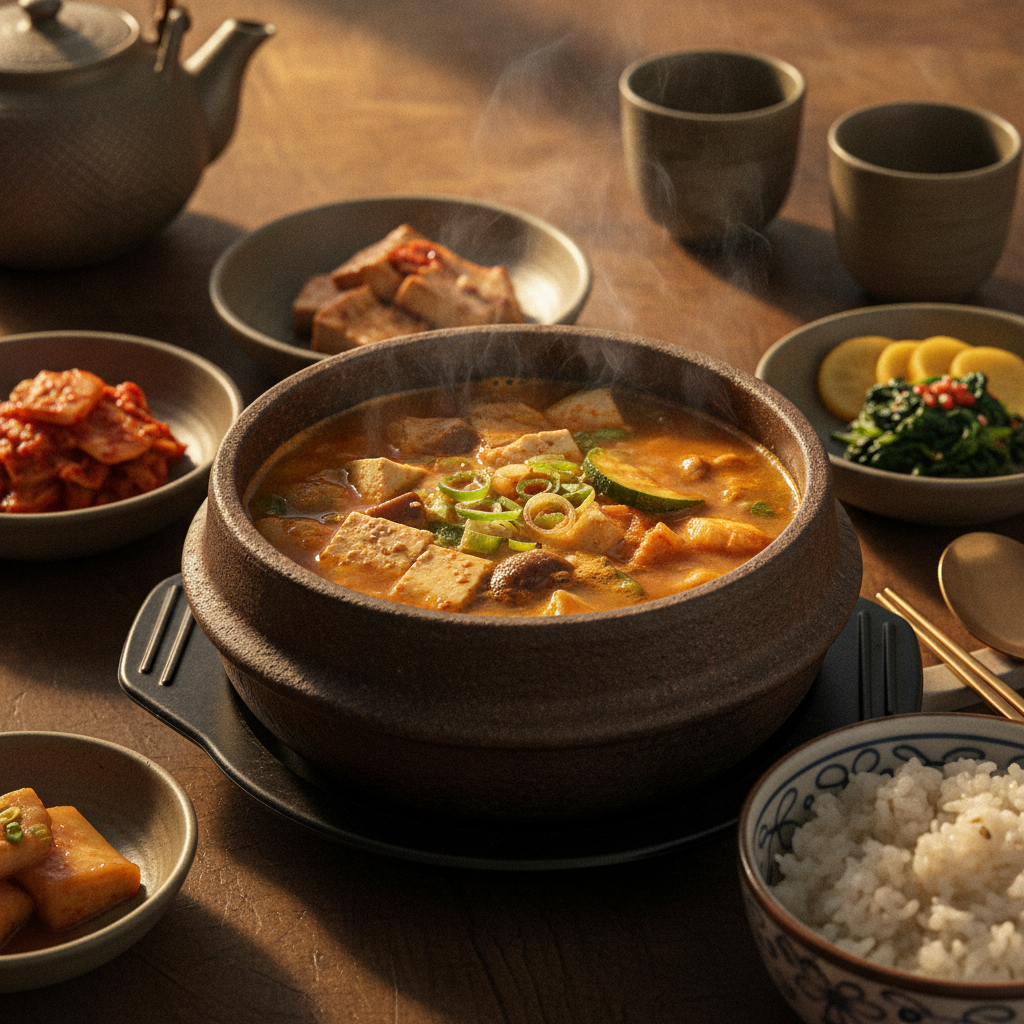
Hello everyone, exploring the deep flavors of Korean cuisine! Today, I want to share a story about Doenjang-jjigae, a hearty Korean soybean paste stew that is an indispensable part of Korean meals, filled with a mother's touch and affection. Doenjang-jjigae is more than just a meal; it's a soul food that encapsulates our nation's history, joys, sorrows, and wisdom of life. Just looking at Doenjang-jjigae bubbling in an earthenware pot warms the heart, and its deep aroma has a magical power to revive even lost appetites. Now, I invite you to the world of this comforting and profound Doenjang-jjigae.
The History and Origin of Doenjang-jjigae
The history of Doenjang-jjigae runs parallel to the history of the Korean people. The origin of doenjang (soybean paste) dates back to before the Three Kingdoms period, and the culture of fermenting soybeans to make paste has continued for thousands of years on the Korean Peninsula. Especially during the Goryeo Dynasty, due to the influence of Buddhism, vegetarianism was preferred over meat, making doenjang a crucial source of protein and seasoning. Soups utilizing doenjang naturally developed and became a staple food, especially on the tables of commoners, alongside rice.
It is presumed that Doenjang-jjigae took its current form during the Joseon Dynasty. At that time, it was called 'jangguk' or 'jangmul' and was consumed by adding various ingredients. Depending on the season and region, people would add available vegetables, seafood, and tofu, making Doenjang-jjigae truly a dish intimately connected with the lives of commoners. In difficult times, even when there were no other side dishes, one bowl of Doenjang-jjigae was enough to finish a bowl of rice. This was due to the savory taste, nutrition, and versatility of doenjang, which pairs well with any ingredient. Thus, Doenjang-jjigae is more than just a dish; it is an important culinary heritage symbolizing the joys and sorrows, wisdom, and communal culture of Koreans, cherished to this day.
Authentic Recipe
Ingredients List (Serves 2-3)
- Doenjang (Korean soybean paste): 3 tablespoons (mixing homemade doenjang and commercial doenjang can create a deeper flavor)
- Gochujang (Korean chili paste): 1/2 tablespoon (optional, for a spicier taste)
- Rice water or kelp-anchovy broth: 600ml (using kelp-anchovy broth enhances umami)
- Tofu: 1/2 block (for pan-frying or stew)
- Korean zucchini (Aehobak): 1/3 piece
- Onion: 1/2 piece
- Green onion: 1/2 stalk
- Cheongyang chili pepper: 1 piece (optional, according to preference)
- Shiitake mushrooms: 2 pieces (optional, adds umami)
- Oyster mushrooms: a handful (optional)
- Minced garlic: 1 tablespoon
- For kelp-anchovy broth: 10g dried anchovies for broth, 1 10x10cm piece of kelp (omit if using rice water)
- Optional ingredients: a handful of clams, 100g pork (neck or belly, diced), 100g beef (brisket or chuck, thinly sliced)
Detailed Cooking Steps
- Prepare Broth (Rice Water or Kelp-Anchovy Broth):
- When using rice water: Collect the second or third rinse water when washing rice.
- When using kelp-anchovy broth: Add 700ml of water, dried anchovies, and kelp to a pot and bring to a boil. Once it boils, remove the kelp first, then simmer for about 10 more minutes over medium heat before removing the anchovies.
- Prepare Ingredients:
- Dice tofu, Korean zucchini, onion, and shiitake mushrooms into similar sizes.
- Slice green onion and Cheongyang chili pepper diagonally.
- If using optional pork or beef, cut into bite-sized pieces. If using clams, soak them in salted water to purge sand.
- Sautéing Ingredients (Optional):
- Heat a little cooking oil in a pot and sauté pork or beef first. When the meat is partly cooked, add onion and sauté until translucent. (This process helps the meat flavor infuse better into the broth and adds a deeper richness.)
- Dissolve Doenjang:
- Pour the prepared broth (rice water or kelp-anch