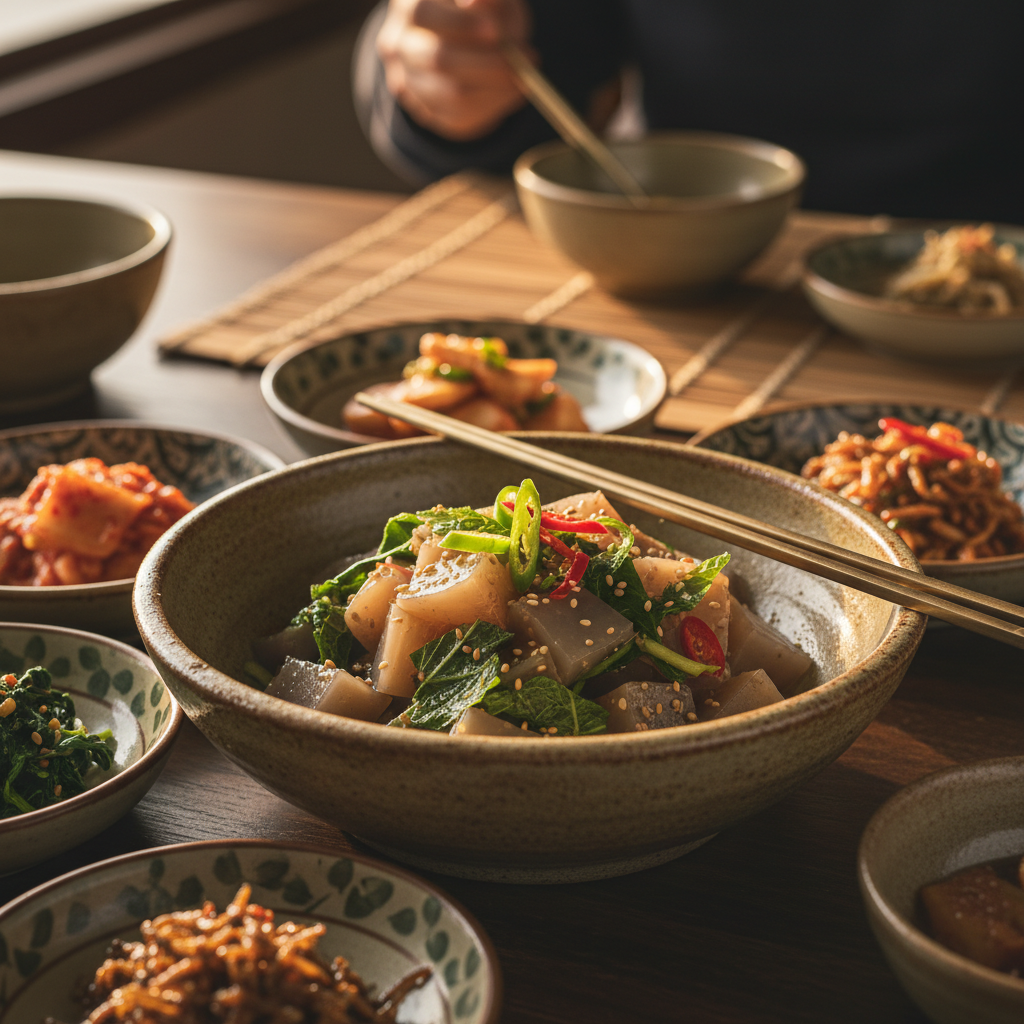
The History and Origin of Acorn Jelly
Acorn jelly, known as dotorimuk in Korean, is a traditional dish whose origins date back to the Goryeo period. It was widely consumed in mountainous regions, primarily made after harvesting acorns in the fall. During times of grain scarcity, acorn jelly served as a vital nutritional source. It boasts a deep flavor within its simplicity, representing a significant part of Korea's food culture, which has developed in harmony with the natural environment.
Traditional Recipe
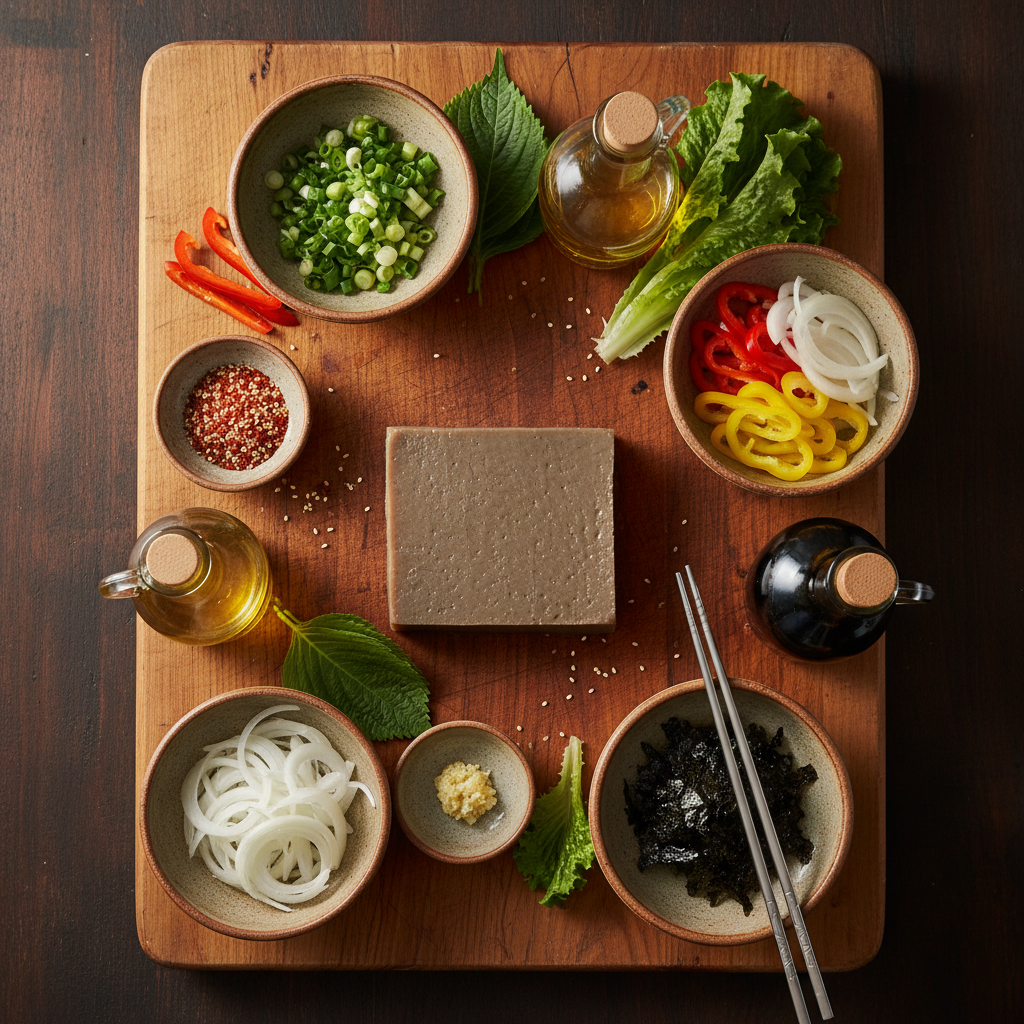
Ingredients
- 1 cup acorn powder
- 4 cups water
- A pinch of salt
- 2 tablespoons soy sauce
- 1 teaspoon minced garlic
- 1 tablespoon sesame oil
- Green onions, chili peppers, and seaweed flakes for garnish
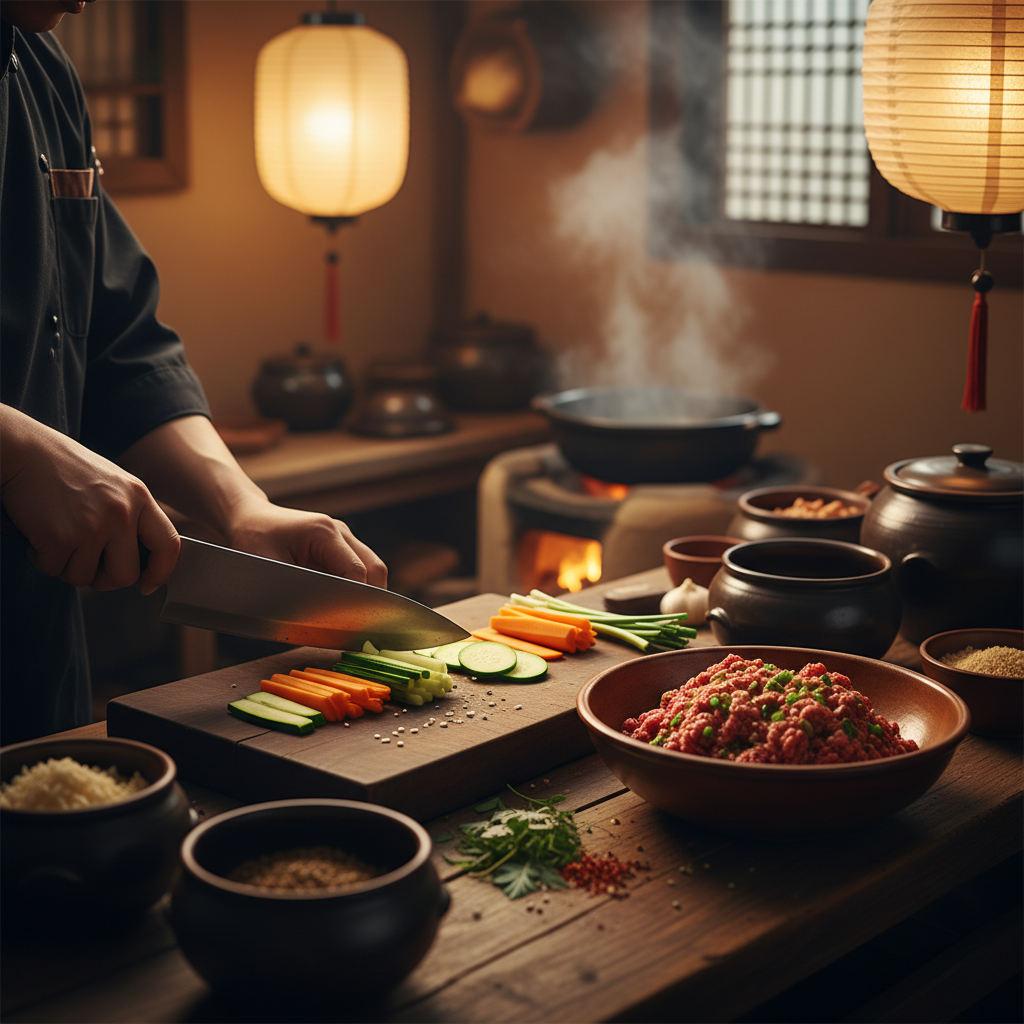
Instructions
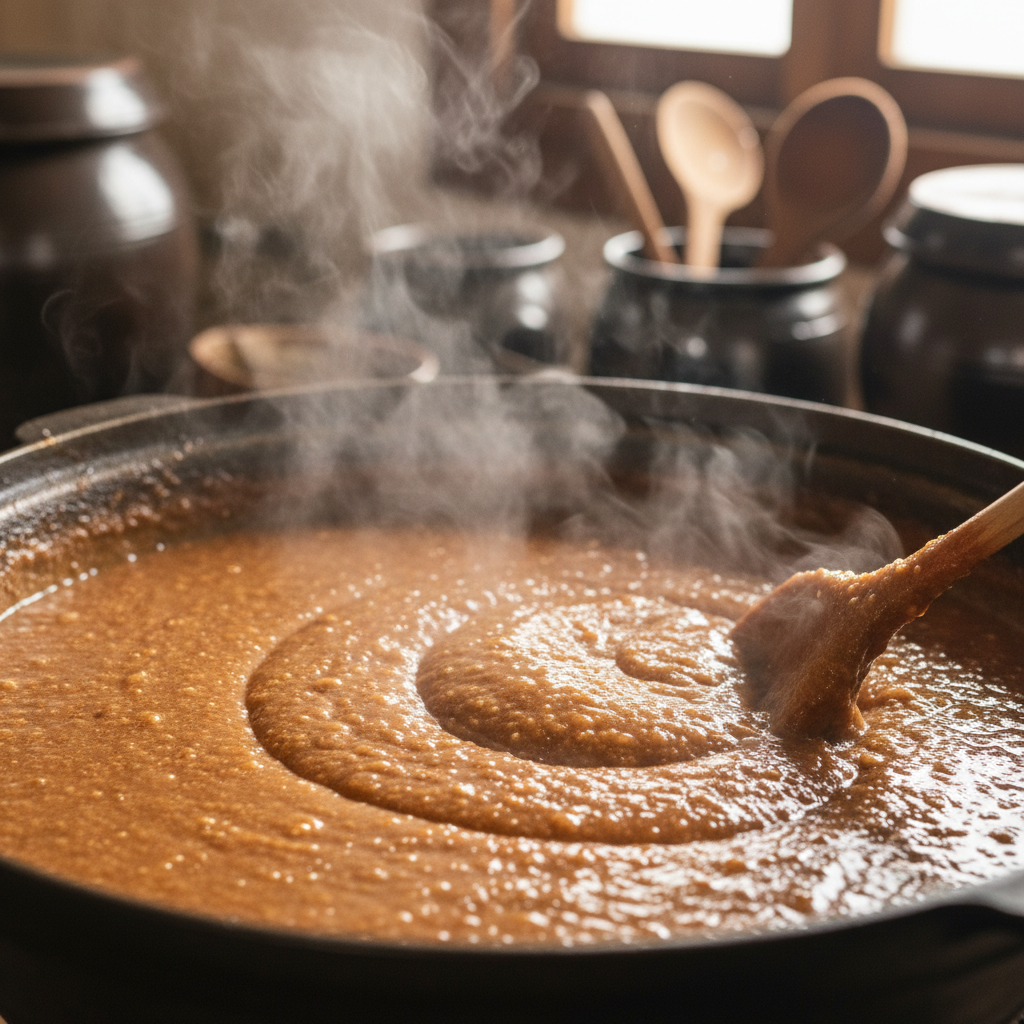
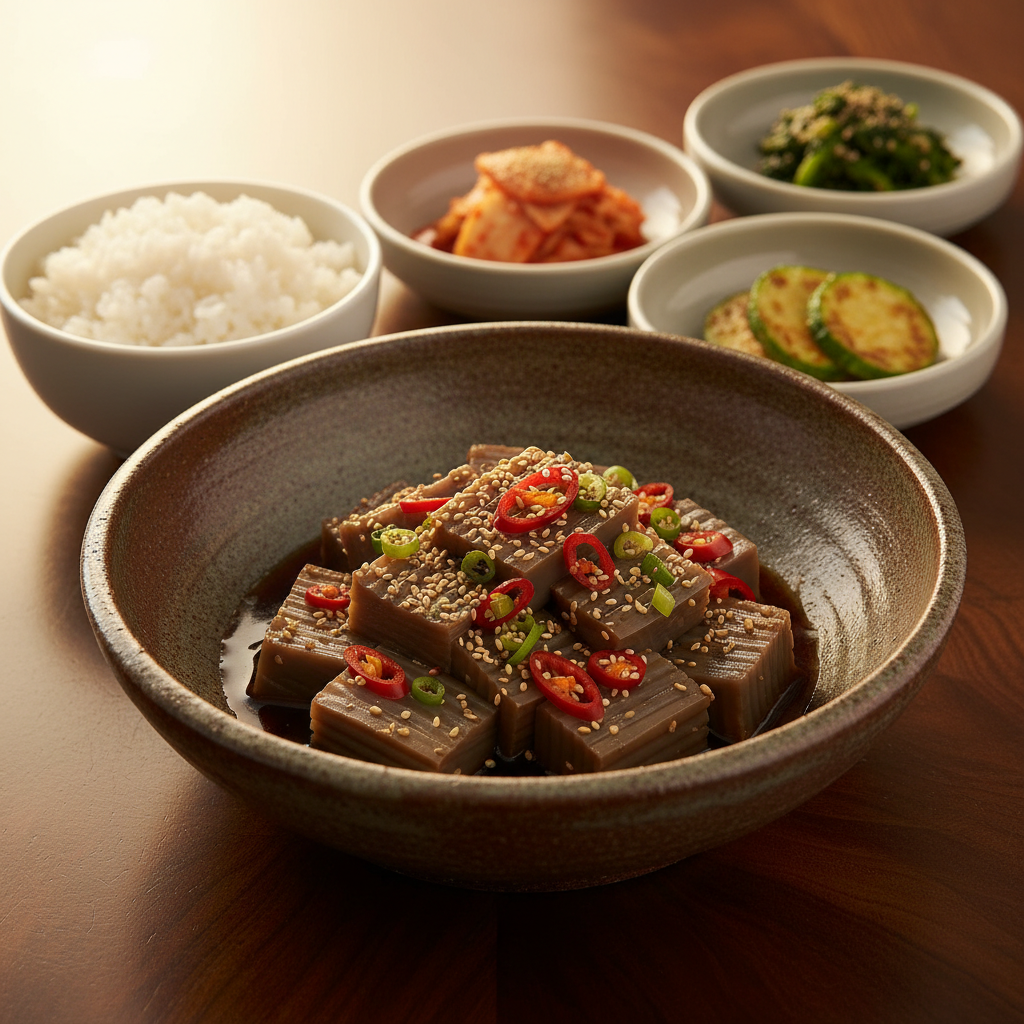
Begin by mixing acorn powder and water in a large pot. Cook over low heat while stirring continuously. As it begins to thicken, add a pinch of salt for seasoning. Once the mixture reaches a thick consistency, remove it from the heat and pour it into a flat dish to cool. Once completely cooled, cut the jelly into desired sizes. Mix soy sauce, minced garlic, and sesame oil to create a sauce to pour over the jelly. Finish by garnishing with green onions, chili peppers, and seaweed flakes.
Characteristics of the Flavor
Acorn jelly has a subtle aroma and a nutty taste on its own. It is characterized by a soft yet resilient texture. When paired with the sauce, the spicy and savory flavors blend to create a harmonious taste experience. The unique sensation of it melting in the mouth along with its nuttiness offers an unforgettable charm once tasted.
Cooking Tips and Secrets
To enhance the flavor of acorn jelly, it is recommended to sift the acorn powder to remove any impurities. Ensuring continuous stirring while simmering is crucial, requiring patience until it reaches the right consistency. Using homemade or aged soy sauce can add depth to the flavor.
Variations of the Recipe
Modern adaptations of acorn jelly include incorporating it into salads. Dice the jelly into cubes and mix with various vegetables, adding dressing for a healthy and unique dish. It can also be thinly sliced and lightly fried for a snack or served with different sauces for a fusion dish.
Accompaniments and Serving Suggestions
Acorn jelly is delightful on its own, but when accompanied by various side dishes, it completes a more diverse meal. It pairs well with Korean side dishes such as soy sauce marinated crab, kimchi pancakes, or mountain vegetable salads. Clear rice wine or makgeolli are excellent drinks to accompany it. Served with rice, it makes for a hearty and healthy meal.