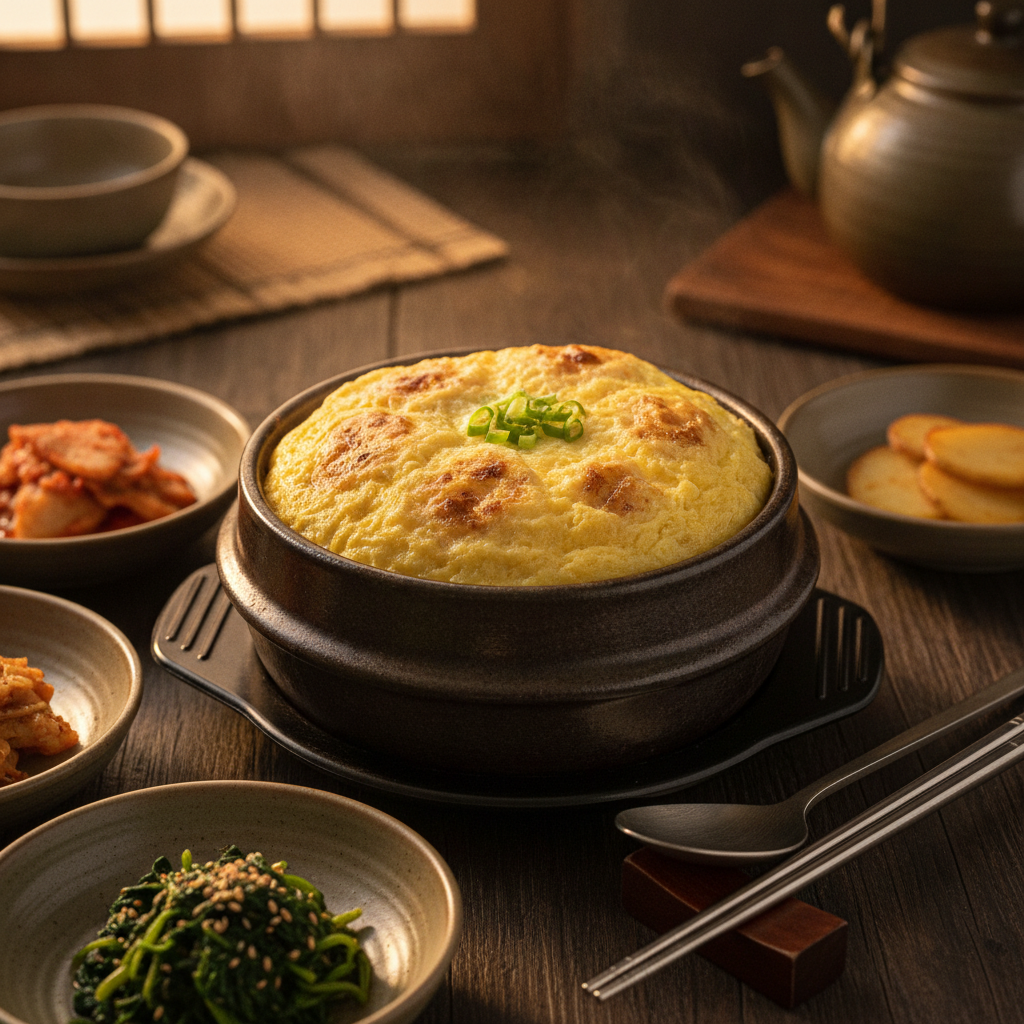
The Taste of Korean Tradition, The Aesthetics of Softness - Authentic Gyeran-jjim Recipe
1. History and Origin of Gyeran-jjim
Gyeran-jjim, or Korean steamed egg, is a beloved and familiar dish that has been cherished on Korean dining tables for a long time. While its exact history is not precisely documented, it is presumed that chickens and their eggs were used to supplement protein in grain-based diets even before the Three Kingdoms period. In the Joseon Dynasty culinary text <Siui Jeonseo>, a recipe similar to Gyeran-jjim appears under the name 'Haemul-jjim' (steamed seafood). At that time, eggs, being a precious ingredient, were likely steamed or boiled with various vegetables. As eggs became more common on the tables of ordinary people, Gyeran-jjim evolved into even more diverse forms.
Gyeran-jjim is more than just a dish to fill one's stomach; it holds a special meaning in Korean food culture. A warm and soft bowl of Gyeran-jjim evokes the taste of a mother's cooking and has been considered a comforting food that soothes the stomach. It is frequently served to children, the elderly, and patients to provide nutrition and ease digestion, and it also acts as a gentle neutralizer on a Korean table often filled with spicy dishes. As a side dish for rice, an accompaniment to drinks, or even as a standalone meal, Gyeran-jjim is a humble yet profound traditional dish that has shared the joys and sorrows of Koreans' lives.
Gyeran-jjim is more than just a meal on the Korean dining table; it is a precious cultural heritage that conveys warmth and comfort.
2. Authentic Recipe
Ingredients (Serves 4)
- 5 eggs (room temperature)
- 300ml kelp broth (5g kelp, 350ml water)
- 1 teaspoon salted shrimp (saeujeot) (or ½ teaspoon salt)
- ½ teaspoon Korean soup soy sauce (gukganjang)
- 2 tablespoons minced green onion
- 1 tablespoon minced carrot
- ½ teaspoon sesame oil
- A pinch of toasted sesame seeds
Detailed Cooking Steps
- Make kelp broth: In a pot, add 350ml water and 5g kelp. When it starts to boil over medium-low heat, remove the kelp. Reduce heat and simmer for another 5 minutes, then strain out 300ml. (Be careful not to leave the kelp in boiling water for too long, as it can produce a bitter taste.)
- Prepare egg mixture: In a large bowl, crack 5 room-temperature eggs. Gently beat them with chopsticks or a whisk, removing any chalazae (white strings). Do not whisk too vigorously, as too much foam can make the Gyeran-jjim tough.
- Season and strain: Add the prepared 300ml kelp broth, 1 teaspoon salted shrimp, and ½ teaspoon Korean soup soy sauce to the beaten egg mixture and mix well. Strain this egg mixture through a fine-mesh sieve twice. This step is crucial for achieving a very smooth and uniform texture in the Gyeran-jjim.
- Prepare vegetables: Have the minced green onion and minced carrot ready. You can also add minced shiitake mushrooms or zucchini if desired.
- Steam Gyeran-jjim (in a dolsot or steamer):
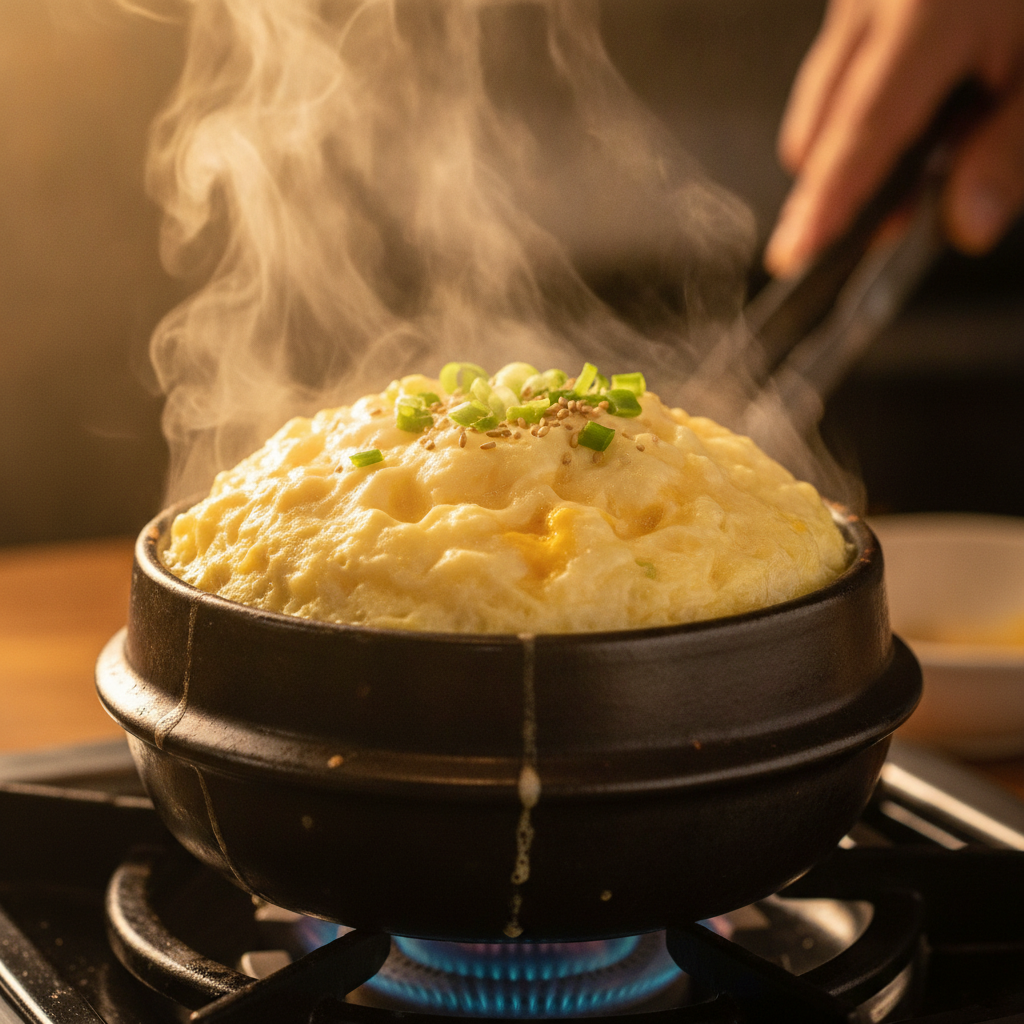
- Using a dolsot (earthenware pot): Lightly coat a dolsot with sesame oil and heat it over medium heat. Pour in about ⅔ of the strained egg mixture. When the edges start to cook, gently stir the bottom with chopsticks. Once about ⅓ of the egg mixture is cooked, reduce the heat to low, sprinkle the minced green onion and carrot evenly, cover with a lid, and steam for 5-7 minutes. If you don't have a lid, you can cover it with a wide plate.
- Using a steamer: Pour the egg mixture into a heat-resistant container (such as a ceramic bowl). Place it in a steamer that has already built up steam and steam over medium-low heat for 15-20 minutes. When steaming, cover the top of the container with plastic wrap or a lid to prevent water droplets from falling, which will result in a smoother surface. Insert a skewer; if clear liquid comes out, it's done.
- Finish: Drizzle ½ teaspoon of sesame oil and sprinkle toasted sesame seeds over the cooked Gyeran-jjim. Serve immediately while warm.
3. Flavor Characteristics
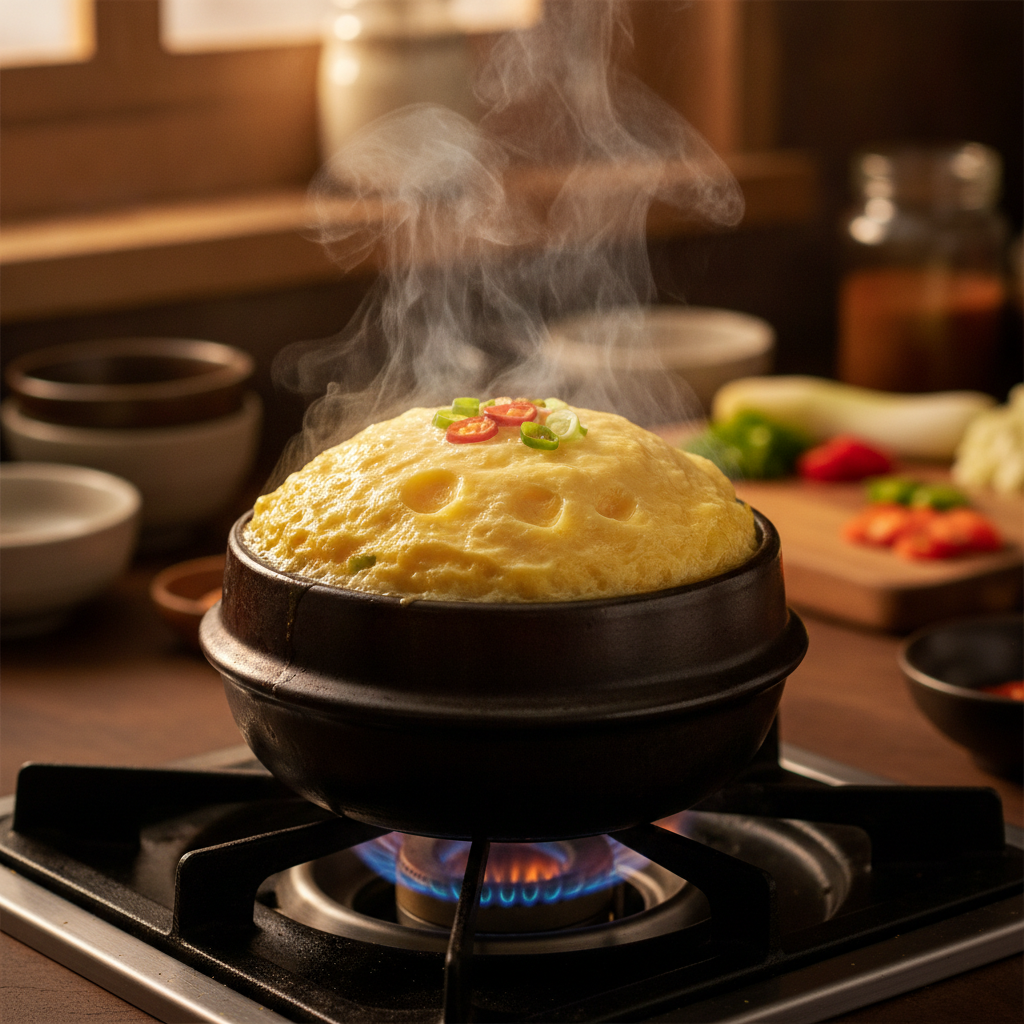
The taste of authentic Gyeran-jjim is truly an aesthetic of softness and savoriness. When gently scooped with a spoon, a fluffy and moist interior is revealed beneath a silky-smooth surface. The moment it enters your mouth, the warm, soft, and tender sensation on the tongue gives the illusion of eating a cloud. The exquisite harmony created by the delicately beaten eggs and kelp broth delivers a subtle umami flavor without any fishy notes.
The first thing you taste is the inherent savoriness of the egg. A natural, unartificial flavor fills the mouth, bringing comfort. This is enhanced by the deep, refreshing umami from the kelp broth, adding layers to what might otherwise be a simple egg dish. The savory umami of salted shrimp and the deep aroma of Korean soup soy sauce balance the overall flavor, with the subtle saltiness actually enhancing the sweetness. The gentle fragrance of sesame oil stimulates the appetite, and finally, the crunchy texture of toasted sesame seeds completes a perfect dish that satisfies not only the palate but also the sense of smell and touch. Unstimulating yet deeply satisfying, the "taste of mom" is truly the genuine charm of authentic Gyeran-jjim.
The harmony of softness, savoriness, and subtle umami that fills the mouth is a special culinary experience that only authentic Gyeran-jjim can provide.
4. Cooking Tips and Secrets
There are a few hidden secrets to making Gyeran-jjim even more delicious. First, always use room-temperature eggs. Cold eggs do not beat well, and when mixed with broth, they can coagulate unevenly, resulting in a tough texture. It's best to take them out 30 minutes in advance.
Second, never skip removing the chalazae and straining the egg mixture. Chalazae can cause a fishy smell and hinder coagulation, leading to a rough texture in the Gyeran-jjim. Straining through a fine-mesh sieve twice will make the Gyeran-jjim much smoother and silkier. This small effort makes a gourmet Gyeran-jjim.
Third, the temperature of the broth is important. Using lukewarm or slightly warm broth, rather than cold broth, helps it mix better with the egg mixture and shortens the coagulation time. However, be careful not to use broth that is too hot, as it will cook the eggs immediately.
Fourth, heat control is key to successful Gyeran-jjim. For dolsot Gyeran-jjim, start with medium heat, and once the edges begin to cook, reduce to low heat to steam gently. Too high heat will burn the bottom of the Gyeran-jjim and evaporate moisture, making it dry. Covering it like steaming ensures even cooking and maintains moisture. When using a steamer, it's best to maintain medium-low heat for slow cooking.
Finally, try using salted shrimp (saeujeot). Using salted shrimp instead of salt adds a deep umami flavor and a subtle oceanic aroma to the Gyeran-jjim. The unique fermented taste of salted shrimp harmonizes with the egg's savoriness, creating an even richer flavor. As Gyeran-jjim is a dish where the cook's sincerity is fully expressed, these small secrets will come together to deliver the best taste.
5. Variation Recipes
Modern Reinterpretation: Myeongnan Avocado Gyeran-jjim
This modern reinterpretation of Gyeran-jjim, enriched with flavor and nutrition, is particularly popular among younger generations. After preparing the egg mixture according to the authentic recipe, pour it into a dolsot. While it's cooking, add 2 tablespoons of myeongnan-jeot (salted pollock roe, skin removed). Once fully cooked, top with ¼ sliced avocado. Finally, sprinkle with shredded seaweed and a dollop of mayonnaise for a unique taste and visual appeal. The salty and savory taste of myeongnan, combined with the creamy richness of avocado, creates a fantastic harmony with the Gyeran-jjim.
Fusion Version: Cheese Corn Gyeran-jjim
This fusion Gyeran-jjim is especially appealing to children. To the authentic Gyeran-jjim recipe, add 2 tablespoons of minced onion and 3 tablespoons of canned corn. When the Gyeran-jjim is almost done, generously sprinkle 50g of mozzarella cheese on top, cover with a lid, and cook over low heat until the cheese melts. The combination of savory cheese and sweet corn, blended with the softness of the Gyeran-jjim, makes a delicious dish that can be enjoyed by all ages.
Simple Version: Microwave Gyeran-jjim
This is a super simple Gyeran-jjim for busy modern people. Beat 2 eggs with 150ml water (or kelp broth) and ½ teaspoon salted shrimp, then strain through a sieve. Pour into a heat-resistant container, cover with plastic wrap, and poke a few holes with a fork. Microwave for 3 minutes, then take it out, sprinkle with a little minced green onion, and microwave for another 1 minute. Adjust cooking time according to your microwave's wattage. While not as soft as dolsot or steamed versions, it's a great way to enjoy Gyeran-jjim quickly and easily.
6. Accompaniments and Table Setting
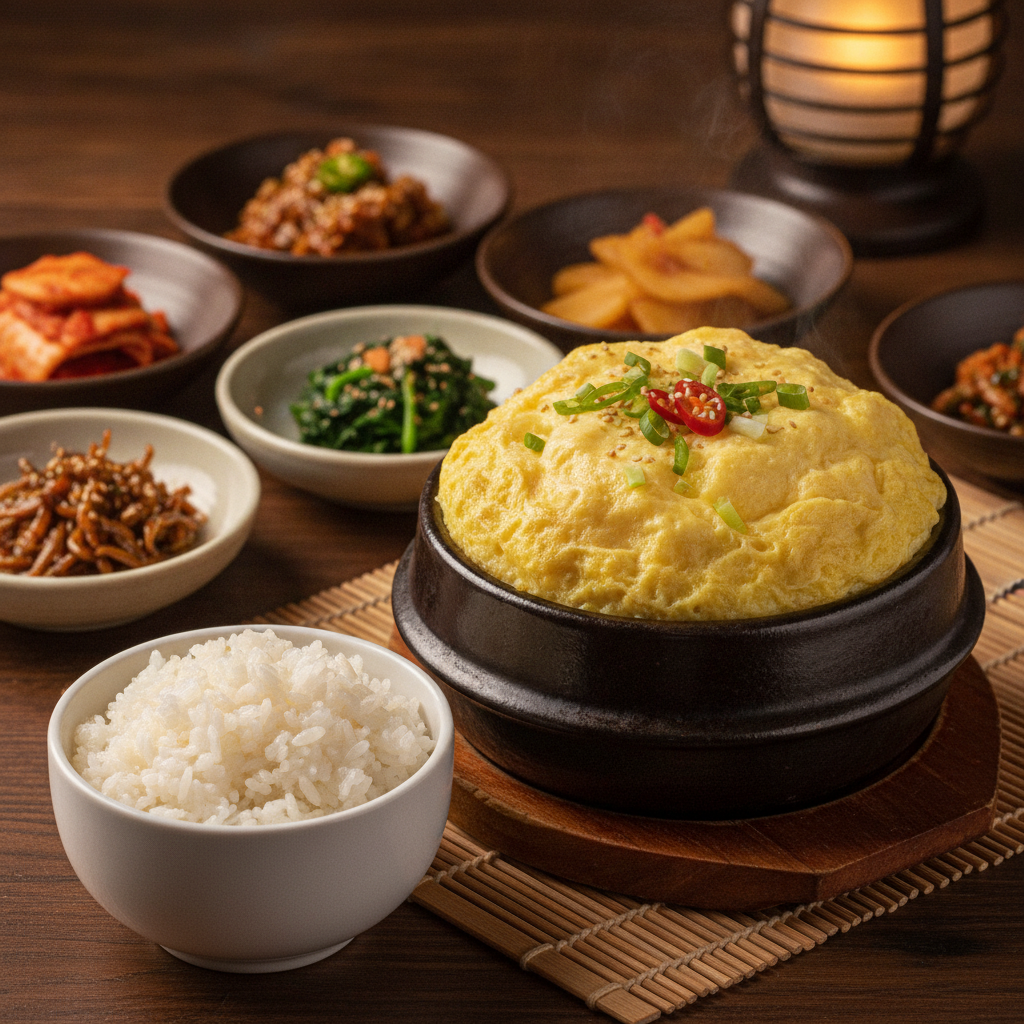
Gyeran-jjim is an excellent dish on its own, but its charm truly shines depending on what it's served with. In a Korean table setting, Gyeran-jjim typically plays the role of gently balancing the flavors alongside spicy or salty main dishes.
Rice: Warm steamed rice is the best and inseparable companion for Gyeran-jjim. Eating a spoonful of soft Gyeran-jjim on freshly cooked white rice makes it easy to swallow and fills the stomach. It also pairs well with brown rice or multi-grain rice for a healthy meal.
Side Dishes: When served alongside main dishes with strong flavors such as spicy kimchi stew, soybean paste stew, stir-fried spicy pork (jeyuk-bokkeum