The History and Origin of Galbijjim
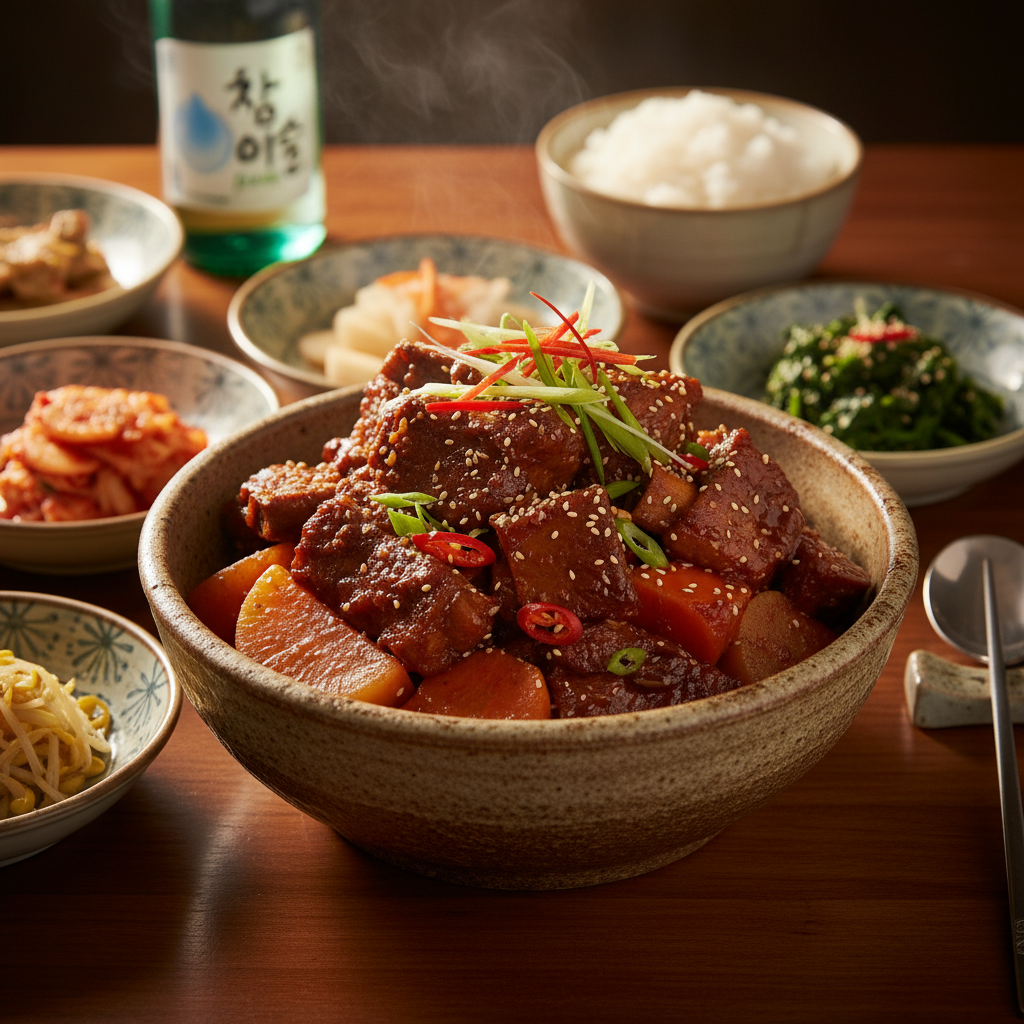
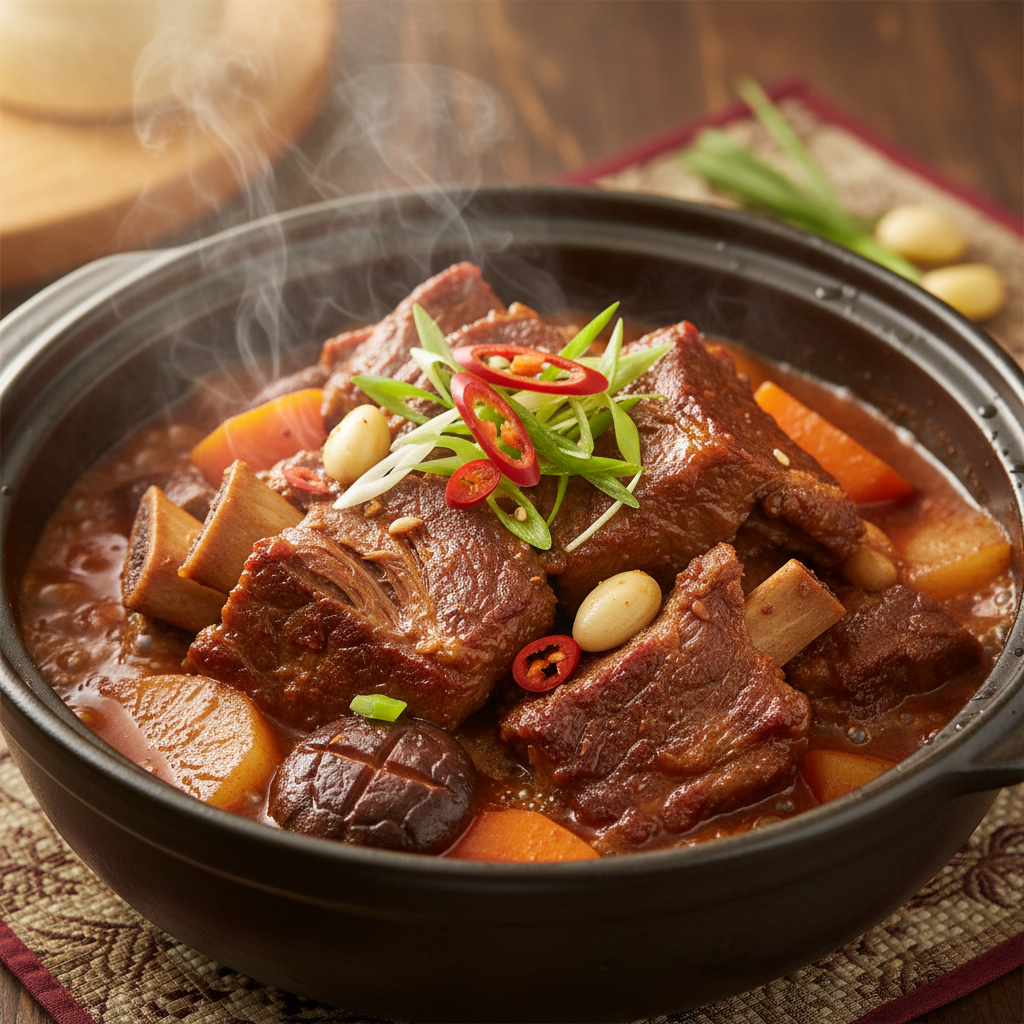
Galbijjim is a traditional Korean dish often enjoyed during holidays or special occasions. It is cherished for its tender meat and rich flavor. The origins of Galbijjim trace back to the Joseon Dynasty, where it was also favored as a royal court dish. Although beef ribs were primarily used, today, variations with pork ribs are also popular. In Korean culinary culture, Galbijjim symbolizes family harmony and often serves as the centerpiece of a grand meal.
Authentic Recipe
Ingredients
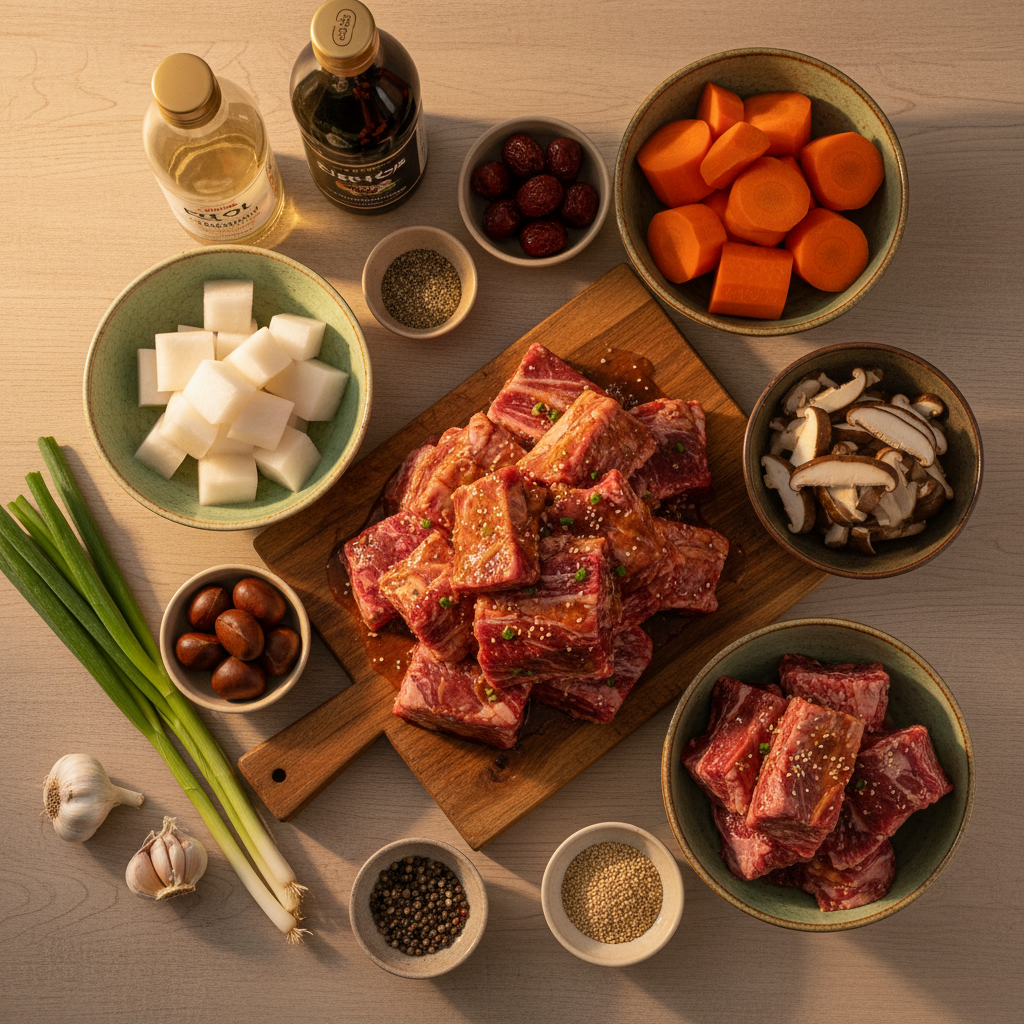
- 1.5 kg beef ribs
- 1 onion
- 2 carrots
- 1/2 radish
- 2 green onions
- 1 cup soy sauce
- 3 tbsp sugar
- 2 tbsp minced garlic
- 1 tbsp sesame oil
- A pinch of pepper
- 4 cups water
Instructions
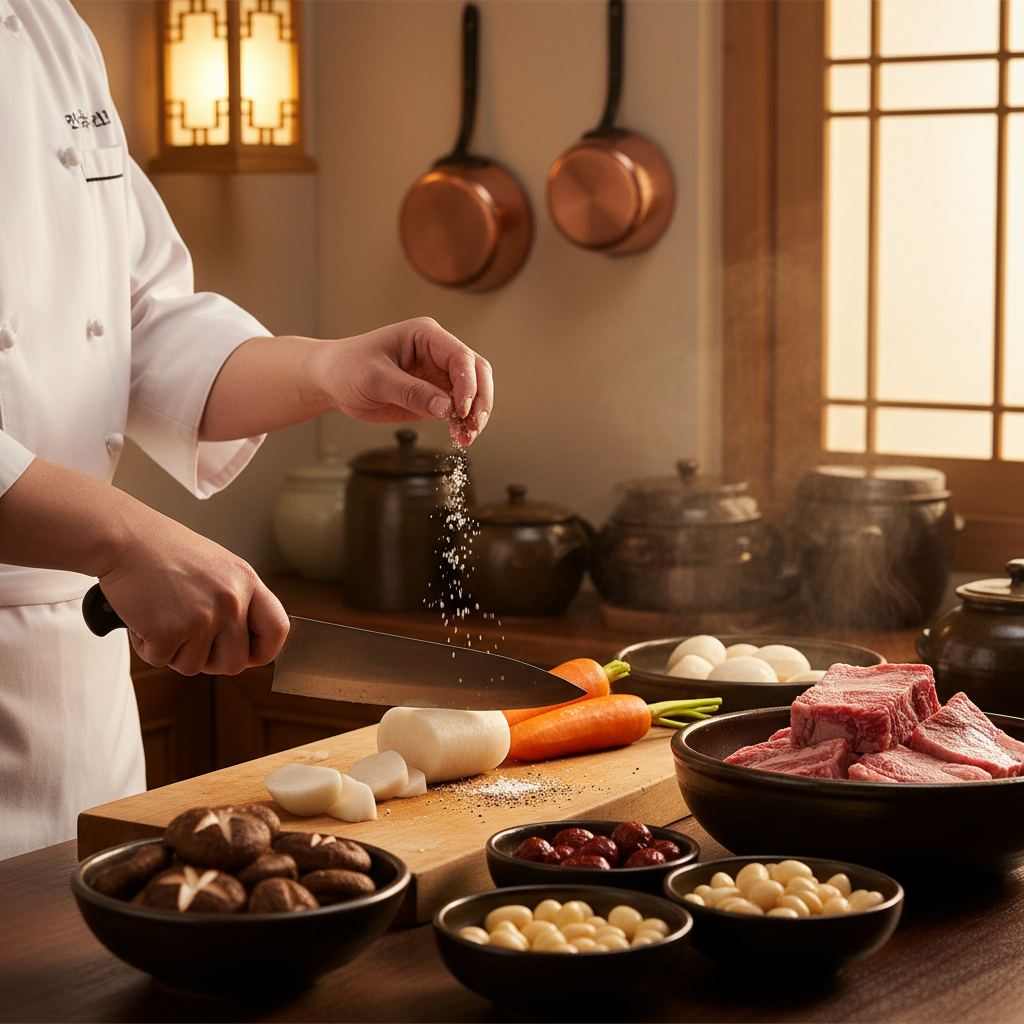
- Soak the beef ribs in cold water for 1 hour to remove blood.
- Cut the onion, carrots, and radish into bite-sized pieces.
- In a large pot, add 4 cups of water and the ribs, boil for 10 minutes, then discard the water and rinse the ribs.
- In the pot, combine the rinsed ribs with onion, carrots, radish, and green onions. Add soy sauce, sugar, minced garlic, sesame oil, and pepper.
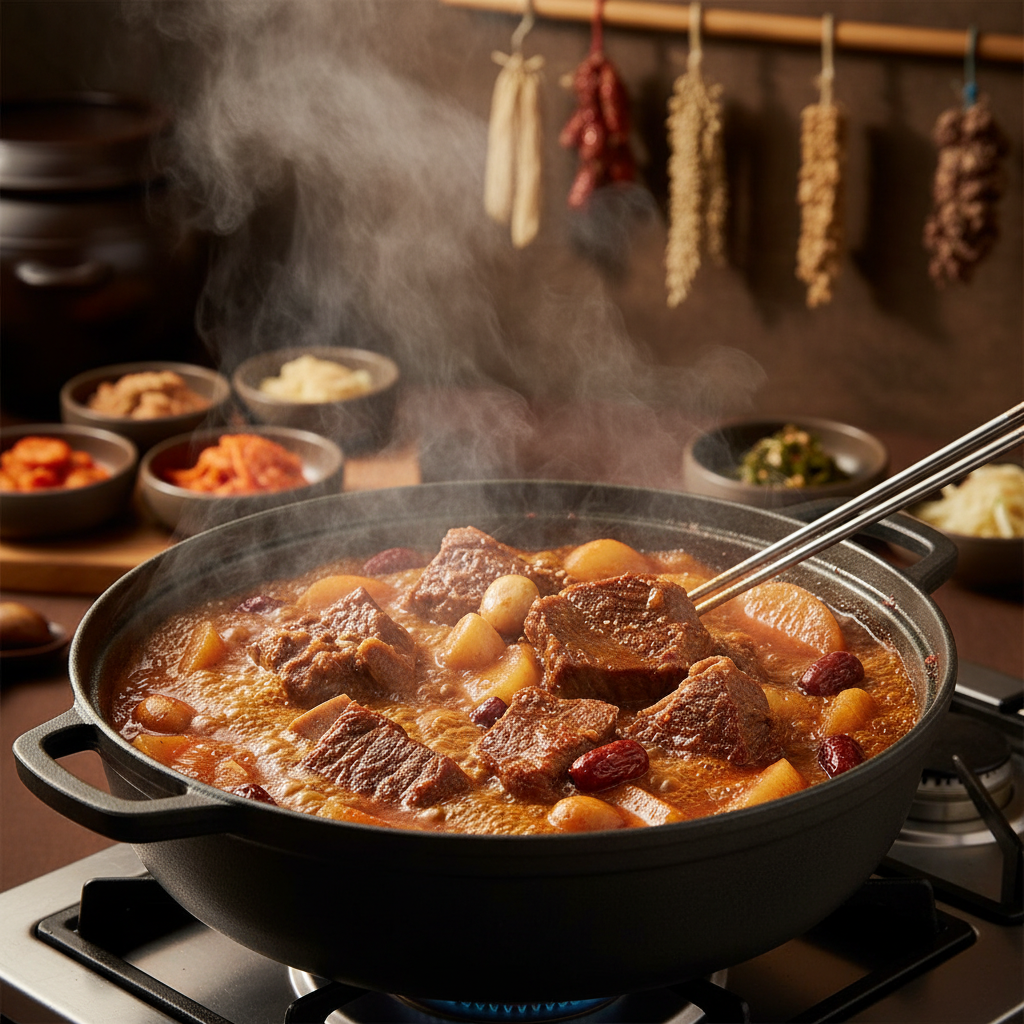
- Add enough water to cover all ingredients and simmer over medium-low heat for 2 hours.
- Once the meat is tender, remove from heat and discard the green onions.
Flavor Characteristics
Galbijjim is known for its tender, slightly sweet taste. The long cooking time allows the meat to melt softly in the mouth. The savory soy sauce, the sweetness of sugar, and the umami from the vegetables create a perfect harmony. This unique flavor offers a profound experience of traditional Korean tastes.
Cooking Tips and Secrets
The secret to a more delicious Galbijjim lies in the freshness of the ingredients and marination time. Choose fresh beef ribs and marinate the ingredients for about a day to enhance the depth of flavor. Additionally, boiling the ribs once more to remove excess fat ensures a cleaner taste.
Variations
A modern variation includes spicy Galbijjim, where adding gochujang (Korean chili paste) introduces a spicy kick for a different appeal. For a simpler version, using a pressure cooker can reduce cooking time. In this case, it's important to adjust the water to maintain the balance of flavors.
Side Dishes and Serving Suggestions
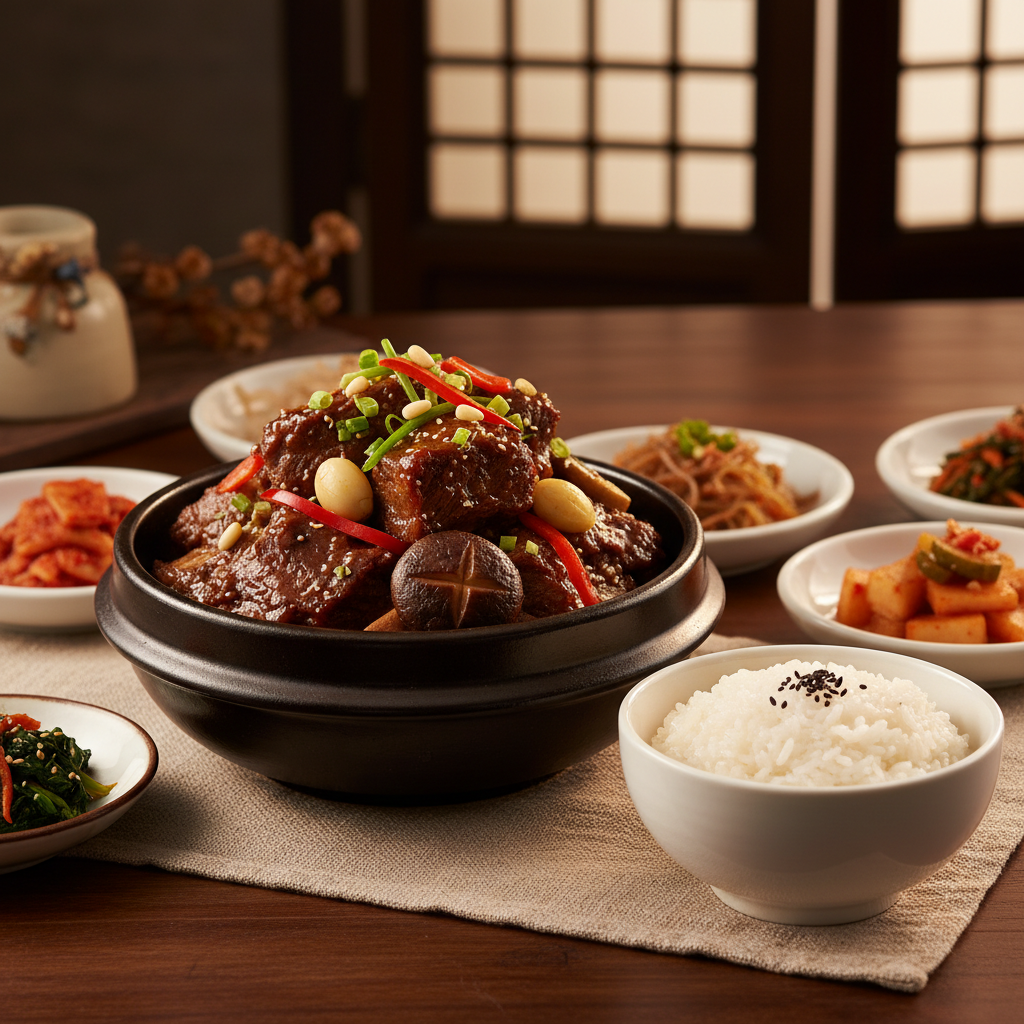
Galbijjim is best enjoyed with plain white rice. It also pairs well with kimchi or vegetable dishes, and traditional Korean drinks like makgeolli or soju complement it, enhancing the authentic Korean dining experience. Even with a simple setting, the rich taste of Galbijjim makes it worthy of special occasions.
This comprehensive guide to Galbijjim caters to both traditional and modern culinary enthusiasts, providing a bridge between cultural heritage and contemporary adaptations. Enjoy exploring the flavors and stories behind this cherished Korean dish!