1. History and Origins of Ganjang Gejang
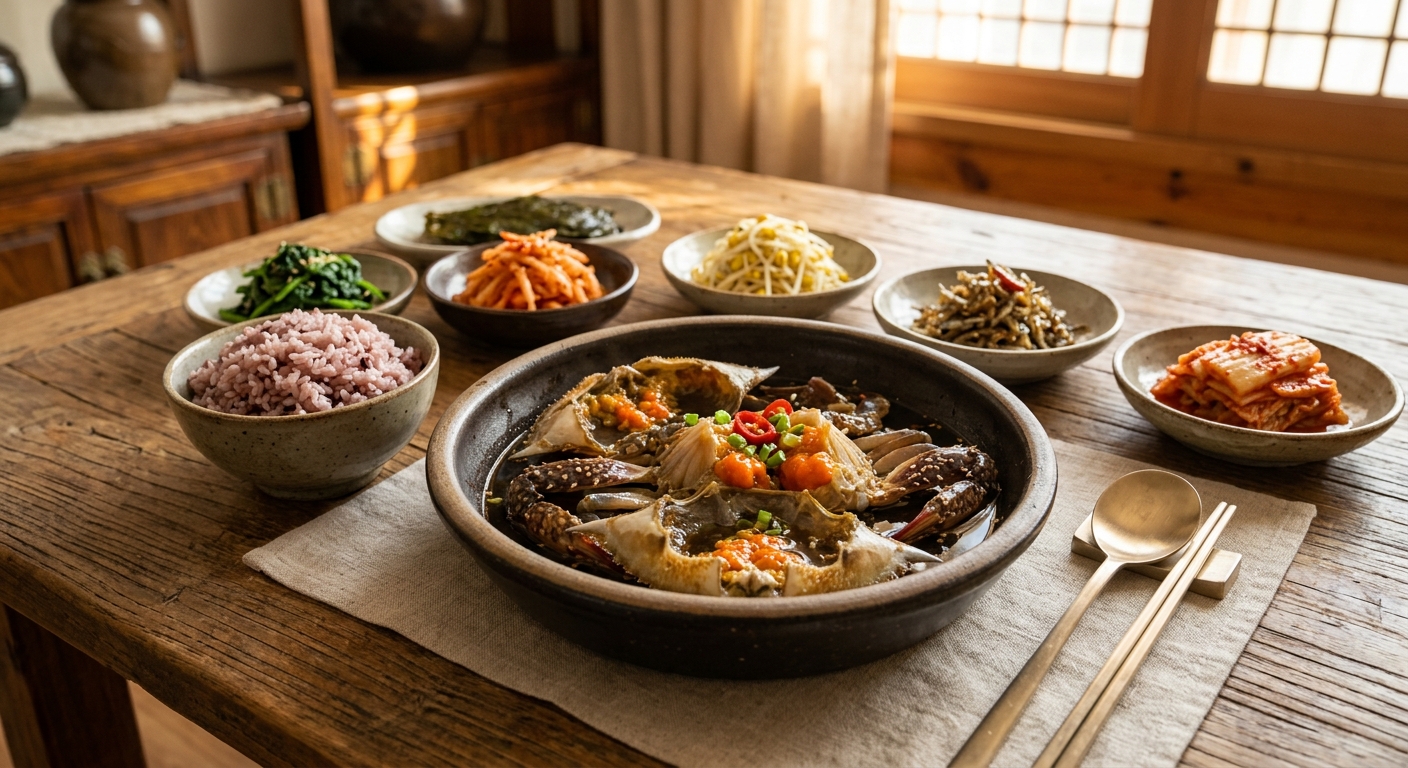
Ganjang Gejang (raw crab marinated in seasoned soy sauce) has long been revered as one of the most exquisite delicacies on the Korean dining table. The culinary tradition of preserving fresh crabs in brine or fermented soy sauce dates back to the Three Kingdoms and Goryeo periods, with prominent documentation appearing in classical Joseon Dynasty agricultural and culinary manuscripts such as Sallim Gyeongje (Farm Management), Gyuhap Chongseo (Women's Encyclopedia), and Jeungbo Sallim Gyeongje. In an era without refrigeration, curing freshly caught crabs in well-aged traditional soy sauce was both a practical preservation technique and a sophisticated method to enhance and mature the natural sweetness of crustacean meat.
Historically, Ganjang Gejang was not merely a side dish; it was a testament to a family's heirloom culinary legacy. Because every household nurtured its own unique crock-fermented soy sauce, the flavor profiles of gejang differed from one home to another, making it a prestigious centerpiece reserved for honored guests, ancestral rites, and celebration banquets. From the inland freshwater mitten crab preserves (Chamgejang) to the coastal varieties utilizing plump, egg-bearing female blue crabs from the Yellow Sea, the dish evolved in harmony with local geography. The widely recognized moniker "Bap-dodoek" (meaning "Rice Thief") affectionately captures the dish's irresistible allure—a playful cultural reflection of ordinary people finding boundless comfort in an empty bowl of rice alongside this savory masterpiece.
"When refined fermented soy sauce embraces the briny sea, and warming medicinal aromatics balance the cooling nature of the crab, the dish achieves a divine culinary harmony."
Thus, Ganjang Gejang stands as an authentic emblem of Korean slow-food philosophy, representing a harmonious union between marine vitality, subterranean fermented legumes, and the virtue of patient aging.
2. Authentic Master Recipe
The essence of authentic Ganjang Gejang lies in selecting prime-quality live female crabs and preparing an exquisitely balanced, slow-simmered spiced soy sauce broth that eliminates all fishiness while imparting profound umami.
Ingredients (Serves 4)
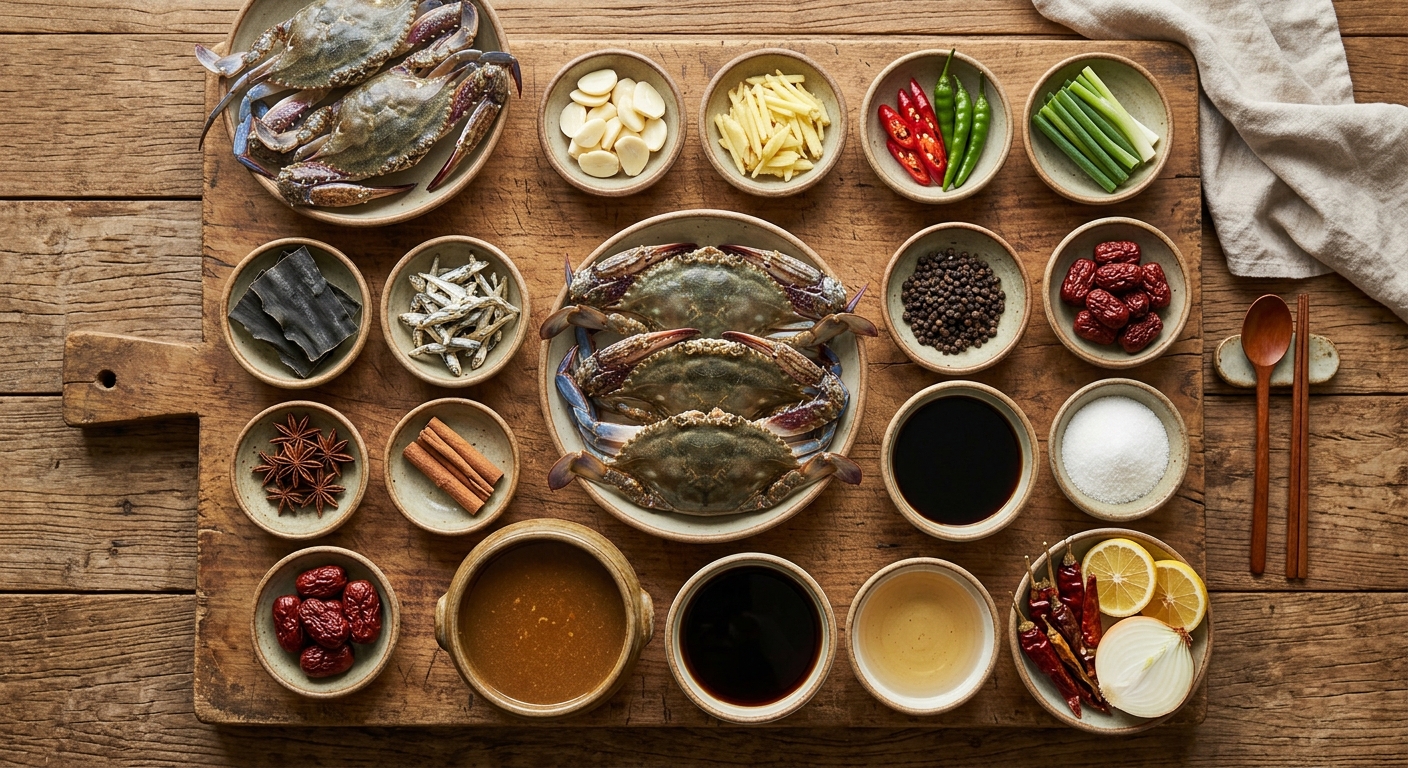
- Main Ingredients: 4 fresh live female blue crabs (approx. 300–350g each, heavy, with vibrant orange roe showing through the shell apron), 1 cup Korean soju or cheongju (for cleaning).
- Soy Sauce Marinade Base: 4 cups (800ml) naturally brewed regular soy sauce, 1/2 cup (100ml) traditional Korean soup soy sauce (Joseon ganjang), 8 cups (1600ml) fresh water, 1 cup (200ml) cheongju (rice wine), 1/2 cup (100ml) mirin, 1/2 cup (100ml) rice syrup (jocheong) or grain syrup.
- Aromatic Herbs & Produce: 2 large scallions (white stems prioritized), 1 large yellow onion, 15 whole garlic cloves, 2 thumb-sized ginger pieces (sliced), 4 Cheongyang spicy green chilies, 2 red chilies, 1 sweet apple, 1/2 Korean pear.
- Herbal & Dried Umami Enhancers: 2 sheets dried kelp (dashima, 10x10cm), 4 dried shiitake mushrooms, 2 slices licorice root (gamcho), 1 dried milkvetch root (hwanggi), 1 tbsp whole black peppercorns, 5 whole dried red chilies.
- Garnish for Aging: 2 sliced Cheongyang green chilies, 1 sliced red chili, 3–4 organic lemon slices.
Step-by-Step Cooking Instructions
- Step 1 - Paralyzing and Cleansing: Place live crabs in the freezer for 30 to 60 minutes until dormant. This prevents them from snapping off their own legs or pinching during cleaning. Using a kitchen brush, scrub thoroughly between the crevices of the legs, around the mouth, and along the abdominal flap under cold running water. Drain completely, pat dry with paper towels, and splash with 1 cup of soju to neutralize surface odors.
- Step 2 - Simmering the Spiced Broth: In a large stockpot, combine 8 cups of water with dashima, dried shiitake, licorice root, hwanggi, scallions, onion, garlic, sliced ginger, sliced apple and pear, dried chilies, and black peppercorns. Bring to a rolling boil over high heat, then remove the kelp. Lower heat to medium-low and simmer for 25 minutes to extract a fragrant vegetable-herbal stock. Pour in the brewed soy sauce, Joseon soy sauce, cheongju, mirin, and rice syrup. Simmer for an additional 15 minutes.
- Step 3 - Straining and Complete Chilling: Strain the hot soy broth through a fine mesh sieve or cheesecloth to obtain a crystal-clear liquid. (Crucial Rule) Let the liquid cool down completely at room temperature, then refrigerate until thoroughly chilled. Never pour warm or lukewarm marinade over raw crabs, as warmth will denature the delicate proteins, causing the meat to dissolve and spoil.
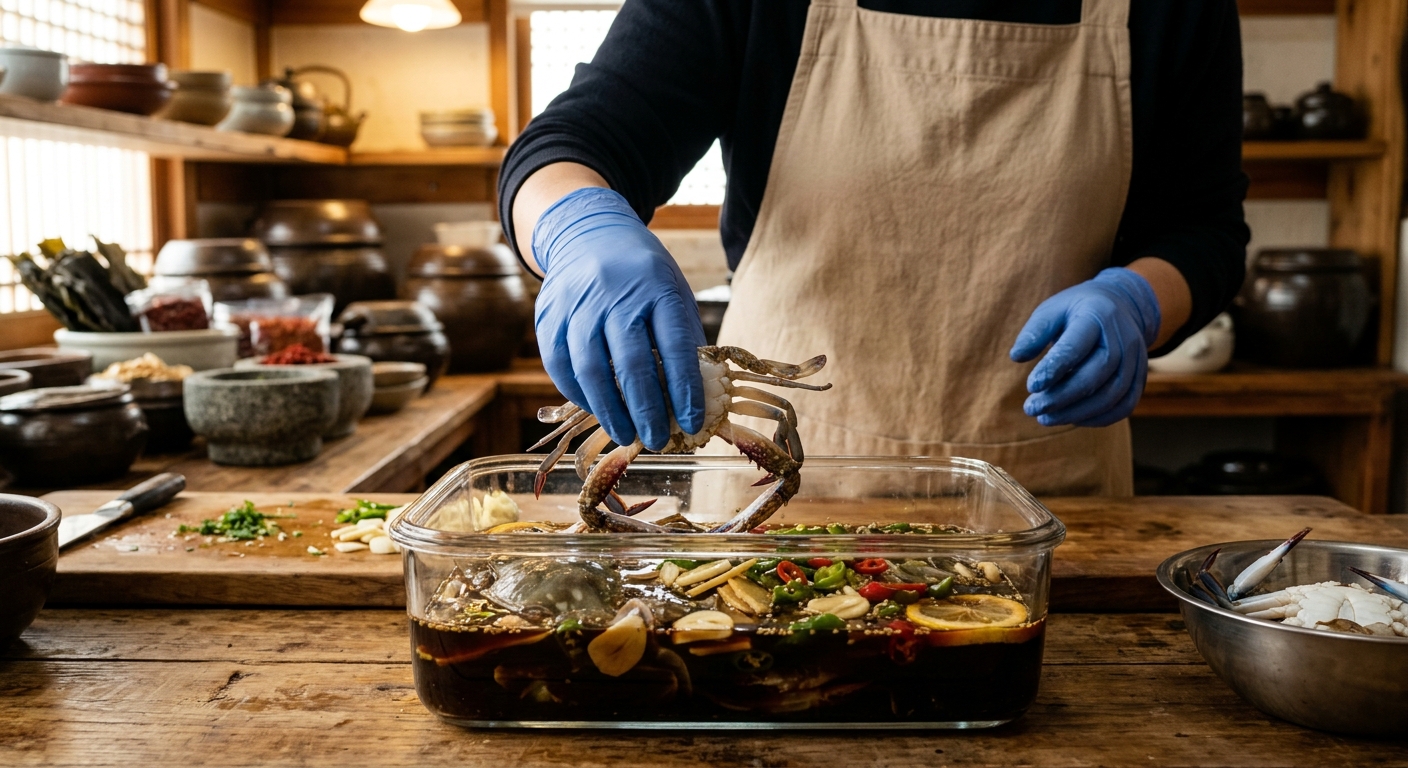
- Step 4 - First Immersion & Fermentation: Arrange the dried crabs tightly inside a sanitized, airtight container with their pale bellies facing upwards. This upward orientation ensures that the creamy tomalley and roe remain safely locked inside the carapace. Pour the icy soy marinade until the crabs are fully submerged. Scatter the lemon slices and sliced fresh chilies on top. Seal and mature in a cold refrigerator (0–2°C) for 24 hours.
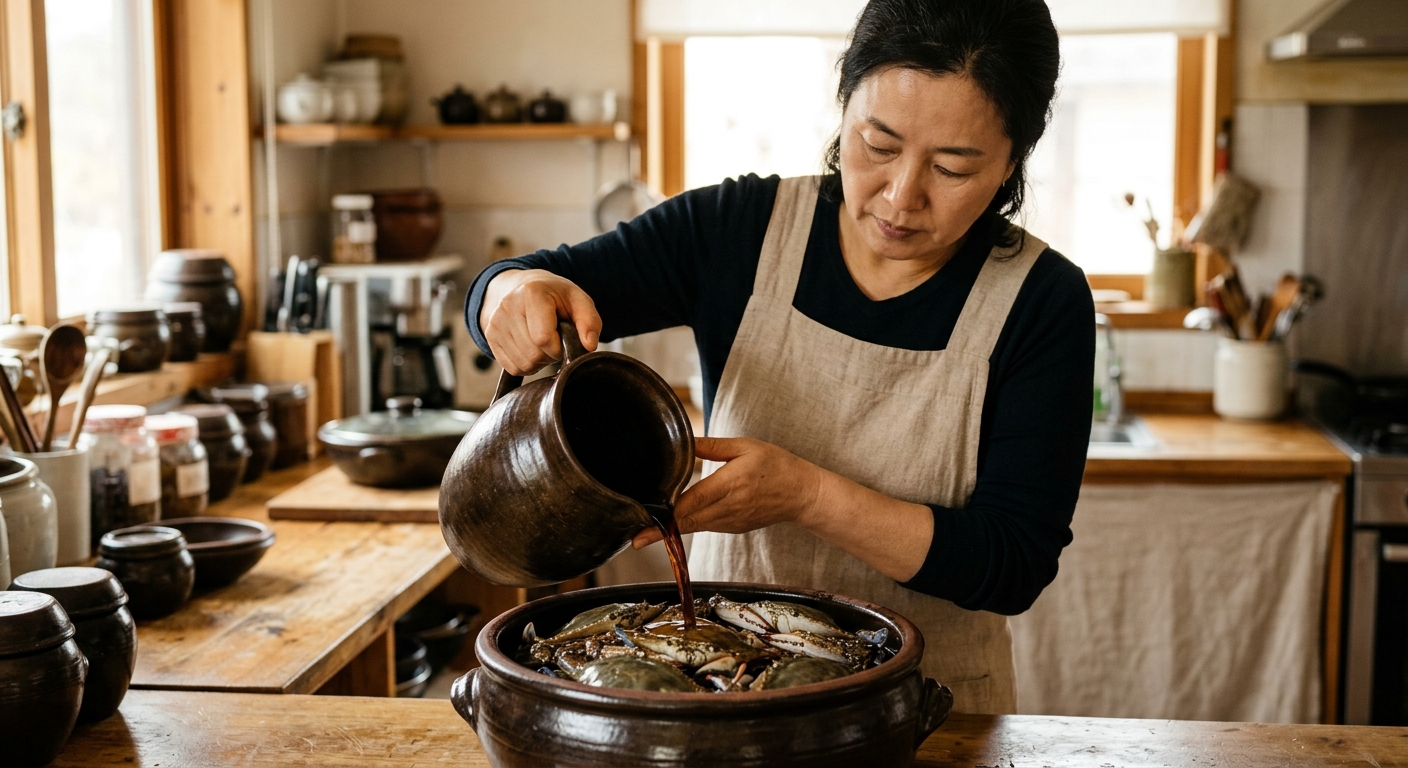
- Step 5 - Second Boil and Final Maturation: After 24 hours, carefully pour out only the soy marinade into a saucepan, leaving the crabs in the container. Bring the marinade to a vigorous boil for 3 to 5 minutes, skimming off any foam or impurities. This step sterilizes the liquid and evaporates excess water released by the crabs. Chill the marinade completely over an ice bath before returning it to the crabs. Age for another 2 to 3 days in the refrigerator before serving.
3. Sensory Profile & Flavor Characteristics
Tasting an artisanal Ganjang Gejang is an intoxicating, multi-layered sensory experience. The journey begins with the captivating texture of the raw crab meat: silky, translucent, and jelly-like, yielding instantaneously to the gentlest bite. Unlike cooked crab, the raw flesh possesses a tender springiness that melts effortlessly on the tongue, unleashing waves of natural sweetness and mineral-rich marine succulence.
The crown jewel is the vivid orange roe and golden tomalley cradled within the shell. Dense, buttery, and remarkably creamy, it rivals the finest sea urchin roe or foie gras. It coats the palate in luxurious richness, providing a deep, nutty counterpoint to the brisk saltiness of the marinade. There is no trace of cloying fishiness; instead, the crab imparts an invigorating freshness akin to a clean ocean breeze.
Binding these components together is the seasoned soy marinade—a symphony of subtle craftsmanship. Rather than an aggressive, one-dimensional salinity, the broth delivers a round, mellow umami. The fruity essences of apple and pear impart a soft, lingering sweetness, while the background notes of ginger, licorice root, and black peppercorn offer warmth and dimension. A zesty, tingling punctuation from the Cheongyang chili cuts through the richness, leaving the finish impeccably refreshing, fragrant, and deeply satisfying.
4. Chef's Secrets & Professional Tips
To master this demanding delicacy at home, heed these five indispensable trade secrets gathered from decades of traditional Korean culinary mastery:
- Select Spring-Harvested Female Crabs: The foundation of exceptional gejang is the quality of the catch. Always opt for female blue crabs harvested during their peak spring window (April to June). Choose crabs with dense, heavy bodies, hard shells, and a warm coral hue glowing faintly beneath the translucent abdominal flap. Flash-frozen female crabs caught directly on fishing vessels (Seondong) are also an outstanding alternative that preserves structural integrity.
- Freezer Stun Technique: Stunning live crabs in the freezer prior to handling prevents limb autotomy (self-amputation caused by stress) and firms up the raw muscle tissue. This quick cold treatment ensures that the meat retains optimal elasticity during the curing process.
- The Absolute Law of Cold Marinade: Never underestimate the importance of temperature control. Introducing even slightly lukewarm soy sauce to raw crab will cook the surface, destroying the silky texture and causing the crab flesh to turn cloudy and liquefy. Always chill the marinade until ice-cold before pouring.
- The Citrus and Traditional Soy Harmony: Adding a few slices of fresh lemon during the curing process neutralizes volatile amines responsible for seafood odor through the natural action of citric acid. Additionally, blending a modest proportion of traditional house-fermented soy sauce (Joseon ganjang) with standard commercial brew eliminates artificial sweetness, introducing an earthy, aristocratic depth.
- Separation for Long-Term Storage: On day 3 or 4, when the crabs reach their flavor zenith, immediately remove them from the marinade. Wrap each crab individually in cling wrap and store in the freezer. Boil and cool the remaining soy sauce, storing it separately in the refrigerator. Leaving crabs immersed indefinitely will result in osmotic shrinkage, rendering the meat dry, rubbery, and excessively salty. Thaw individual crabs 30 minutes before dining and ladle the reserved cold marinade over them for perpetual freshness.
5. Contemporary Variations & Creative Adaptations
While traditional recipes remain timeless, modern culinary techniques have yielded creative, accessible reinterpretations that fit contemporary urban lifestyles.
1) Modern Quick-Cured Raw Crab & Shrimp Rice Bowl (10-Minute De-shelled Gejang)
For those who wish to avoid the messy chore of cracking shells at the table, this version utilizes deshelled raw crab meat or fresh peeled sweet prawns bathed in an instant cold dressing.
- Preparation: Whisk together 1 cup of quality soy sauce, 3 tablespoons of Japanese tsuyu, 2 tablespoons of mirin, 1.5 tablespoons of light agave or oligo syrup, 1/2 cup of chilled dashi water, finely minced shallots, sliced chilies, and a squeeze of fresh lemon juice. Submerge peeled prawns and pure raw crab meat in this mixture for just 3 to 4 hours in the refrigerator.
- Serving: Heap the marinated seafood over a warm bowl of steamed rice, topped with a golden pasture-raised egg yolk, chopped chives, toasted sesame seeds, and a drizzle of aromatic sesame oil. It delivers instant decadence with zero shell-cracking hassle.
2) East-Meets-West: Ganjang Gejang Brown Butter Pasta
A sophisticated fusion creation combining the creamy richness of Italian emulsified pasta with the explosive umami of cured crab tomalley and soy reduction.
- Preparation: Sauté thinly sliced garlic and crushed pepperoncino in extra virgin olive oil until fragrant. Toss in al dente spaghetti alongside a splash of starchy pasta cooking water, 2 tablespoons of gejang marinade, and a generous pat of unsalted European butter (15g), swirling vigorously to form a glossy emulsion. Off the heat, fold in raw crab meat, golden tomalley, and roe using the residual pan heat to warm it without overcooking.
- Flavor Profile: The nutty, caramelized notes of butter soften the piquancy of the soy sauce, allowing the oceanic umami of the crab roe to cling to every single strand of pasta—a luxurious alternative to traditional Italian bottarga or uni pasta.
6. Traditional Table Setting & Pairing Suggestions
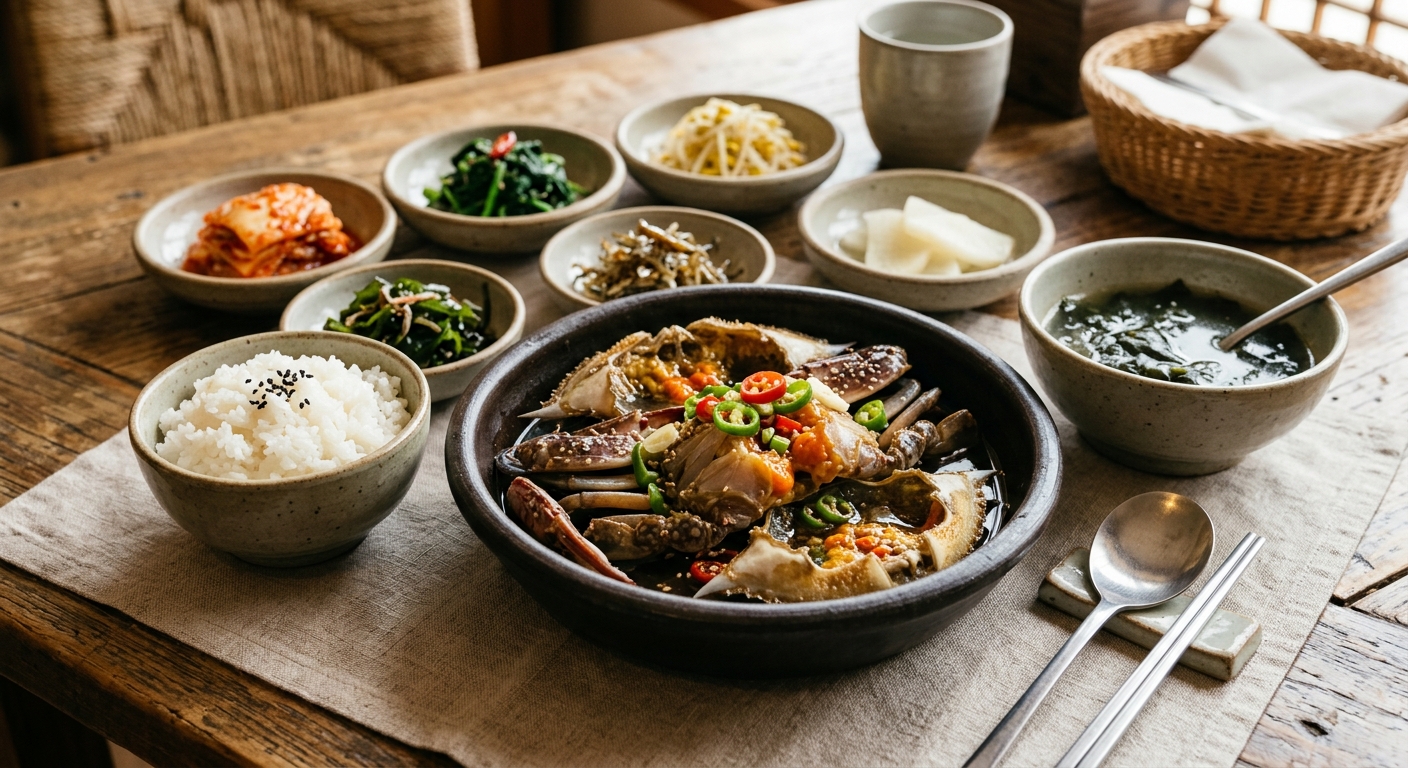
When presenting Ganjang Gejang, the accompanying banquet should be designed with mindfulness, allowing the complexity of the centerpiece to shine without competition from overly pungent or spicy side dishes.
Curating the Perfect Dining Table
- The Steamed Rice (The Ultimate Vessel): Prepare freshly harvested, premium short-grain white rice (such as Shindongjin or Koshihikari) cooked in a traditional cast-iron or stone pot. When mixing rice directly inside the crab carapace (ge-ttak-ji), ensure the rice has cooled slightly from steaming hot to warm; excessive heat can unpleasantly curdle the delicate raw tomalley and roe.
- Warming Soups: Serve alongside a mild, clear clam soup (Jogaetguk), a delicate soybean paste soup with napa cabbage, or an ethereal steamed egg custard (Gyeranjjim). Because crab is traditionally classified as having a cooling thermodynamic property in Korean medicine, gentle, warm broths soothe the stomach and cleanse the palate between rich bites.
- Complementary Side Dishes: Unseasoned, fire-toasted seaweed (Gim), crispy sunny-side-up eggs fried in toasted perilla oil, and blanched spinach or bean sprouts lightly seasoned with sesame oil. Wrapping a spoonful of warm rice, succulent crab meat, and a drizzle of marinade inside a crisp sheet of toasted seaweed is universally acknowledged as the quintessential bite.
- Artisanal Beverage Pairings:
- Clear Traditional Rice Wines (Cheongju / Yakju): Bottlings such as Cheongmyeongju or Gyeongju Gyodong Beopju exhibit subtle grain sweetness and crisp natural acidity that seamlessly elevate the sweetness of the crab flesh while refreshing the palate.
- Craft Distilled Soju (Hwayo 25, Mir): Premium small-batch distilled rice spirits possess a clean, dry finish that cuts through the buttery richness of the crab tomalley, ensuring each successive mouthful tastes as pristine as the first.
Set with warmth, care, and reverence for nature's bounty, a table crowned with homemade Ganjang Gejang is far more than a meal—it is a heartfelt feast of comfort, heritage, and genuine hospitality.