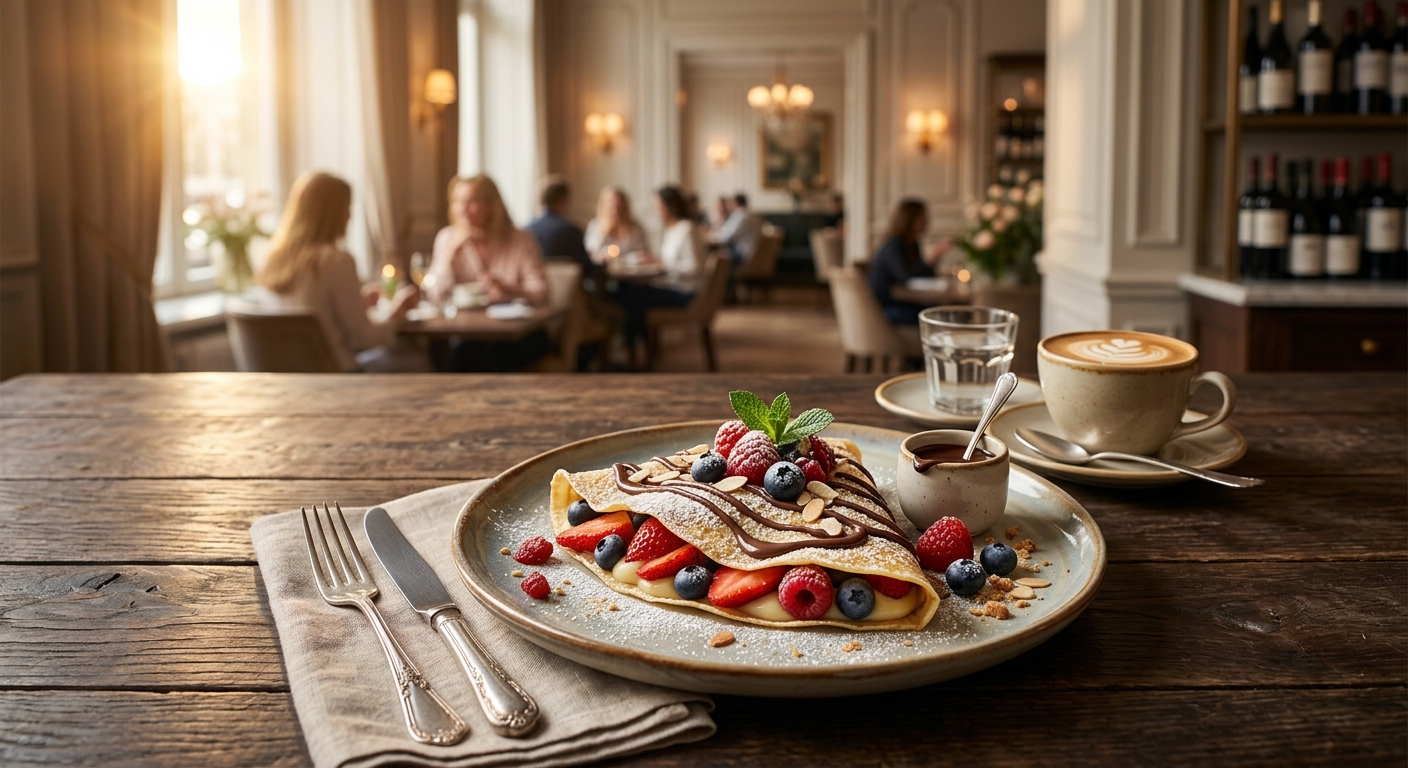
Tradition
Crêpes are more than just a dessert; they are a tradition and a ritual deeply rooted in the lives and culture of the French people. Especially on February 2nd, 'La Chandeleur' (Candlemas), making and eating crêpes is a long-standing custom. This day signifies the end of winter and the beginning of spring, and the round, golden crêpes are believed to symbolize the sun. People believed that if they held a pan in their right hand and a coin in their left while flipping a crêpe, they would have good luck and wealth throughout the year. The excitement of flipping the crêpe in the pan and the anticipation of a successful flip transcended mere cooking, becoming an act of hope and aspiration for the future. The time spent with family and friends making and sharing crêpes was a process of forming warm bonds and creating precious memories.
Crêpes have also evolved with unique characteristics in each region of France. For example, in Brittany, savory 'Galettes' made from buckwheat flour are cherished as a traditional food, similar to crêpes but distinctly different in taste and texture. In this way, crêpes have evolved into various forms, reflecting regional characteristics and are deeply connected to the gastronomic culture of each area. Made from simple ingredients like flour, eggs, and milk, they encapsulate the wisdom of French life, community spirit, and beautiful culinary traditions. A single crêpe contains warmth, simple happiness, and a rich history passed down through the ages.
History
The history of crêpes dates back to ancient times. Records show evidence of thin grain dough baked on hot stones as early as 7000 BCE during the Neolithic period. This can be considered the origin of today's crêpes and pancakes. Crêpes began to take on their distinct form in the Middle Ages, particularly around the 13th century in the Brittany region of France, when buckwheat cultivation began. Buckwheat, which grew well in barren land, became an important food source for the people of Brittany, and the thin, flat dough baked from it became the precursor to 'galettes.' At that time, they were mainly made from just water and buckwheat flour, serving as a staple food to satisfy hunger.
Over time, as wheat flour became more common, sweet crêpes made from wheat flour began to appear around the 15th century. Especially among royalty and nobility, crêpes served with sugar, fruit, and cream became fashionable, evolving from a simple meal into a delicate dessert. In the late 19th century, 'Crêpes Suzette' was created in a famous Parisian restaurant, gaining worldwide renown. The spectacular preparation, involving flamed orange liqueur, elevated crêpes from simple street food to the realm of sophisticated gastronomy. Today, crêpes have become a beloved snack worldwide, extending beyond France, with various adaptations made to suit different cultures and ingredients. Evolving over thousands of years, crêpes are not just food but a living legacy that fully encompasses the history of human culinary culture.
Preparation
Crêpes, as simple as their ingredients, require a humble yet delicate touch in their preparation. The basic ingredients for traditional crêpe batter are flour, eggs, milk, and a pinch of sugar and salt. A small amount of butter or cooking oil may also be added to enhance the flavor. The most crucial part is getting the batter consistency right; if it's too thick or too thin, it's difficult to make thin, soft crêpes. A consistency much thinner than pancake batter, more like a thick cream, is usually appropriate. To achieve this, the flour is sieved to remove lumps, and eggs and milk are thoroughly mixed in order.
After making the batter, it's essential to let it rest in the refrigerator for at least 30 minutes to an hour. This resting process allows the gluten in the flour to stabilize and the batter to absorb the flavors of the ingredients more deeply, resulting in a much softer and chewier crêpe. The well-rested batter is then spread thinly on a hot crêpe pan or frying pan. The most important aspects of this step are maintaining a consistent pan temperature and quickly pouring the batter onto the pan, spreading it evenly with a flick of the wrist. The key is to bake it not too thick and until the edges are golden brown. Once one side is cooked, it's flipped to lightly cook the other side, being careful not to overcook, as this can make the crêpe tough. Making a thin, moist crêpe with slightly crispy edges is the core of traditional preparation, perfected through extensive experience and delicate intuition.
Food Story and How to Eat
Crêpes are a complete snack and dessert in themselves, but they are also a versatile food that can be endlessly varied depending on how you choose to enjoy them. The most basic way is to sprinkle sugar on a freshly baked, warm crêpe. Simple yet allowing you to experience the authentic savory and soft taste of the crêpe in its purest form. A dash of lemon juice adds a refreshing zest, making the taste even lighter. In France, crêpes enjoyed this simply are called 'Crêpes au Sucre' or 'Crêpes au Citron.'
For a richer experience, spread sweet spreads like Nutella chocolate, strawberry jam, or apricot jam, or pile on fresh fruits (strawberries, bananas, blueberries, etc.) and whipped cream. Utilizing seasonal fruits, in particular, allows for a fresher and more diverse taste experience. For example, in summer, try peaches or cherries, and in autumn, sweet apples or figs. For savory crêpes like 'galettes,' topping them with ham, cheese, and a fried egg makes for a hearty meal. As for beverages, warm black tea or coffee, or traditional French apple cider (Cidre), pair wonderfully with crêpes. The crisp, dry taste of cider, in particular, enhances the sweet flavors of the crêpe. Enjoy crêpes during brunch with friends, a sweet date with a loved one, or a leisurely afternoon alone, savoring the small joys of life.
Taste
I would describe the taste of a crêpe as "thin happiness." Taking the first bite, the soft and moist texture that touches your tongue delivers an immediate delight. The flour, eggs, and milk blend in perfect harmony, giving a sensation of melting smoothly like silk. The edges are slightly crispy, creating an interesting contrast of subtle crispiness hidden within the softness. This thin and delicate texture is one of the greatest charms of a crêpe.
In terms of aroma, the savory and subtly sweet scent unique to freshly baked dough tickles the nose. It's a comforting and warm fragrance, like stepping into a freshly baked bakery, putting the mind at ease. When butter or vanilla is added, a richer and more captivating aroma can be experienced. The taste is fundamentally light with a subtle sweetness. This lightness acts as a canvas that pairs well with any topping, embracing the sweetness of chocolate, the freshness of fruit, and the smoothness of cream. The warmth felt as a warm crêpe melts in your mouth goes beyond mere temperature, possessing a magical power to evoke childhood memories or warm moments with loved ones. Crêpes offer a complete gastronomic experience that satisfies all five senses: enjoying with the eyes, smelling with the nose, tasting with the tongue, hearing the crispness with the ears, and feeling the warmth with the hands.
Restaurant Recommendations
1. Creperia
Location: 50 Eoulmadang-ro, Mapo-gu, Seoul
Features: A crêpe specialty shop located near Hongdae, striving to recreate the authentic taste of France. It's characterized by thin, chewy crêpe batter, fresh seasonal fruits, and various homemade sauces. The 'Strawberry Nutella Crêpe' is particularly popular and frequently mentioned on social media. Its cozy, European-style interior is also a charm.
2. Les Monks
Location: 49 Apgujeong-ro 42-gil, Gangnam-gu, Seoul
Features: Located in Garosu-gil, this place offers both traditional Breton galettes and crêpes. Both the savory buckwheat galettes and sweet wheat crêpes are excellent, with the 'Eggs Benedict Galette' and 'Banana Nutella Crêpe' being particularly popular. It's a great spot to enjoy a relaxed brunch in a sophisticated atmosphere.
3. Monts et Crêpes
Location: 16-1 Jeongja-dong, Bundang-gu, Seongnam-si, Gyeonggi-do
Features: A charming and pretty crêpe shop located on Jeongja-dong Cafe Street. The warm crêpes, made to order, are soft and moist, and the variety of topping combinations allows for the fun of creating your own crêpe. Homemade cream and fresh fruit toppings are particularly noteworthy, with 'Fresh Strawberry Crêpe' and 'Mango Crêpe' as signature items. Take-out is also convenient, perfect for enjoying during a stroll.
Online Purchase Recommendations
1. [French Chef's Recipe] Premium Handmade Crêpe Batter
Brand: La Crêpe
Features: Frozen crêpe batter made with a French chef's recipe. After thawing, you can simply bake it in a pan to easily make high-quality crêpes at home. It features a thin and soft texture, suitable for both sweet and savory meal crêpes.
Naver Shopping Search Link: