Tradition
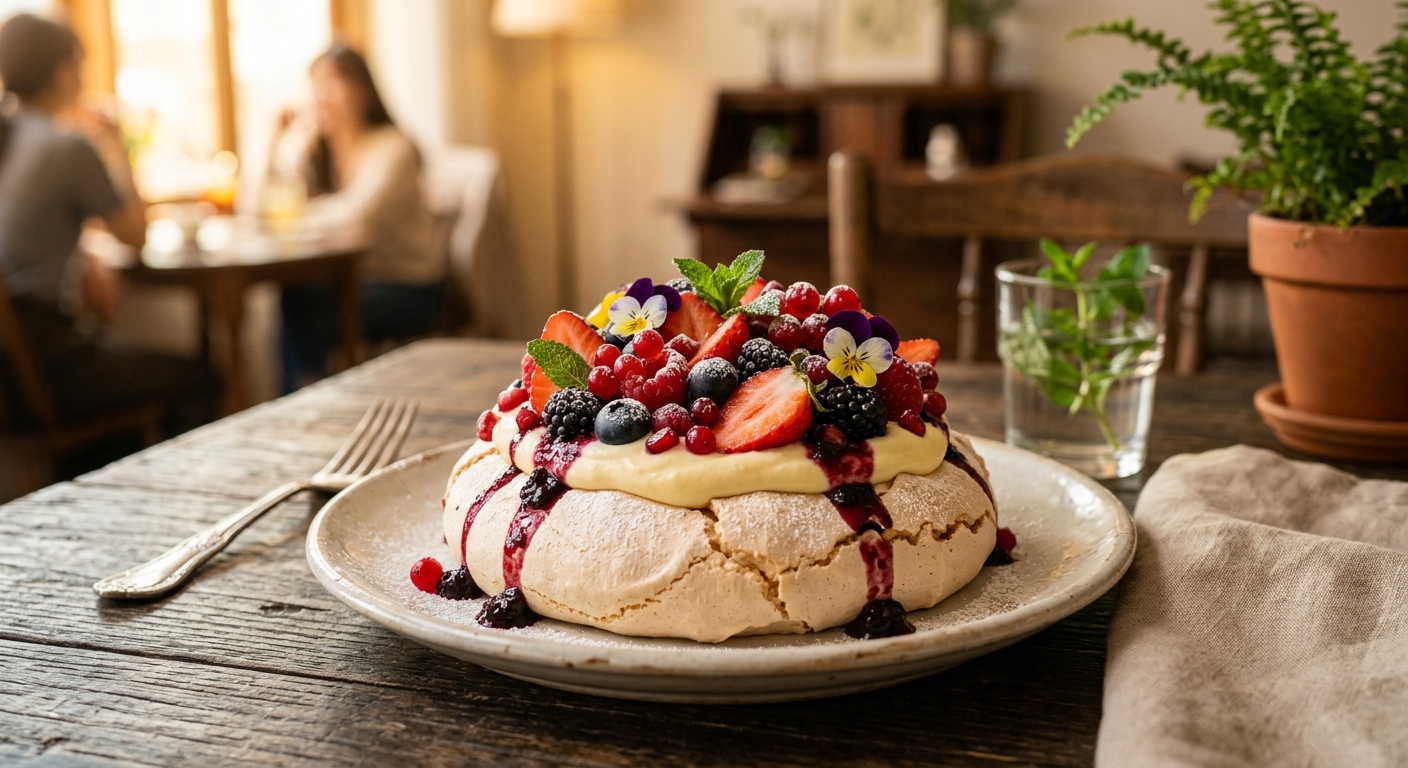
To behold a Pavlova resting gracefully at the center of a dining table is to be instantly invited into a sunlit celebration of warmth, fellowship, and boundless joy. Renowned as the quintessential dessert of summertime holiday gatherings across the Southern Hemisphere, this pristine confection transcends the concept of mere sweetness. It stands as an enduring emblem of hospitality, bringing loved ones together under open skies to slice through its airy tiers and share in the simple luxury of togetherness.
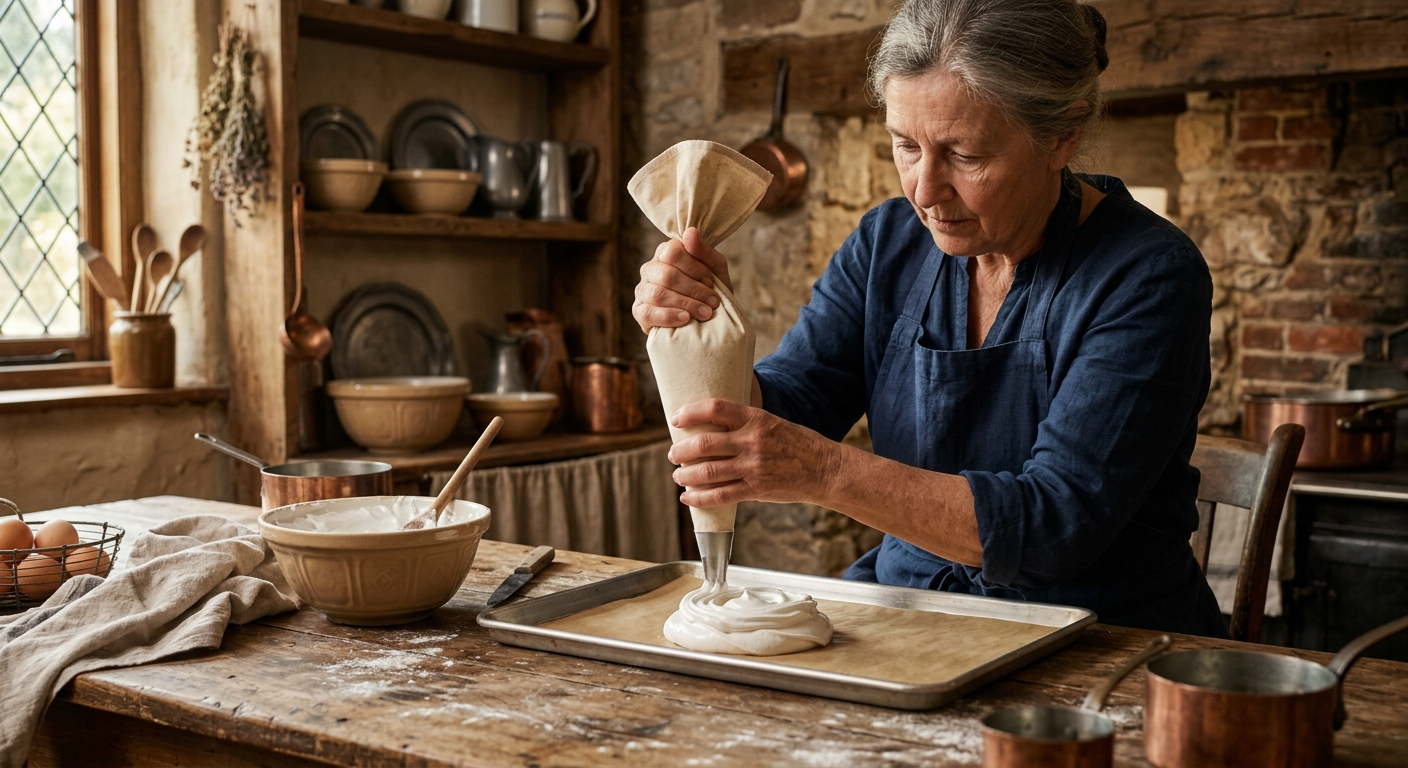
What makes Pavlova such a treasured tradition is its unapologetic, rustic charm. Unlike the rigid geometry of classic French patisserie, the beauty of a Pavlova lies in its spontaneous, cloud-like silhouette. Baked with an organic, billowing form, crowned with mounds of softly whipped cream, and scattered generously with freshly harvested fruits, it welcomes everyone to the table with ease and generosity. In every home, the dessert becomes a vibrant edible canvas reflecting the season's bounties and the host’s affectionate creativity.
"More than just a sweet confection, Pavlova embodies the radiant laughter, golden sunlight, and heartfelt warmth of shared celebration."
The cultural soul of this dessert lies not in clinical precision, but in harmonious indulgence. The slight crackles on its porcelain surface and the gentle drift of cream are celebrated as signs of authentic homemade warmth. It is a timeless culinary ritual that honors harvest, connection, and the sweet ephemerality of life's brightest moments.
History
The enchanting story of Pavlova traces back to the 1920s, forever intertwined with the legacy of the peerless Russian ballerina Anna Pavlova. During her historic tours across Oceania, audiences were utterly captivated by her legendary performance in 'The Dying Swan'. Her gravity-defying leaps, the gossamer flutter of her tulle tutu, and the ethereal elegance of her stage presence left an indelible impression on all who witnessed her art.
Inspired by her weightless grace, a talented local chef set out to translate her fleeting pirouette into a sublime culinary creation. The crisp, airy meringue base was crafted to mirror the flaring layers of her tutu, the pillowy peaks of whipped cream evoked the soft feathers of a swan, and the vibrant jewels of fresh fruit paid homage to the shimmering adornments of her stage costumes.
In the decades that followed, a spirited and affectionate culinary rivalry arose between Australia and New Zealand, with both nations claiming to be the true birthplace of this iconic masterpiece. While early recipes referencing meringue cakes named after the ballerina surfaced in New Zealand publications during the late 1920s, Australian culinary figures equally championed their own refined interpretations in the early 1930s, firmly establishing its global fame.
Today, this historic debate only enriches the lore of Pavlova, elevating it from a regional specialty to a worldwide classic. Through a symphony of sugar, egg whites, and cream, the transcendent beauty of a legendary dancer continues to live on upon our dessert plates.
Recipe & Craftsmanship
Crafting an authentic Pavlova is a delicate alchemy of precision, temperature control, and patient devotion. While ordinary meringue treats are baked until entirely dry and brittle, the supreme art of the Pavlova resides in achieving a dramatic contrast: a paper-thin, fragile shell on the outside enclosing an impossibly soft, pillow-like marshmallow core on the inside.
1. The Meringue Foundation
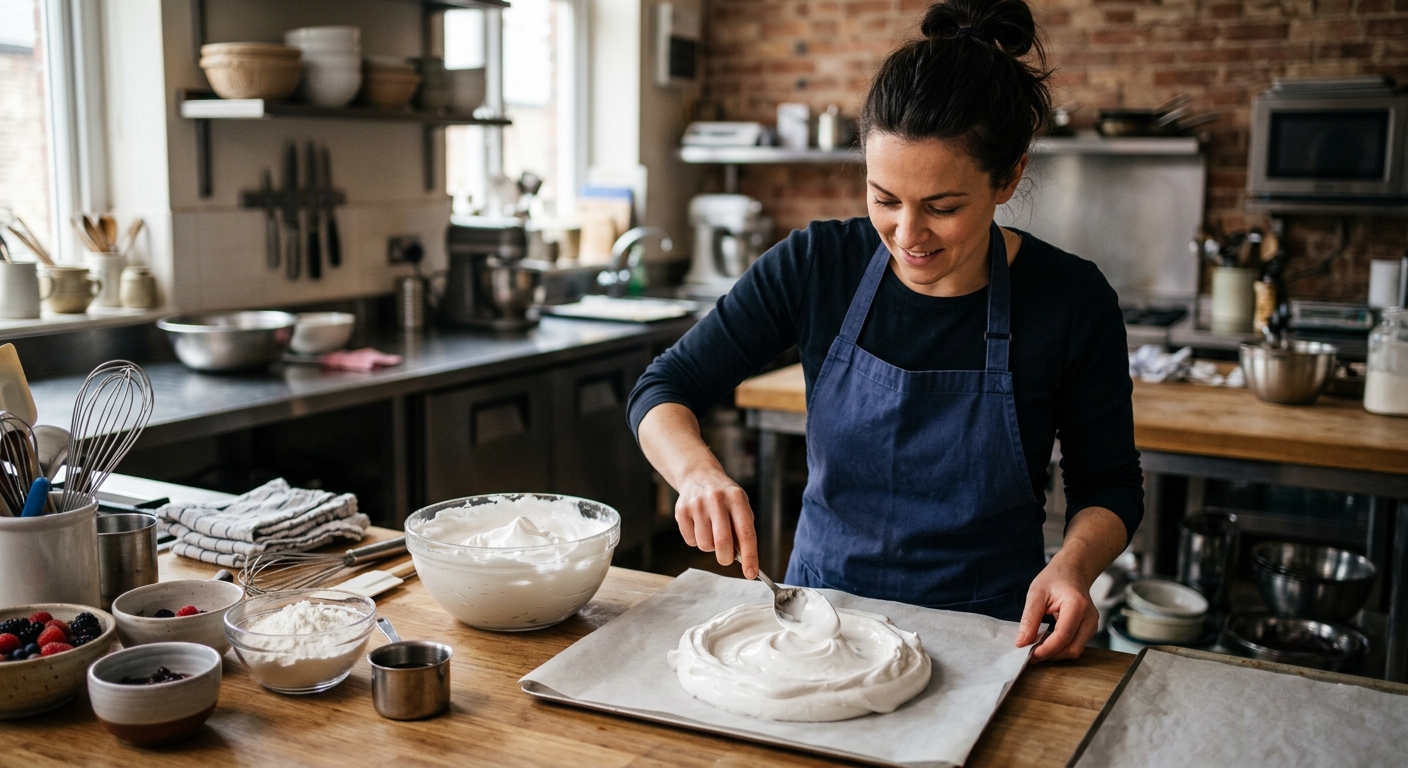
The journey begins with room-temperature egg whites, meticulously separated to ensure not a single trace of yolk or fat impedes the aeration. Whipped gradually until soft peaks emerge, superfine caster sugar is introduced spoon by spoon to build a glossy, structural meringue. To lock in the signature marshmallow texture, two vital ingredients are folded in near the end: a touch of cornstarch and a splash of mild acid, such as white wine vinegar or fresh lemon juice, complemented by pure vanilla extract. The starch and acid work synergistically to stabilize the egg white proteins during baking.
2. Gentle Baking and the Slow Cool
The meringue is shaped onto baking paper into a voluptuous nest or disc with gentle furrows along its sides, then baked at a low temperature—between 120°C and 150°C—for about 75 to 90 minutes. When the exterior turns a delicate pale ivory and feels crisp to the touch, the oven is turned off without opening the door. Allowing the Pavlova to cool completely inside the gentle, residual warmth of the closed oven over several hours prevents thermal shock, ensuring the crust sets firmly while the interior retains its moist, cloud-like tenderness.
3. Layering with Cream and Fruit
Once thoroughly chilled, the meringue is topped with lightly sweetened, softly whipped pure dairy cream. A lavish assortment of ripe, tart-sweet fruits is arranged across the top just prior to serving, preserving the pristine crispness of the meringue beneath.
Food Story & How to Enjoy
Savoring a Pavlova is a multi-sensory theatrical experience. When the grand, fruit-laden platter is set before guests, the gentle crunch as the carving knife fractures the delicate crust is an auditory delight that heightens anticipation. As each slice reveals the snowy white, marshmallow-soft interior nestled under billows of fresh cream, dining becomes a celebration of visual and textural elegance.
The secret to fully elevating Pavlova lies in the thoughtful harmony of seasonal fruit pairings. During warm summer days, tart passionfruit pulp, fragrant mangoes, and vibrant kiwifruit lend a bright, tropical acidity that cuts through the sugar. In cooler seasons, a tapestry of raspberries, blackberries, and strawberries provides a refreshing berry tartness. Because the meringue base is unapologetically sweet, pairing it with fruits featuring pronounced acidity ensures a sophisticated, well-balanced profile.
To complement this ethereal creation, serve it alongside a steaming pot of fragrant Earl Grey or first-flush Darjeeling tea, whose brisk bergamot notes and clean tannins cleanse the palate between bites. For celebratory occasions, a chilled flute of dry Champagne or sparkling wine offers sparkling effervescence that dances harmoniously with the melt-in-the-mouth texture of the meringue.
Taste & Sensory Profile
The first bite of Pavlova awakens the palate with an astonishing play of textures and flavors. It begins with the delicate, crystalline shatter of the baked crust—a fleeting, sweet crunch reminiscent of spun sugar. Yet almost instantly, this crisp sensation gives way to the plush, velvety interior, which dissolves across the tongue like a warm, vanilla-scented marshmallow cloud.
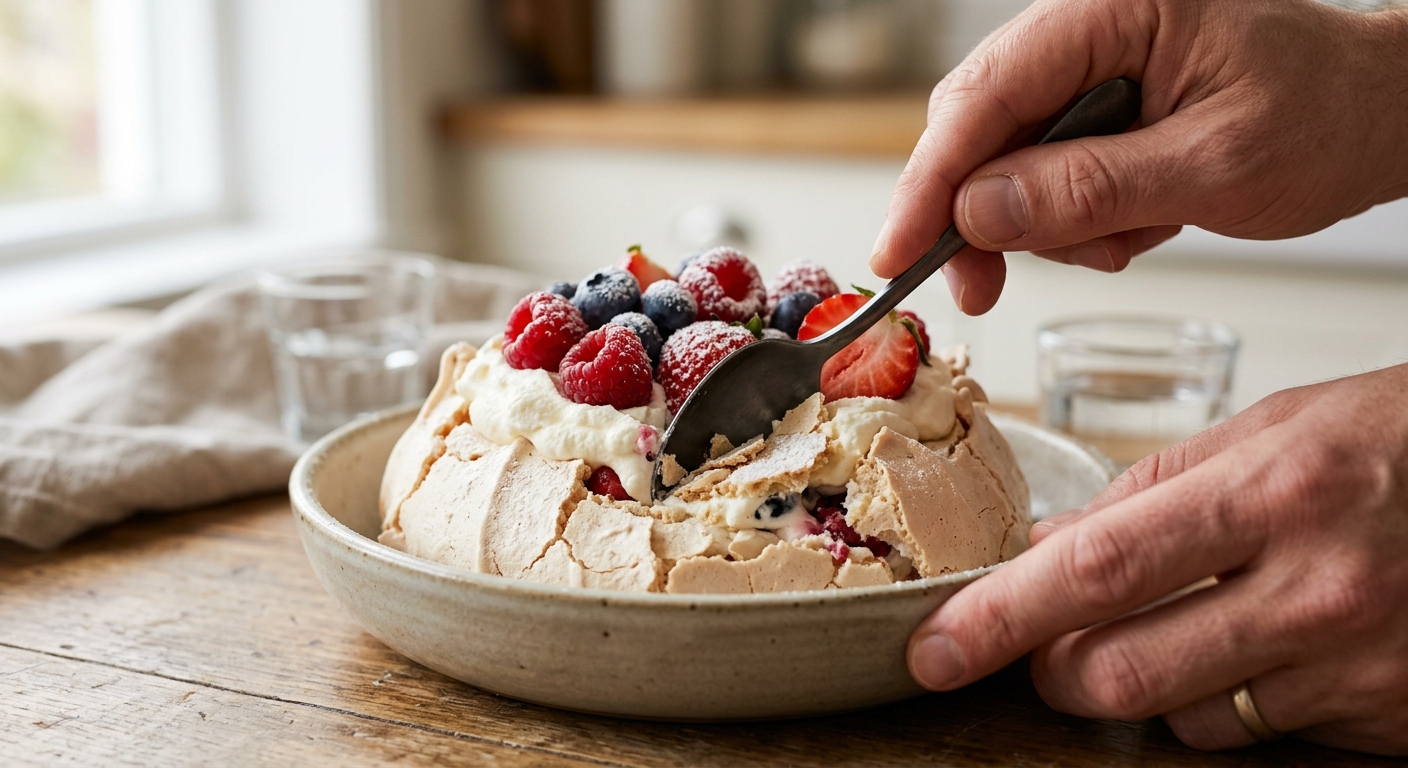
As the sweetness of the meringue begins to unfold, it is cushioned by the cool, rich neutrality of softly whipped fresh cream. Then arrives the crescendo: the vibrant burst of tart fruit juices cutting cleanly through the richness, balancing sweet and sour in breathtaking harmony. Every mouthful delivers a dynamic dialogue between crisp and yielding, rich and tart, airy and luxurious.
Long after the bite has vanished, delicate notes of vanilla bean and the bright aroma of sun-ripened fruit linger on the breath. Pavlova is far more than a simple confection; it is an ephemeral poem sculpted from air, sugar, and sunshine—a pure, unforgettable triumph of dessert craftsmanship.
Looking for a place nearby? Search “파블로바” on Naver Map.