Tradition
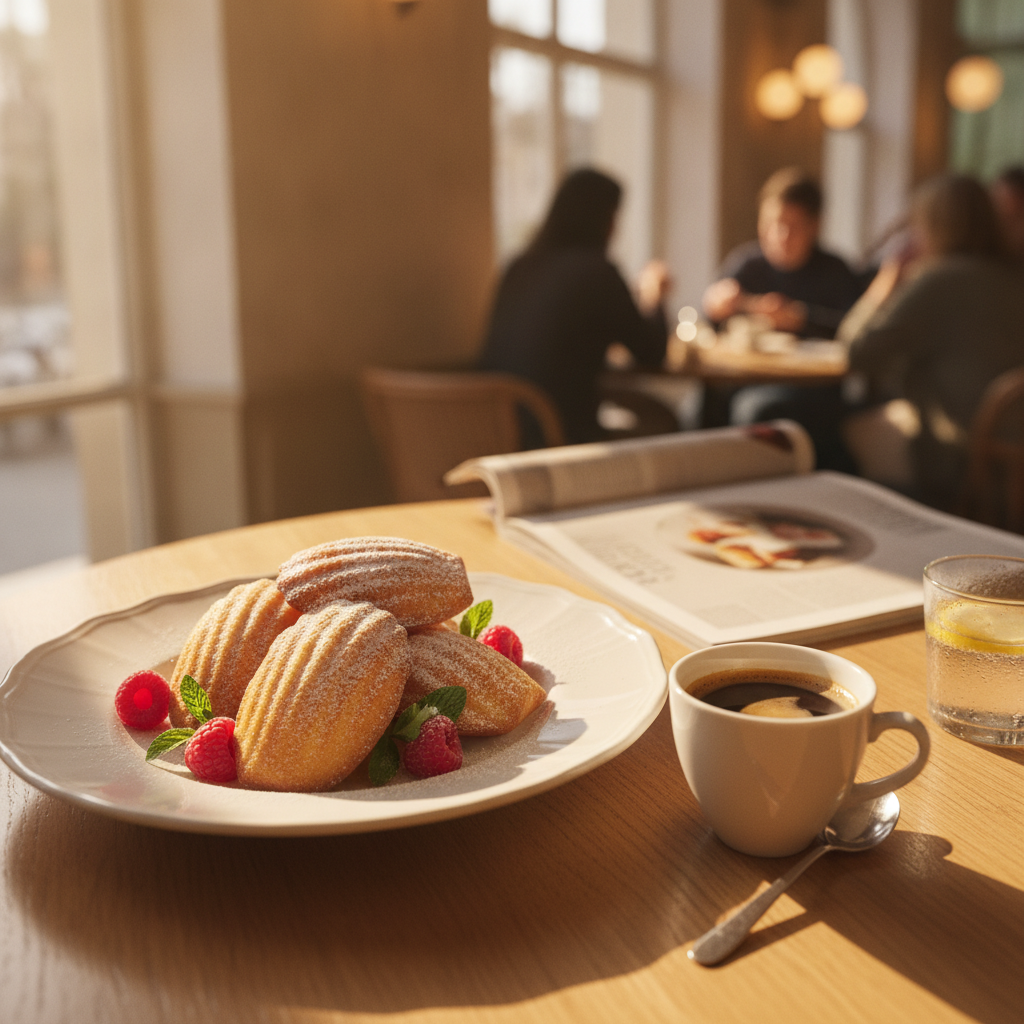
Madeleine, a specialty of the Commercy region in France, is more than just a dessert; it's a cultural symbol deeply embedded in the lives of the French people. Its small, charming scallop shape evokes childhood innocence and memories, while its sweet and soft taste offers comfort and happiness. In French homes, Madeleines are often enjoyed as a snack with warm tea or coffee during afternoon tea, and they are also popular as gifts for special occasions. Especially on weekend mornings, the aroma of freshly baked Madeleines filling the house, with the whole family gathered together for a cozy time, is a heartwarming scene commonly found in any French household. Madeleines also frequently appear in French literature, further solidifying their cultural significance. In Marcel Proust's "In Search of Lost Time," the scene where the protagonist recalls childhood memories by dipping a Madeleine in tea illustrates how important Madeleines are as a medium for evoking nostalgia, beyond just being a delicious pastry. Thus, Madeleines are not just a simple snack for the French; they are warm companions that share precious moments and memories of life, and a cultural heritage that transcends time.
During holidays like Christmas or Easter, even more special Madeleines appear. Variations such as adding orange peel instead of lemon zest or coating them with chocolate add to the festive atmosphere. Madeleines hold more than just a recipe's meaning for the French, to the extent that each family has a secret recipe passed down through generations. The sight of grandmothers teaching their granddaughters, and mothers teaching their daughters how to make Madeleines, sharing warm conversations and memories, shows that Madeleines are more than just a dish; they are a medium of love that connects generations. In this way, Madeleines are deeply ingrained in the daily lives of the French people, establishing themselves as a precious presence that brings small joys and happiness to life. The warm sentiment and cultural significance contained in a single small, shell-shaped pastry make Madeleines even more special, allowing one to fully experience the charm of France.
History
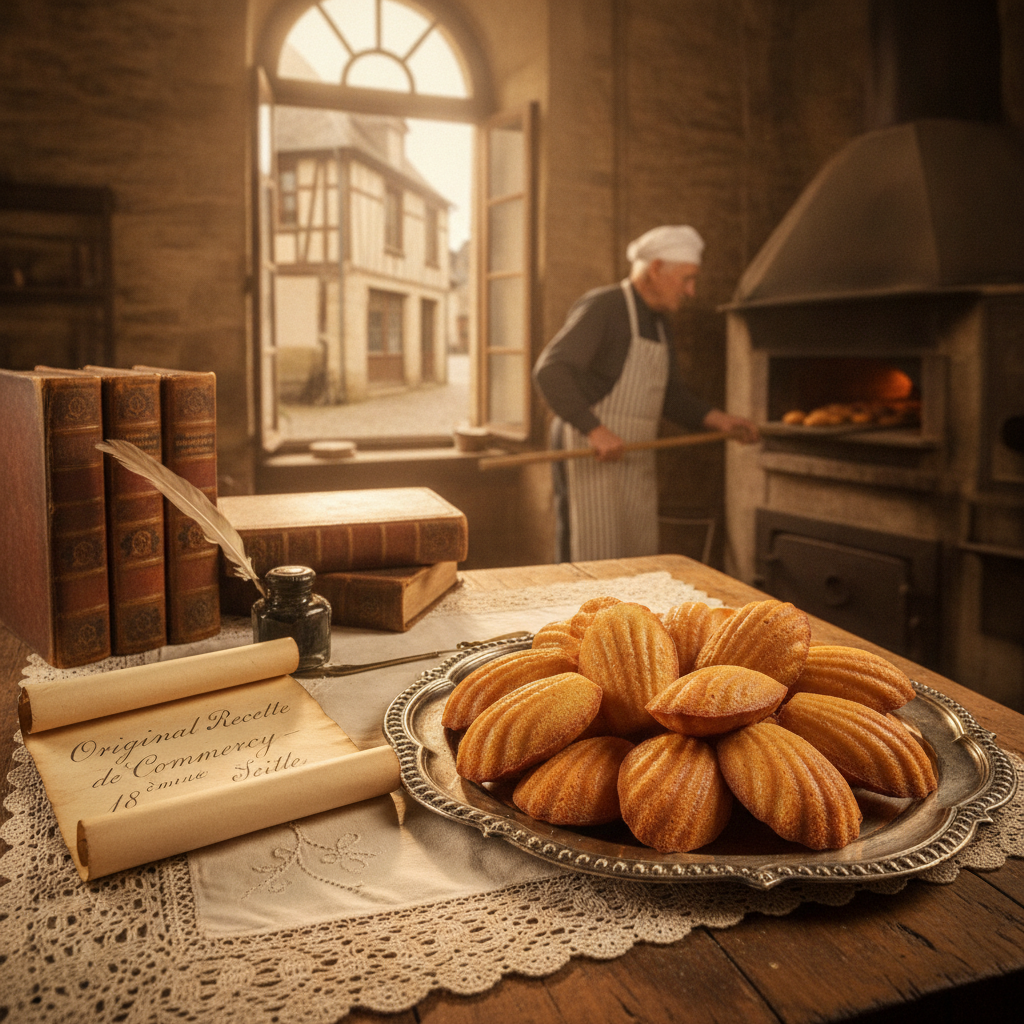
While there are several theories about the exact origin of the Madeleine, the most widely accepted story begins in Commercy, Lorraine, in the 18th century. A plausible account relates an anecdote from a banquet hosted by Stanislas Leszczynski, then Duke of Lorraine and King of Poland, in 1755. During the banquet preparations, the head chef suddenly left, and a young maid named Madeleine Paulmier baked small shell-shaped cakes using a recipe she learned from her grandmother. These cakes unexpectedly received enthusiastic praise from the guests, and Duke Stanislas is said to have named the pastry 'Madeleine' after the maid. Subsequently, Madeleines were introduced to the French court at Versailles through his daughter, Marie Leszczynska, who became Queen of France as the wife of Louis XV. With her influence, Madeleines gained great popularity among the nobility and began to spread throughout France.
Another theory suggests that Jean Avice, a chef for the Prince of Condé in northern France, first created them in the late 17th century. He reportedly called them 'Condé cakes' after the Prince, with the name later changing to Madeleine. However, most historians today consider the story of Madeleine Paulmier from Commercy to be the most credible. In the 19th century, with the advancement of confectionery technology during the Industrial Revolution, Madeleines became a more popular dessert. Especially with the widespread availability of cast-iron molds, Madeleines could be easily made at home, leading to a variety of recipes and variations. In the 20th century, Madeleines gained literary significance as a symbol of memory and nostalgia, appearing in Marcel Proust's "In Search of Lost Time." Thus, Madeleines are a historic dessert that began at the royal table and have continued to be loved by the public to this day. Their small, humble scallop shape embodies the history and culture of France.
Preparation
Madeleines, though simple in appearance, require a delicate and precise process to achieve their exquisite taste. The core of the traditional Madeleine preparation lies in 'Beurre Noisette' (brown butter) and the 'resting' process. First, Beurre Noisette involves slowly melting butter over low heat to evaporate its moisture and toast the milk solids to a hazelnut brown, creating a distinct nutty aroma. In this process, the butter develops a deep, rich flavor, becoming a crucial element in determining the unique taste of Madeleines. Well-made Beurre Noisette adds a special fragrance and flavor to the Madeleine batter. The basic ingredients include flour, sugar, eggs, butter, lemon zest, and baking powder, with vanilla extract or orange zest sometimes added to enhance the aroma.
To make the batter, eggs and sugar are thoroughly mixed and whipped until frothy. Sifted flour and baking powder are then gently folded in. Finally, cooled melted Beurre Noisette and lemon zest are added to complete the batter. A critical step here is 'resting'. The finished batter is refrigerated for at least one hour, or even up to a day, to mature. This process allows the ingredients to meld together, deepening the flavor, and stabilizes the gluten in the batter, which is crucial for creating the characteristic moist and tender texture of Madeleines when baked. Furthermore, baking the batter when it is cold helps form the beautiful 'hump' that is the hallmark of a Madeleine. Once the well-rested batter is spooned into Madeleine molds and baked in a preheated oven, golden-hued, beautiful Madeleines emerge. Their slightly crisp exterior and moist interior, coupled with a subtle lemon scent and rich buttery aroma, make for a taste that is akin to a work of art, born from a delicate manufacturing process, bringing a rush of happiness with every bite.
Food Story and How to Eat
A Madeleine is a complete story in itself. Though small and unassuming in its scallop shape, a single bite releases a delicate flavor and aroma that fills the mouth, creating the illusion of being transported to a tranquil French village. The best way to enjoy a Madeleine is, of course, freshly baked and warm. Its slightly crisp exterior and moist interior, combined with the rich butteriness and refreshing tang of lemon, satisfy all the senses. Enjoying it with hot coffee or black tea deepens its flavor even further. Especially strong black coffee or Earl Grey tea gently envelops the Madeleine's sweetness, creating a perfect harmony. In France, there's a heartwarming tradition around 4 PM, when children return from school, to prepare Madeleines and warm milk as a snack. This shows that Madeleines are not just a snack to fill the stomach, but a medium for expressing love and connection within the family.


How Madeleines are enjoyed also varies with the seasons. On a sunny spring day, a refreshing lemon Madeleine paired with a cool iced lemon tea makes a perfect combination. In summer, Madeleines with berries or chilled Madeleines served on top of ice cream are excellent options. In autumn, Madeleines with cinnamon or apple pieces go well with a warm latte, and in winter, Madeleines coated in chocolate or with dark chocolate chips enjoyed with mulled wine or hot cocoa bring a feeling of warmth and happiness to both body and soul. Madeleines also enrich any dessert table for special occasions. Their small and charming shape allows for a beautiful display when several varieties are presented together, offering guests a range of flavors. As bite-sized treats, Madeleines are easy to enjoy yet provide ample satisfaction, making them a welcome dessert at any gathering.
Taste
Taking a bite of a Madeleine, the first sensation is the delicate crispness of its exterior. Baked to a golden hue by the oven's heat, the outer layer breaks slightly like a thin sugar coating, revealing the soft interior. This is followed by the moist and tender texture of the cake that fills the mouth. It feels like eating a piece of fluffy cloud, with a delightful lightness and a melt-in-your-mouth softness that is exquisite. Embracing all of this is the rich aroma characteristic of Madeleines. A freshly baked Madeleine first tantalizes the nostrils with the fragrant scent of butter. The deep, rich hazelnut aroma created by Beurre Noisette subtly permeates, adding a touch of sophisticated flavor. To this, the refreshing scent of lemon zest is added, balancing the richness of the butter and infusing the entire Madeleine with a fresh and vibrant energy. If vanilla extract is included, a sweet and gentle vanilla aroma will