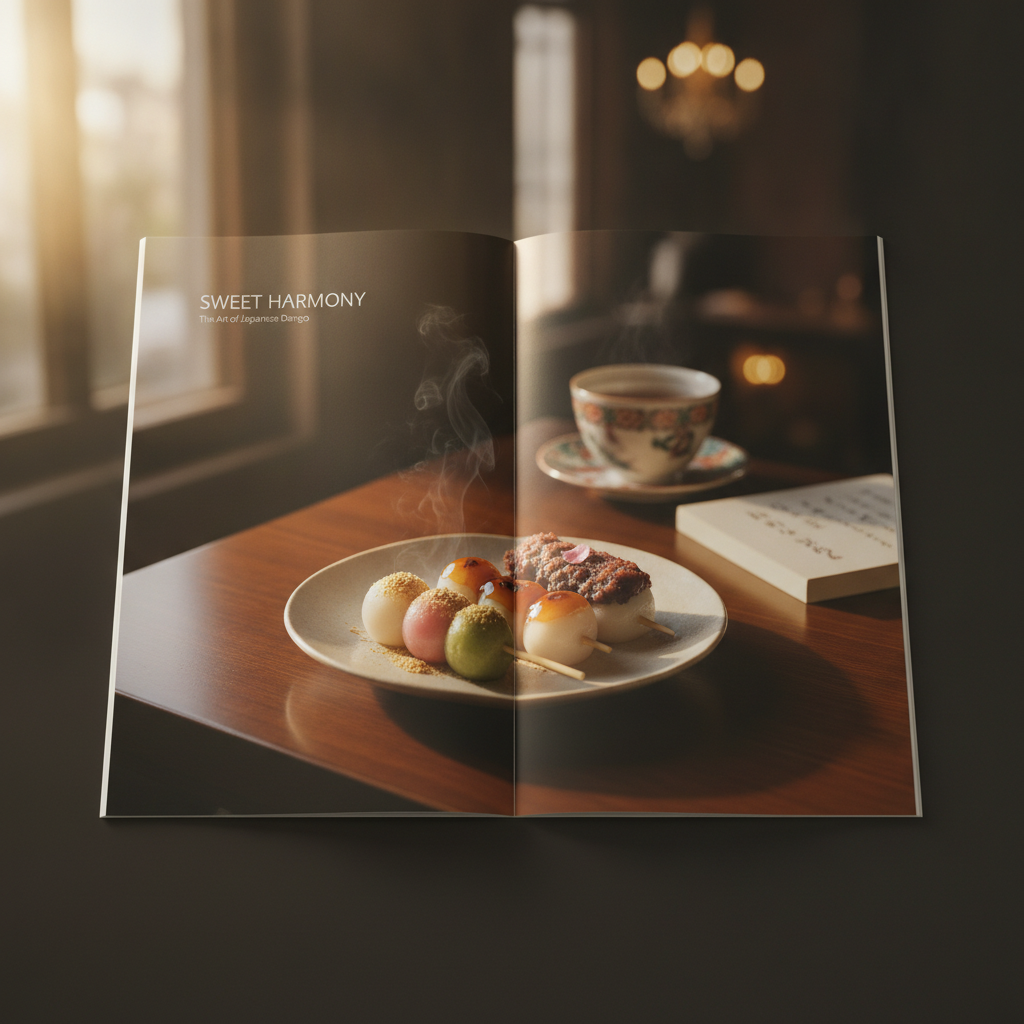
Tradition
Under the cherry blossoms scattering petals in spring, amidst the bustling summer festivals, on autumn hillsides adorned with colorful leaves, and within the warm embrace of serene winter nights, we always encounter dango. Dango is more than just a snack; it's an iconic food deeply rooted in Japanese life and culture. Three or five round dumplings made from glutinous rice flour, skewered on a stick, possess a humble beauty of their own. Particularly in spring, Hanami Dango (flower-viewing dango) is a popular essential for cherry blossom viewing. Its three colors—pink, white, and green—visually represent the vitality of spring and the beauty of nature, bringing a smile to anyone who sees them. These three colors symbolize cherry blossoms, lingering snow, and new sprouts, respectively, narrating the hope of spring that overcomes the harsh winter. In festivals held at shrines and temples, dango is also offered to the gods, imbued with a sacred meaning. During holidays or special occasions, families gather to make and share dango, fostering communal bonds. In agricultural Japan, rice was a source of life and a symbol of abundance, thus dango, made from rice, carried meanings of blessing and gratitude beyond just being a snack. Having accompanied the Japanese people's daily lives for a long time, dango has become a food of memories, sharing moments of joy and sorrow, meetings and partings. Each bite offers a chewy texture and a subtle sweetness that possesses a magical power to make busy modern people pause and savor simple happiness. Dango continues to be a precious presence that comforts the Japanese heart and injects sweet vitality into their lives, transcending time.
History
The history of dango dates back to Japan's distant ancient times. Records of food made with glutinous rice have been found in Jomon period (circa 10,000 BCE – 300 BCE) ruins, indicating its long heritage. However, dango in its current form is believed to have started appearing around the Heian period (794 – 1185). At that time, dango was primarily used as an offering to gods at shrines and temples, or as a luxury snack enjoyed by aristocrats. Mitarashi dango, originating from the Shimogamo Shrine in Kyoto, holds a significant place in the history of dango. Legend has it that Mitarashi dango was created around the 14th century when Emperor Go-Daigo modeled it after the water droplets gushing from the spring at Shimogamo Shrine. The five dumplings skewered on a stick, with one at the top and four below separated, resembled these water droplets, hence its name. Thus, dango evolved in close connection with sacred rituals. By the Muromachi period (1336 – 1573), dango gradually became more popular. As glutinous rice cultivation flourished across the country and dango-making techniques advanced, various types of dango emerged. Particularly during the Edo period (1603 – 1868), street vendors commonly sold dango, and it became a popular snack easily enjoyed by common people. From this point, dango evolved into even more diverse forms, integrated with seasonal festivals and events. For instance, Hanami dango for cherry blossom viewing in spring, and Tsukimi dango for moon-viewing events in autumn came into being. In this way, dango changed and developed with the times, deeply permeating Japanese life to become a beloved national snack today. Having passed down through hundreds of years, dango is more than just food; it is a living heritage encapsulating Japan's history and culture.
Preparation Method
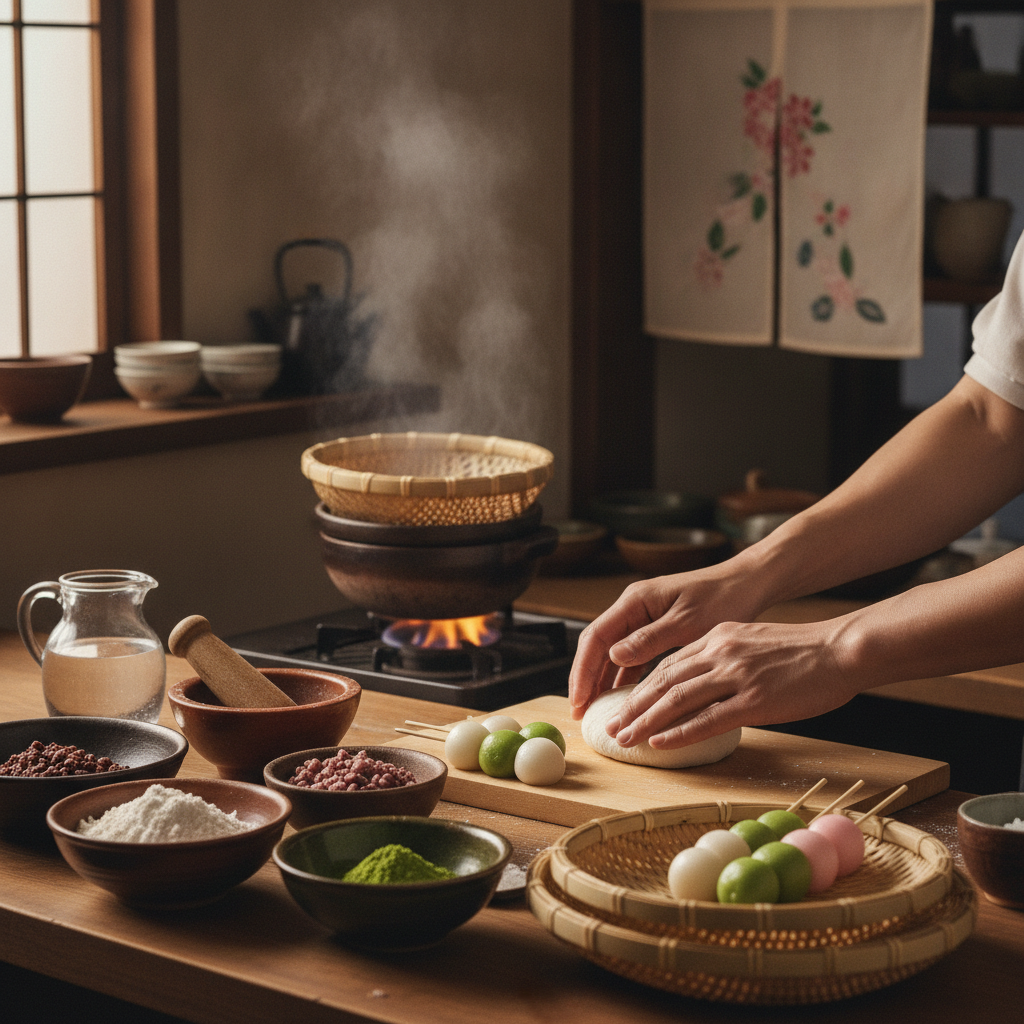
The preparation of dango might seem simple at first glance, but it is a delicate process where the type of glutinous rice flour, consistency of the dough, and boiling time can result in completely different tastes and textures. Traditional dango is primarily made using glutinous rice flour (mochiko), water, and a small amount of sugar. The most crucial aspect is the choice of glutinous rice flour. For a chewy and soft texture, it is best to use mochiko made from finely ground high-quality glutinous rice. Recently, some also mix in non-glutinous rice flour (joshinko) for a softer texture. The dough-making process is a critical step that determines the quality of the dango. Gradually pour lukewarm water into the glutinous rice flour and knead gently by hand. It's important to achieve an appropriate consistency—neither too sticky nor too stiff. Sufficient kneading during this process is essential to develop the stickiness needed for a chewy texture. Once the dough is ready, roll it into small balls, about the size of a thumb joint. Lightly pressing the center of each dumpling ensures even cooking and a beautiful shape when boiled. The formed dumplings are boiled in water; once they float to the surface, boil for another 2-3 minutes to cook them thoroughly. The cooked dango are then transferred to cold water to cool, and drained. This process gives the dango a chewier and more springy texture. Finally, the dango are skewered and coated with various sauces. The most basic sauce is mitarashi sauce, made from soy sauce and sugar. Other popular types include anko dango topped with red bean paste, kinako dango coated with roasted soybean flour, and matcha dango dusted with green tea powder. The choice of sauce dramatically alters the appeal of the dango, making it fun to enjoy according to personal preference. While dango doesn't require special aging or fermentation, a tip is to prepare the dough in advance and refrigerate it briefly for an even chewier texture. Dango making is more than just cooking; it's a traditional process imbued with the aesthetics of care and patience.
Food Story and How to Eat
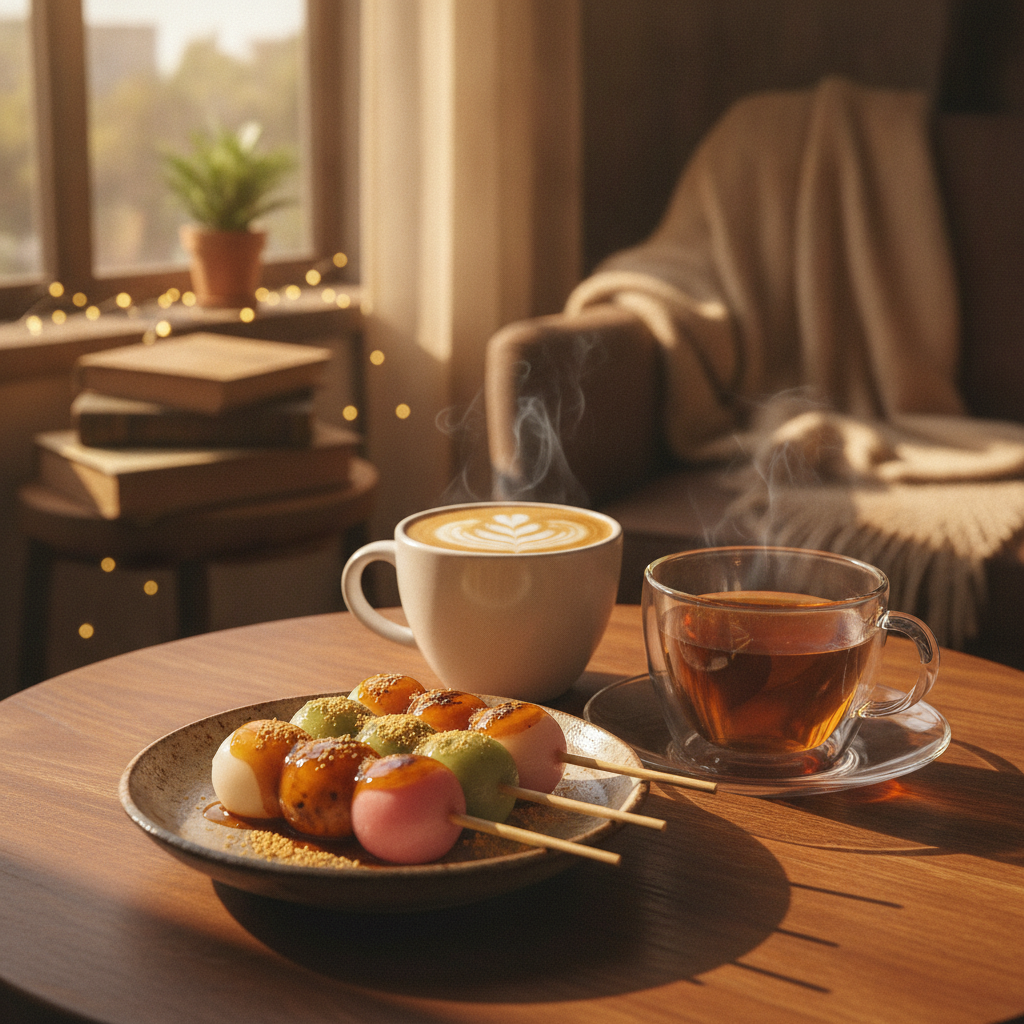
Dango is a small story in itself, a culinary experience imbued with the charm of the four seasons. The best way to enjoy dango is to savor 'the moment.' In spring, amidst the falling cherry blossoms at a hanami spot, taste the pink, white, and green hanami dango and feel the vitality of spring with all your senses. Paired with a chilled glass of sake or a warm cup of green tea, your spring memories will be even more beautiful. In summer, chilled dango served in cold water or with fresh fruit sauces are perfect. Under the bright sun, a bite of chewy, refreshing dango will make you forget the heat. It's even better with cold barley tea or a matcha latte. In autumn, celebrating the harvest season, savor dango topped with chestnut or sweet potato paste, or Tsukimi dango resembling the full moon, embracing the autumn evening atmosphere. With warm sake or fragrant hojicha, you can fully experience the richness of autumn. In winter, anko dango with red bean paste or savory kinako dango, paired with a warm cup of tea, brings comforting warmth. A warm bite of dango against the cold wind offers a small solace for both body and mind. Enjoy it with rich matcha or sweet amazake (sweet fermented rice drink). Dango is not only about the accompanying beverages but also a medium for creating memories with loved ones. Sharing dango while chatting with friends, strolling hand-in-hand with a lover, or laughing with family holds more meaning than just a snack. Dango offers small but certain happiness, or "shokakko." Taking a break from busy daily life to enjoy a sweet bite of dango and some leisure will offer a small respite for your body and mind. Eating dango is more than just filling your stomach; it's a beautiful experience of engaging all your senses in Japanese culture and seasonal changes.
Taste
The taste of dango is difficult to define in a single word. This is because the plainness and chewiness of the glutinous rice dumplings themselves, combined with the diverse sauces applied, create an endless spectrum of flavors. With the first bite, the gentle aroma of soft glutinous rice subtly tickles the nose, filling the mouth. The chewy and springy texture, felt with each chew, offers a fantastic sensation, as if biting into clouds. The perfect stickiness, neither too tough nor too soft, showcases the delicate skill of the dango artisan. The most representative dango taste is, without a doubt, Mitarashi dango. The sweet and savory soy sauce blends perfectly with the chewy dumplings, creating a heavenly harmony. The rich flavor of the sauce envelops the plainness of the dumplings, and each bite explodes with umami. Its highly addictive