Tradition
The image of children gathered around a small briquette fire in front of a stationery store in a dimly lit alley, eagerly waiting for sugar to melt in a magical moment, is a warm memory that every Korean holds dear. Dalgona is not just a simple sugar candy. It was a small luxury that brought joy and comfort to the lives of ordinary people, and a medium for sharing community spirit. Those moments, watching the dalgona vendor's movements with bated breath, gasping as the sugar swelled, and experiencing the mixed emotions of success or failure in the "뽑기" (dalgona challenge) game, prove that dalgona has become a cultural icon beyond mere food.
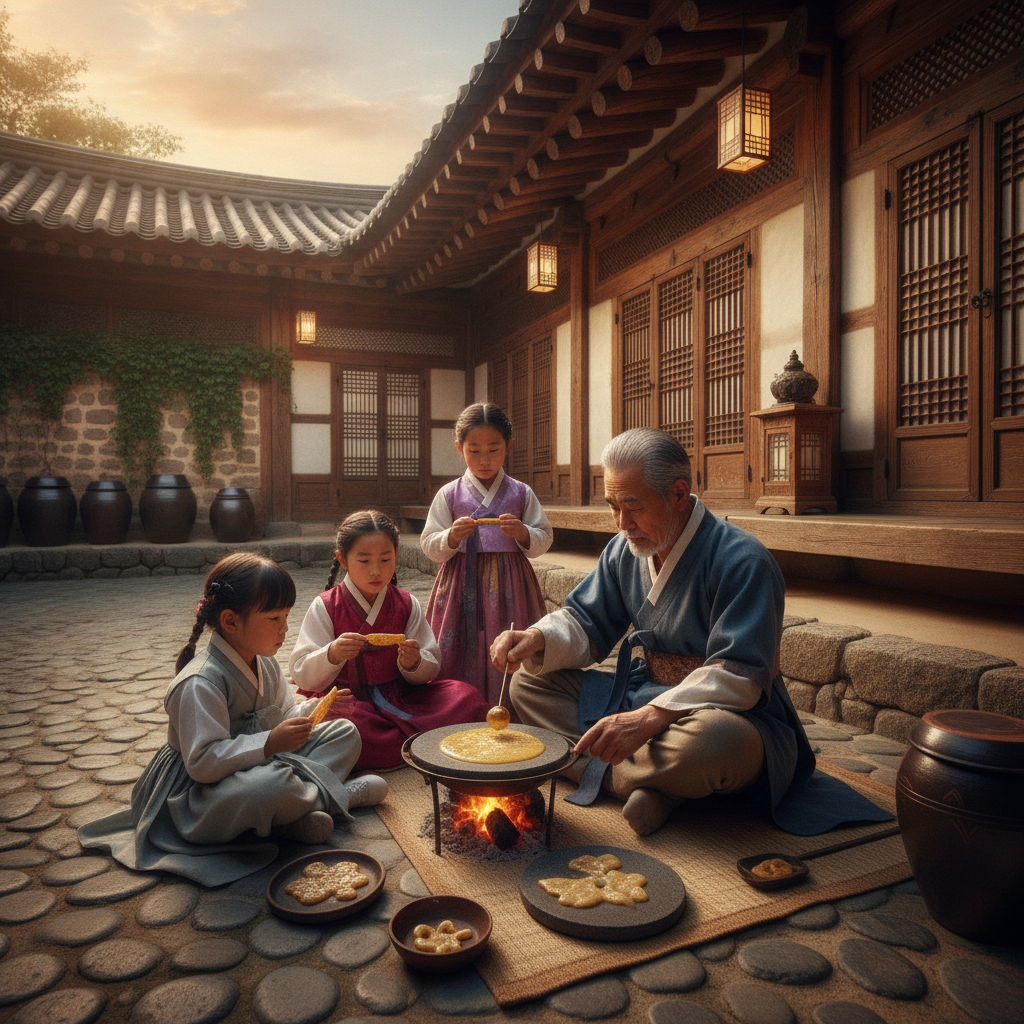
From the 1960s to the 1980s, Dalgona was a precious presence that offered sweet solace and small joys to children even during difficult times. The scene of children gathering in groups after school to buy dalgona from street vendors was an important part of daily life back then. This humble snack, made only from sugar and baking soda, provided the purest form of sweetness without special ingredients or complex recipes, earning the love of many. Especially the "뽑기" game, where children could get another dalgona if they successfully broke out a shape from the stamped candy without breaking the shape itself, offered a sense of accomplishment and an exciting challenge beyond just a snack. This is the background against which dalgona established its unique cultural value, combining play and memories, beyond its simple taste. Infused with the nostalgia of those times, dalgona still evokes cherished childhood memories for many today, fostering a sense of empathy across generations. A piece of dalgona contains memories and longing as deep as its sweet sugar.
History
The history of Dalgona parallels the winding path of modern Korean history. After the Korean War in the 1950s, sugar was a precious ingredient and a sweet luxury amidst poverty and hardship. It was at this time that a street snack called 'tteong-gwaja' (poop candy) or 'ppopgi' (pull out), which started in Busan, became known as the origin of Dalgona. Back then, it was made by melting sugar and adding baking soda, but it gradually spread throughout the country and developed into various forms. In the 1960s and 70s, even amidst economic development, sugar was still an expensive ingredient for ordinary people, so the method of adding baking soda to a spoonful of sugar to make it puff up and increase its volume was an economical snack that gave great satisfaction to children. Especially the dalgona sold directly from a briquette fire in front of stationery stores after school had an irresistible charm that captivated children.
The name Dalgona is presumed to have spread nationwide after being called "Dalgona" in the Daegu region. In Seoul, it was mainly called "ppopgi" or "ttigi," and in Busan, it was sometimes called by the somewhat blunt name "tteong-gwaja." Although the names varied by region, the method of making it with sugar and baking soda and enjoying the "ppopgi" game was the same. After the 1980s, as the economy grew, children's snack options diversified, and street vendors gradually disappeared due to hygiene issues, dalgona seemed to decline for a while. However, with the retro craze after the 2000s, dalgona began to attract public attention again. Especially in 2020, during the pandemic, 'Dalgona Coffee' gained worldwide popularity, making dalgona one of the representative K-foods. In this way, dalgona has consistently changed and evolved with the times, maintaining its legacy as a traditional snack deeply rooted in the lives of Koreans. Beyond a simple sugar candy, the history of dalgona, which embodies the culture and memories of an era, will continue.
Preparation
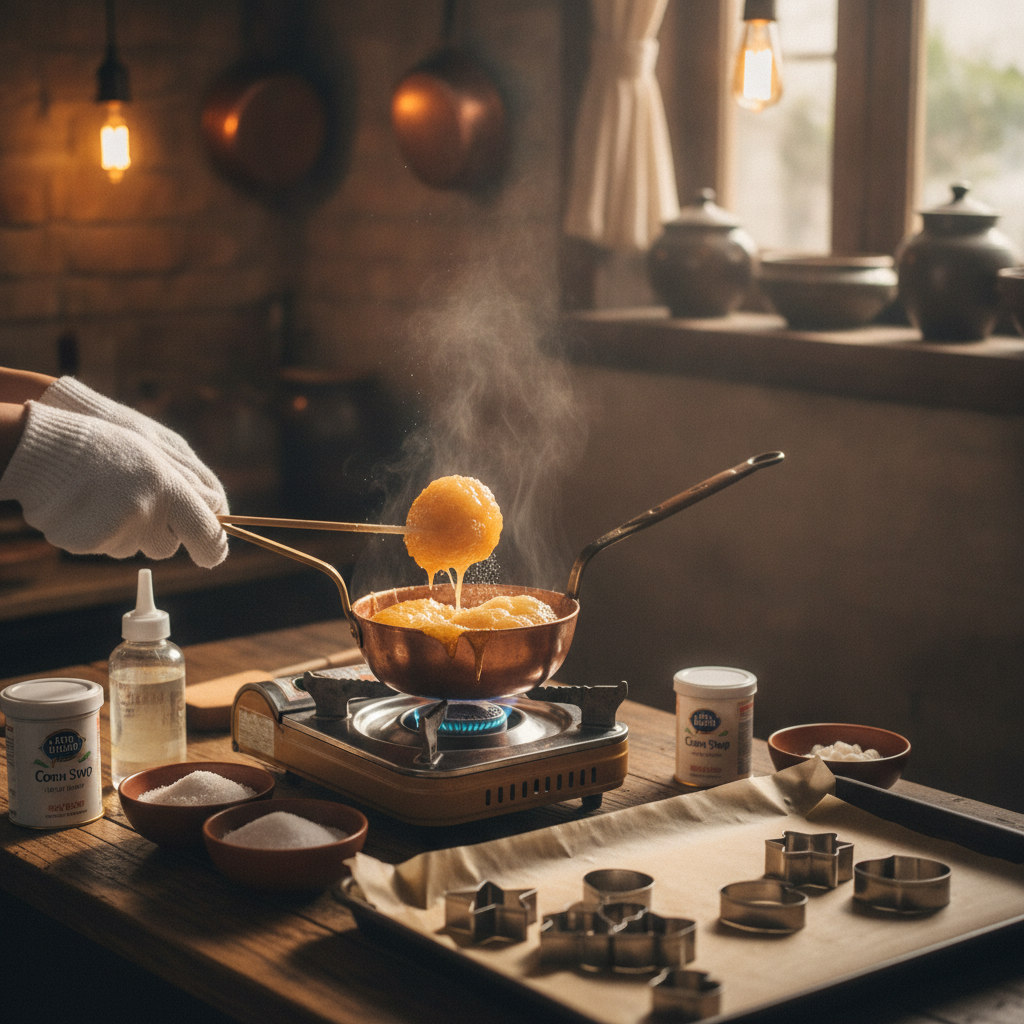
The preparation of Dalgona is surprisingly simple, yet it's like an art that requires hidden scientific principles and skilled techniques. The core ingredients are just two: sugar and baking soda. Sometimes a little water is added, but most prefer to melt the sugar directly. First, put a spoonful of sugar into a small ladle or a specialized pan and place it over low heat. Heat control is crucial here. Too high heat will burn the sugar and give it a bitter taste, while too low heat will prevent the sugar from melting properly. When the sugar begins to melt transparently, just before it turns brown, dip the tip of a chopstick into a very small amount of baking soda and add it. The moment the baking soda is added, the sugar magically puffs up and turns into a bright golden color.
After adding the baking soda, quickly stir with chopsticks to ensure the sugar and baking soda are evenly mixed. The carbon dioxide generated during this process creates Dalgona's unique crispy and light texture. When sufficiently puffed up, pour it onto a greased flat plate and press it flat before it cools. At this point, if you stamp it with various molds (star, heart, umbrella, etc.), you get the familiar Dalgona challenge shapes. Be careful of burns when handling hot Dalgona, and quick hand movements and precise timing are the secrets to making successful Dalgona. Skilled Dalgona artisans perfectly control every step, from heat regulation to the amount of baking soda added and stirring speed, to always produce Dalgona of consistent quality. In particular, if there is too much baking soda, it will taste bitter, and if there is too little, it will not puff up properly and become hard, so finding this delicate balance is key. The traditional method involved directly stirring a ladle over a briquette fire, but nowadays, it can be easily made at home using a gas stove or a portable burner. Thus, the charm of Dalgona lies in the fact that even with simple ingredients and processes, it embodies the touch of an artisan and scientific principles.
Food Story and How to Eat
Dalgona is a perfect snack in itself, but enjoying it in various ways can provide an even richer taste experience. The most traditional way is, of course, to simply bite into the dalgona. The sweetness that crumbles and melts on the tongue instantly evokes childhood memories. Especially, dalgona obtained by succeeding in the "ppopgi" challenge brought greater joy than any luxurious dessert. As for drinks to pair with dalgona, Dalgona Coffee is an absolute must-mention. When you drink rich coffee topped with plenty of sweet and crispy dalgona crumble, the bitterness of the coffee and the sweetness of the dalgona create a fantastic harmony. Adding dalgona to an iced latte with plenty of ice makes for a cool and sweet summer treat.
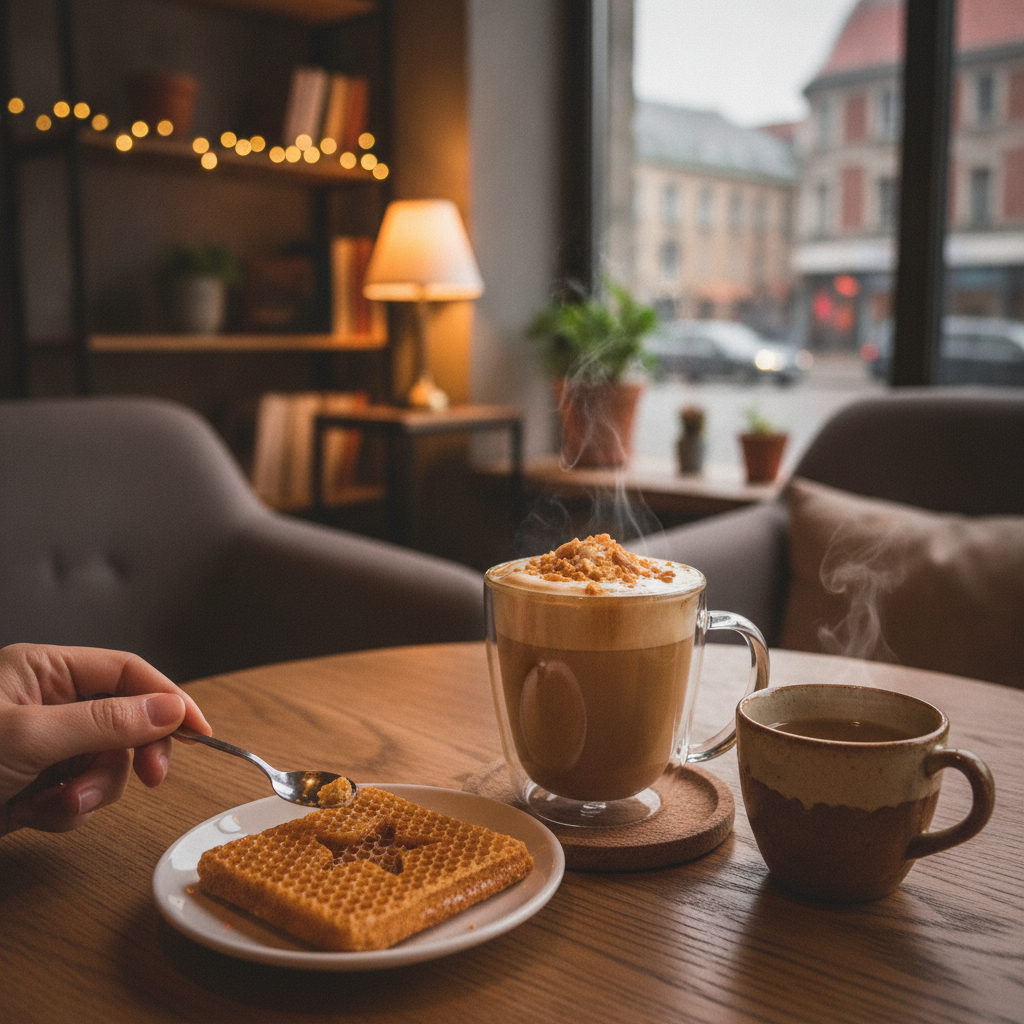
Dalgona also makes an excellent dessert topping. Sprinkle crushed dalgona pieces on vanilla ice cream to enjoy a unique texture where the creaminess of the ice cream and the crispiness of the dalgona blend together. It's also great on yogurt or pudding, or added to hotcakes or waffles for extra sweetness. There are also ways to enjoy dalgona with seasonal flair. On a cold winter day, melt dalgona in warm milk to enjoy it like a sweet milk tea, or add dalgona to warm cocoa to make a special hot chocolate. Conversely, on a hot summer day, you can pile dalgona on bingsu (shaved ice) to use it as a cool and sweet bingsu topping. Recently, various baking recipes using dalgona have also gained popularity. There are many desserts that highlight dalgona's unique flavor, such as dalgona macarons, dalgona scones, and dalgona cakes. As such, dalgona is more than just a snack; it possesses a chameleon-like charm that brings sweet joy and diverse taste experiences to our daily lives. In any way, a happy smile will always bloom with dalgona.
Taste
The taste of Dalgona is, in a word, 'pure sweetness' itself. The deep, rich sweetness created as sugar caramelizes is Dalgona's unique charm that sets it apart from other sugar candies. The first impression felt on the tongue is crispiness. The delightful 'snap' as it crumbles upon touching the teeth, along with the sweet aroma that fills the mouth, stimulates both the sense of smell and taste simultaneously. Thanks to the thin, airy, and bubbly structure created by melted sugar, Dalgona boasts a light and soft texture, much like cotton candy.