
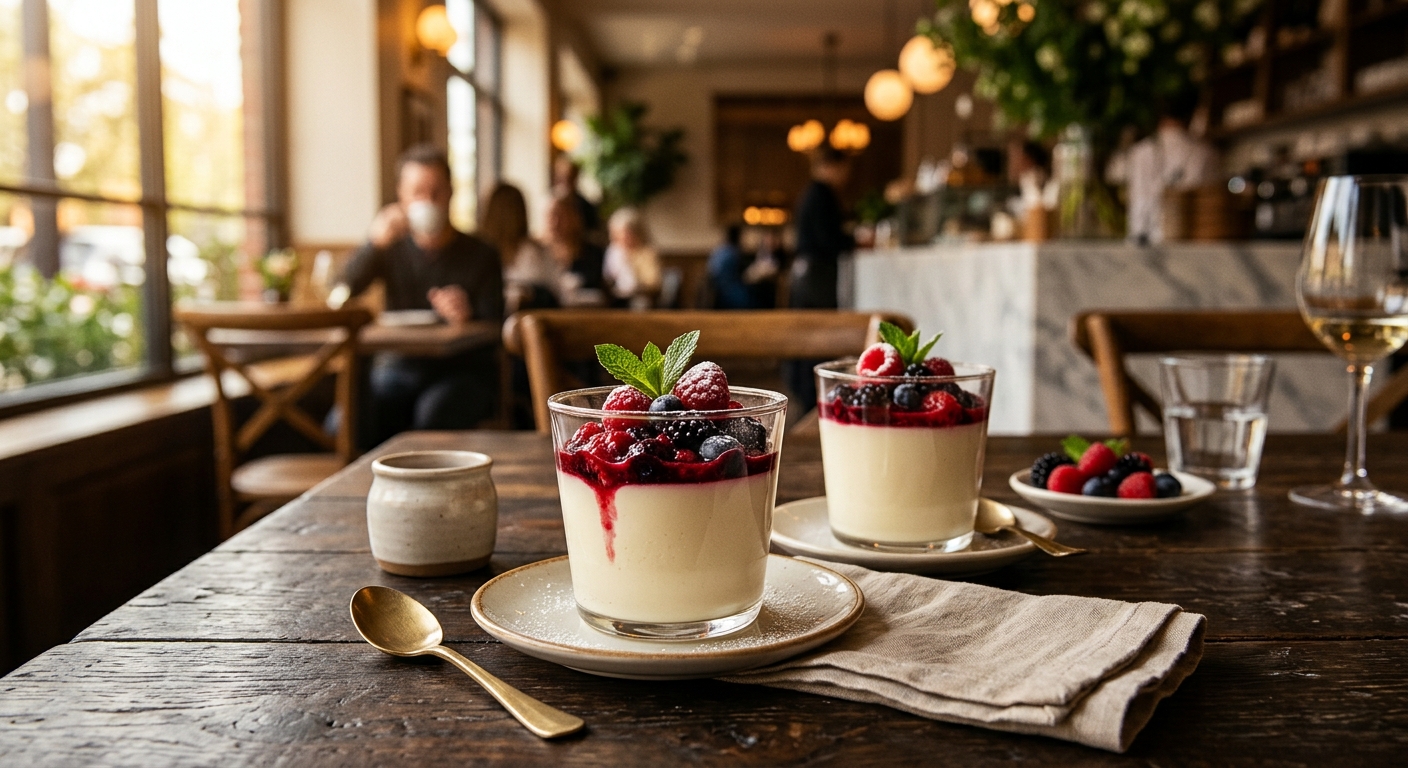
1. Tradition: The Rustic Purity and Warm Hospitality of Northern Italy
When a pristine, porcelain-white mound rests upon the dining table, the surrounding atmosphere softens into a quiet, reverent serenity. Panna cotta, translating literally to 'cooked cream' in Italian, represents one of the most unpretentious yet elemental creations in European confectionery. Its minimalism does not imply an absence of artistry; rather, it reflects the agrarian soul of Piedmont, where dairy farmers treated the sweet cream skimmed from rich cow's milk with utmost care and reverence.
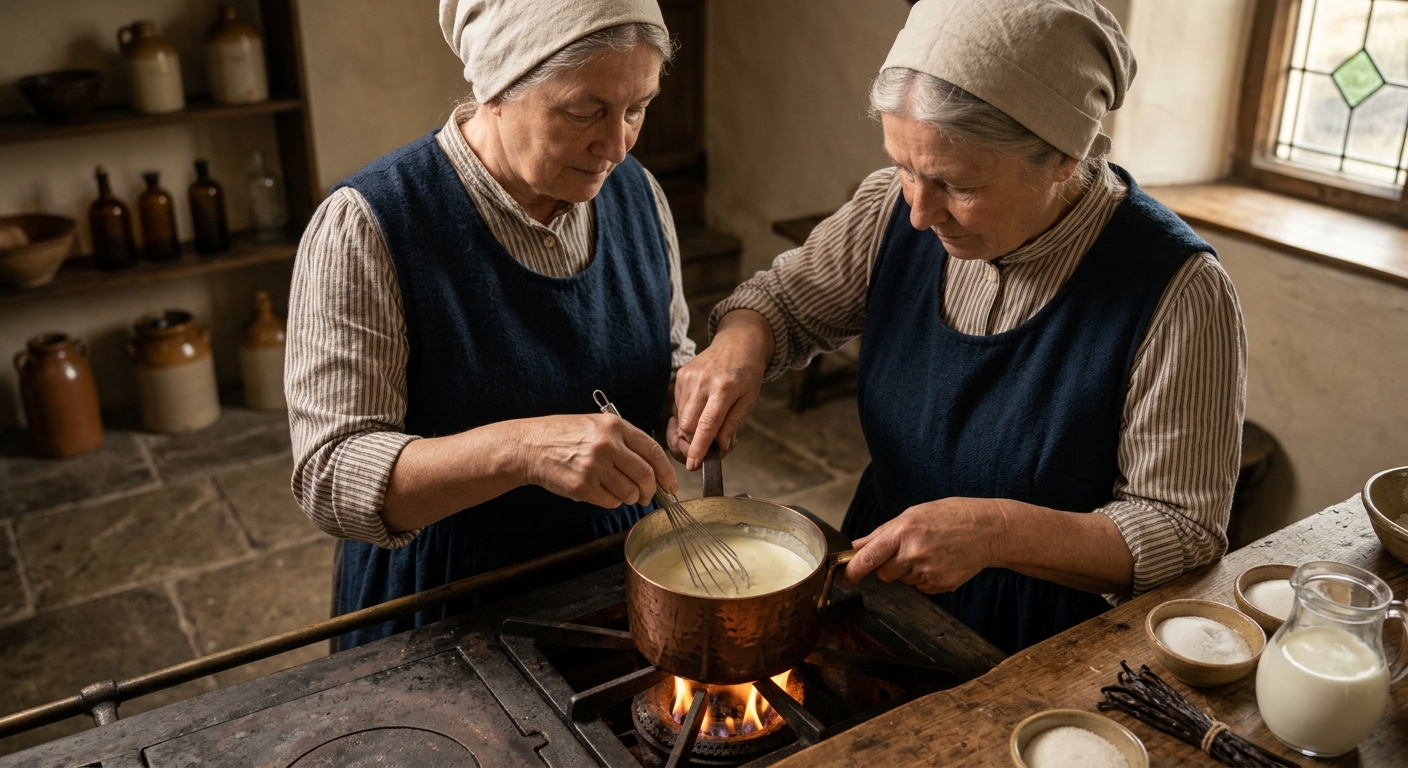
Around long wooden tables lined with family and friends, panna cotta served as the gentle conclusion to grand gatherings. After hours of savory roasts and tannic regional wines, the arrival of this chilled, gently trembling confection invited diners to unwind and share quiet reflections. Devoid of baroque garnishes, it shines through honest restraint, embodying the genuine spirit of Piedmontese pastoral hospitality where natural flavors are honored above all else.
"True culinary nobility dwells where all superfluity is cast aside, captured in a single droplet of nature's milk-white essence."
More than a mere indulgence, panna cotta is a cultural emblem of peaceful repose, celebrating the harmony between dedicated animal husbandry and the rhythmic cycle of the northern seasons.
2. History: From the Misty Langhe Hills to Global Acclaim
The origins of panna cotta trace back to the fog-shrouded vineyards and rolling pastures of the Langhe area within northwestern Italy's Piedmont region. Long before written records standardized the formula, rural farmsteads practiced gentle simmering of fresh cream and milk over hearth embers. Local folklore suggests that during the early twentieth century, an unnamed woman of Hungarian heritage residing in the Langhe hills harmonized this rustic dairy tradition with gelatin, shaping the dessert into its recognizable modern form.
From Marine Gelatin to Modern Refinement
Prior to commercially purified pork or bovine gelatin, resourceful Piedmontese cooks simmered the clean bones and cartilage of freshwater fish to extract an odorless, collagen-rich setting agent. Because cane sugar was a costly luxury reserved for the aristocracy, ancestral preparations relied minimally on sweetness, often sweetened only by wild mountain honey or concentrated fruit musts.
During the 1960s and 1970s, trattorias and fine restaurants across Italy embraced this countryside secret, elevating it onto printed menus. Serving as an exquisite white canvas adaptable to any fruit or spice, panna cotta crossed borders to enchant gourmands worldwide. Amid historical pastry styles dominated by heavy doughs and intricate icings, panna cotta stands as a triumph of freshness and elemental purity.
3. The Craft: The Precise Chemistry of Warmth and Chill
While the recipe appears disarmingly simple, crafting an authentic panna cotta is an exercise in delicate thermal equilibrium and immaculate emulsification. The foundation requires heavy dairy cream, whole milk, fine sugar, aromatic vanilla bean pods, and leaf gelatin. A careful ratio—typically between equal parts milk and cream or leaning richer toward cream—governs the final density and silkiness.
Gentle Infusion and the Chilled Suspension
The process begins by hydrating translucent gelatin sheets in icy water until limp and elastic. In a heavy saucepan, cream, milk, and sugar are brought together alongside the scraped aromatic seeds and split pod of a fragrant vanilla bean. The critical nuance lies in heating the mixture only until faint micro-bubbles shimmer around the perimeter (approximately 80°C), never allowing it to boil, which would fracture the milk proteins and dull the clean dairy sweetness.
"One does not merely boil cream; one coaxes the soul of vanilla and the sweetness of pasture milk into gentle communion."
Off the heat, the wrung gelatin sheets are stirred in smoothly until completely incorporated. The liquid is then passed through an ultra-fine sieve to remove stray specks and the spent pod. To prevent the heavy vanilla caviar from sinking to the base of the mold, the warm mixture is stirred gently over an ice bath until it cools to lukewarm body temperature before pouring. Rested in the quiet dark of the refrigerator for several hours, it sets into an elastic, delicate suspension.
4. Stories and Service: Dressing the Canvas Across the Seasons
Panna cotta reveals its theatrical charm depending on how it is presented. While rustic glass tumblers offer cozy intimacy, the true climax occurs when the mold is dipped momentarily in warm water and inverted onto a broad flat plate. Released from its vessel, it quivers rhythmically upon the ceramic surface, announcing its flawless texture before the first bite is taken.
As a chameleon of seasonal produce, panna cotta adapts with effortless grace:
- Spring and Summer: Accompanied by a tart coulis of fresh raspberries, wild blackberries, or red currants, where vivid acidity cuts through the lavish dairy fat.
- Autumn and Winter: Crowned with a warm drizzle of bitter espresso in affogato fashion, deeply caramelized sugar syrup, or toasted crushed Piedmontese hazelnuts.
For beverage pairings, nothing surpasses a glass of chilled Moscato d'Asti. Its delicate floral bouquet, low alcohol content, and persistent effervescence wipe the palate clean after every spoonful. An afternoon savoring panna cotta alongside a pot of Earl Grey or rich drip coffee transforms an ordinary pause into an enduring sensory sanctuary.
5. Sensory Profile: A Velvet Caress and the Echo of Sweet Pastures
Guiding a silver spoon through the contour of a chilled panna cotta is an experience of pure sensual pleasure. There is no coarse resistance; the dessert yields with a delicate shudder, hovering delightfully between the structure of a set custard and the liquid luxury of chilled cream. This characteristic wobble—the famous tremblote—is the tactile hallmark of a chef who respects the restraint of gelatin.
Upon the tongue, it demands no chewing. Warmed by body heat, it dissolves instantaneously into a silken liquid veil. The initial chill yields to the clean, buttery richness of fresh dairy, filling the mouth with deep comforting warmth. Moments later, the floral, woody sweetness of vanilla emerges, softening the dairy richness into a soothing melody.
Because it is spared from cloying sweetness, the palate remains unburdened, leaving behind a prolonged, velvety fragrance. When contrasted with a tart berry reduction, the vibrant acidic sparks strike through the richness like sunlight through morning mist. It is an extraordinary experience that begins in coolness and ends in radiant comfort, lingering long after the plate is cleared.
Looking for a place nearby? Search “판나코타” on Naver Map.