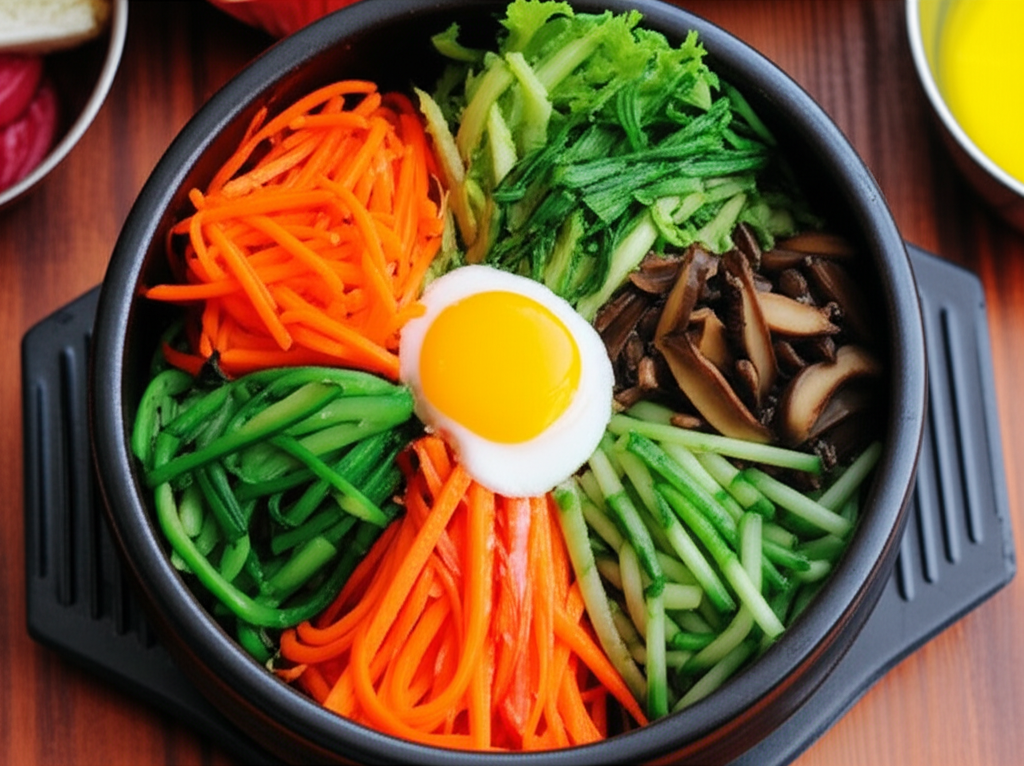
🍽️ What is 비빔밥?
Bibimbap, a jewel on the Korean dining table, is truly something special. The name itself, 'bibim' meaning mixed and 'bap' meaning rice, perfectly describes this iconic Korean dish. It features a warm bowl of rice topped with a colorful array of seasoned vegetables (namul), meat (often beef), a fried egg, and finished with a dollop of spicy gochujang (Korean chili paste) and a drizzle of fragrant sesame oil. The magic happens when you mix everything together, allowing the distinct flavors and textures of each ingredient to meld into a harmonious symphony. It's not just a meal; it's a complete culinary experience, offering a rich balance of carbohydrates, protein, and vitamins, making it a delightfully healthy choice. Its vibrant visuals and unforgettable taste have made it a beloved dish worldwide.
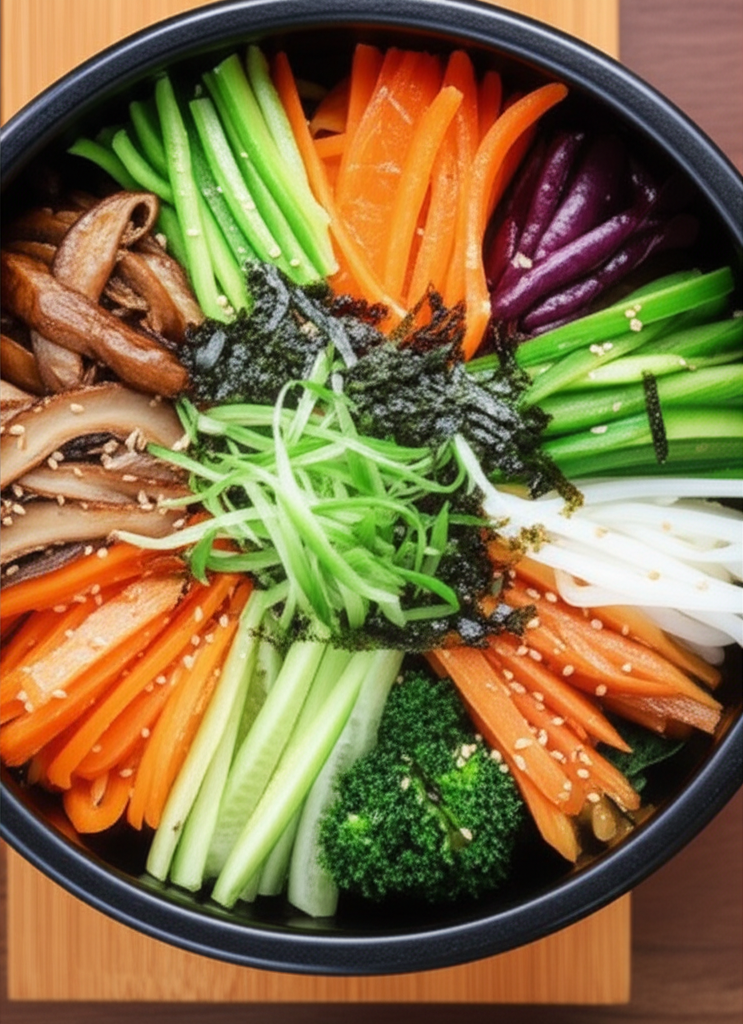
📜 History of 비빔밥
The history of Bibimbap is as rich and varied as its ingredients. While its exact origins remain somewhat elusive, several theories prevail. One popular theory suggests it originated from 'Gondolban,' a royal dish where the king's leftover side dishes were mixed with rice. Another theory points to the ingenuity of farmers during busy harvest seasons, who would mix various ingredients in one bowl for a quick and easy meal. Furthermore, it's believed to have evolved from the custom of mixing leftover foods during traditional holidays like Jeongwol Daeboreum (Lunar New Year) or Chuseok (Korean Thanksgiving). Throughout centuries, Bibimbap has been deeply intertwined with the lives of Koreans, becoming more than just a meal. It embodies the spirit of harmony and sharing within a community, and its adaptability has led to various regional versions, each with its unique charm.
🌍 Why it's world-famous
Bibimbap's global appeal is undeniable, captivating palates across continents for several compelling reasons. Firstly, its reputation as a healthy and wholesome meal is a major draw. Packed with fresh vegetables and grains, it offers a balanced nutritional profile, often lower in calories compared to many Western meat-centric dishes, making it perfect for health-conscious individuals. Secondly, its stunning visual appeal is a feast for the eyes. The vibrant 'obangsaek' (five traditional Korean colors) of green, red, yellow, white, and black ingredients create a beautiful mosaic, making it incredibly Instagram-worthy. Thirdly, its customizable nature allows diners to adjust ingredients and spice levels to their preference, accommodating vegetarians or those who prefer a milder taste. Lastly, the global surge of the Hallyu (Korean Wave) has naturally brought Bibimbap into the spotlight, showcasing it as a symbol of Korean culture's harmony and balance. It’s more than just food; it’s an art form.
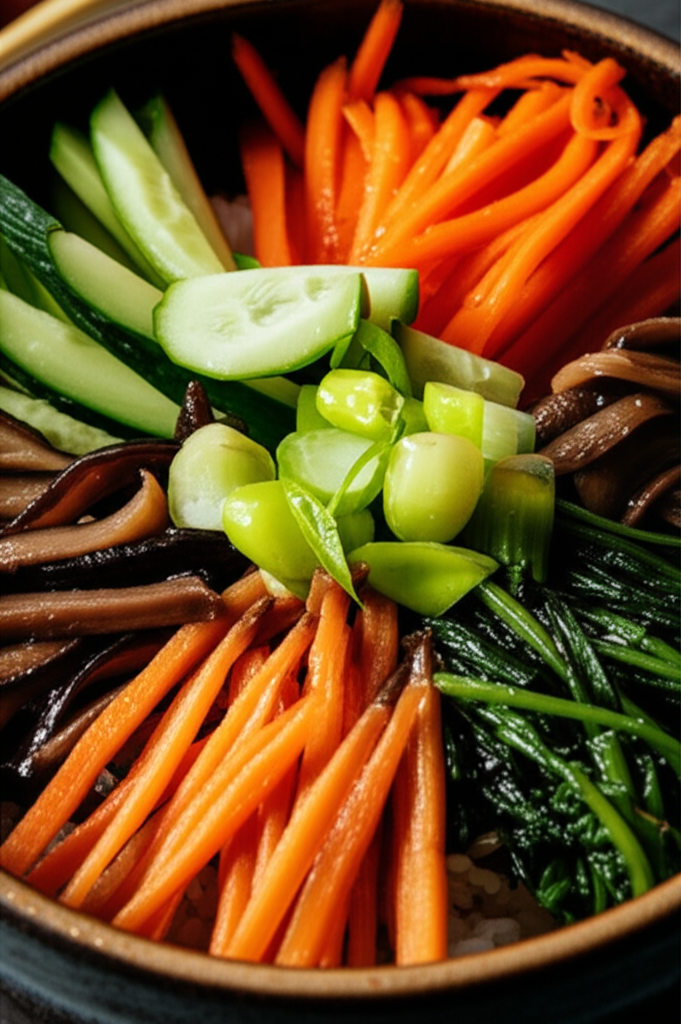
🏪 Where to try in Korea
If you're visiting Korea, make sure to seek out these legendary Bibimbap establishments!
- Hanguk Jip (Main Branch, Jeonju): Located in Jeonju, the spiritual home of Bibimbap, this restaurant boasts over 70 years of history. Their signature Yukhoe Bibimbap (Bibimbap with seasoned raw beef) and meticulously prepared side dishes are simply exquisite. It's a pilgrimage site for anyone seeking the authentic essence of Jeonju Bibimbap.
- Gogung (Myeongdong Branch, Seoul): Nestled in the bustling heart of Myeongdong, Seoul, Gogung offers a taste of traditional Jeonju Bibimbap. Popular among international tourists, it's always vibrant and lively. Besides their classic Bibimbap and Dolsot Bibimbap (hot stone pot), you can also enjoy dishes like royal Tteokgalbi (grilled short rib patties) for a richer dining experience.
- Jeonju Hoegwan (Gangnam Branch, Seoul): Situated near Gangnam Station, this spot provides a sophisticated and modern setting to savor deeply flavorful Bibimbap. Their Dolsot Bibimbap is particularly sought after, served in a sizzling hot stone pot that keeps the rice warm and creates a delicious crispy layer at the bottom. The harmony of various fresh vegetables and quality ingredients truly shines here.
🛒 Where to buy ingredients
Thinking of whipping up Bibimbap at home? In Korea, sourcing ingredients is incredibly easy!
- Offline Supermarkets: Large supermarkets like E-Mart, Lotte Mart, and Homeplus stock almost all Bibimbap ingredients fresh, excluding cooked rice. Many even offer pre-packaged assortments of seasoned vegetables (namul) and Bibimbap sauce kits for ultimate convenience. For an even fresher and often more affordable selection of seasonal namul, be sure to visit local traditional markets.
- Online Shopping Sites: Major Korean online retailers such as Coupang, Market Kurly, and Gmarket allow you to easily order everything from Bibimbap kits to gochujang, sesame oil, and various dried vegetables. If you're abroad, look for local Korean grocery stores, or international shipping services like Amazon, or dedicated Korean grocery websites to get authentic Korean gochujang and sesame oil. Remember, high-quality sesame oil is a crucial component for that authentic Bibimbap flavor, so choose wisely!
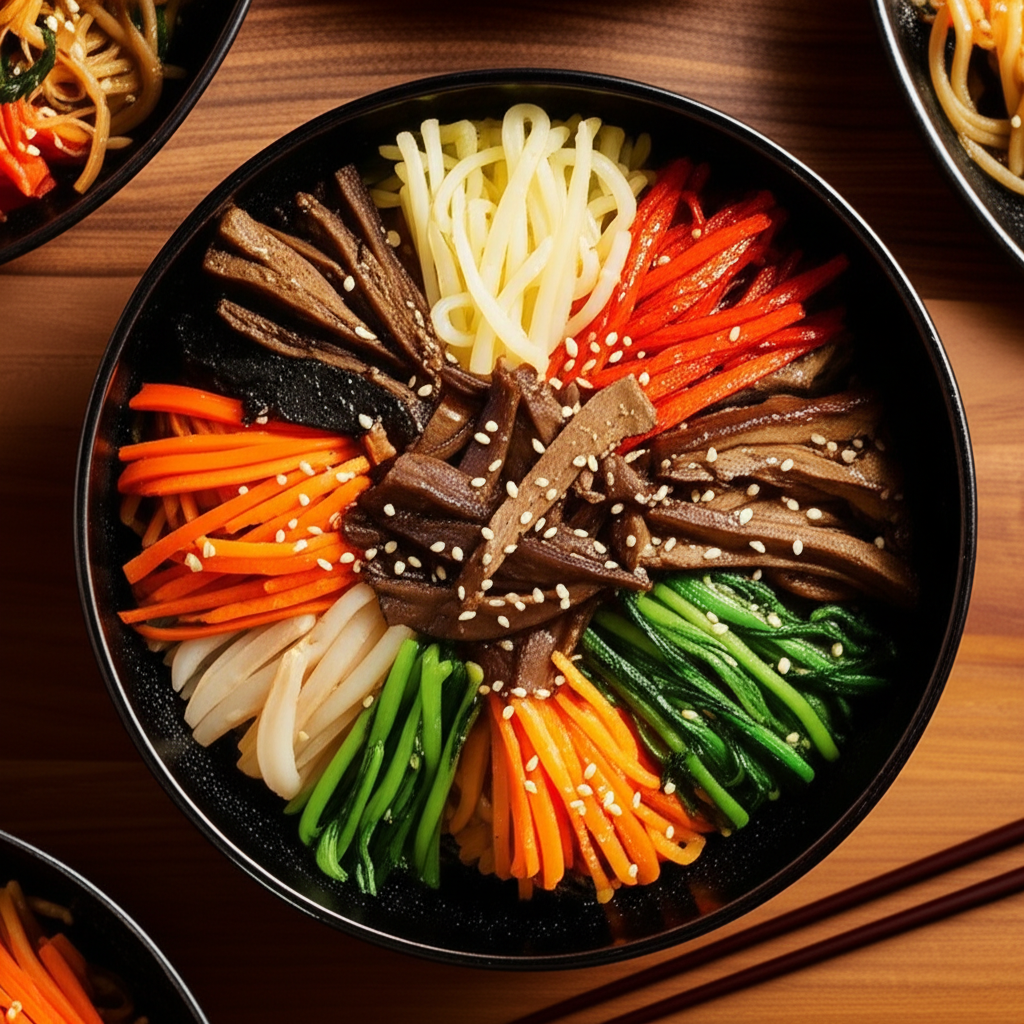
👨🍳 Home cooking guide
Alright, it's time to create your very own Bibimbap at home! It's simpler than you might think, and the effort put into a homemade bowl will reward you with an unforgettable taste.
- Cook the Rice: Prepare a bowl of warm, freshly cooked rice. Mixed grain rice works wonderfully too.
- Prepare the Vegetables (Namul): Blanch or sauté your favorite namul like spinach, bean sprouts, bellflower roots (doraji), and fernbrake (gosari). Season them individually with salt, sesame oil, and minced garlic. If you're short on time, pre-packaged namul assortments are a great alternative.
- Prepare Meat/Egg: Sauté marinated beef or prepare a fried egg (sunny-side up is classic!) or an egg julienne.
- Assemble: Place the warm rice in a large bowl. Artfully arrange all the prepared vegetables, meat, and egg on top.
- Mix and Enjoy!: Finally, add a generous dollop of gochujang (Korean chili paste), a drizzle of sesame oil, and a sprinkle of sesame seeds. Then, mix everything together thoroughly with your spoon! You can also add some shredded seaweed or kimchi if desired.
The true joy of Bibimbap lies in the mixing itself. Only when all ingredients are uniformly combined can you fully appreciate the harmonious blend of flavors. Don't hesitate to experiment and discover your own perfect Bibimbap recipe!