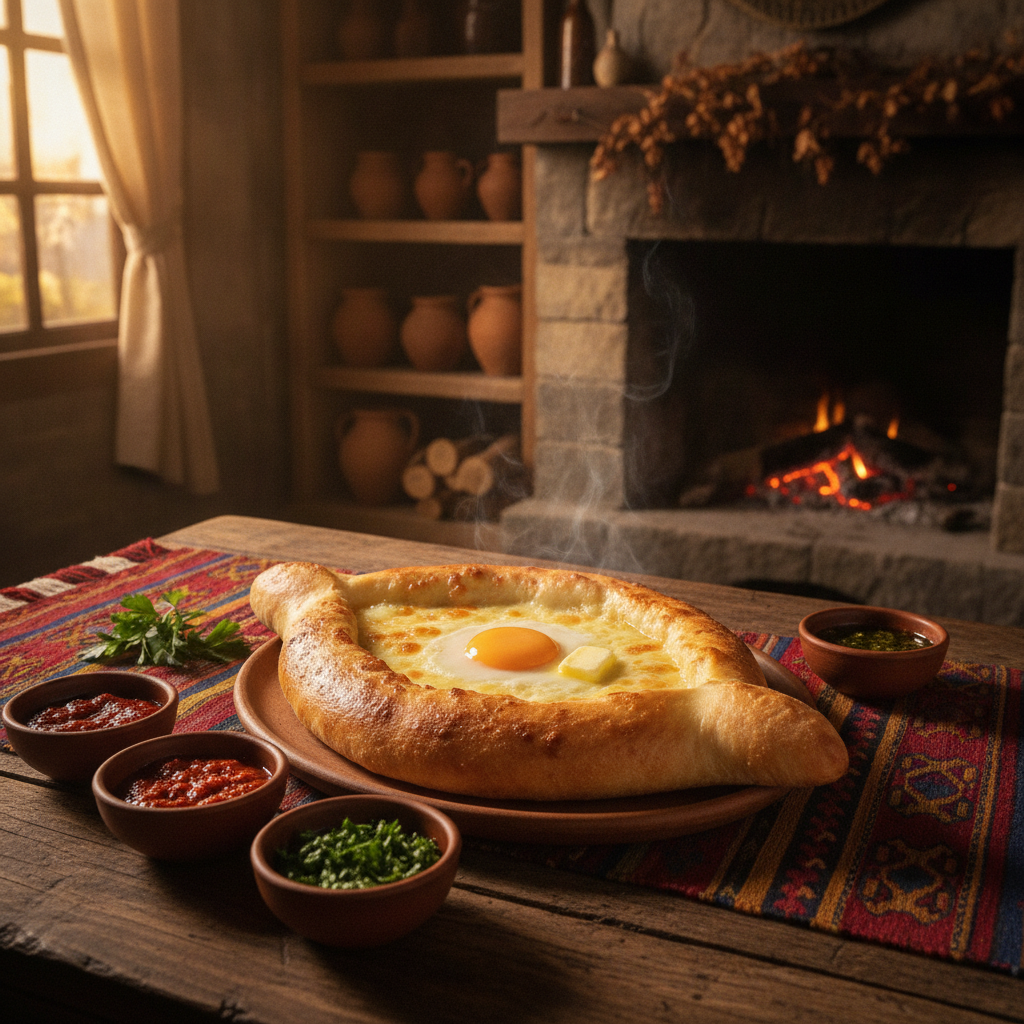
Georgia and Khachapuri: The Heartbeat of a Culture
Under the red sunsets of Georgia, beneath the majestic Caucasus Mountains, what image first comes to mind? Likely a rich feast accompanied by aromatic wine, and at its center, a golden, cheesy bread: Khachapuri. This dish is more than just a meal; it's the very heartbeat of Georgian culture. 'Khacho' means cheese, and 'puri' means bread, perfectly describing this harmonious blend of cheese and dough. For Georgians, Khachapuri offers the sustenance of breakfast, the energy of lunch, and the tranquility of dinner—it's an integral part of their daily life. It's present when guests are welcomed, at celebrations, or for comfort after a long day. Just as kimchi is indispensable to a Korean meal, a Georgian table without Khachapuri is unimaginable. Each region boasts its unique shape and flavor, reflecting Georgia's diverse regional character. The moment you tear off a warm piece of Khachapuri and taste it, you feel the generous hospitality and deep history of Georgia. This single dish encapsulates the joys, sorrows, and fiery spirit of the Georgian people.

History and Origin: A Culinary Journey from Ancient Times to Today
The history of Khachapuri is as deep and varied as Georgia's own long past. While its exact origins are unknown, scholars speculate it may have been influenced by ancient Greek culture. Active trade along the Black Sea coast spread various cultures and culinary traditions to Georgia. At that time, Greeks consumed cheese and bread as staples, and it's highly probable that this dietary culture was introduced to Georgia, combining with local ingredients to form the prototype of Khachapuri. Furthermore, Georgia has historically had a thriving livestock industry, abundant in fresh milk and cheese. This environment provided fertile ground for the development of cheese-infused bread dishes. By the Middle Ages, it evolved into more refined forms in monasteries and castles, with regional specific cheeses and baking techniques combining to create the diverse types of Khachapuri we know today. The rugged terrain of the Caucasus Mountains, in particular, fostered independent cultural development in each region, which was reflected in Khachapuri, leading to unique regional recipes like Imeruli, Adjaruli, and Megruli. Khachapuri is more than just food; it is a living legacy that embodies the long history, wisdom, and communal life of the Georgian people. Within each slice of Khachapuri lies the story of Georgia, spanning thousands of years.
Traditional Recipe: The Perfect Harmony of Cheese and Bread
Georgian Khachapuri varies widely in form and filling depending on the region, but the most iconic types are Imeruli and Adjaruli Khachapuri. Imeruli Khachapuri is round and flat, generously filled with Imeretian cheese. The dough is made from flour, water, salt, and yeast, characterized by its chewy yet soft texture. The dough is rolled thin, filled with mashed Imeretian cheese, shaped back into a circle, and baked in an oven. It's ready when the surface turns golden brown and the cheese melts. Adjaruli Khachapuri, on the other hand, is a boat-shaped Khachapuri typical of the Adjara region on the Black Sea coast. The dough is shaped like a boat, filled with a mixture of Imeretian and Sulguni cheeses, and then baked. Once the cheese is melted, a raw egg yolk and a knob of butter are added while it's still hot. The highlight of Adjaruli Khachapuri is mixing this yolk and butter with the cheese before eating. The key ingredients are, of course, the unique Georgian cheeses. Imeretian cheese is soft and salty, while Sulguni cheese is elastic and savory. The combination of these two cheeses creates the distinctive deep flavor of Khachapuri. The cooking process might seem simple, but it requires the delicate touch of an artisan, controlling factors like dough fermentation, cheese proportions, and oven temperature. Freshly baked Khachapuri, hot from the oven, is truly a work of art.
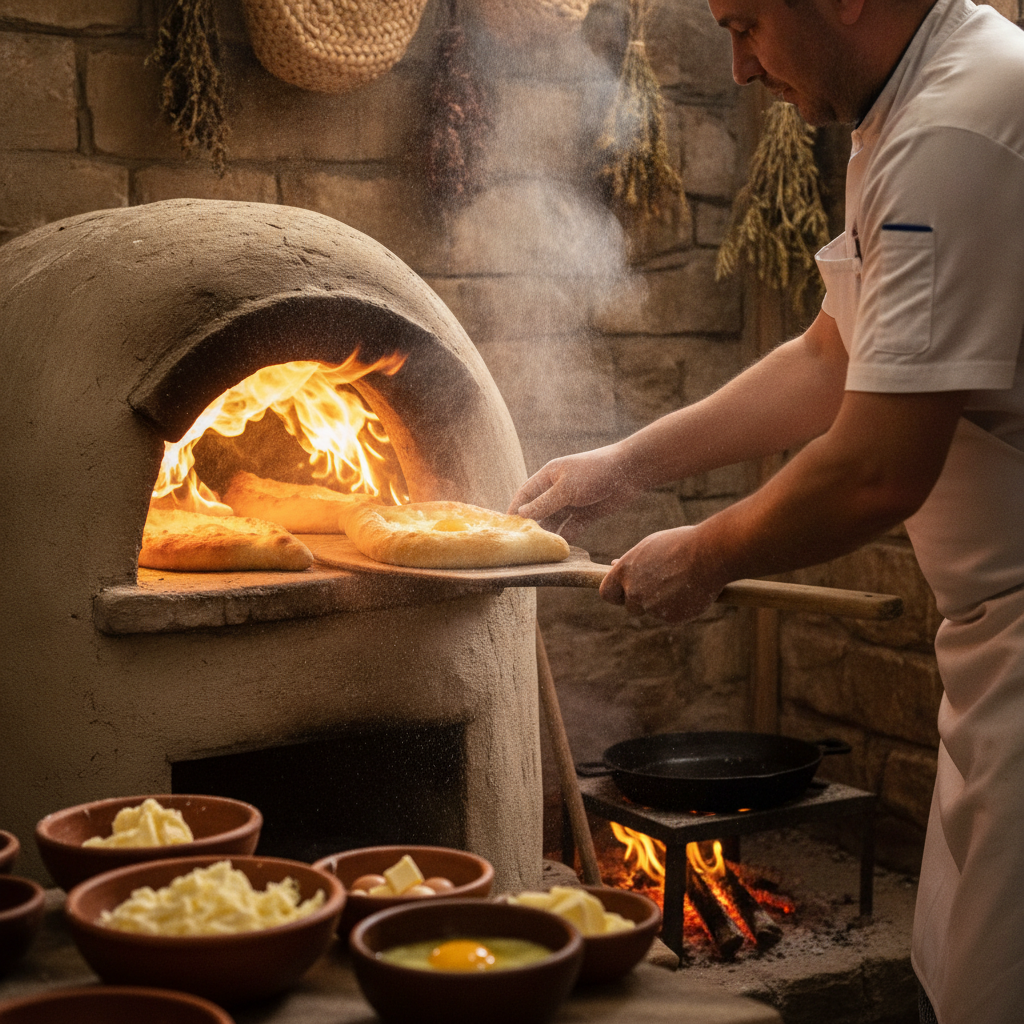
How to Enjoy Locally: Eating Like a Georgian
There are many ways to enjoy Khachapuri in Georgia. Georgians consider Khachapuri not just a dish for special occasions but a humble yet rich food enjoyed daily. For breakfast, it's common to pair a warm slice of Imeruli Khachapuri with strong Georgian coffee. The savory aroma of freshly baked bread and the salty cheese awaken the taste buds, starting the day vibrantly. For lunch or dinner, it's typically served as an accompaniment to main dishes. Especially delicious is tearing off pieces of Khachapuri and dipping them into the sauces of traditional Georgian barbecue (Mtsvadi) or stews like Ojakhuri. For Adjaruli Khachapuri, the proper way to eat it is to break the raw egg yolk and butter placed on top of the hot cheese with a fork, mixing them thoroughly. This process transforms the cheese and yolk into a creamy sauce, and dipping pieces of bread into this sauce fills your mouth with a rich, savory flavor. Georgian tables are always laden with abundant food, but Khachapuri holds its own, unmatched presence. It also makes a perfect snack when sharing wine and conversation with friends. If you want to experience the true spirit of Georgia, try eating Khachapuri with your bare hands, just like the locals, and immerse yourself in their way of life.

Flavor Profile: A Sensory Feast of Khachapuri
The taste of Khachapuri is hard to define in a single word. A crisp exterior and chewy interior, filled with rich, melted cheese, create a symphony of flavors with every bite. Freshly baked Khachapuri teases the nose with the savory scent of bread and the pungent aroma of salty cheese. Visually, the contrast between the golden-brown crust and the overflowing white cheese is incredibly appetizing. Imeruli Khachapuri boasts a slightly firm crust with a soft, chewy interior. The abundant Imeretian cheese inside melts smoothly, creating a perfect harmony with the bread. The salty yet savory cheese flavor spreads throughout the mouth, offering an addictively appealing taste. Adjaruli Khachapuri provides a different sensory experience. The moment the egg yolk and butter on top of the hot cheese are mixed, the cheese becomes even smoother, and the richness of the yolk and the flavor of the butter combine to create a creamy texture. Dipping bread into this sauce offers a simultaneous sensation of richness, saltiness, and creaminess, leading to ecstasy. The chewiness of the bread, the gooeyness of the cheese, and the softness of the yolk create a diverse texture in the mouth. Enjoyed with wine, the cheese's flavor is further enhanced, delivering a deep, moving experience as if tasting the very soul of Georgia.
Making at Home: Tips for Your Own Khachapuri Home-Cooked Recipe
While perfectly replicating the taste of authentic Khachapuri at home can be challenging, with a few tips, you can certainly make a satisfying home-cooked version. The key, of course, lies in the cheese and the bread dough.
Simple Home-Cooked Khachapuri Recipe (Adjaruli Style)
- Ingredients:
- 200g strong flour, 3g dry yeast, 5g sugar, 3g salt, 120ml warm water, 10ml olive oil (for dough)
- 100g mozzarella cheese, 50g feta cheese (or mixed with ricotta cheese), 2 egg yolks, 20g unsalted butter (for filling and topping)
- Instructions:
- Make the dough: In a bowl, combine strong flour, yeast, sugar, and salt. Add warm water and olive oil, mixing until a dough forms. Knead for about 10 minutes until smooth, then let it rise in a warm place for about 1 hour until doubled in size.
- Prepare the cheese: Crumble or grate the mozzarella and feta cheeses (or ricotta) and mix them.
- Shape: Divide the risen dough into two pieces. Roll each piece into an elongated oval. Fold both long edges of the oval inward to create a boat shape, pressing down slightly in the middle to create space for the cheese.
- Fill with cheese: Generously fill the center of the boat-shaped dough with the prepared cheese mixture.
- Bake: Bake in a preheated oven at 200°C (390°F) for 15-20 minutes. Remove when the bread is golden brown and the cheese is melted.
- Finish: Immediately after taking it out of the oven, place 1 egg yolk and 10g of butter on top of each hot Khachapuri. Break the yolk and mix it well with the cheese and butter, then tear off pieces of bread to dip into the mixture.
Tip: If Georgian cheese is hard to find, mixing mozzarella cheese with feta or ricotta cheese
Looking for a place nearby? Search “하치푸리” on Naver Map.