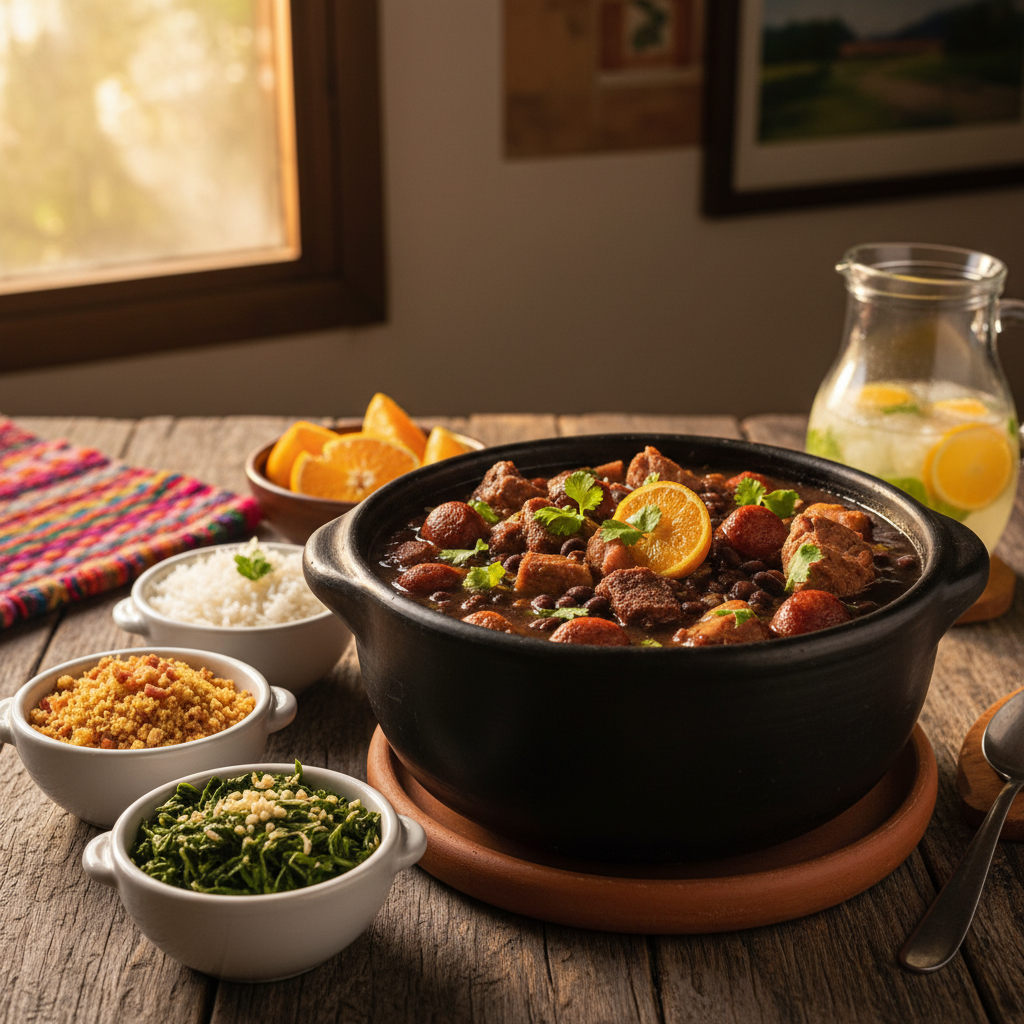
Brazil and Feijoada
In the vast landscapes and vibrant culture of Brazil, Feijoada is more than just a dish. This traditional meal strengthens social bonds and brings people together. On weekends, families and friends gather to share this hearty dish, creating moments that transcend mere dining. Feijoada holds a deep-seated place in the lives of Brazilians, embodying their spirit and way of life.
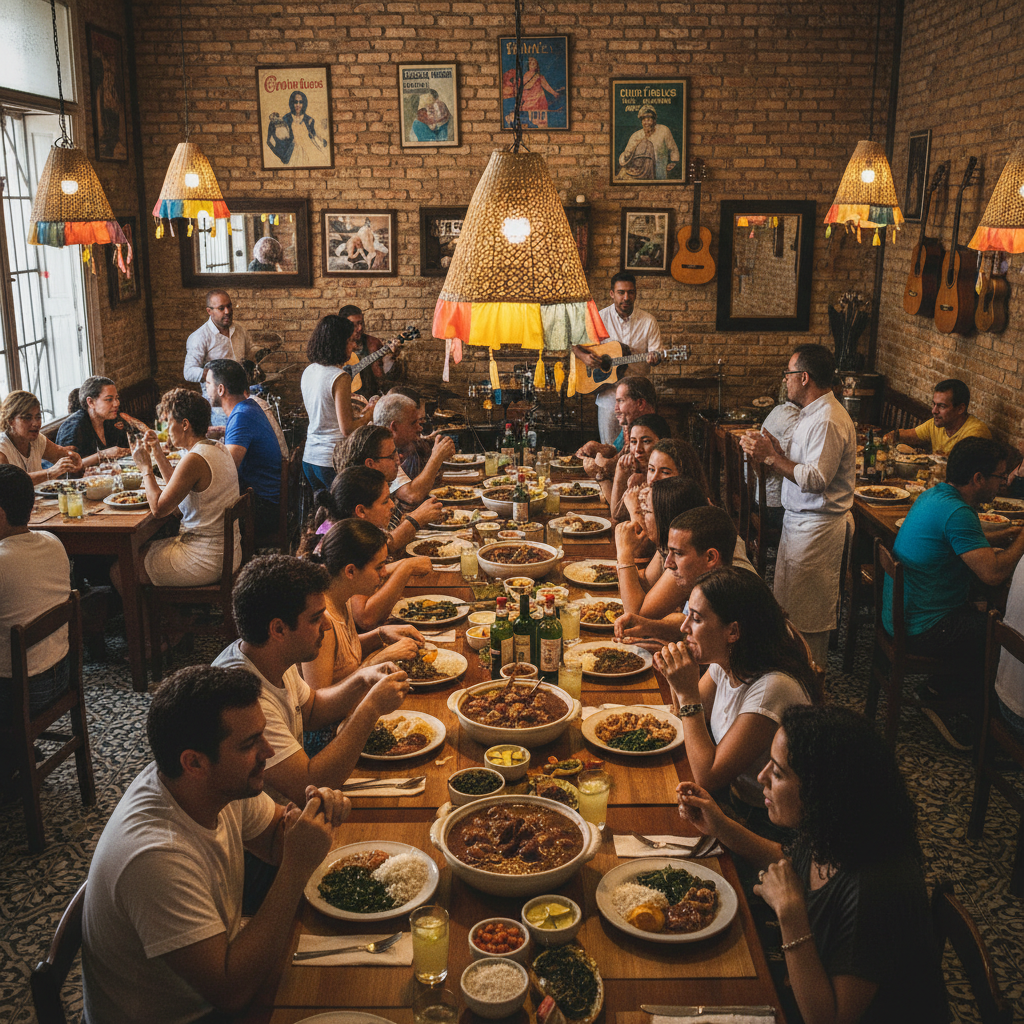
History and Origin
Feijoada traces its origins back to the colonial era, believed to have been created by African slaves. They utilized leftover meats and black beans to craft a nourishing meal. Over time, this dish spread across Brazil, each region adding its unique touch. Today, it stands as one of Brazil's emblematic dishes, cherished throughout the nation.
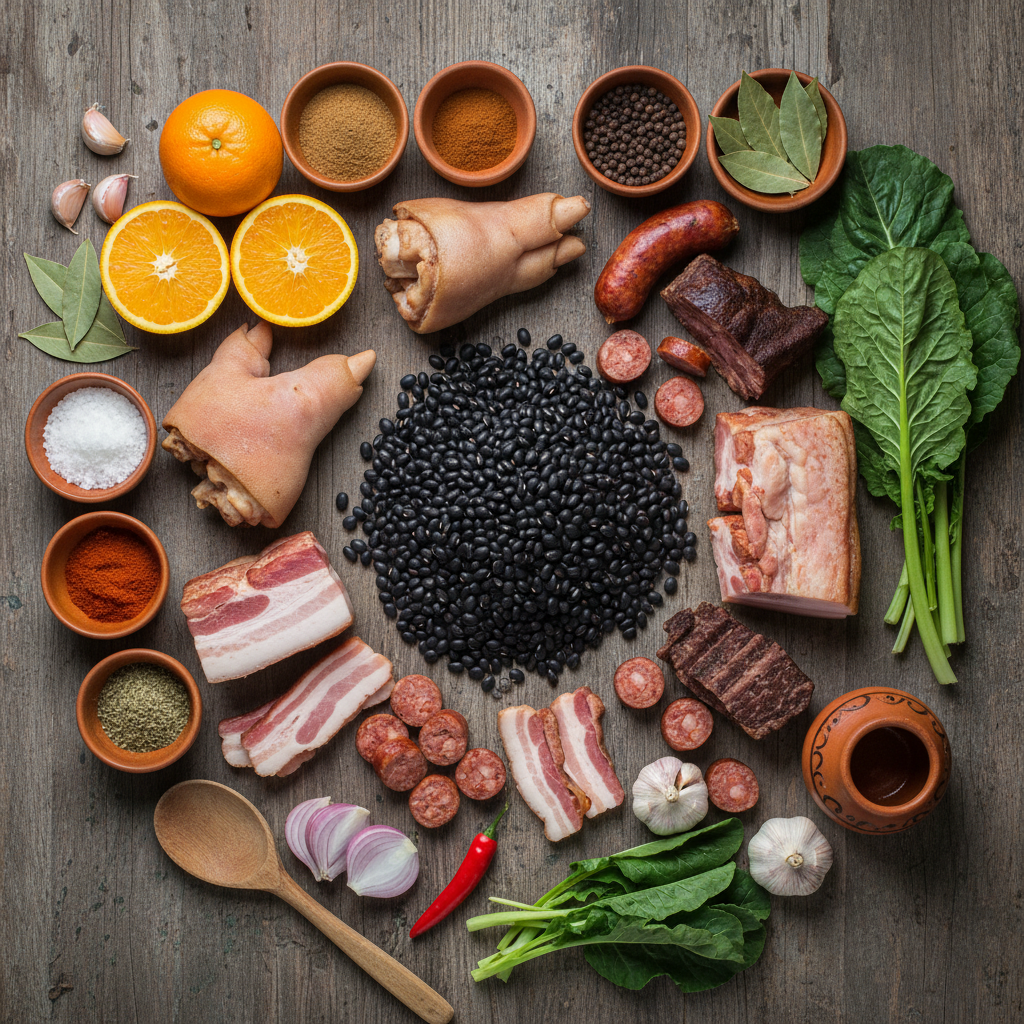
Traditional Recipe
The traditional recipe for Feijoada is simple yet rich. The main ingredients include black beans and various meats, particularly pork. The meats are slow-cooked until tender, while the beans add a robust flavor. Garlic, onions, bay leaves, and various spices enhance the dish, completing its deep taste profile. Although the cooking process is time-consuming, the result is undeniably worth the wait.
Enjoying It Locally
In Brazil, Feijoada is typically enjoyed over weekends, accompanied by rice, farofa, and orange slices. The rice balances the hearty flavors, farofa adds a crunchy texture, and oranges refresh the palate. Locals savor these elements together, achieving a perfect harmony of flavors and textures in every bite.
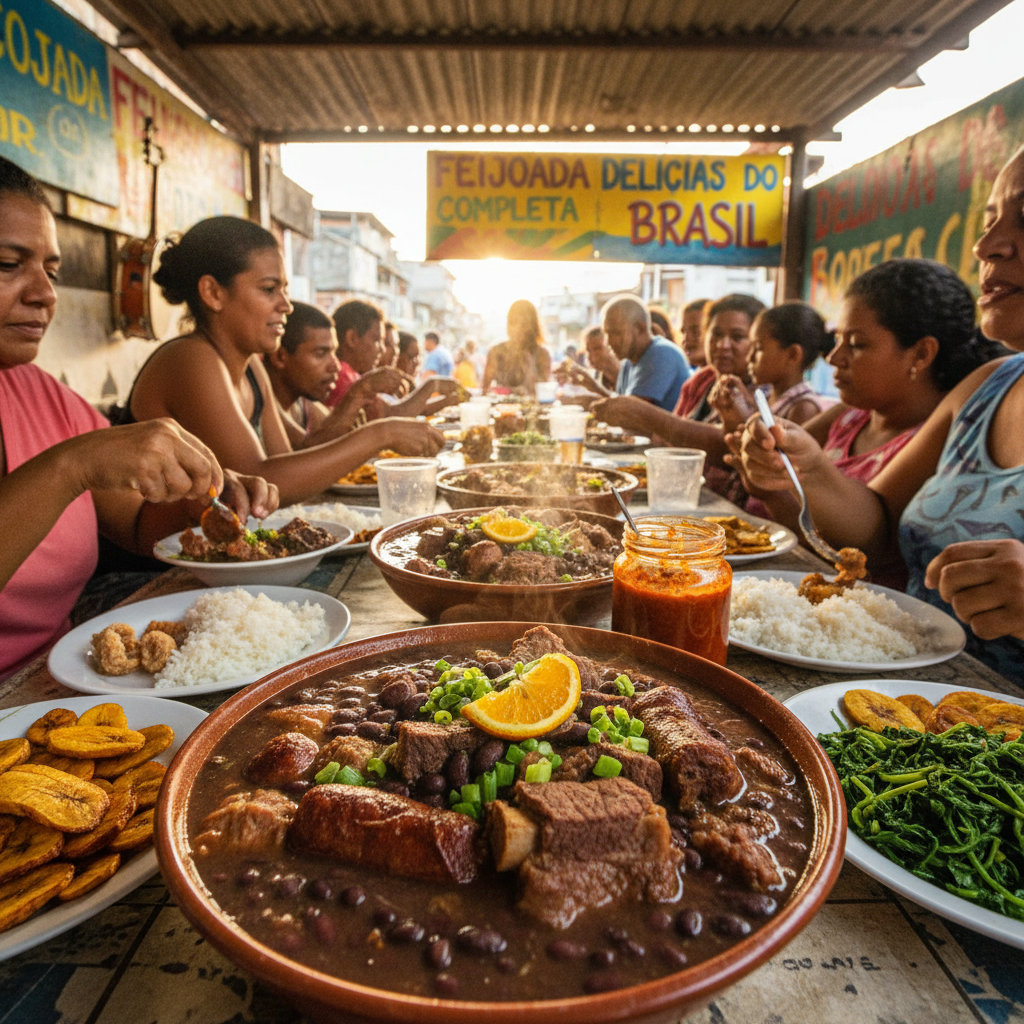
Flavor Profile
Feijoada is characterized by its salty yet rich taste. The umami of the meats blends seamlessly with the earthy beans, enveloping the palate with each bite. The tenderness of the meats and the depth of the beans create a sensory delight, with a subtle hint of spices enhancing the overall flavor, making it both deep and fulfilling.
Tasting It in Korea
In Seoul, a few places offer authentic Feijoada. 'Brazilian Grill' in Gangnam serves Feijoada prepared following traditional methods. 'Rio Copacabana' in Itaewon provides a Brazilian dining experience with various sides. Lastly, 'Salvador' in Hongdae offers a cozy setting to enjoy traditional Brazilian dishes.
Trying It at Home
To make Feijoada at home simply, gather basic ingredients like black beans, sausages, bacon, and pork. Soak the beans overnight, and fry the meats until crispy. Cook all the ingredients together, adding garlic and onions for flavor, resulting in a simple yet hearty version of Feijoada right at your kitchen.
This text provides a comprehensive and emotive exploration of Feijoada, capturing its cultural significance, history, taste, and the experience of enjoying it both in Brazil and abroad.