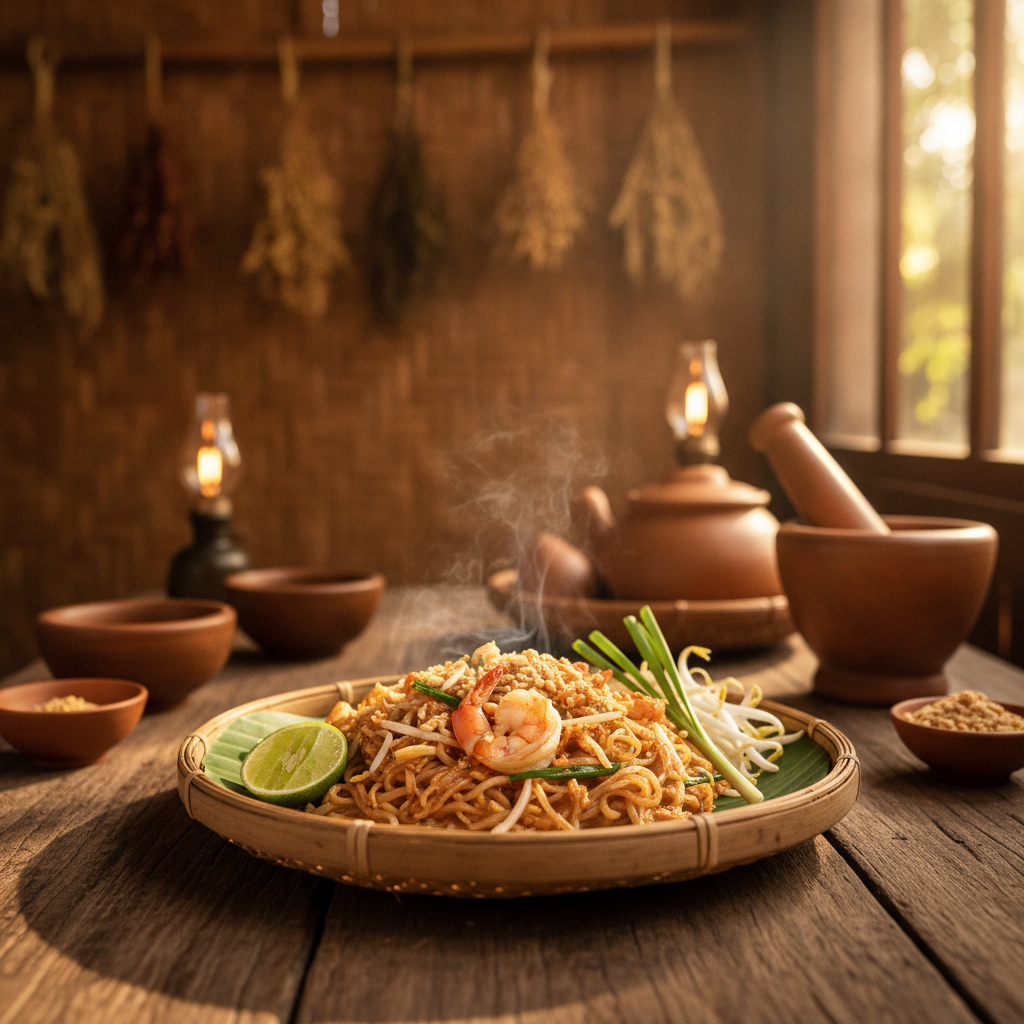
1. Thailand and Pad Thai – The Significance of This Dish in Thai Culture
What images first come to mind when you think of Thailand? Perhaps the golden temples shimmering under the hot sun, the exotic spices tickling your nose, and the vibrant street food scene. At the heart of all these images lies Pad Thai. Pad Thai is more than just a meal; it is an icon symbolizing Thailand's identity and culture. You can't truly say you've experienced Thailand without encountering Pad Thai. The sweet and savory aroma of stir-fried noodles wafting from street stalls stops travelers in their tracks, while in fine dining restaurants, it captivates gourmands with its refined and delicate presentation. Pad Thai is deeply woven into the daily lives of Thais, a soul food that shares their lives, joys, and sorrows. A plate of Pad Thai after a hard day's work under the scorching sun brings comfort, and sharing Pad Thai with friends strengthens bonds. In this way, Pad Thai is the perfect ambassador encompassing Thailand's street culture, family culture, and gourmet culture, effectively delivering Thailand's warm hospitality and vibrant energy to all who visit. The moment you taste Pad Thai, you will feel the heartbeat of Thailand.
2. History and Origin – When and How the Dish Began
The history of Pad Thai is far more fascinating and political than one might imagine. Pad Thai, now a quintessential Thai dish, was actually born during the tumultuous period of World War II as part of a government-led campaign to foster Thai nationalism and rebuild the national economy. At that time, under Prime Minister Plaek Phibunsongkhram's government, Thailand was pursuing strong nationalist policies. As part of this, the government developed "Pad Thai" to encourage rice consumption among the populace and establish a national identity. The name "Pad Thai" itself means 'Thai-style stir-fry,' inherently embedding national identity within its name. Thailand was facing economic hardship due to the Great Depression and the war, with abundant rice but a shortage of wheat. The government aimed to promote rice consumption and increase food self-sufficiency by developing a new national dish using local rice. Although rice noodles originated in China, the cooking method was adapted to Thai tastes, giving it a unique flavor and identity. It also played a role in encouraging Chinese immigrants to successfully assimilate into Thai society. Initially, it was popularized as street food, serving to satisfy the hunger of ordinary people, and gradually spread nationwide to become a representative dish of Thailand. Pad Thai is more than just food; it is a historical product embodying the aspirations of the Thai people to overcome national crises and foster national pride. Every plate of Pad Thai we enjoy today reflects Thailand's painful history and the wisdom of its ancestors who sought to overcome it.
3. Traditional Recipe – Authentic Cooking Method, Key Ingredients, and Process
Authentic Pad Thai is a delicate art that goes beyond simply stir-frying noodles, achieving a perfect balance and harmony of flavors. Its essence lies in fresh ingredients and the Pad Thai sauce. Key ingredients include flat rice noodles (Sen Lek), shrimp, tofu, bean sprouts, chives, and crushed peanuts, with eggs added for tenderness. The most crucial element determining the taste of Pad Thai is the special sauce. This sauce is a combination of tamarind paste, palm sugar, fish sauce, and sometimes a touch of chili powder. The sourness of tamarind, the sweetness of palm sugar, and the umami of fish sauce blend to create Pad Thai's unique complex flavor.
The cooking process must be quick. First, heat oil in a hot wok and stir-fry minced garlic and shallots to release their aroma. Add shrimp and tofu and cook until done, then add the soaked rice noodles. Next, pour in the essential Pad Thai sauce and stir-fry quickly to ensure the noodles are well coated. As the sauce soaks into the noodles, they soften and take on their characteristic color. Finally, add bean sprouts, chives, and pre-made scrambled eggs, and stir-fry briefly. It's important not to overcook the bean sprouts and chives to maintain their crisp texture. The "wok hei" (breath of the wok) is vital for Pad Thai, so cooking quickly over high heat is the core of the traditional method. The finished Pad Thai is served on a plate, garnished with crushed peanuts, chili flakes, and a lime wedge. This perfectly cooked Pad Thai, with the freshness of each ingredient and the exquisite harmony of the sauce, brings immense happiness with every mouthful.
4. How Locals Enjoy It – How Thais Eat It and What Accompanies It
Enjoying Pad Thai in Thailand is more than just a meal; it's a cultural experience. Locals typically enjoy Pad Thai at street stalls or small eateries. Pad Thai is stir-fried hot in a wok upon order, allowing you to experience its freshness and warmth immediately. Every table is usually equipped with a set of four condiments called 'Phrik Nam Pla.' This is a significant part of Thai food culture, allowing diners to adjust their food to their own taste. Phrik Nam Pla typically consists of sugar, fish sauce, chili flakes, and chilies pickled in vinegar. Locals taste the Pad Thai first, then adjust it to their preference by adding sugar for more sweetness, fish sauce for saltiness and umami, chili flakes for spiciness, and pickled chilies for sourness, finding their perfect balance. Squeezing plenty of lime juice over Pad Thai for a refreshing zest is also a common local practice. The sourness of lime enhances the rich flavors of Pad Thai. Additionally, it's common to pair Pad Thai with a refreshing Thai beer (Singha or Chang) or a sweet Thai iced tea (Cha Yen). When eating Pad Thai from a street vendor, it's often wrapped in a banana leaf or served in a styrofoam plate. The experience of walking along the street, holding a freshly stir-fried, warm Pad Thai, will be an unforgettable memory of your trip to Thailand. Adjusting the condiments yourself, just like the locals do, is a delightful way to deeply understand Thai food culture.
5. Characteristics of the Taste – Sensory Description of Texture, Aroma, and Flavor
Pad Thai is a feast for the senses, an exquisite culinary experience that transcends a simple stir-fried noodle dish. The moment you lift the noodles with chopsticks, you feel the supple flexibility of the rice noodles. Upon entering your mouth, the chewy yet tender rice noodles first envelop your tongue. Simultaneously, the crisp texture of freshly stir-fried bean sprouts provides a pleasant contrast, and the burst of fresh aroma with each bite awakens your palate. The occasional crunch of savory peanut pieces further enriches the Pad Thai's flavor, while soft tofu and plump shrimp add a diverse range of textures. And what about the aroma that wafts to your nose? The sweet and sour scent of tamarind blended with the deep umami of fish sauce creates an exotic yet mouth-watering allure. The fiery "wok hei" emanating from the wok adds a deep, savory aroma unique to Pad Thai, making you feel as if you are standing in the middle of a hot Thai night market. The taste is truly a perfect orchestra. Sour, sweet, salty, and spicy notes dance on your tongue in exquisite harmony. The first taste is dominated by the sweet and sour notes of tamarind and palm sugar, but soon the deep umami of fish sauce follows, and finally, a subtle spiciness cleanses the palate. All these flavor elements blend harmoniously without any one overpowering the others, creating a magical taste that makes you anticipate the next bite. Pad Thai is not just food; it is a plate of art embodying the soul of Thailand.
Looking for a place nearby? Search “팟타이” on Naver Map.