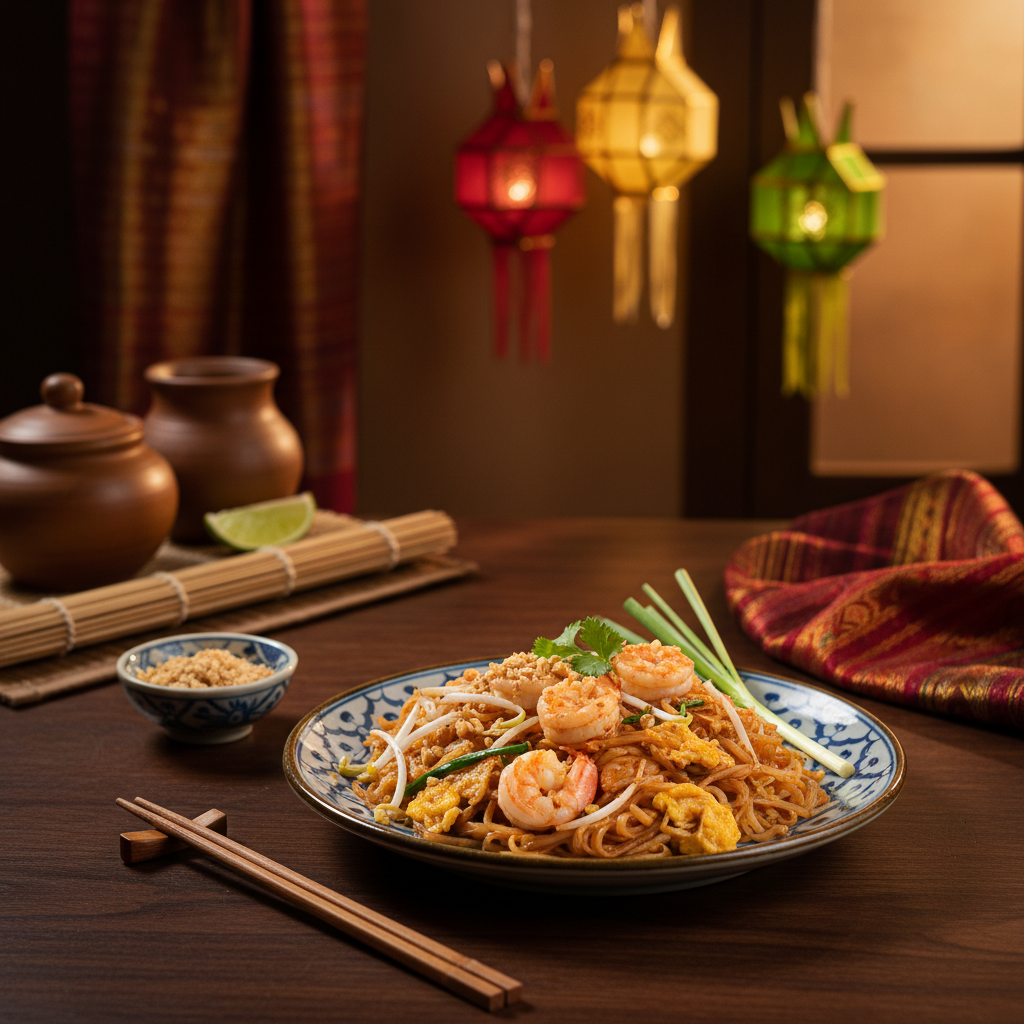
Thailand and Pad Thai
Thailand is a country rich in culinary diversity, and among its myriad offerings, Pad Thai holds a special place. This dish is more than just a noodle dish; it plays a significant role in Thailand's history and everyday life. For Thai people, Pad Thai represents warm family meals, bustling street vendors, and for foreigners, it offers a delightful first impression of Thailand. Through this dish, the diverse and complex cultural landscape of Thailand is encapsulated on a single plate.
History and Origin
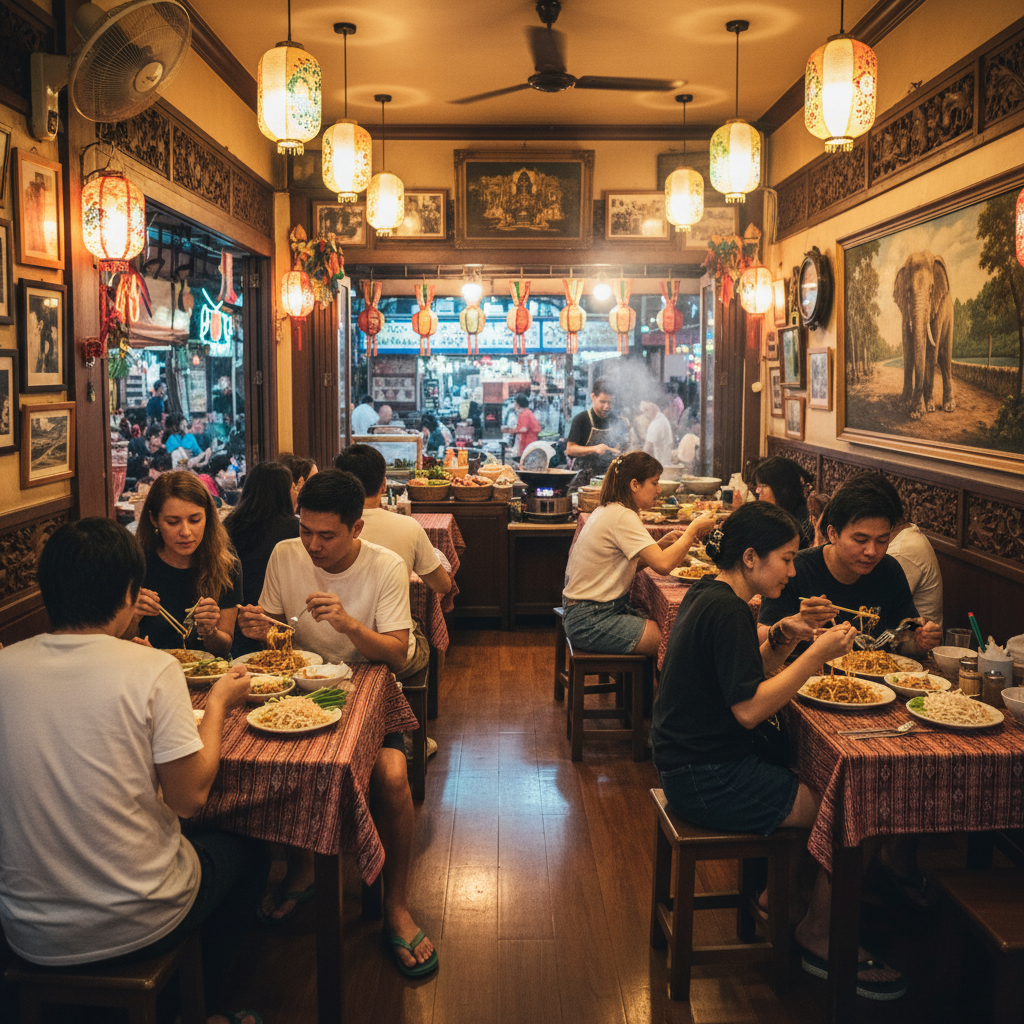
Pad Thai emerged in the late 1930s as part of a governmental campaign to boost economic independence. During that time, Thailand faced a rice shortage, and noodle dishes were promoted as an alternative. Pad Thai was born amidst these circumstances and has since become a staple of Thai cuisine. This dish embodies the historical context and demands of its time, reflecting the resilience and adaptability of Thai culture.
Traditional Recipe
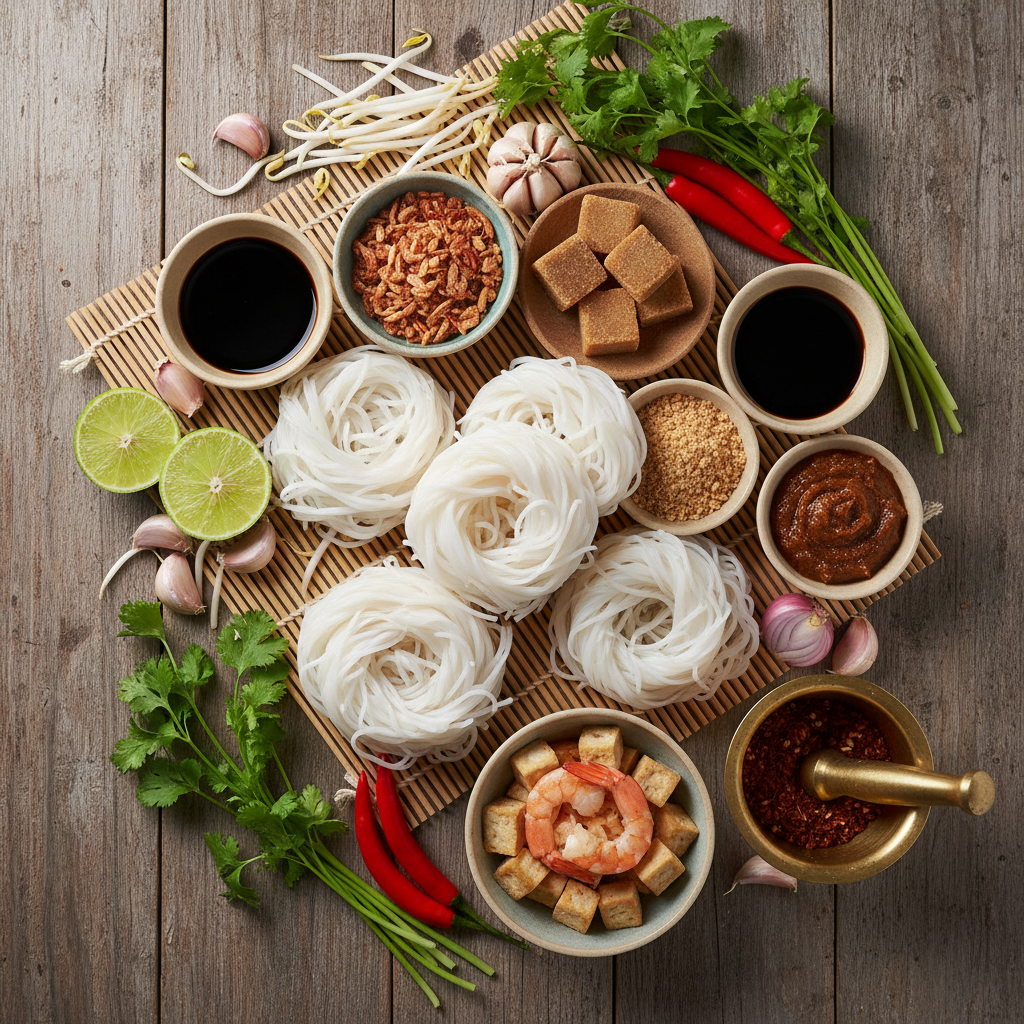
Traditional Pad Thai uses rice noodles, shrimp, tofu, eggs, bean sprouts, and crushed peanuts as its main ingredients. The flavor comes from tamarind sauce, fish sauce, sugar, and lime juice, creating a sweet and savory balance. The cooking process is relatively simple, but achieving the perfect harmony of ingredients is key to its authentic taste. Stir-frying each ingredient in sequence in oil is crucial to defining the flavor of Pad Thai.
Enjoying it Locally
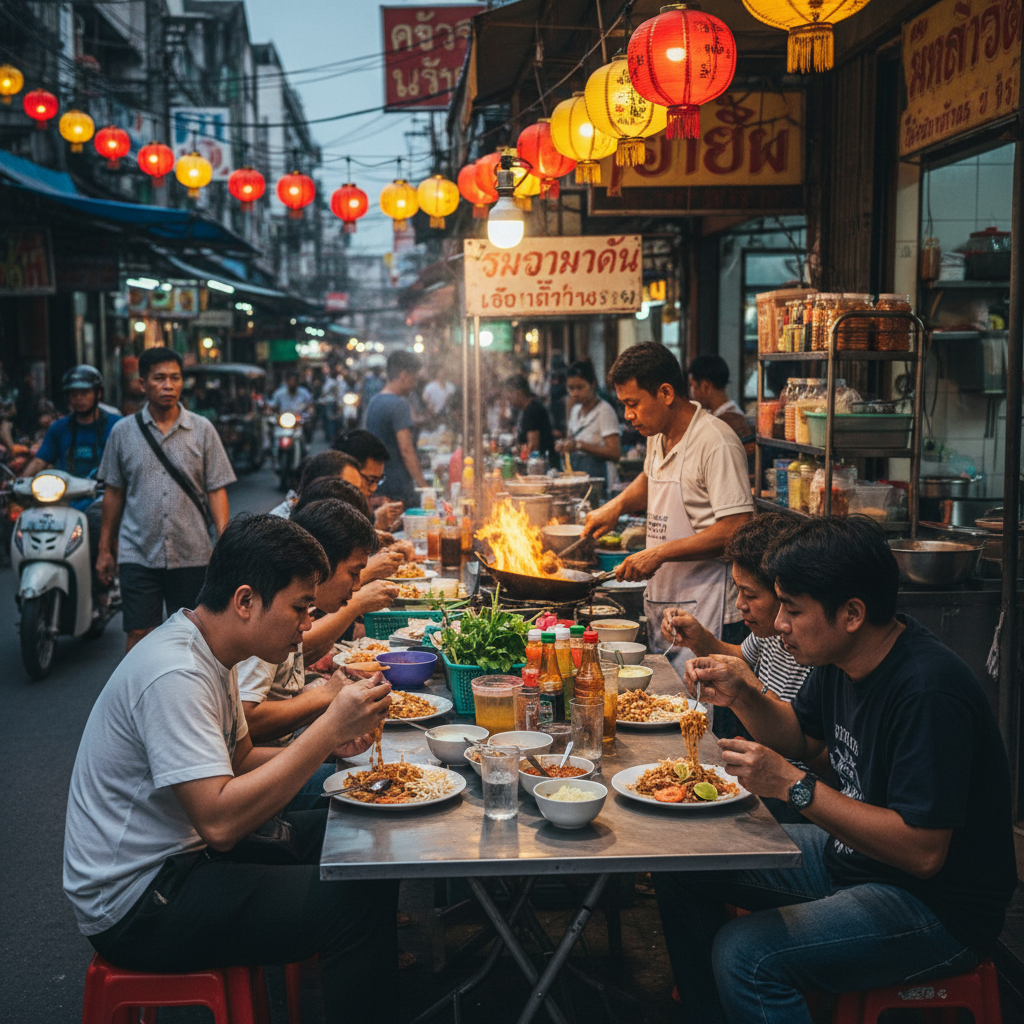
In Thailand, Pad Thai is a popular street food found at bustling stalls. Locals enjoy it with crunchy peanuts and fresh lime wedges, and those who favor spiciness often add extra chili powder. It's common to pair Pad Thai with chilled tea or a refreshing beer, enhancing the overall dining experience.
Flavor Profile
Pad Thai offers a rich texture and a symphony of flavors in every bite. The chewy noodles, tender tofu, crunchy bean sprouts, and nutty peanuts come together with the deep flavors of tamarind and fish sauce to tantalize the taste buds. The sweetness, saltiness, and slight tanginess blend harmoniously, providing a taste of Thailand's allure in one dish.
Tasting it in Korea
In Seoul and the metropolitan area, several restaurants offer authentic Pad Thai. 'Bangkok Express' in Gangnam is popular for its faithful rendition of the dish. 'Sawadee Kap,' a Thai cuisine specialty in Hapjeong, is also recommended for its use of fresh ingredients and traditional recipes. Lastly, 'Thai Kitchen' in Myeongdong offers an atmosphere reminiscent of Thailand along with its Pad Thai.
Making it at Home
To prepare Pad Thai at home easily, keep a few tips in mind. First, be careful not to overcook the rice noodles. If you don't have tamarind sauce, you can substitute with a mix of lime juice and a bit of sugar. Have all ingredients prepped in advance and stir-fry them quickly to preserve freshness. Finally, add a personal touch by incorporating cilantro or chilies according to your taste.
This article captures the cultural significance, historical roots, and sensory experience of enjoying Pad Thai, both in Thailand and abroad.