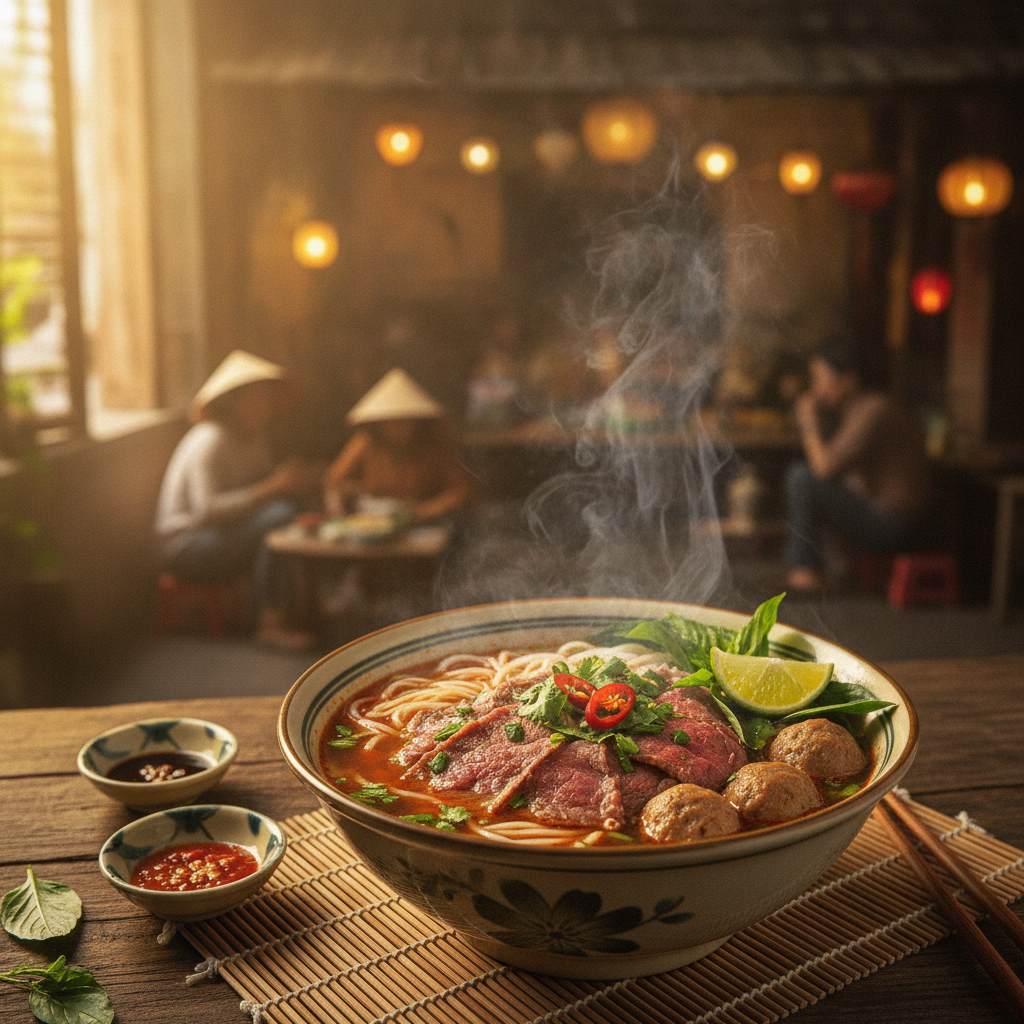
A Bowl Holding Vietnam's Soul, Pho
Walking the streets of Vietnam, the fragrant aroma of broth wafting through the air feels like an invitation into their lives. This scent originates from 'Pho,' or Vietnamese rice noodle soup. Pho is more than just a dish; it's an integral part of Vietnamese daily life, culture, and deeply embedded in their soul. From office workers hurrying through the chilly morning air to children returning home from school, and families and friends gathered, chatting warmly, pho is always present. A warm bowl of pho comforts weary bodies and minds, offers simple yet certain happiness, and sometimes feels like a mother's embrace, soothing homesickness. For Vietnamese people, pho is a national dish enjoyed for breakfast, lunch, dinner, and even as a late-night snack. They start their day with pho, gain energy, and share warmth with each other. From street vendors to upscale restaurants, pho is a ubiquitous symbol of Vietnam and a living cultural heritage that breathes with their lives. For travelers to Vietnam, pho provides a special gateway to deeply immerse themselves in the locals' lives and experience their daily routines. Tasting a bowl of pho is a sensory experience that fully embraces Vietnam's history, culture, and the warmth of its people.
History and Origin
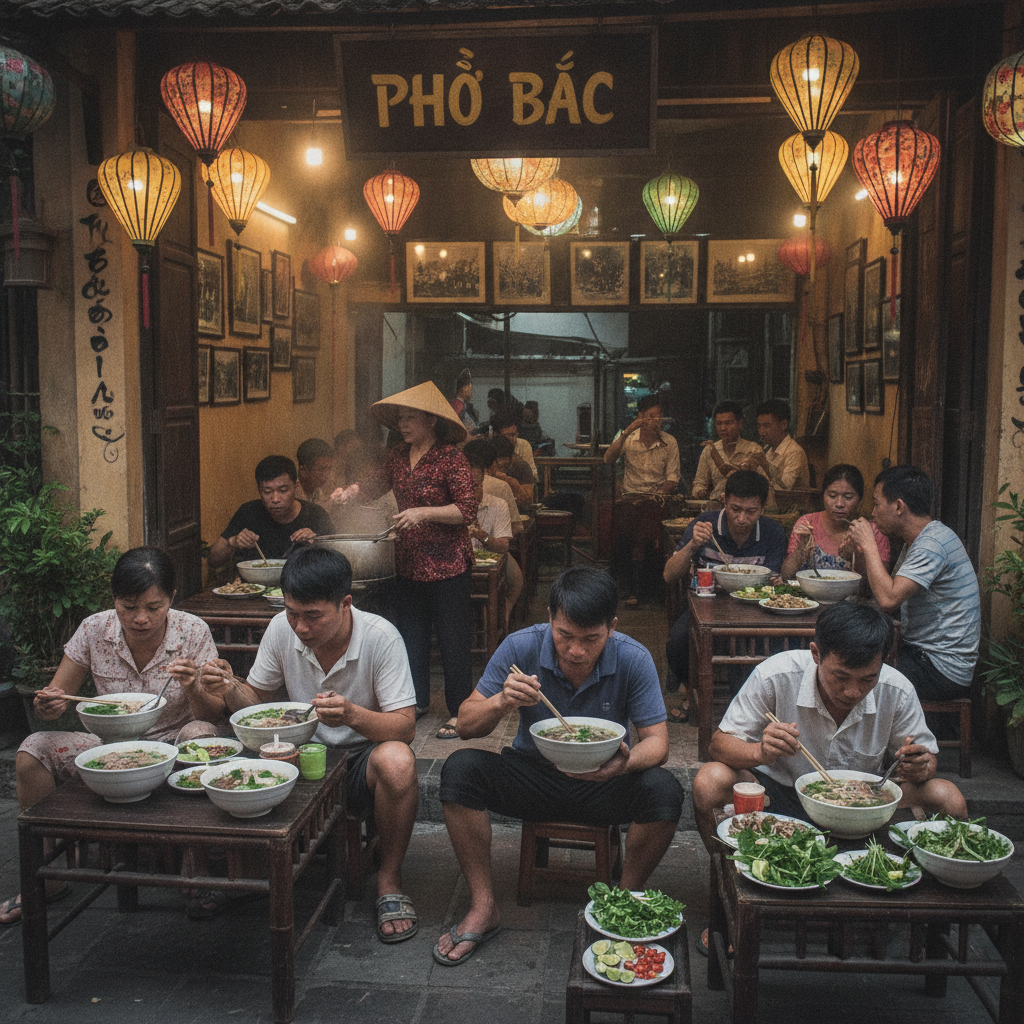
The origin of pho dates back to the late 19th and early 20th centuries, to the Hanoi region in northern Vietnam. At that time, Vietnam was under French colonial rule, and it is widely believed that pho was born during this period, inspired by the French beef stew called 'pot-au-feu.' The name 'Pho' itself is said to have originated from the French 'pot-au-feu.' Early pho primarily developed in the northern region as 'Pho Bo' (beef pho). At that time, Vietnamese people rarely ate beef, as cattle were considered important for agriculture. However, as the French began to consume beef, beef by-products became available in the market, leading to the creation of a new noodle dish. In the mid-20th century, during the Vietnam War and the division of North and South, many northerners migrated south. This migration spread pho to the southern regions, where it evolved into more diverse and richer flavors. Southern pho is generally sweeter than northern pho and is typically served with a variety of fresh herbs, bean sprouts, and lime. Within this historical context, pho became more than just a dish; it symbolized the migration, settlement, and cultural exchange of the Vietnamese people. Amidst the pain of war, pho satisfied hunger and offered warm comfort, providing hope in new homelands. Today, pho is a beloved national dish throughout Vietnam and has become a global favorite, captivating palates worldwide.
Traditional Recipe
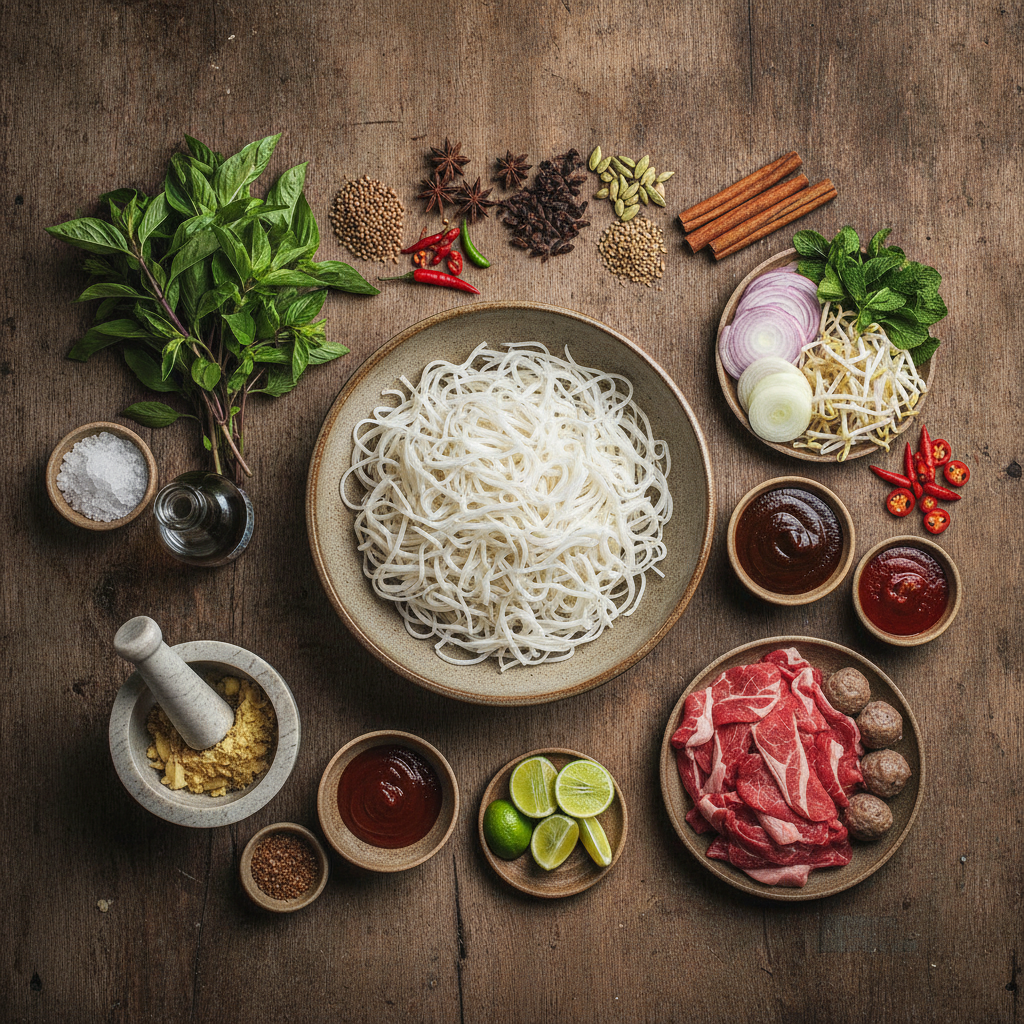
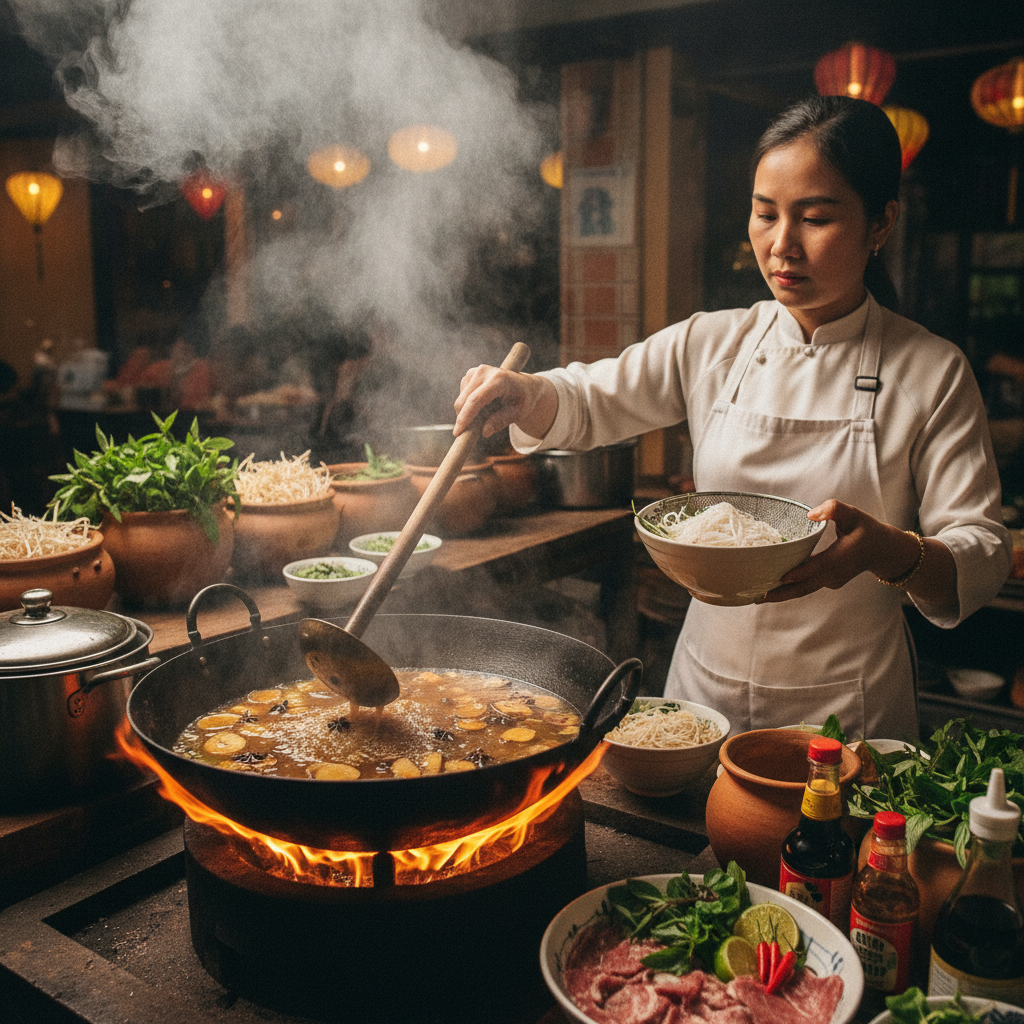
The heart of authentic pho lies in its deep and clear broth. Preparing the broth is a labor of love that demands time and dedication. First, beef bones (especially marrow bones or flank) are thoroughly washed to remove blood, then blanched once to remove impurities. Afterward, the bones are placed in a large pot with whole peppercorns, star anise, cinnamon sticks, cloves, ginger, and onions, and simmered over low heat for an extended period. The ginger and onions are lightly charred over an open flame beforehand to deepen their unique aroma. The broth needs to simmer for at least 6 hours, and often more than 12 hours, to achieve its rich and profound flavor. It's crucial to continuously skim off any foam that rises to maintain a clear and clean broth. The broth is seasoned with salt and fish sauce (nuoc mam), with an emphasis on preserving the natural flavors of the ingredients rather than over-seasoning. The noodles used are flat rice noodles, which are briefly blanched in boiling water just before serving to ensure a tender texture. Garnishes include thinly sliced beef (flank, brisket, sirloin, etc.) or chicken, served with fresh bean sprouts, cilantro, lime, and chilies. The meat is cooked by the hot broth, maximizing its tenderness. The magic of traditional pho lies in how all these ingredients come together in perfect harmony in a single bowl.
How to Enjoy Locally
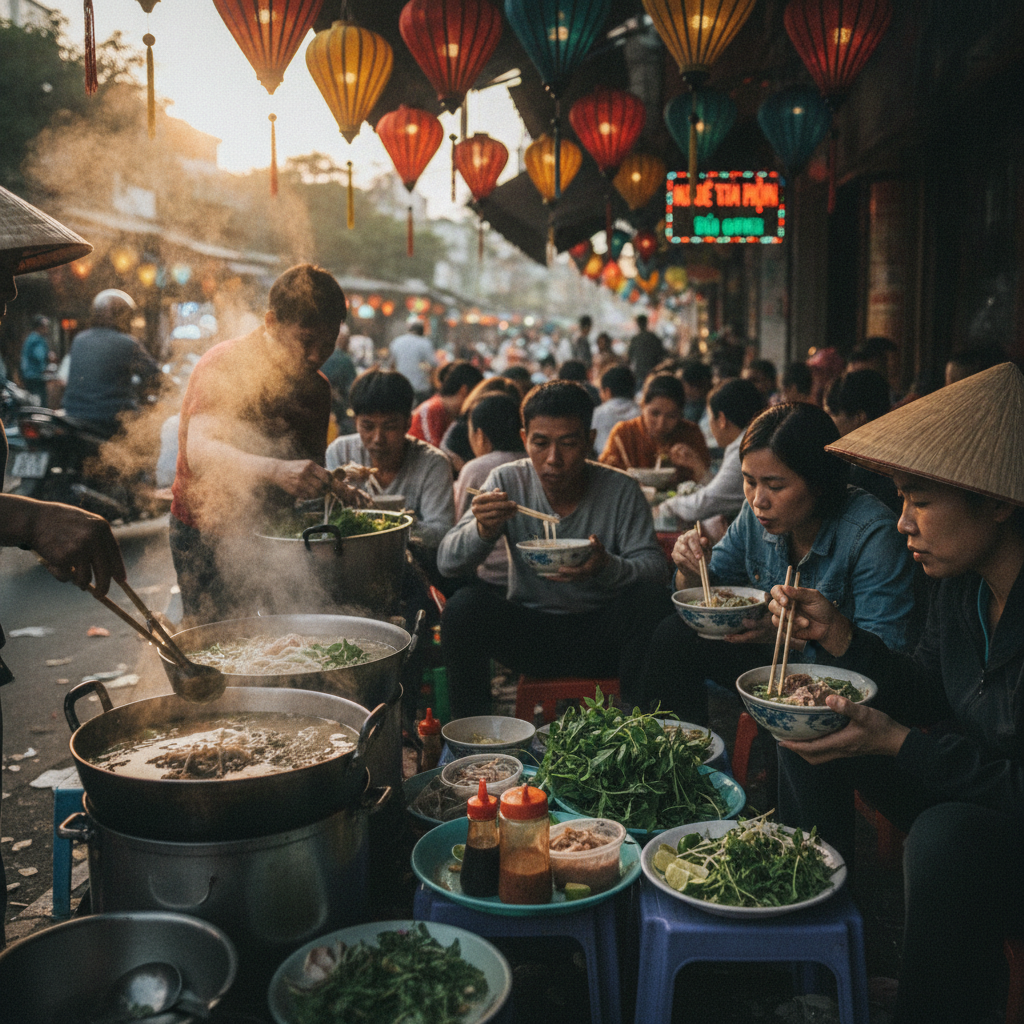
Enjoying pho in Vietnam is as diverse and vibrant as its culture. From bustling street stalls to air-conditioned restaurants, pho is interwoven into the daily lives of locals everywhere. Vietnamese people most commonly enjoy pho for breakfast. The sight of someone stopping on their way to work to slurp down a steaming bowl of pho is a common morning scene in Vietnam. When ordering, you can usually choose between 'Pho Bo' (beef pho) and 'Pho Ga' (chicken pho), with various cuts of meat like flank, brisket, or tendon available. Once your pho arrives, you customize it with fresh vegetables and sauces placed on the table. Aromatic herbs like bean sprouts, cilantro, basil, and mint are added, along with a squeeze of lime for freshness, and a dash of spicy Sriracha or sweet hoisin sauce for enhanced umami. Locals eat pho by picking up noodles and meat with chopsticks and sipping the broth with a spoon. Making a slurping sound is considered a sign of appreciation and enjoyment. You'll often see people enjoying Vietnamese coffee or refreshing tea alongside their pho, which pairs well with the warm, rich flavors of the soup. To enjoy pho like a local, don't be too formal; relax, and experiment with different spices and vegetables to find your perfect flavor.
Flavor Characteristics
The taste of pho is difficult to define in a single word. It is deep, complex, yet surprisingly delicate. The first spoonful of warm, clear broth spreads through your mouth, enveloping your entire body in warmth. The broth carries the subtle, exotic aroma of star anise and cinnamon, harmoniously blended with the savory notes of ginger and onion, offering an oriental depth. The umami from fish sauce adds vibrancy to what might otherwise be a bland broth. The rice noodles are soft yet chewy, melting gently in your mouth after being briefly blanched in the hot broth. The thinly sliced beef, cooked by the heat of the broth, is exquisitely tender and melts on the tongue. The juicy meat further enhances the pho's rich flavor. When crisp bean sprouts, fragrant cilantro, zesty lime, and spicy chilies are added, the spectrum of flavors expands even further. While cilantro's unique aroma is polarizing, it is a crucial element that completes the taste of pho. The sourness of lime cuts through any richness in the broth, and the spicy chilies add a stimulating kick that whets the appetite. The harmonious blend of all these ingredients is truly artistic. A single bowl of pho encompasses sweetness, saltiness, sourness, spiciness, and umami, offering a complete gastronomic experience that satisfies all five senses.
Making Pho at Home
While it's challenging to perfectly replicate the deep flavors of authentic pho at home, you can certainly enjoy a delicious version with a simple home-cooked recipe. Here are some tips for making pho at home:
- Broth Preparation: Using store-bought bone broth or beef broth can significantly save time. To deepen the flavor, add star anise, cinnamon sticks, cloves, whole peppercorns, sliced ginger, and halved onions. Lightly toast the spices in a dry pan before adding them to enhance their aroma. Simmer for at least 30 minutes to allow the flavors to infuse.
- Noodle Preparation: For dried rice noodles, soak them in lukewarm water for about 30 minutes, then blanch them in boiling water for approximately 1 minute. If you have fresh noodles, you can blanch them directly without soaking.
- Meat Preparation: Prepare thinly sliced beef for shabu-shabu (such as brisket or beef belly). You can either briefly blanch it in the simmering broth or pour hot broth over it to cook it.
- Garnish Preparation: Prepare bean sprouts, cilantro, red chilies (or green chilies), and lime (or lemon). Lightly blanch the bean sprouts or add them directly to the hot broth.
- Assembly: Place the blanched noodles in a bowl, then arrange the prepared meat on top. Add the garnishes like bean sprouts, cilantro, and chilies, then generously pour in the hot broth. Finish with a lime wedge.
- Adjusting Flavor: According to your preference, add fish sauce, Sriracha sauce, or hoisin sauce to adjust the taste. A dash of Vietnamese chili or chili oil can add a spicy kick.
While homemade pho might differ slightly from the complex flavors of authentic Vietnamese pho, it's more than enough to offer a warm, comforting bowl. Sharing carefully prepared pho with loved ones can be a wonderful way to experience the spirit of Vietnam.
Vietnamese pho is not just a dish. It is a work of art that embodies the history, culture, and warm heart of the Vietnamese people. I hope that all travelers around the world discover the true charm of Vietnam through this magnificent dish and forever remember the story of pho that breathes with their lives.
Looking for a place nearby? Search “쌀국수 포” on Naver Map.