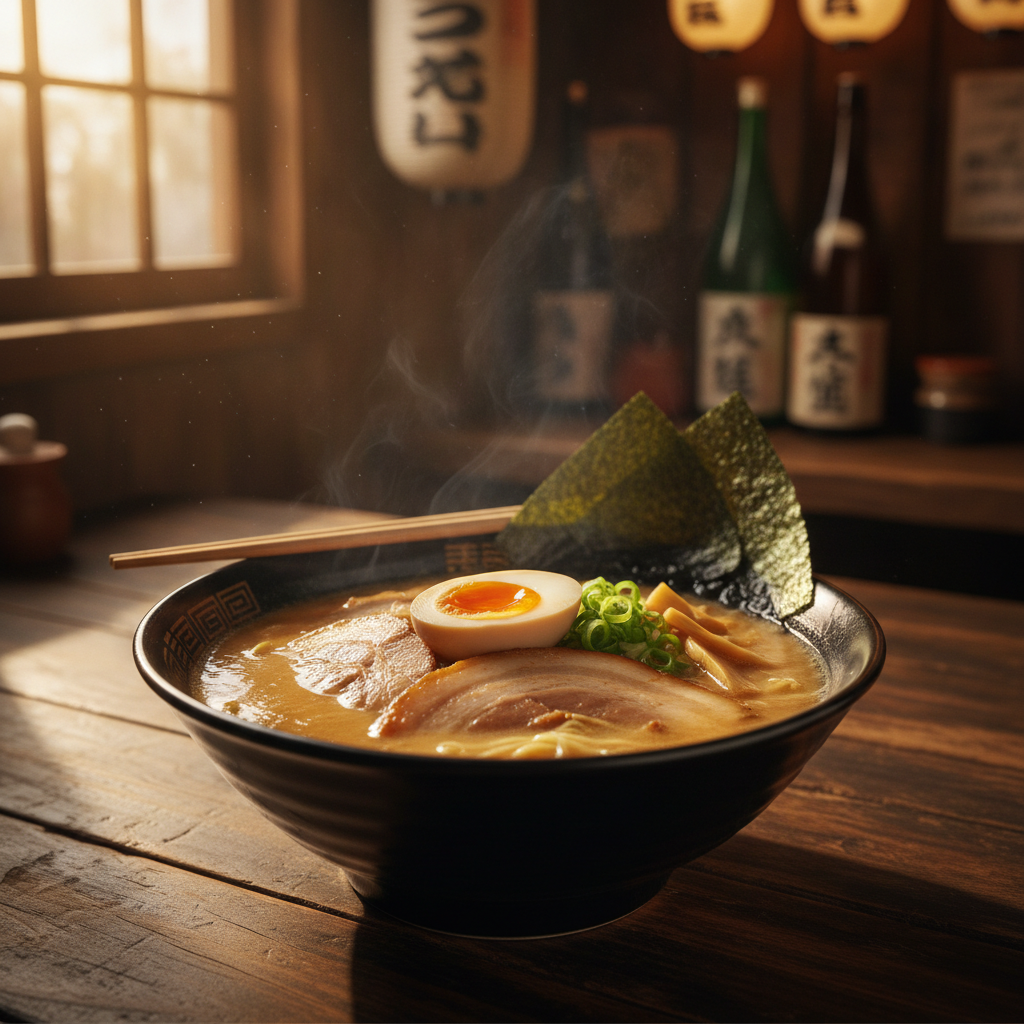
Japan and Ramen: Comfort in a Bowl of Everyday Life
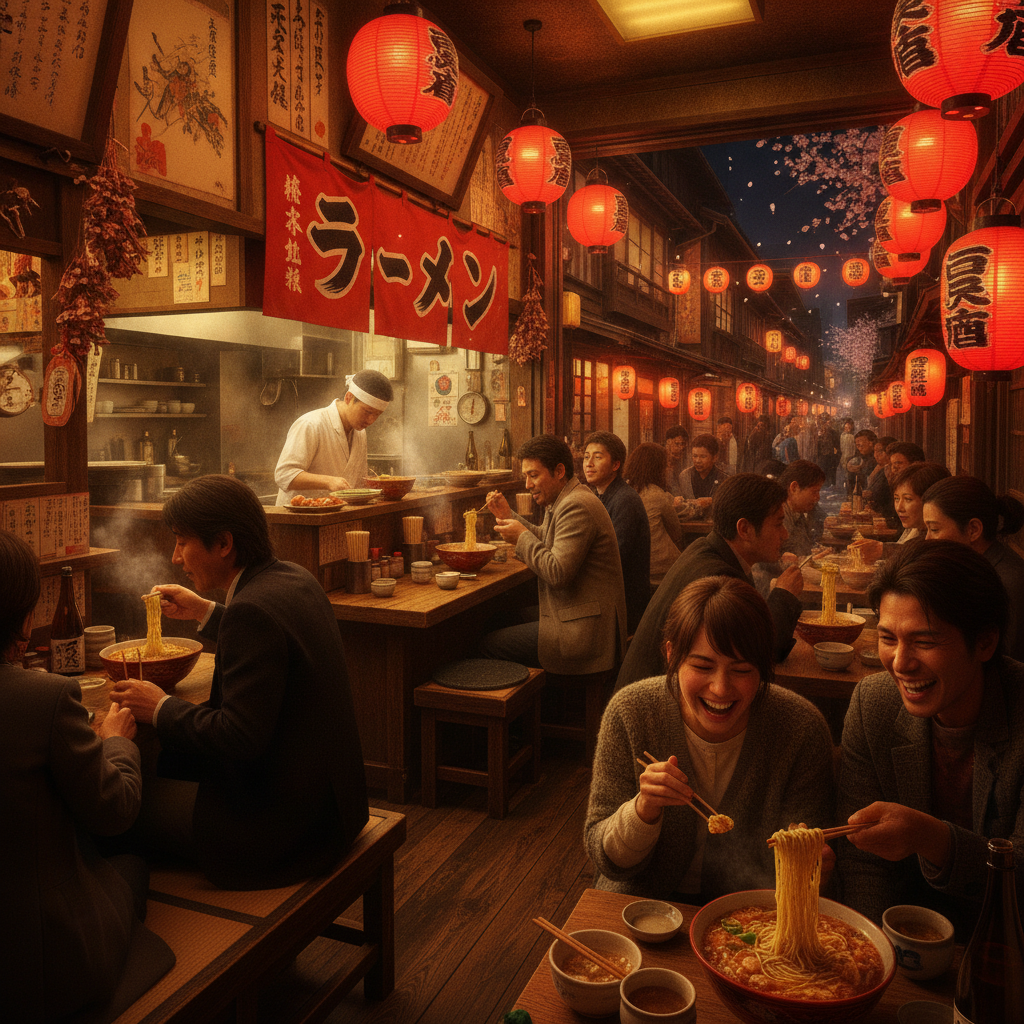
What images first come to mind when you travel to Japan? Perhaps the grandeur of Mount Fuji, the serene gardens of Kyoto, or the dazzling neon signs of Tokyo. For me, however, Japan is remembered through the image of a steaming bowl of ramen, encompassing all these diverse landscapes. Ramen is more than just a dish; it's a soul food deeply embedded in the daily lives of Japanese people and a cultural symbol. It offers solace at the end of a tiring day, a hearty meal to satisfy hunger, and sometimes, a medium for cherished moments with friends and family. It's a warm comfort on chilly days and possesses an enchanting allure that makes you seek it out even on hot summer nights, sweating profusely. Ramen soothes the fatigue of office workers on their way home, appeases the hunger of students after cram school, and offers unforgettable culinary experiences to travelers. This single bowl encapsulates the joys and sorrows of Japanese life and the spirit of craftsmanship. Ramen accompanies the highs and lows of the Japanese, staying by their side like an old friend. The clatter of chopsticks, the slurping of broth, and even contented sighs—a ramen shop is always bustling with the vibrancy of life. It's no exaggeration to say that ramen, like its hot broth, infuses warmth into Japanese society.
History and Origin: Hot Comfort from the Middle Kingdom
The history of ramen has been quite an interesting journey. Tracing its roots, we find it in noodle dishes that arrived from China in the late 19th century, coinciding with Japan's opening to the world. At that time, Chinese residents in Japan began selling their native cuisine, which marked the beginning of ramen. Initially called 'Shina Soba' (支那蕎麦) or 'Nankin Soba' (南京蕎麦), it gradually spread, primarily in port cities. In the early 20th century, after the Great Kanto Earthquake, mobile food stalls began selling ramen during Tokyo's reconstruction, leading to its widespread popularity. Especially after World War II, amidst food shortages, inexpensive and nutritious ramen played a crucial role in satisfying the hunger of the common people. From this point, ramen became deeply ingrained in Japanese daily life, and various regional styles of ramen began to emerge. Hokkaido's miso ramen, Fukuoka's tonkotsu ramen, Tokyo's shoyu ramen, and more—each region developed unique flavors and cooking methods, forming the diverse spectrum of ramen we know today. Evolving continuously over decades and centuries, ramen captivated Japanese palates and culture. In every bowl, the history of immigration, the pain of war, and the hope of reconstruction flow like hot broth. Ramen is more than just a meal; it is a living history, a witness to modern Japanese history, and a dish that has breathed alongside the lives of the common people.
Traditional Recipe: A Bowl Infused with the Artisan's Soul
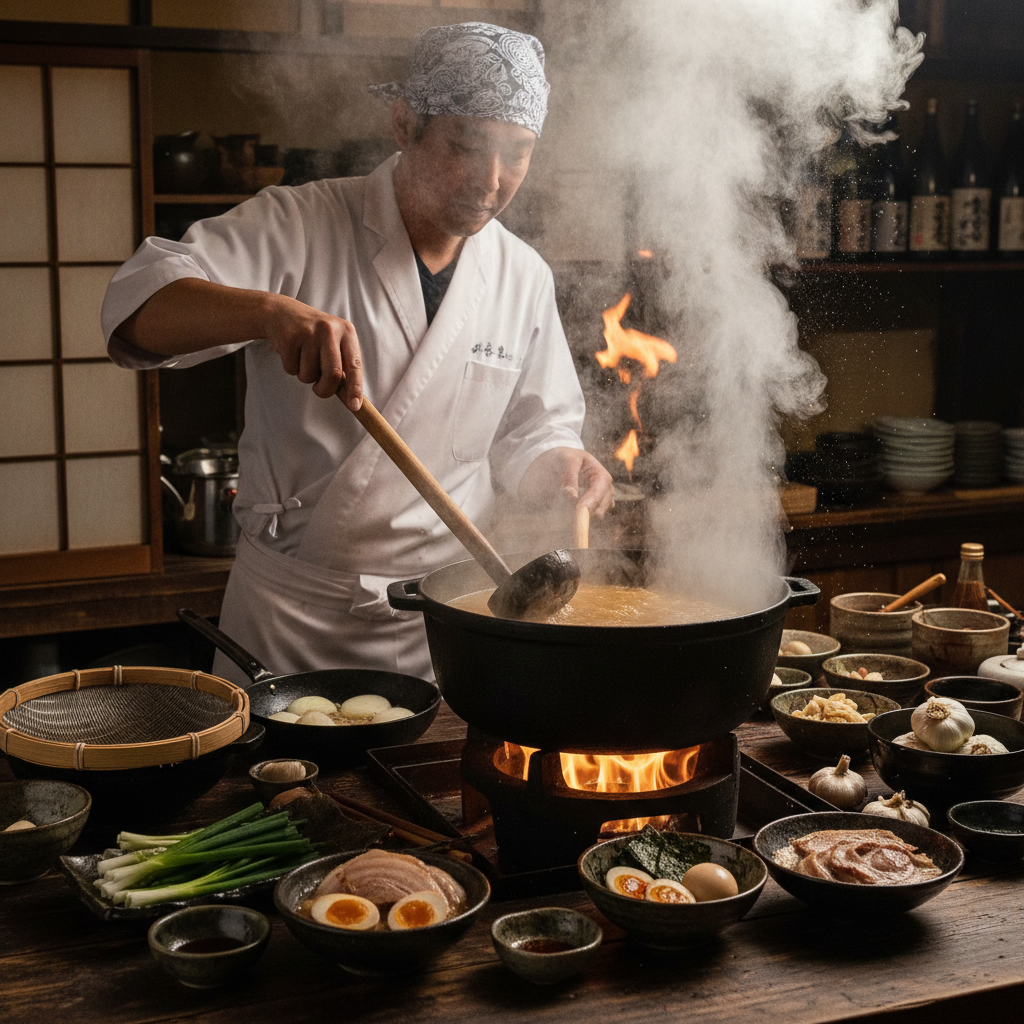
Ramen is not merely a combination of noodles and broth; it's closer to a work of art requiring delicate balance and artisanal skill. The core of authentic ramen undoubtedly lies in the 'soup' (スープ, suupu). For tonkotsu ramen, pork bones are simmered for hours to create a milky, rich broth, with the key being to eliminate the peculiar pork smell while extracting deep umami. Shoyu ramen uses a chicken bone or seafood broth with a soy sauce base, resulting in a clear and clean taste, while miso ramen incorporates fermented soybean paste for a savory and profound flavor. The 'tare' (タレ) added to this broth is a crucial element that determines the ramen's taste. Based on soy sauce, salt, or miso, tare amplifies the broth's flavor and imparts the ramen's unique character. The noodles are also the lifeblood of ramen. Made by mixing flour, water, and kansui (かんすい), the noodles must have a chewy and elastic texture, with their thickness and shape varying according to the type of broth. Finally, the finishing touch of ramen is the 'toppings' (トッピング). Softly braised chashu (チャーシュー), crunchy menma (メンマ), moist ajitama (味玉), fragrant green onions, and umami-rich nori seaweed complete a perfect bowl. When all these ingredients faithfully perform their roles and harmonize beautifully, the best ramen is born. From the simmering time of the broth to the timing of noodle cooking, the ratio with tare, and the arrangement of toppings, every step is imbued with the artisan's delicate touch and long experience. Like an orchestra conductor, the ramen master orchestrates the "voices" of each ingredient to create a perfect harmony.
How to Enjoy Locally: The Aesthetics of Ramen Tasted with All Senses
Enjoying ramen in Japan is more than just a meal; it's a ritual. As you open the door to a ramen shop, the savory and rich aroma of broth greets your nose first. Once seated, you choose from the menu and place your order, soon hearing the lively sounds of noodles being boiled and broth being mixed in the kitchen. When the ramen arrives, you first appreciate it with your eyes. The neatly arranged chashu, the lustrous ajitama, and the color harmony of green onions and dark nori are a painting in themselves. Next, you take in the aroma. The complex scent of broth and tare rising with the hot steam tantalizes the appetite. And finally, with the first spoonful, you taste the broth. Its deep, rich, sometimes clean and refreshing flavor warmly envelops your entire body. Now, it's time to lift the noodles with your chopsticks. Japanese people slurp their ramen. The sound of slurping noodles loudly is to allow the broth and noodles to meet the air, enhancing their flavor and aroma. It also expresses respect for the ramen and enjoyment of the meal. The chashu, melting softly in between, adds richness, and the crunch of menma provides textural pleasure. Some customize their ramen by adding spicy seasoning, garlic, or sesame seeds. After savoring every last drop of the broth, you are left with a feeling of deep satisfaction, both physically and mentally. In the cozy and lively atmosphere of a local ramen shop, even the brushing of shoulders with strangers feels comforting. Ramen there becomes a medium through which you experience the life and emotions of the Japanese with all your senses.
Characteristics of Flavor: A Feast of Flavors in a Hot Bowl
The taste of ramen is difficult to define in a single word because it is so incredibly diverse and complex. However, if I were to point out a few common characteristics, first would be the 'deep and rich umami.' The umami created by long-simmered broth and aged tare offers a rich satisfaction that envelops the entire tongue, going beyond mere saltiness or sweetness. This umami possesses an addictive quality that is unforgettable once tasted. Second is the 'chewy and firm texture of the noodles.' Ramen noodles must maintain an appropriate thickness and elasticity to absorb the broth well. The chewy resistance felt when you put them in your mouth and the smooth texture as they go down are among the joys of eating ramen. Third is the 'perfect harmony of ingredients.' The juicy tenderness of chashu, the crisp texture of menma, the savory moistness of ajitama, and the fresh aroma of green onions blend in the hot broth to create a perfect symphony of flavors. The essence of ramen's taste lies in how all these elements complement each other and create a synergistic effect without losing their individual character. Lastly, ramen possesses an inherent characteristic of 'warmth.' The hot broth warms a cold body and offers warm comfort to a tired mind. It's more than just a hot temperature; it carries an emotional warmth that warms the heart as well. Thus, ramen is a feast of flavors that satisfies all senses, combining deep umami, chewy texture, perfect harmony, and comforting warmth.
Ramen by Region
Japanese ramen is not one dish. Under the same name, the broth changes from region to region — and the difference usually traces back to who first made it, where, and what they were copying. Only what could be confirmed in records is listed here.
| Region | Broth | Character | Origin |
|---|---|---|---|
| Tokyo | Shoyu (soy sauce) | Chicken-and-pork stock with soy seasoning, thin wavy noodles | In 1910, Rairaiken opened in Asakusa with Chinese cooks brought from Yokohama's Nankinmachi, selling soy-sauce Chinese noodles — regarded as the prototype of shoyu ramen |
| Hakodate | Shio (salt) | Clear, salt-seasoned broth | A record survives of an 1884 Hakodate newspaper ad for "Nankin soba" at a Western-style restaurant run by a Chinese merchant |
| Sapporo | Miso | Rich miso broth, thick wavy noodles | Miso ramen was created in the mid-1950s at Aji no Sanpei in Susukino and became known after a 1955 magazine feature |
| Kurume / Hakata (Fukuoka) | Tonkotsu (pork bone) | Milky pork-bone broth | Said to begin in 1937 at the Nankin Senryo stall in front of Kurume Station, drawing on Nagasaki champon's pork-bone broth and Tokyo/Yokohama Chinese noodles. Hakata tonkotsu follows this lineage |
| Kitakata (Fukushima) | Shoyu | Wide, thick, wavy noodles | Said to originate in the mid-1920s when Ban Kinsei, from Zhejiang, China, began selling Chinese noodles from a cart (Genraiken) |
One thread runs through the table: almost every origin involves a Chinese cook or Chinese noodles. Ramen is less a dish born in Japan than Chinese noodles that met local ingredients and tastes at ports and station fronts, and branched from there.
Shop names are given only to explain origins, not as recommendations; their current business or taste was not checked. Regions such as Wakayama and Kumamoto were left out because their records could not be confirmed.
Making at Home: Tips for Your Own Home-Cooked Ramen Recipe
It's challenging to perfectly recreate complex authentic ramen at home, but with a few tips, you can certainly make a satisfying 'ramen of your own.' The key lies in the broth, tare, and noodles.
1. Broth (Soup)
For the most crucial broth, using commercially available tonkotsu concentrate or chicken broth packs is convenient. Adding onions, garlic, and leek roots and simmering them again will deepen the flavor significantly. Anchovy-kelp broth can also serve as a base. For more umami, add a handful of katsuobushi and steep it briefly.
2. Tare (Flavor Base)
Mixing soy sauce, mirin, sake, and sugar in a 1:1:1:0.5 ratio and boiling it will create a basic shoyu tare. Adding a little minced garlic or ginger will enhance the flavor. If you want to make miso ramen, try making tare by mixing commercially available Japanese miso with soy sauce, mirin, and minced garlic.
Looking for a place nearby? Search “라멘” on Naver Map.