Whisper of the Star, Star Anise: The Mysterious Scent of the Orient
1. The Charm of Star Anise
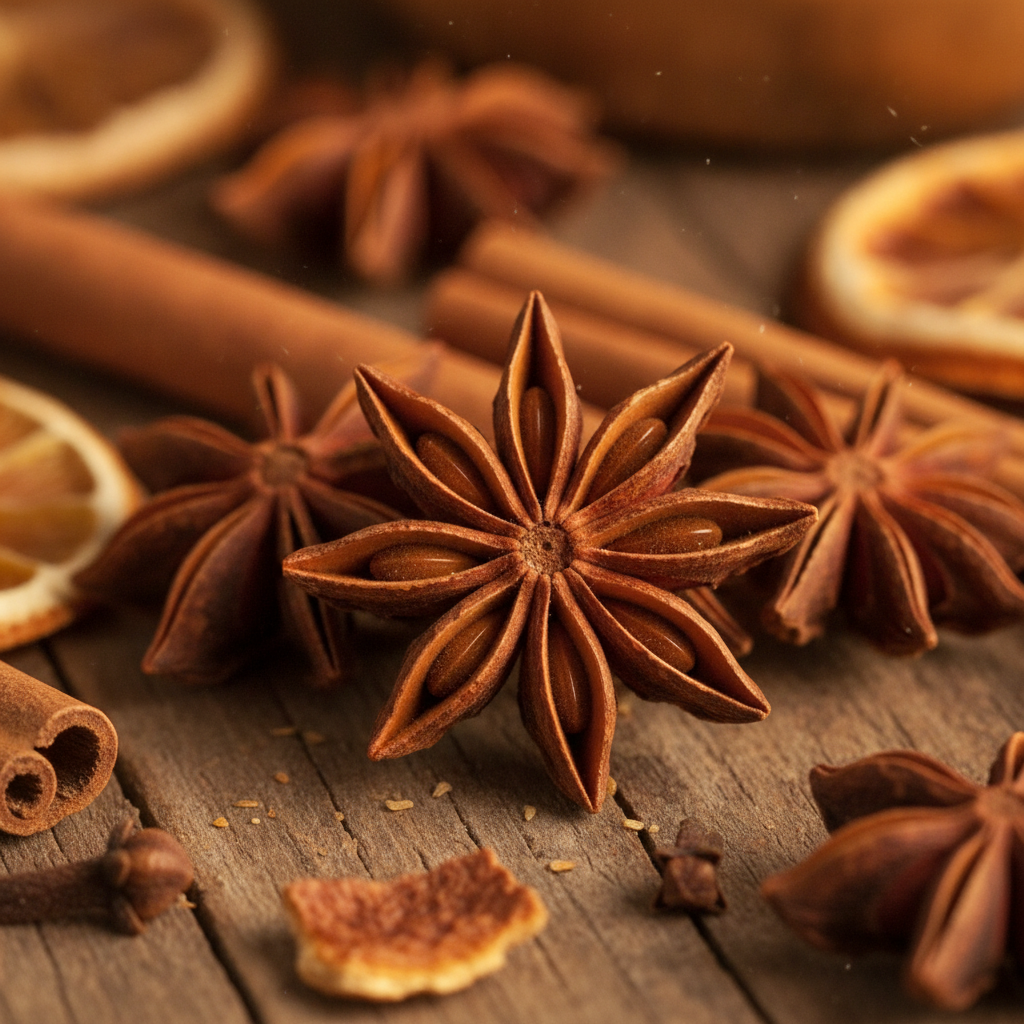
Imagine a single star shining brightly among countless others in the deep night sky. Star Anise, or Palgak in Korean, first captivates our eyes with its mysterious form, as if that star has descended to Earth. Its unique shape, resembling eight pointed arms, is a work of art in itself, possessing a primal yet elegant beauty. However, the true charm of Star Anise blooms in its aroma. The moment it graces your nostrils, an intense yet sweet, sometimes even intoxicating, distinctive scent instantly dominates your sense of smell. Thanks to anethole, a component similar to anise and fennel, its complex flavor profile, sweet like licorice yet with a hint of spiciness, is both primal and refined, much like the fragrance of wildflowers blooming deep in a forest. This aroma gently unfolds in hot broths, infusing the entire dish with warm and exotic comfort, leaving a lingering impression deep in our memories. The scent of Star Anise goes beyond merely enhancing the taste of food; it's like magic that awakens the chef's touch, the anticipation, and the diner's palate. It is not just a spice, but a small piece of a star, imbued with the mystery and wisdom of the East.
2. History and Spice Trade
The history of Star Anise is as distant and fascinating as the footsteps of a merchant walking along the Silk Road. This mysterious spice, which began to be cultivated in the southern regions of China and northern Vietnam since before Christ, was initially used more for medicinal purposes. Its warm and exotic aroma might have held a sacred meaning for people of that time, beyond mere flavor. Star Anise was widely used as a medicinal herb and spice as early as the Song Dynasty in China, and its value was comparable to gold and silk. Star Anise was first introduced to the West around the 16th century when European merchants sought Eastern goods amidst the Age of Discovery. Portuguese traders brought Star Anise to Europe while traveling between the Philippines and Southeast Asia, and its unique aroma quickly captivated European palates. It gained significant popularity in England, where it was used in teas and pastries, and in Russia, where it was used to flavor vodka. The spice trade played a crucial role not only in buying and selling goods but also in promoting cultural exchange between East and West. Star Anise was an exotic scent from across the sea, a medium that stimulated curiosity about unknown lands. A single small fruit connected the lives and cultures of countless people, marking a page in history. Within that star-shaped fruit lies the story of thousands of years of trade, exploration, and cultural fusion.
3. Origin and Cultivation
The homeland of Star Anise is the Guangxi Province in southern China and the mountainous regions of northern Vietnam, where warm and humid climates persist. The fertile soil, abundant rainfall, and year-round mild temperatures in these areas provide optimal conditions for Star Anise trees to flourish. The Star Anise tree (Illicium verum) is an evergreen broadleaf tree that can grow up to 6-10 meters tall. Its leaves are glossy dark green, and in spring, it produces beautiful yellow flowers. After these flowers fade, small green fruits begin to form, which then grow into the star-shaped Star Anise we know. The fruits ripen over approximately 6 months to a year, changing from green to brown and gradually hardening. Harvesting usually takes place between autumn and winter, requiring the delicate task of hand-picking each ripe Star Anise fruit. Due to the height of the trees, long poles or ladders are often used. The harvested fruits are then immediately dried, either naturally under the sun or using special drying facilities. During this process, the distinct intense aroma and color of Star Anise deepen, transforming into the beautiful brown star shape we recognize. The cultivation of Star Anise is more than just an agricultural activity; it's like creating a work of art by dedicating time and effort within the natural order. The vitality of Star Anise blooming amidst the dense greenery of the rainforest is truly wondrous.
4. Culinary Uses
Star Anise is an indispensable core spice in Oriental cuisine, especially Chinese and Vietnamese dishes. Its intense yet sweet aroma adds depth and flavor to meat dishes that might otherwise be too rich. It is an essential ingredient in China's famous Five-Spice Powder and transforms the quality of an entire dish with just one or two pieces when used in red meat dishes like Peking Duck, Hongshao Rou (braised pork belly), or in long-simmered stews like Galbijjim (braised short ribs) and Jangjorim (soy-braised beef). Star Anise effectively masks gamey odors in meat and infuses it with a subtle yet exotic fragrance, stimulating the appetite. In Vietnam's national dish, Pho, Star Anise plays a crucial role. Adding Star Anise when simmering beef broth creates a deep and complex flavor profile that completes the distinctive taste of Pho. Surprisingly, Star Anise also harmonizes well with desserts and beverages. In the West, it is used during the Christmas season in warm drinks like Glühwein or Eggnog, along with cinnamon and cloves, to add a cozy and exotic aroma. A small amount added to fruit compotes or tarts made with apples or pears can offer a unique flavor experience. Ingredients that pair well with Star Anise include various meats such as pork, beef, and duck, as well as soy sauce, sugar, ginger, garlic, chili, and other warm spices like cinnamon and cloves. Star Anise possesses a magical power to make an ordinary dish extraordinary just by its presence.
5. Health Benefits
Beyond simply adding flavor and aroma, Star Anise has been used as an important medicinal herb in traditional Eastern medicine for centuries. Anethole, the main component of Star Anise, is known for its powerful anti-inflammatory and antioxidant properties. This can help alleviate symptoms of respiratory illnesses like colds and flu, and indeed, Star Anise is used to extract shikimic acid, a key precursor to the flu medication Tamiflu. Star Anise is also beneficial for digestive health. Traditionally, Star Anise tea has been used for indigestion, abdominal pain, and gas relief, and is known to soothe stomach cramps and promote digestion. Furthermore, Star Anise possesses antibacterial and antifungal properties, which can have positive effects on preventing food poisoning and maintaining oral health. Some studies also suggest that Star Anise may help regulate blood sugar levels. Additionally, Star Anise is known to calm nerves and reduce stress, so a warm cup of Star Anise tea can bring tranquility to a tired body and mind. Of course, like all medicinal herbs, excessive consumption is not advisable, and it is especially important for pregnant women or individuals with specific medical conditions to consult a professional before consumption. Star Anise is a precious gift from nature, and the healing power contained within its star shape is still well worth exploring.
6. Purchasing & Storage Tips
Choosing good Star Anise is a crucial step that determines the success of your cooking. First, examine the shape of the Star Anise. It's best if the angles are clear and all eight arms are intact. Broken or fragmented Star Anise may indicate a lack of freshness or a weaker aroma. The color should be a deep brown with a slight sheen. If it looks too black or brittle, it might be old. And most importantly, smell it. When you gently rub it with your fingers, a strong, sweet, and warm characteristic aroma of Star Anise should waft up. Make sure there is no moldy or stale smell. Whole Star Anise retains its fragrance much longer and deeper than ground Star Anise, so it's recommended to purchase whole pods if possible. You can grind whole Star Anise as needed to enjoy its fresh aroma. Store purchased Star Anise in an airtight container in a cool, dry place away from direct sunlight. Humidity can damage the aroma of Star Anise and cause mold, so be particularly careful. When stored properly, Star Anise can retain its fragrance for up to 2-3 years. Refrigeration is not essential, but it can help preserve the aroma for longer periods during extended storage. Delicate storage is essential to cherish the precious aroma of Star Anise contained within each tiny star fragment.
7. Recommended Recipes
Fragrant Star Anise Braised Pork Belly
Ingredients: 500g pork belly, 3 whole star anise, 1 piece ginger (sliced), 3 cloves garlic (crushed), 4 tablespoons soy sauce, 2 tablespoons sugar, 2 tablespoons mirin, 500ml water, a little cooking oil
Instructions:
- Cut the pork belly into large pieces.
- Heat cooking oil in a pot and stir-fry the pork belly until the surface is golden brown.
- Add whole star anise, ginger, and garlic to the stir-fried pork and cook together to release their aroma.
- Add soy sauce, sugar, mirin, and water. Bring to a boil, then reduce heat to low, cover, and simmer for at least 1 hour. Flip the meat occasionally to ensure even cooking and thorough absorption of the sauce.
- When the liquid has reduced to a thick sauce, it's done. Enjoy warm with rice.
Star Anise Cinnamon Apple Compote
Ingredients: 2 apples, 1 whole star anise, 1 cinnamon stick, 3 tablespoons sugar, 1 tablespoon lemon juice, 100ml water
Instructions:
- Peel and core the apples, then cut them into bite-sized pieces.
- In a saucepan, combine the sliced apples, whole star anise, cinnamon stick, sugar, lemon juice, and water. Bring to a simmer over medium heat.
- Once simmering, reduce the heat to low and cook for 10-15 minutes, or until the apples are soft.
- Remove the star anise and cinnamon stick. Enjoy warm or chilled, perhaps with yogurt or ice cream.
Star Anise is a captivating spice that adds depth and specialness to such a variety of dishes. Experience the mysterious aroma of Star Anise in your kitchen. A small star will fill your table with the exotic tastes and scents of the Orient.