Star Anise's Whisper: Embracing the Mysterious Scent of the East
1. The Charm of Star Anise: The Fragrance of Oriental Fantasy
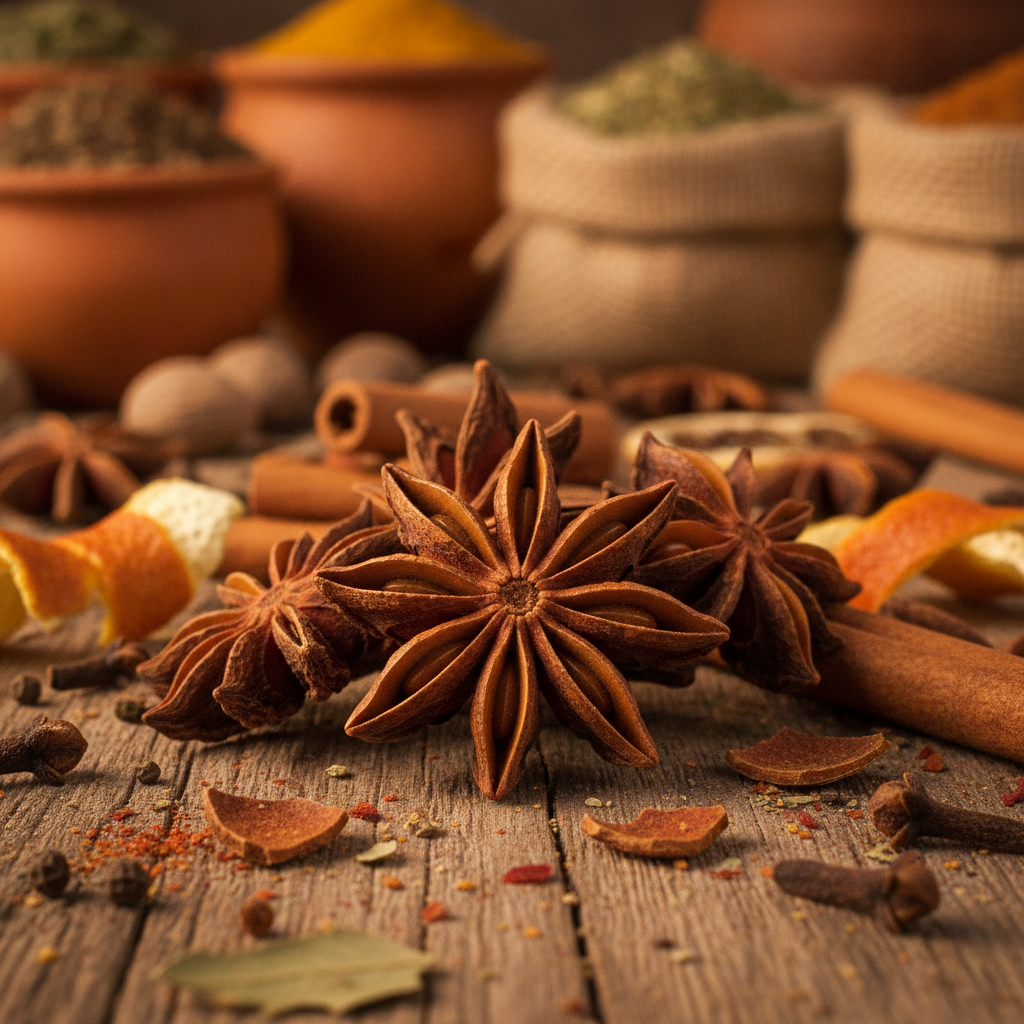
As countless stars twinkle in the night sky, whispering their own stories, Star Anise, or 팔각 (palgak), captivates with its elegant star shape, just like its name suggests. And the fragrance contained within that small star unfolds a mysterious oriental fantasy that, once smelled, can never be forgotten. The initial sweet and intoxicating aroma of licorice, immediately followed by refreshing notes of anise and bitter clove, is like viewing a complex yet harmonious Oriental painting. This scent, a delightful blend of spiciness, coolness, and warmth that tickles the nose, is a work of art in itself. Like a treasure from the East that traveled west along the Silk Road long ago, star anise exudes an exotic yet profound charm. It can powerfully mask the gamey smell of meat, or it can delicately imbue sweet desserts with a soft and elegant fragrance. This versatile spectrum is one of star anise's greatest attractions. The aroma emanating from a single piece of star anise transcends a mere ingredient, embracing the deep history and culture of Asia, and the lives and sorrows of the people within it. Just as stars in the night sky transmit light from billions of light-years away, star anise is a magical presence that delivers the essence of the East across thousands of years.
"Star anise is not just a spice. It is the whisper of stars adorning the Eastern night sky, a treasury of fragrance imbued with ancient wisdom and beauty."
2. History and Spice Trade: A Bridge of Fragrance Connecting East and West
The history of star anise is as deep and ancient as its fragrance. Valued as both medicine and food in ancient China, star anise began to spread to Central Asia and the Middle East via the Silk Road around the 1st century AD. Merchants, captivated by its exotic aroma, treated star anise as a precious treasure, and it soon became an important commodity connecting East and West. Especially in the Middle Ages, it was used as a substitute for anise in Europe or highly prized as a rare spice on aristocratic tables due to its unique flavor. With the advent of the Age of Discovery, the spice trade became even more vibrant, and star anise became a symbolic presence, offering Europeans the mysterious tastes of the East. Portuguese merchants are believed to have first brought star anise from China to Europe in the early 16th century, and thereafter, various maritime powers such as the Netherlands and England entered the star anise trade, further increasing its value. Star anise was more than just an ingredient for flavor; it was an icon symbolizing wealth, power, and interaction with new civilizations. Each piece of star anise, having crossed rough seas, contained the sweat and courage of countless merchants, and humanity's fervent desire for the unknown world. This small, star-shaped fruit, born in the deep mountains of the East, traversed oceans to deliver the essence of the Orient to gourmets worldwide, marking an important page in history.
3. Origin and Cultivation: Green Forests Where Stars Blossom
The homeland of star anise lies in the deep, green subtropical forests of southern China and northern Vietnam. The mild and humid climate of these regions provides optimal conditions for the star anise tree (Illicium verum) to thrive. The star anise tree is an evergreen that can grow up to 20 meters tall. Small, yellow flowers blooming amidst its green leaves transform into star-shaped fruits as autumn deepens. Initially green, the fruits gradually turn reddish-brown as they ripen, becoming fully imbued with their characteristic aroma. These beautiful star-shaped fruits are composed of eight follicles, each containing a single seed. However, what we use as a spice is not the seed itself, but the dried fruit pericarp that encloses the seeds. Harvesting typically occurs between late autumn and early winter, done by hand-picking directly from the trees. This delicate process of selecting only perfectly ripe fruits requires extensive experience and skilled techniques. The harvested star anise fruits must be thoroughly sun-dried to acquire their familiar deep brown color and unique aroma. This drying process is a crucial step in determining the flavor of star anise; if not sufficiently dried, mold can form, or the aroma may not fully develop. Star anise, blossoming like stars after a period of patience in the green forests, is a precious gift born from the synergy of nature's wonder and human dedication.
4. Culinary Applications: A Feast of Flavors Brought by Star Anise
Thanks to its unique and intense flavor, star anise has become an indispensable core spice in Eastern cuisine, especially Chinese and Vietnamese dishes. A prime example is its essential role in China's five-spice powder (五香粉), and its critical contribution to completing the deep broth flavor of Vietnam's national dish, 'Pho'. When star anise is added to meat dishes like pork or beef, it effectively removes gamey odors and adds a deep, rich flavor to the meat. In soy sauce-based braised meat dishes like Chinese Hongshao Rou (紅燒肉) or Dongpo Rou, the sweet and slightly bitter aroma of star anise balances the richness of the meat, creating a deeper taste. It also pairs excellently with duck and chicken dishes, especially in smoked or barbecue preparations, where it adds an exotic aroma for a special culinary experience. Star anise harmonizes surprisingly well with sweet desserts and beverages, not just savory dishes. In the West, it is used in mulled wine (glühwein), apple pie, and pear desserts to add a fragrant and exotic flavor. It pairs particularly well with cinnamon, cloves, anise, and fennel; using them together creates a more complex and rich taste. When using star anise, it is important to use it sparingly due to its strong aroma. You can enjoy the charm of star anise in various ways, such as adding it whole and removing it after cooking, or grinding it finely for seasoning. A single piece of star anise invites us on a special journey to explore the flavors of the East.
5. Health Benefits: A Healing Star Infused with Eastern Wisdom
Star anise is not merely a spice that enhances culinary flavors; it has been used as an important medicinal ingredient in Eastern traditional medicine for a long time. Its primary benefit is aiding digestion. Star anise helps stimulate stomach motility and promotes the secretion of digestive juices, thus assisting digestion and effectively alleviating symptoms of indigestion such as abdominal bloating or discomfort. It is also known to help prevent and alleviate colds. Anethole, the main component of star anise, has antibacterial and antiviral properties, which can enhance resistance to respiratory illnesses and help clear phlegm and soothe coughs. The fact that shikimic acid, one of the raw materials for the influenza treatment Tamiflu, is extracted from star anise, is significant evidence supporting its medicinal value. Additionally, star anise contributes to removing active oxygen in the body and preventing cell damage through its antioxidant action, and it can also help alleviate inflammation. Traditionally, star anise has also been used to relieve menstrual pain in women and to aid lactation. Of course, like all medicinal substances, excessive consumption should be avoided, and pregnant women or individuals with specific conditions should consult a professional before consumption. However, appropriate amounts of star anise can have beneficial effects on our bodies, contributing to a healthy life as a healing star infused with Eastern wisdom. The health benefits offered by a fragrant piece of star anise remind us once again of nature's gifts.
6. Buying & Storage Tips: The Wisdom of Choosing a Sparkling Star
Choosing good quality star anise is a crucial step that determines the taste and aroma of your cooking. The first thing to check is its shape. Star anise should ideally have eight intact follicles, forming a complete star shape, as its name suggests. Intact star anise preserves its aroma better and is visually more appealing than broken or fragmented pieces. The color should be a deep reddish-brown with a slight sheen. If it's too dark or has a bluish tint, it may be of poor quality or not properly dried. It is also important to smell it directly. Fresh, good quality star anise will have a strong, sweet, refreshing, and characteristic anethole scent. Avoid it if it smells moldy or damp. Since the quality of star anise varies depending on the harvest time and drying method, it is wise to purchase from a reputable spice specialty store. Proper storage is also vital for maintaining the aroma of star anise for a long time. Star anise can easily lose its fragrance or spoil when exposed to air, humidity, and light. Therefore, it should be stored in an airtight container in a cool, dry, and dark place. Whole star anise retains its aroma much longer than ground star anise, so it's best to grind it as needed. With correct storage, you can enjoy the fresh and captivating aroma of star anise for a long time, allowing it to truly shine in your dishes. Enrich your culinary creations with the wisdom of choosing a sparkling star.
7. Recommended Recipes: Simple Delicacies Infused with Star Anise
Simple Recipe 1: Star Anise Braised Pork (Simplified Hongshao Rou)
This recipe creates a simple braised pork dish infused with the deep flavor of star anise. It's excellent as a side dish for rice and also suitable for entertaining guests.
- Ingredients: 500g pork belly, 2 star anises, 5 cloves garlic (whole), 1 piece ginger (20g), 5 tbsp soy sauce, 2 tbsp sugar, 3 tbsp cooking wine, 2 cups water, a little cooking oil
- Instructions:
- Cut the pork belly into bite-sized pieces.
- Heat cooking oil in a pot and brown the pork belly on all sides.
- Add star anise, whole garlic, and ginger to the browned pork and stir-fry briefly to release their aromas.
- Add soy sauce, sugar, cooking wine, and water. Bring to a boil, then reduce heat to low, cover, and simmer for about 40 minutes.
- Stir occasionally. Once the liquid has reduced and the pork is tender, turn off the heat and serve.
Simple Recipe 2: Fragrant Star Anise Pear Compote
Star anise also pairs wonderfully with sweet fruits. This recipe highlights the sweetness of pears with the exotic aroma of star anise, making for a delightful dessert.
- Ingredients: 2 pears, 1 star anise, 1/2 cinnamon stick, 3 tbsp sugar, 1 cup water, 1 tsp lemon juice
- Instructions:
- Peel and core the pears, then cut them into bite-sized pieces.
- In a saucepan, combine the cut pears, star anise, cinnamon stick, sugar, water, and lemon juice. Bring to a boil.
- Once boiling, reduce heat to low, cover, and simmer for 15-20 minutes