The Allure of Star Anise
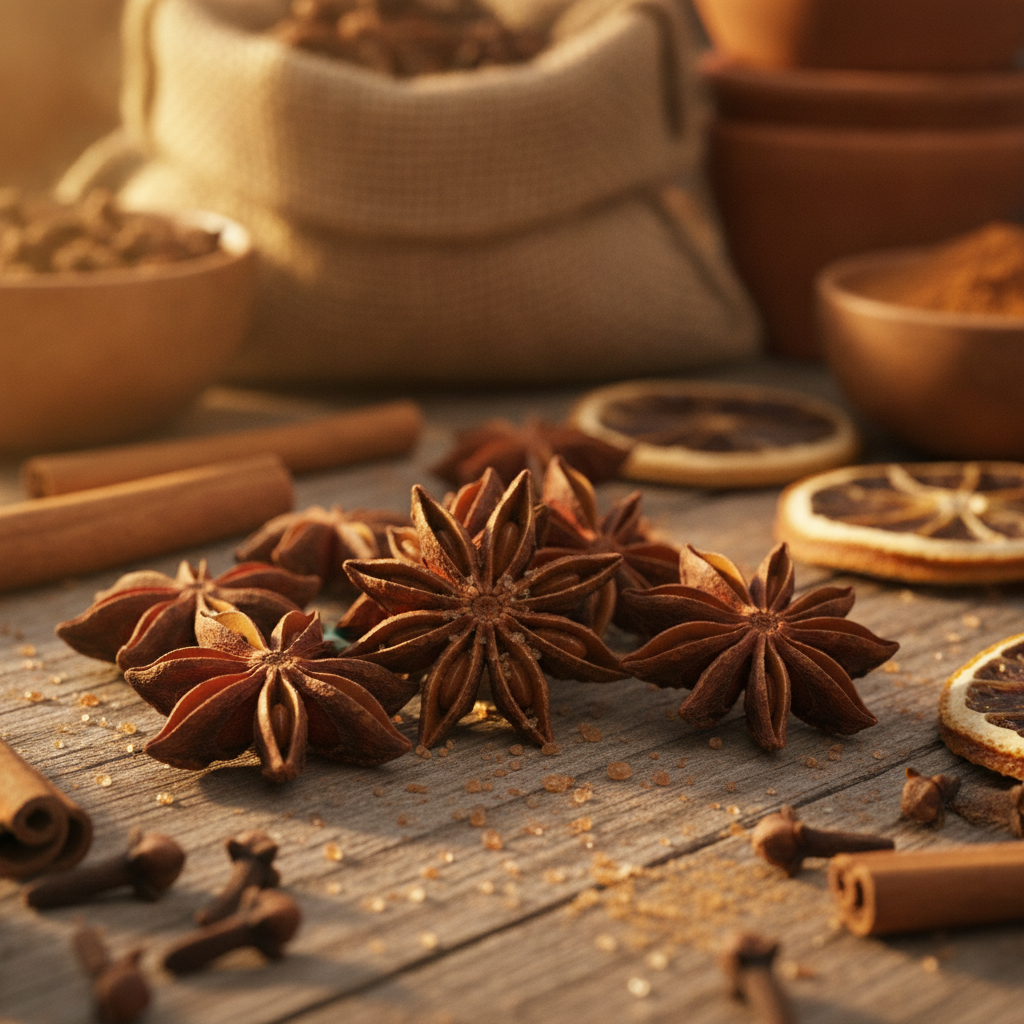
Like a star shining brightly in the darkness, star anise holds a mysterious and captivating aroma that lives up to its name. The moment you first encounter it, this small star, intricately carved with eight arms, immediately captivates with its visual beauty. But its true charm blossoms from its scent. The moment it touches your nose, a unique licorice-like aroma, sweet yet pungent, with a smoky depth, subtly diffuses. This scent doesn't just enhance the taste of food; it possesses a magical power that awakens our senses and transports us into unfamiliar Oriental landscapes. Sometimes, it gently envelops us as if offering warm comfort, and at other times, it leaves a strong impression, creating unforgettable memories. The scent of star anise is not merely an olfactory experience but a lyrical poem where ancient history, culture, and exotic scenery intertwine. As soon as we smell it, we feel as if we are wandering through a serene temple in a misty mountain or a bustling night market in Southeast Asia. Such a complex and profound aroma is the unique charm that only star anise can offer, and it is why countless gourmets and chefs are captivated by this small star. The journey of scent provided by a single piece of star anise sometimes makes us dream of returning to the past, and sometimes of exploring an unknown world. The depth of aroma held by this small star establishes a unique realm that cannot be compared to any other spice, constantly stimulating and enchanting our taste and smell.
History and Spice Trade
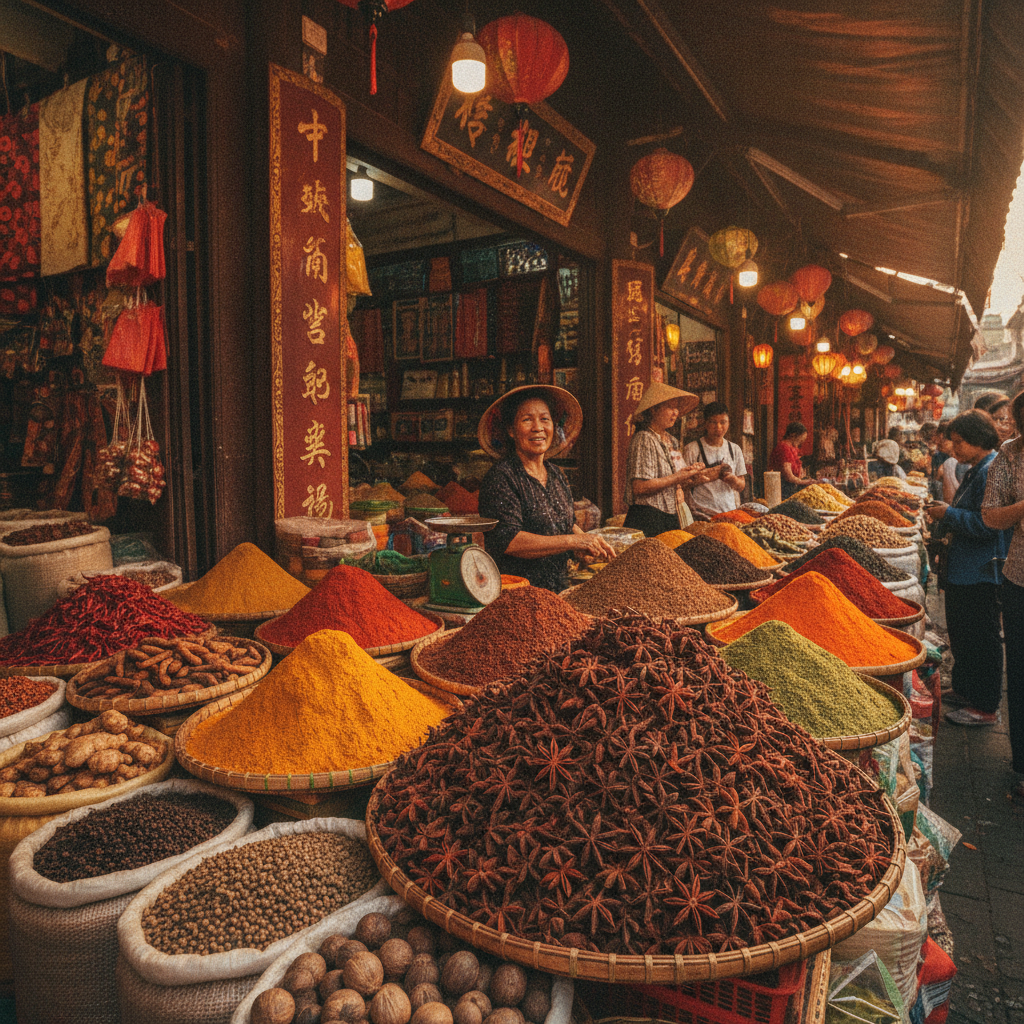
The history of star anise dates back to ancient civilizations in the East, where the shadows of the Silk Road once stretched. For thousands of years, it has been treasured in China and Vietnam as a medicinal herb and a spice emitting a mysterious aroma. Its unique scent and medicinal properties were a significant part of folk remedies and were even presented as tribute to imperial courts. However, star anise truly rose to prominence as a global spice with the dawn of the Age of Discovery. In the 16th century, Portuguese merchants, charting new trade routes to the East, first introduced this mysterious "star of the Orient" to Europe. To Europeans at the time, the scent of star anise was a novel experience, evoking fantasies and longings for the unknown East. Along with nutmeg, cloves, and pepper, star anise held a value as precious as gold, becoming an important item in the spice trade. The competition to acquire this small star was fierce, often fueling colonial rivalries and the exploration of new maritime trade routes. Wealthy European aristocrats used star anise to create uniquely flavored liquors and confections, its exotic aroma becoming a symbol of luxury and wealth. The fact that we can access star anise relatively easily today is thanks to countless explorers and merchants who risked their lives to cross oceans and spread this small star across the globe. The history of star anise is not merely a tale of a spice but a grand epic imbued with the encounter and exchange of Eastern and Western civilizations, and the human spirit of exploration. The hundreds of years of stories contained within this small star still stimulate our imagination, recalling glorious ancient trading ports and the sound of waves on distant seas.
Origin and Cultivation
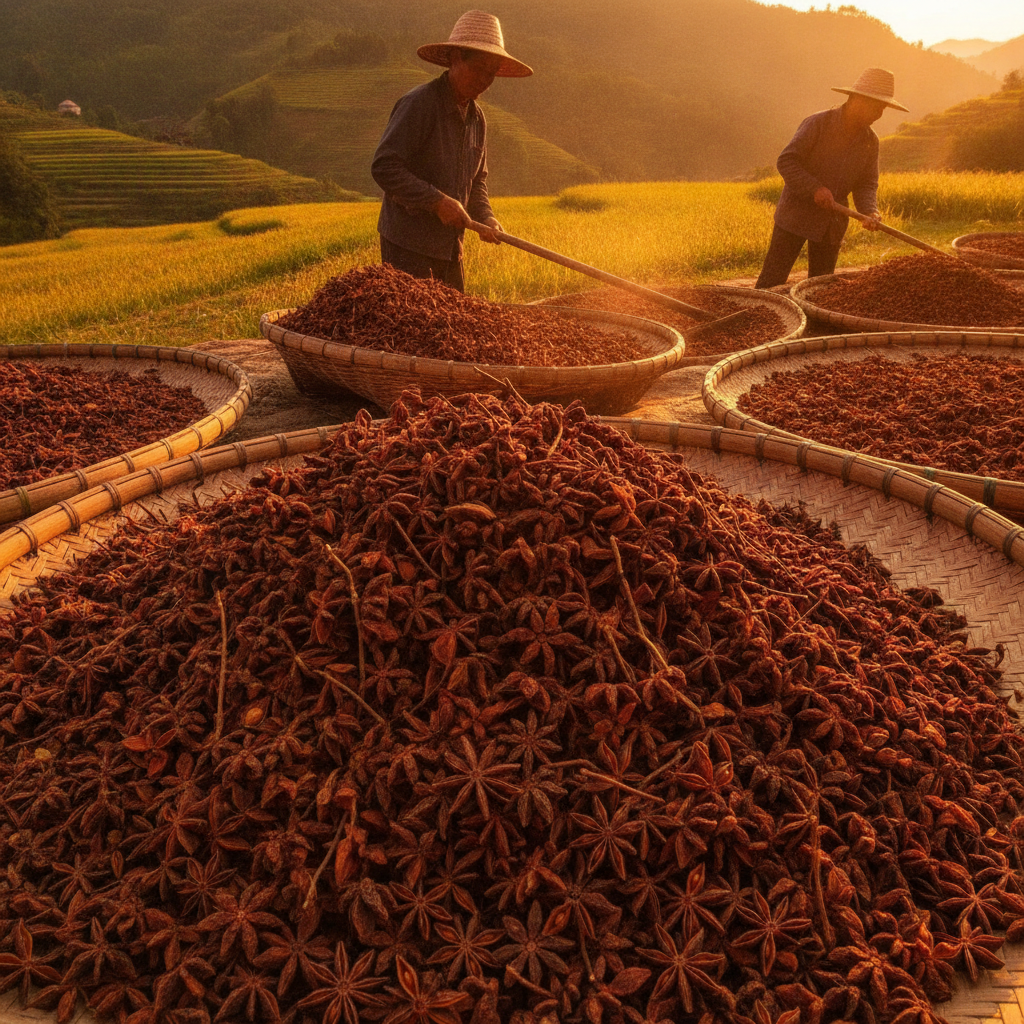
As its name suggests, star anise, with its mysterious aroma, also has an exotic landscape as its origin. It is primarily found in the subtropical mountainous regions of southern China and northern Vietnam, with China's Guangxi Zhuang Autonomous Region and Vietnam's Lạng Sơn province being the global centers of star anise production. The fertile soil and mild yet humid climate in these areas provide optimal conditions for star anise trees to grow. The star anise tree (Illicium verum) is an evergreen tree that can grow up to 5-10 meters tall, featuring glossy green leaves and beautiful yellow flowers. After these flowers bloom, they gradually form star-shaped fruits, which are the part we use as a spice. Harvesting usually occurs in autumn, often when the fruit is still green and not fully ripe. This is because fully ripe fruits can easily split, leading to a loss of aroma. Harvesting is mostly done by hand, as mechanization is difficult due to the tree's nature of growing in rugged mountainous terrain. The harvested star anise fruits undergo a drying process in the sun, transforming into the dark brown, star shape we recognize. During this drying process, the characteristic sweet and warm aroma of star anise is concentrated, and the fruit hardens as its moisture evaporates. Well-dried star anise is like a work of art in itself, a precious gift born from the sweat of farmers and the blessings of nature. These star anise, carefully cultivated and harvested in their place of origin, are then distributed worldwide, adding depth and flavor to various dishes. One can imagine mysterious mists always shrouding the mountain slopes where star anise trees grow. The small stars that bloom there are beautiful outcomes of nature's wonder and human effort.

Culinary Applications
Star anise, with its distinctive aroma, has a remarkably wide range of culinary applications. It has become an indispensable key spice, especially in Asian cuisine. It is an essential component of Chinese 'five-spice powder' (五香粉) and plays a crucial role in creating the deep and rich broth of Vietnam's national dish, 'Phở'. The sweet yet pungent licorice-like aroma of star anise pairs exceptionally well with meat dishes. Adding a piece or two of star anise when braising or boiling pork or duck helps remove gamey odors and enhances the meat's flavor. In soy-sauce-based braises, galbi-jjim (Korean braised short ribs), or jangjorim (Korean beef stew), a touch of star anise can add an exotic yet profound taste. Star anise is also increasingly making its presence felt in Western cuisine. Especially when simmered with cinnamon and cloves in mulled wine (Vin Chaud) or apple cider, it creates fragrant and warming beverages perfect for winter. It also surprisingly complements desserts; a small amount added to tarts, pies, or compotes made with apples or pears can offer a unique flavor. Its combination with chocolate or coffee is also intriguing. Infusing a piece of star anise in hot cocoa or coffee adds an exotic yet smooth aroma, creating a special experience. Because star anise has a strong aroma, a small amount is sufficient to make its presence felt. If you are using it for the first time, it's best to start with one or two pieces and gradually adjust the quantity. The spectrum of flavors this small star can unfold on the dining table is truly astonishing. Whether exploring the deep flavors of the East or adding an exotic touch to Western dishes, star anise will always elevate your cooking to the next level. It is truly like a magic wand for your culinary endeavors.
Health Benefits
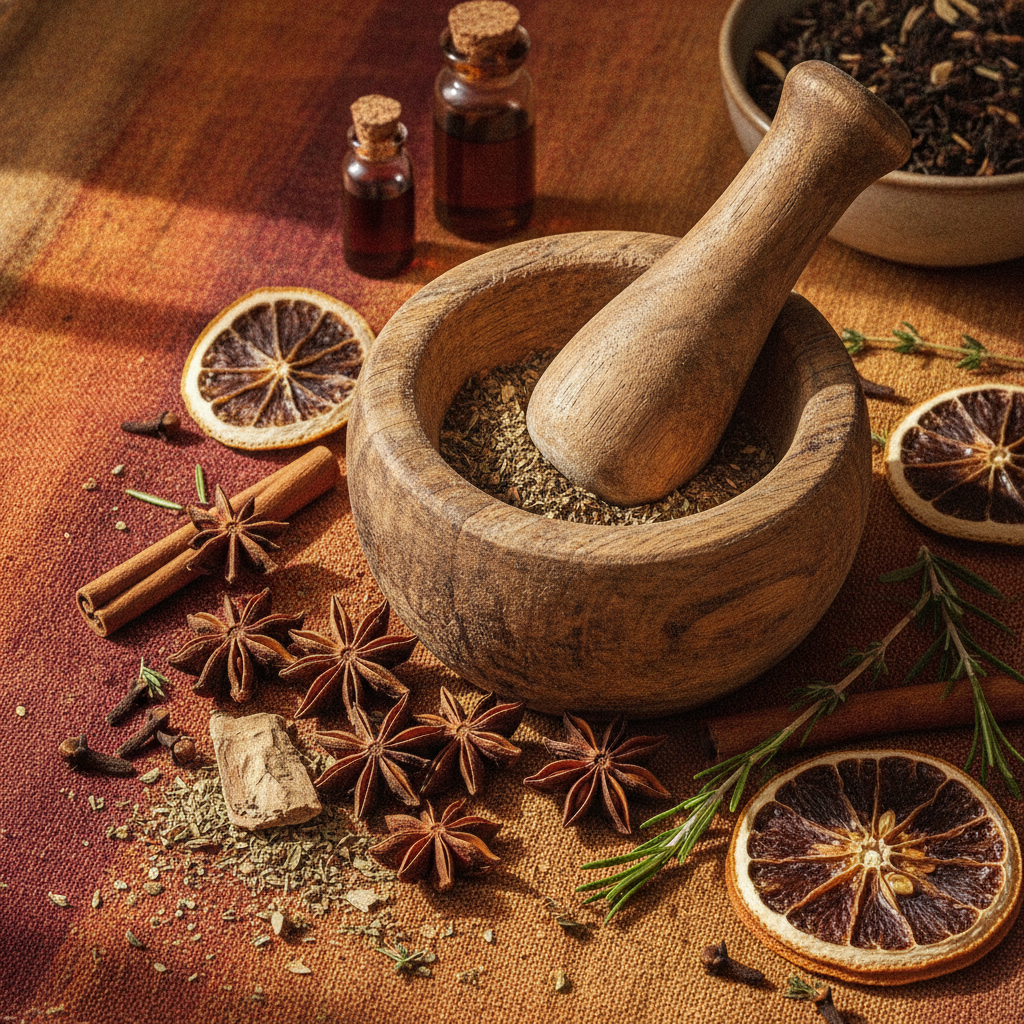
Star anise is more than just a spice that enhances the flavor of food; for thousands of years, it has been used as a precious medicinal herb in traditional Eastern medicine. Modern scientific research on its efficacy is also actively underway, and the potential of star anise is truly remarkable. One of the best-known benefits of star anise is its ability to aid digestion. It can help alleviate indigestion, bloating, and nausea, and is known to contribute to improving gut health. This is due to anethole, a major active compound found in star anise, which has also been found to have anti-inflammatory and antioxidant effects. Furthermore, star anise possesses powerful antimicrobial and antiviral properties. It gained global attention for being one of the main sources of shikimic acid, a key component of the influenza antiviral drug 'Tamiflu.' This suggests that star anise may help in the prevention and alleviation of colds and flu. It may also be effective in pain relief; traditionally, star anise has been used to reduce arthritis and rheumatism pain. The warm nature of star anise also offers benefits in warming the body and promoting blood circulation. Of course, star anise is a spice, not a medicine, so excessive consumption for direct therapeutic purposes is not recommended. However, incorporating star anise appropriately into your daily diet can have positive effects on health promotion. Drinking star anise tea or adding it to dishes to enjoy its subtle aroma along with its health benefits are good methods. This small star, a gift from nature, contains various benefits not only for taste and aroma but also for our bodies. The wisdom of star anise, which has protected human health for centuries, continues to shine brightly today.
Buying & Storage Tips
Choosing good star anise is a crucial factor in determining the taste and aroma of your dishes. When purchasing, it's advisable to pay close attention to a few points. First, check the shape of the star anise.