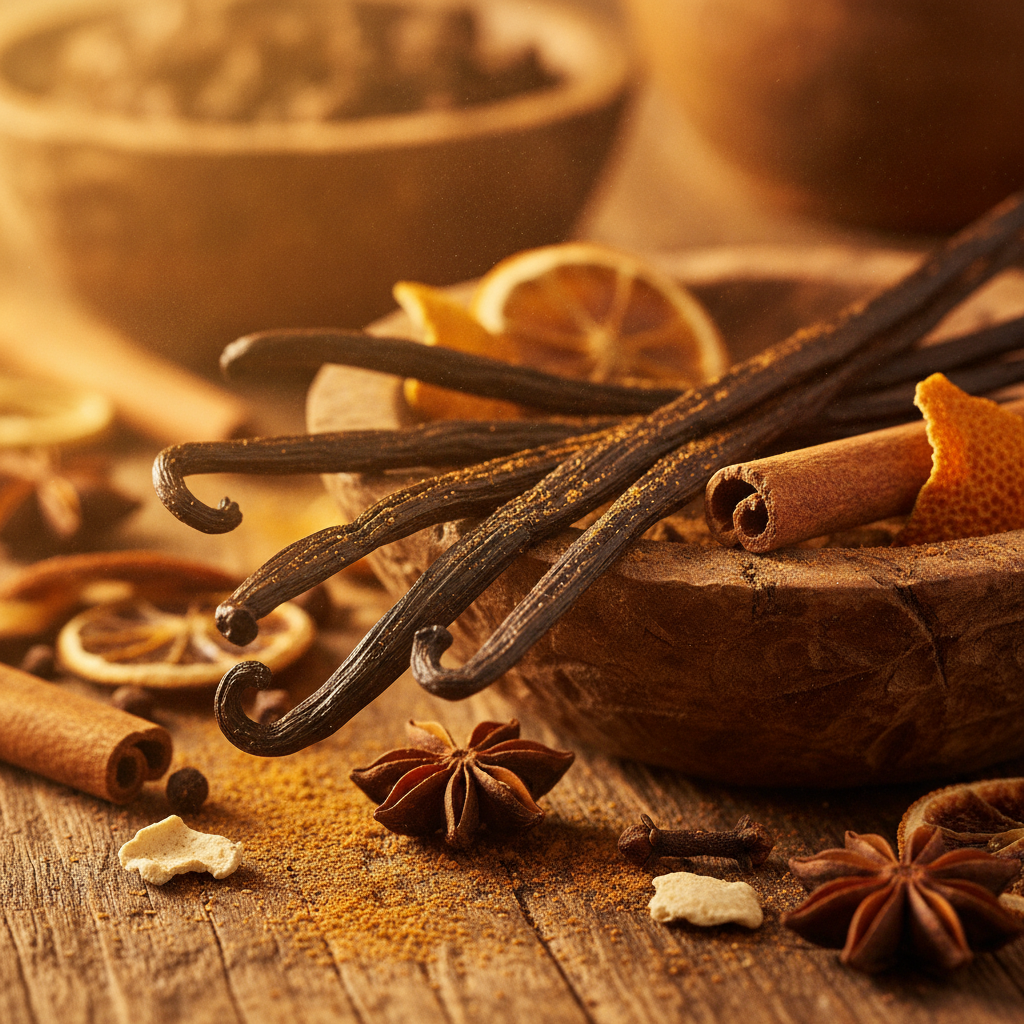
The Enchanting Scent of Vanilla: A Hidden Gem in the Culinary Journey
1. The Allure of Vanilla
Among the countless spices in the world, is there any other aroma that is so universally beloved yet capable of evoking such profound emotion? Vanilla is more than just sweetness; it is a magical fragrance that brings forth warmth, softness, and sometimes, a faint nostalgia. From the comforting aroma emanating from freshly baked bread to the ecstasy found in cold ice cream, and the delicate finish of a luxurious dessert, vanilla, by its mere presence, infuses ordinary food with extraordinary life. Its scent is so multifaceted that it is difficult to define in a single word. Sometimes it’s nutty like caramel, sometimes delicate like a flower, and sometimes it resonates deeply like wood. It's like a well-composed orchestra, where various aromatic notes harmonize to form a perfect symphony. The moment we inhale this scent, we feel both the comfort of being wrapped in a warm blanket and the mystery of being drawn into an unknown world. The allure of vanilla transcends mere gustatory pleasure; it possesses the power to stimulate our senses and memories, enriching the moments of our lives. It is the scent of happiness, the scent of solace, and above all, the scent that etches unforgettable memories.
Vanilla's unique fragrance stems from its primary compound, vanillin, but over 200 other trace compounds complexly interact to complete its rich and subtle aroma. This complexity is why artificial vanilla flavor can never truly capture the depth of natural vanilla. The deep, warm scent that emanates when a natural vanilla bean is split or crushed has the power to evoke happy childhood memories. In the soft custard of crème brûlée, the moist crumb of a madeleine, or the frothy top of a vanilla latte, vanilla quietly asserts its presence, elevating the dish's sophistication. Not just a simple sweetness, but a subtle, elegant, and sometimes even sensual charm, vanilla shines as a true gem in the world of gastronomy.
2. History and Spice Trade
The history of vanilla begins in the ancient, deep forests of Central America. The Totonac people of Mexico were the first to discover and utilize the allure of vanilla. They considered vanilla a sacred plant, using it in religious rituals and adding it to their chocolate drink, 'xocolatl.' When Montezuma II offered this drink to the Spanish conquistador Hernán Cortés, Cortés was captivated by the exotic aroma of vanilla, and thus, vanilla journeyed to Europe on the tide of the Age of Discovery. Introduced to Europe in the 17th century, vanilla was initially reserved for royalty and nobility. It became a symbol of wealth and power, enjoyed with chocolate or used in luxurious desserts and perfumes.
However, for a long time, vanilla remained a mysterious plant that could only be cultivated in Mexico. The reason was that the Melipona bee, native to Mexico, was the only insect capable of pollinating the vanilla orchid. Because of this, Europeans repeatedly tried to cultivate vanilla in Europe or other colonies but failed every time. With vanilla supplies limited to Mexico, its price skyrocketed, and vanilla stood alongside other precious spices like pepper, cloves, and nutmeg as an important commodity in the spice trade. This enigma was dramatically solved in 1841 by Edmond Albius, a 12-year-old enslaved boy on the French island of Réunion. He discovered a method for artificially pollinating the vanilla orchid, a revolutionary event that changed the landscape of global vanilla cultivation. Thanks to Edmond's discovery, vanilla spread to Indian Ocean islands like Madagascar, Réunion, and the Comoros, with Madagascar, in particular, becoming the world's largest vanilla producer today. The history of vanilla is not merely the history of a plant but a dramatic segment of human history, intertwined with colonialism, slavery, and the genius of a young boy.
3. Origin and Cultivation
As mentioned earlier, vanilla's homeland is the eastern coastal region of Mexico, particularly the state of Veracruz. This area boasts a humid and warm climate ideal for growing vanilla orchids. However, today, approximately 80% of the world's vanilla production comes from Madagascar, an island nation off the southeastern coast of Africa. Vanilla is also cultivated in other tropical regions such as Indonesia, Uganda, and Papua New Guinea. Vanilla is a member of the orchid family and a vine, so it grows by climbing other trees. Its cultivation process is extremely delicate and labor-intensive.
The most crucial step is pollination. In Mexico, Melipona bees aid in natural pollination, but in Madagascar and other regions, thanks to Edmond Albius's discovery, all pollination is done by hand. This delicate