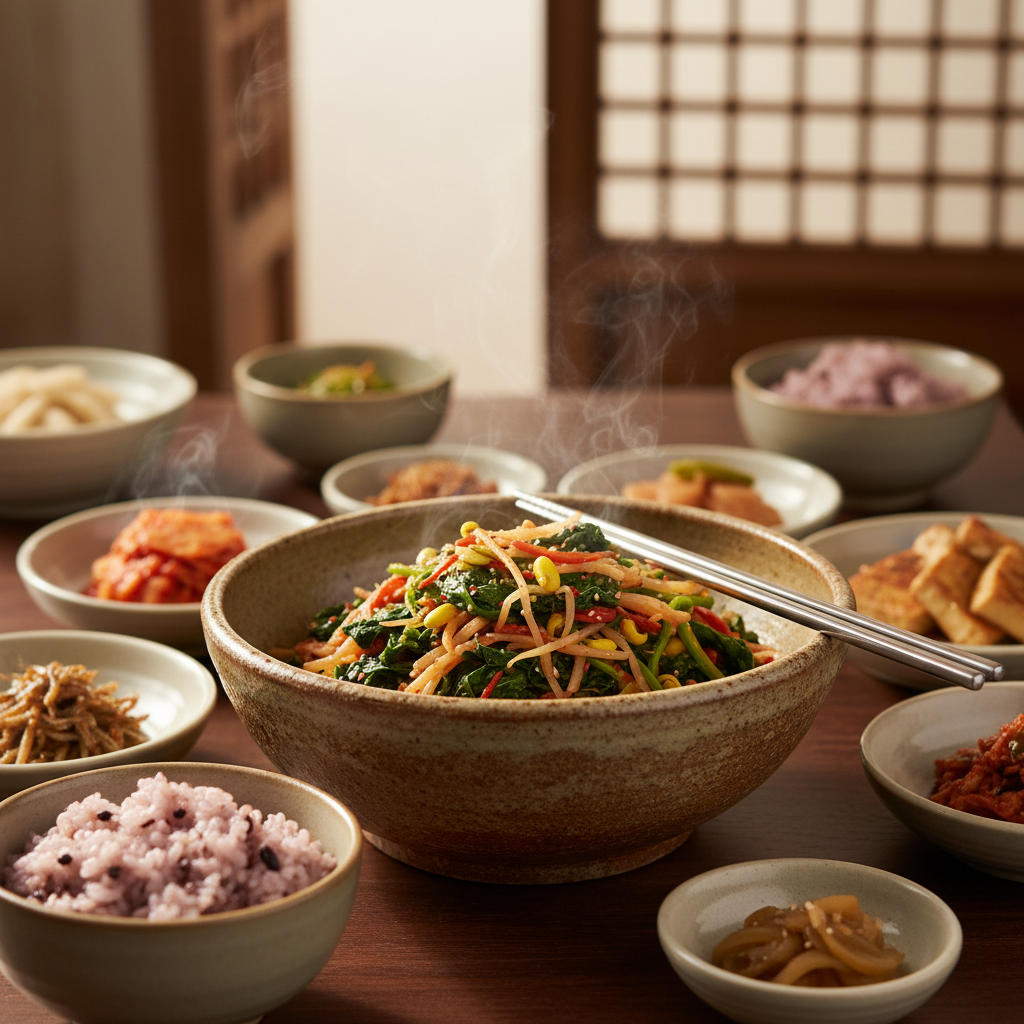
The History and Origins of Namul Muchim
Namul muchim is a traditional Korean dish that reflects the unique culinary culture of Korea. The term "namul" commonly refers to vegetables, particularly green leafy vegetables that grow in the wild, and "muchim" means a preparation method that involves simply seasoning these ingredients with salt, soy sauce, sesame oil, and more. Its history dates back to the Three Kingdoms period, evolving through the Goryeo and Joseon eras. Especially due to the influence of Buddhism, which promoted a vegetable-centric diet avoiding meat, namul muchim became a significant side dish. It's a staple in traditional events like holidays and ancestral rites, symbolizing harmony with nature and a healthy diet beyond mere food.
Authentic Recipe
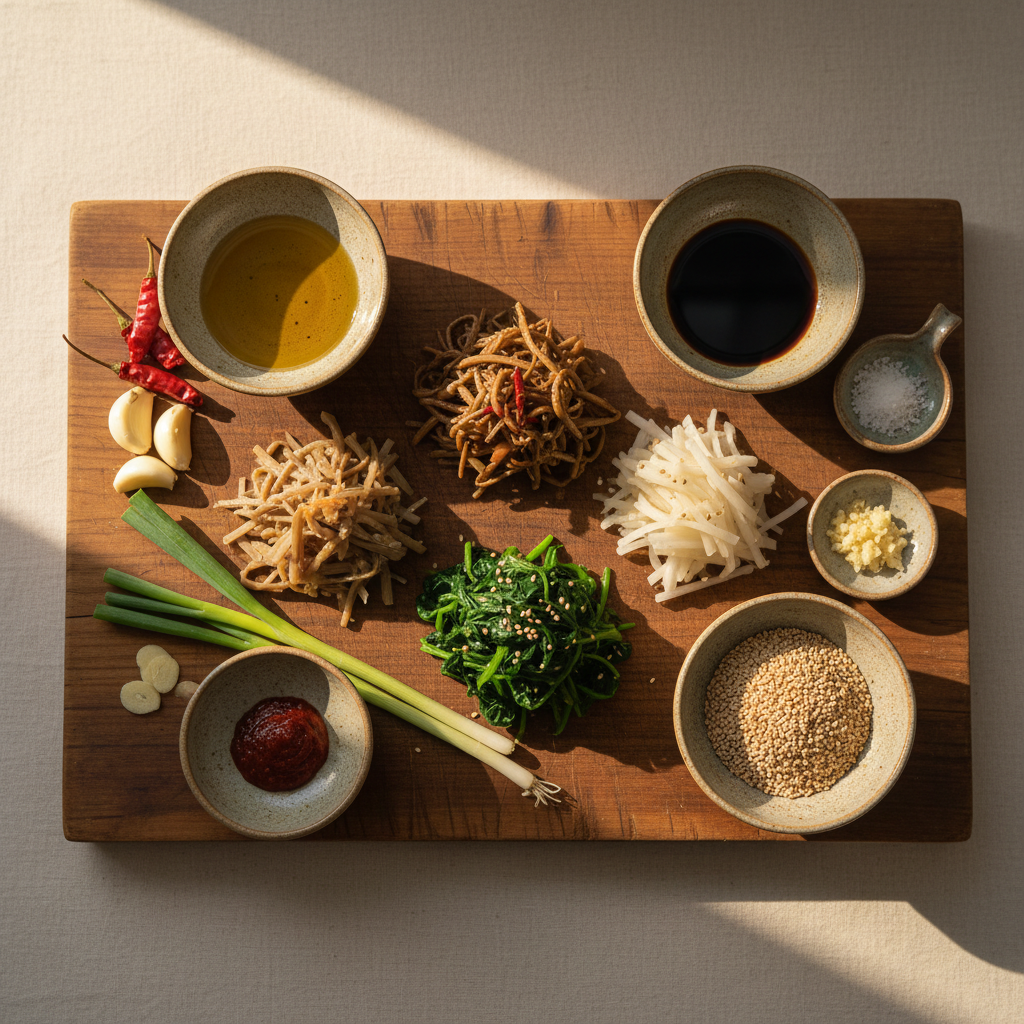
Ingredients
- 200g spinach
- 1 teaspoon salt
- 1 teaspoon minced garlic
- 1 tablespoon sesame oil
- 1 tablespoon soy sauce
- 1 tablespoon sesame seeds
Cooking Instructions
- Wash the spinach thoroughly, then blanch it in boiling water with salt for 30 seconds.
- Rinse the blanched spinach in cold water and squeeze out excess water.
- Cut the spinach into bite-sized pieces and place it in a bowl.
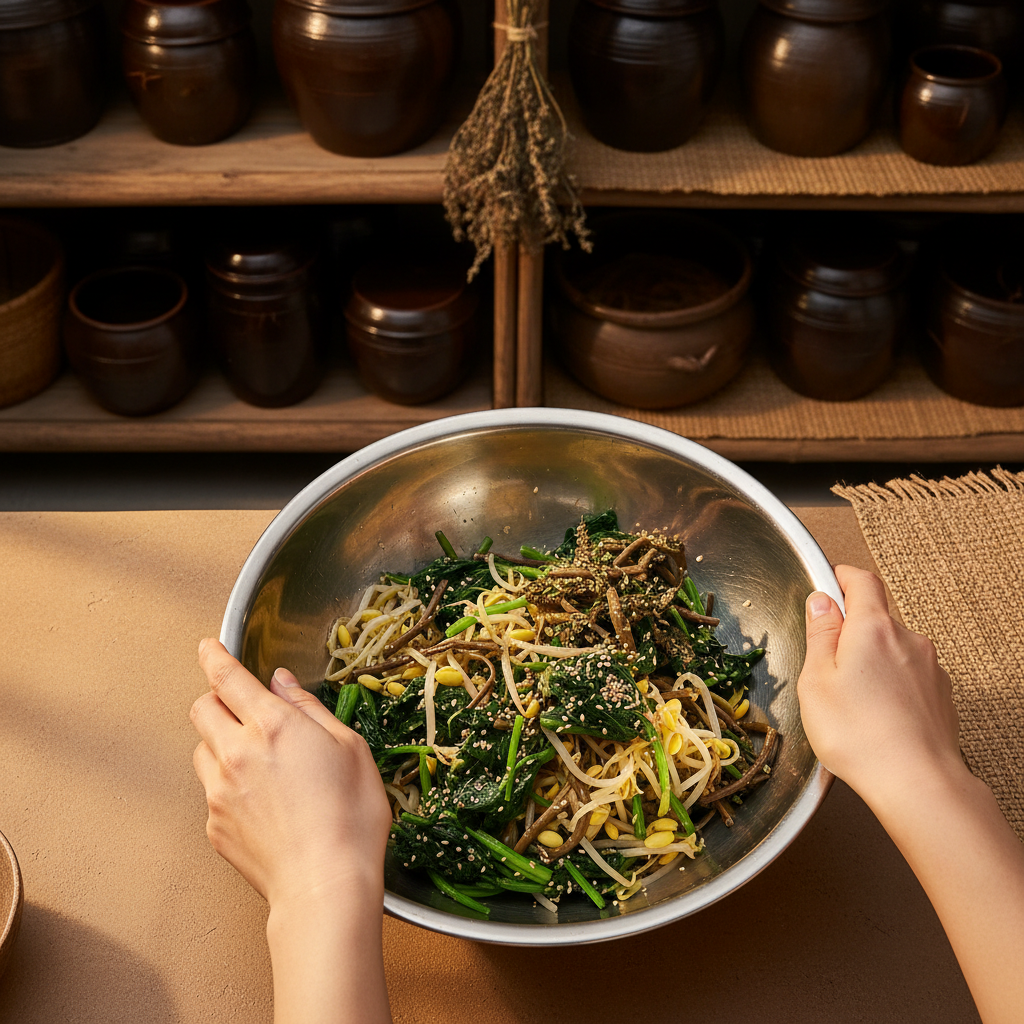
- Add minced garlic, sesame oil, soy sauce, and sesame seeds, then mix gently.
- Transfer to a plate and enjoy.
Taste Characteristics
Namul muchim harmoniously combines the distinct flavors and aromas of each ingredient. The fresh spinach offers a soft yet crisp texture, the sesame oil imparts a rich nutty aroma, and the soy sauce adds depth to the flavor, filling your mouth. The nutty flavor of the sesame seeds further enriches and warms the overall taste. With every bite, you can feel the freshness of nature, while its clean finish enhances your appetite.

Cooking Tips and Secrets
To make even more delicious namul muchim, consider these tips. First, quickly rinse the blanched spinach in cold water to maintain its green color. Second, squeeze out excess water thoroughly to ensure the seasoning is absorbed evenly. Third, add sesame oil at the end to maximize its nutty aroma. These small tricks together create a more delicious and fragrant namul muchim.
Variations on the Recipe
In modern times, you can experiment with various ingredients to transform namul muchim. For instance, try using shepherd's purse or bellflower instead of spinach for a different taste. You can also add chili powder for a spicy kick or incorporate other vegetables like onions for a textural change. As a fusion dish, you can turn namul muchim into a salad by adding balsamic vinegar or lemon juice to accentuate its refreshing taste.
Pairing and Table Setting
Namul muchim pairs well with a variety of Korean meals. It complements rich dishes like doenjang jjigae or kimchi jjigae, making a complete meal when served with rice. Additionally, it pairs well with traditional beverages like makgeolli or baekju, making it an easy side dish to enjoy during a drinking session. Center your meal around namul muchim and complement it with other Korean dishes to savor the harmony of flavors.