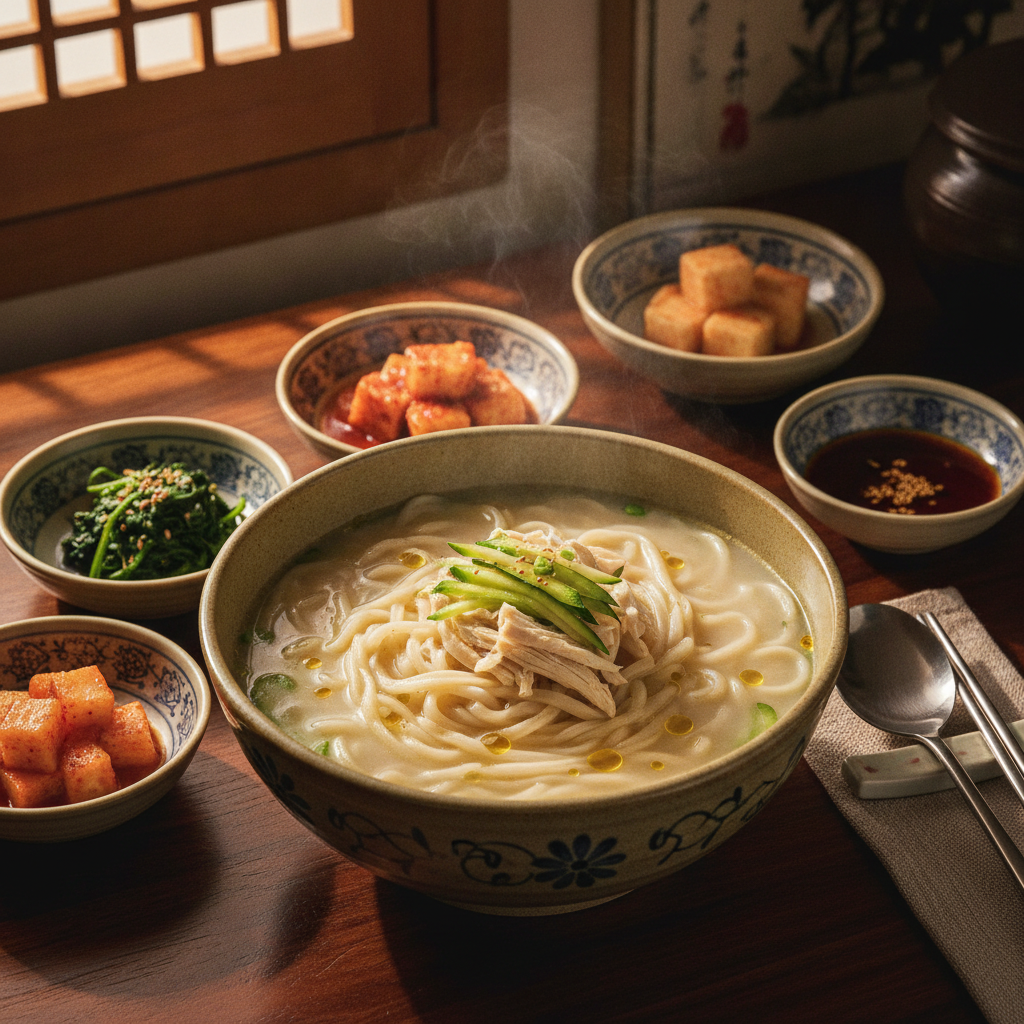
Korean Soul Food, A Deep and Warm Consolation in a Bowl – Authentic Kalguksu
1. History and Origin of Kalguksu
Kalguksu, literally meaning 'knife-cut noodles,' carries a rich history within its simple name. While its exact origins are difficult to pinpoint, traces of noodle dishes made from wheat flour can be found as far back as the Goryeo Dynasty, when wheat became more common. During the Joseon Dynasty, wheat flour was a precious ingredient, making Kalguksu a rare and esteemed dish enjoyed primarily at feasts or on special occasions.
Historical records from the late Joseon Dynasty, such as Lee Gyu-gyeong's 『Oju Yeonmun Jangjeon San'go (五洲衍文長箋散稿)』, mention "noodles made from wheat flour, cut with a knife and boiled in soup," hinting at the existence of Kalguksu. Furthermore, 『Dongguk Sesigi (東國歲時記)』 records that Kalguksu was enjoyed as a summer delicacy. This suggests that Kalguksu, eaten hot and sweaty, served as a hearty meal and a fortifying dish for commoners to endure the summer heat.
After the Korean War, with the large influx of wheat flour as relief aid, Kalguksu became more accessible to the everyday tables of ordinary people. Inexpensive and nutritious wheat flour provided great comfort to those suffering from hunger, and Kalguksu, being simple yet filling, naturally became a popular dish. Particularly, Kalguksu based on anchovy broth developed into various regional specialties across the country, earning much love as a local delicacy. Today, Kalguksu transcends a mere meal; it has established itself as a quintessential Korean soul food, offering warm solace and cherished memories. Kalguksu, often craved on rainy or chilly days, is a dish deeply connected to the Korean psyche. Having stood by Koreans for centuries, Kalguksu continues to be cherished for the profound flavor hidden within its humble appearance.
2. Authentic Recipe
Ingredients (for 4 servings)
- Noodle Dough: 300g strong flour, 100g all-purpose flour, 180ml water (adjust as needed), 5g salt, 1 tbsp cooking oil (optional, for dough)
- Broth: 20g dried anchovies (for broth), 2 sheets dried kelp (10x10cm), 100g Korean radish, 1 white part of green onion, 1/2 onion, 2.5L water
- Toppings & Additional Ingredients: 1/2 zucchini, 1 potato, 1/4 carrot, 2 shiitake mushrooms, 1/2 green onion, 1 tbsp minced garlic, 1-2 tbsp Korean soy sauce (for soup, adjust to taste), pinch of salt, pinch of black pepper, a little shredded gim (seaweed), a little sesame seeds
Detailed Cooking Instructions
- Prepare the Noodle Dough:
In a large bowl, combine strong flour, all-purpose flour, and salt. Gradually add water and begin kneading. Knead for about 10 minutes until the dough comes together and no longer sticks to your hands. Optionally, add a tablespoon of cooking oil at the end of kneading for a chewier and smoother texture. Once the dough is formed, cover it with plastic wrap or a damp cloth and refrigerate for at least 30 minutes (1 hour or more is even better).
- Make the Broth:
Pour 2.5L of water into a pot. Add dried anchovies (guts removed), kelp, Korean radish, the white part of the green onion, and onion. Bring to a boil over high heat. Once boiling, remove the kelp (to prevent bitterness), then reduce heat to medium-low and simmer for another 20 minutes. When sufficiently flavored, remove all solids, leaving only the clear broth.
- Prepare Toppings:
Julienne the zucchini, potato, carrot, and shiitake mushrooms. Slice the green onion diagonally. Soak the julienned potato in cold water to remove excess starch for a cleaner taste.
- Slice the Noodles:
Take the rested dough out and place it on a generously floured cutting board. Roll it out thinly with a rolling pin, continuously dusting with flour to prevent sticking, until it's about 2mm thick. Fold the rolled dough like an accordion, then slice it uniformly into about 0.5cm wide strips. Gently loosen the cut noodles and dust with flour to prevent sticking.
- Cook Kalguksu:
Bring the prepared broth back to a boil. Add the julienned potatoes first and cook until partially tender. Once the potatoes are half-cooked, add the sliced noodles, gently stirring with chopsticks to prevent them from sticking together. When the noodles start to become translucent, add zucchini, carrots, shiitake mushrooms, and minced garlic, and bring to a simmer again. Cook until the noodles are fully done (about 5-7 minutes). Season with Korean soy sauce and salt to taste, then add the green onion and finish.
- Serve:
Ladle the hot Kalguksu into bowls. Garnish with shredded gim and sesame seeds as desired. If you prefer a spicier taste, a sprinkle of chopped green chili or chili powder can be added.
3. Flavor Characteristics
The flavor of authentic Kalguksu can be described in one word: 'deep and warm comfort.' The texture of freshly made noodles offers a unique experience unlike any other noodle dish. Hand-kneaded and knife-cut noodles boast an irregular yet incredibly chewy elasticity that machine-made noodles simply cannot replicate. The first bite is soft and comforting, then the delightful chewiness that builds with each bite fills your mouth with pleasure.
The broth is the heart of Kalguksu's flavor. Carefully simmered with anchovies and kelp as a base, along with seasonal vegetables like radish, green onion, and onion, the broth is clear yet rich in umami. Its subtle oceanic notes and the sweetness of vegetables blend harmoniously without being overpowering, offering a sense of calm with every sip. This broth, combined with the noodles, creates a richer layer of flavor, integrating with the inherent flour aroma of the noodles.
Adding to this are diverse toppings such as zucchini, potato, and shiitake mushrooms, which provide not only visual appeal but also contribute their unique flavors and aromas to the broth, creating a more complex taste profile. The tender, floury texture of cooked potatoes, the crispness of zucchini, and the chewiness of mushrooms achieve a perfect balance within a single bowl. Finally, a sprinkle of shredded gim or sesame seeds enhances the savory notes, completing a perfect bowl of Kalguksu. Though it may appear humble, a bowl of Kalguksu encapsulates the warmth, sincerity, and harmonious depth of flavor found on a Korean dining table.
4. Cooking Tips and Secrets
"The secret to great Kalguksu begins with great noodles, and great noodles begin with sufficient resting."
One of the most crucial factors determining the taste of Kalguksu is the noodles themselves. Here are my secrets to making chewy and soft noodles