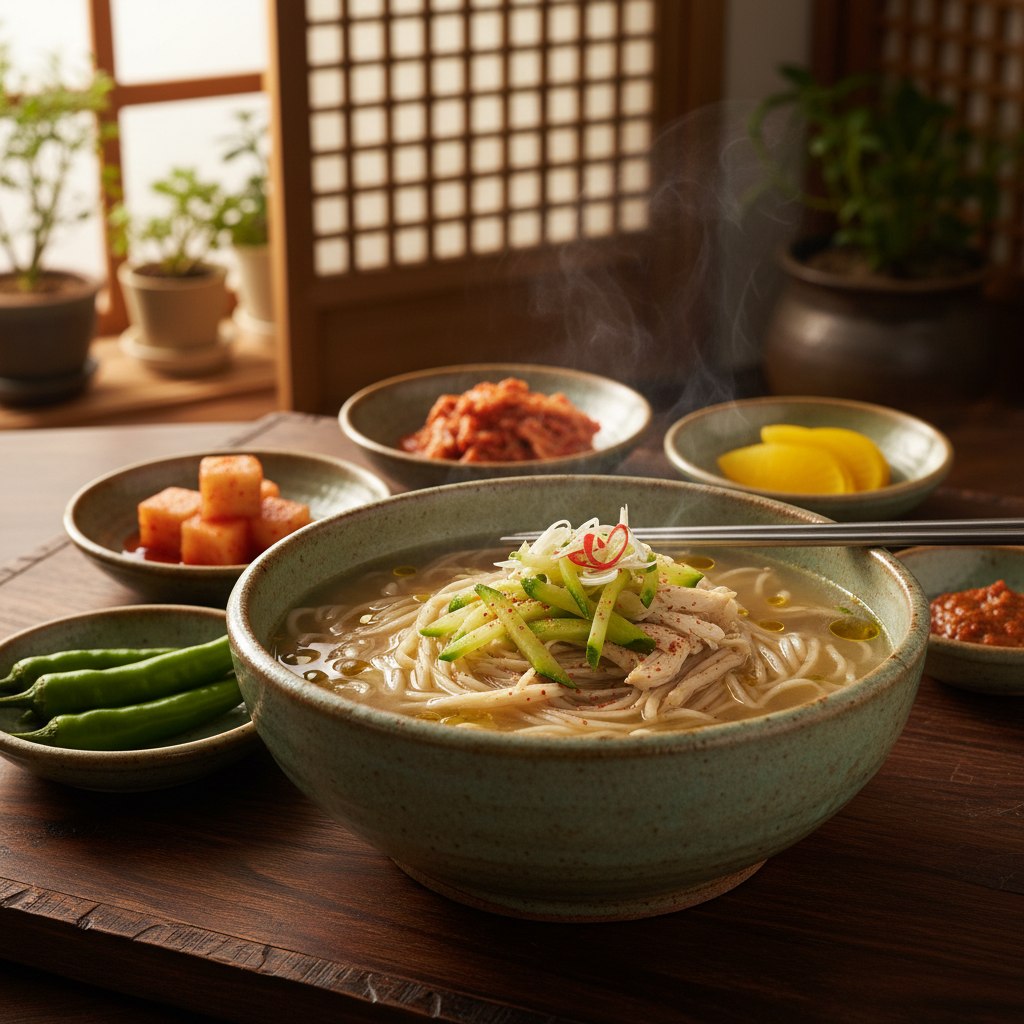
History and Origin of Kalguksu
Kalguksu is a traditional Korean noodle dish that dates back to the Goryeo dynasty. Initially a delicacy enjoyed by the nobility due to the scarcity of wheat flour, it became more widely consumed by the general public during the Joseon period. The name 'kalguksu' derives from the method of hand-rolling the dough and cutting it into long strips with a knife. In Korean food culture, kalguksu has been cherished for its simple yet deep broth, captivating people across all social classes. Different regions have developed their own unique kalguksu styles by adding seasonal ingredients.
Authentic Recipe
Ingredients (Serves 4)
- Flour: 400g
- Water: 200ml
- Salt: 1 teaspoon
- Dried anchovies for broth: 100g
- Kelp: 1 sheet
- Zucchini: 1
- Onion: 1/2
- Minced garlic: 2 tablespoons
- Green onion: 1 stalk
- Soy sauce: 2 tablespoons
- Pepper: to taste
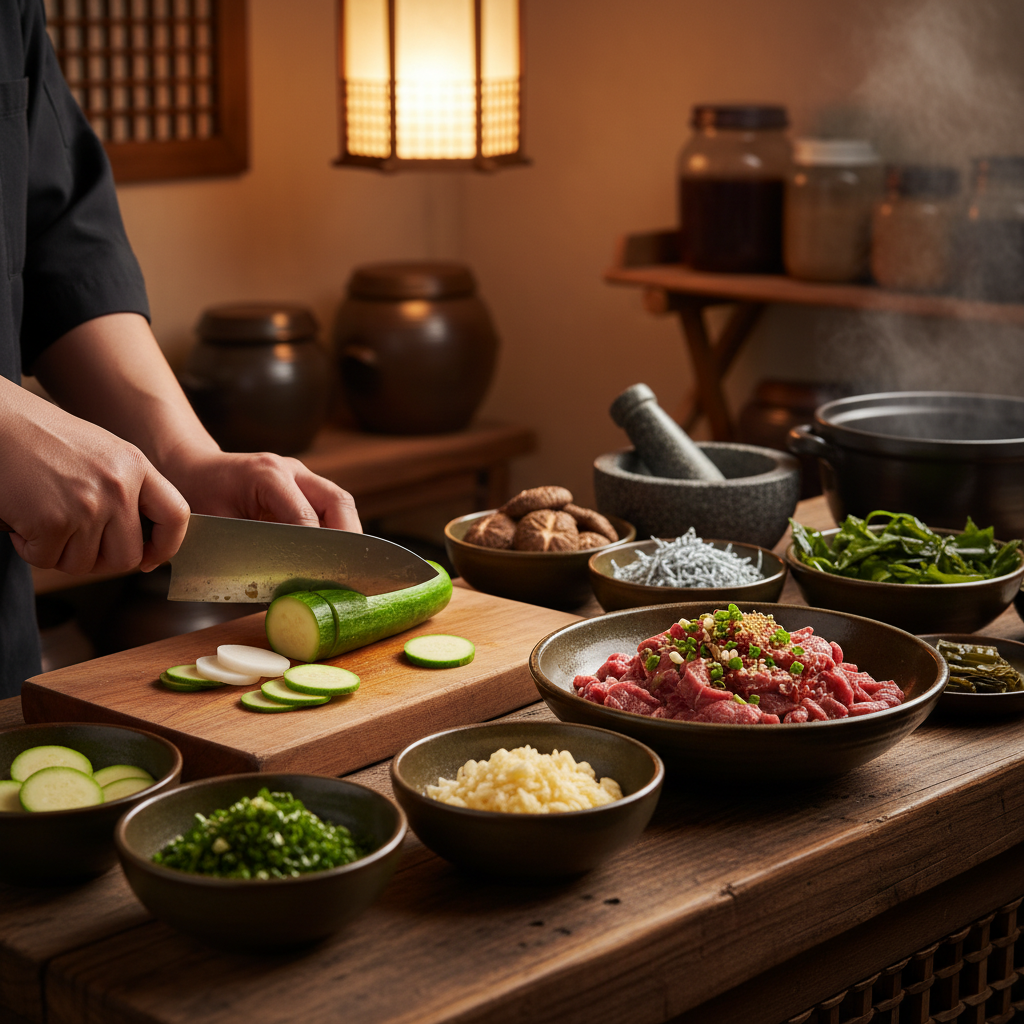
Cooking Method
- Mix flour with water and salt, kneading it into a dough and let it rest for 30 minutes.
- Roll the dough out thinly and cut it into long strips to make the noodles.
- In a pot, boil 2 liters of water with anchovies and kelp for 20 minutes to make the broth.
- Remove the anchovies and kelp, then add zucchini, onion, and minced garlic to the broth and bring to a boil.
- Add the noodles and cook thoroughly, seasoning with soy sauce and pepper to taste.
- Slice the green onion thinly and garnish before serving.
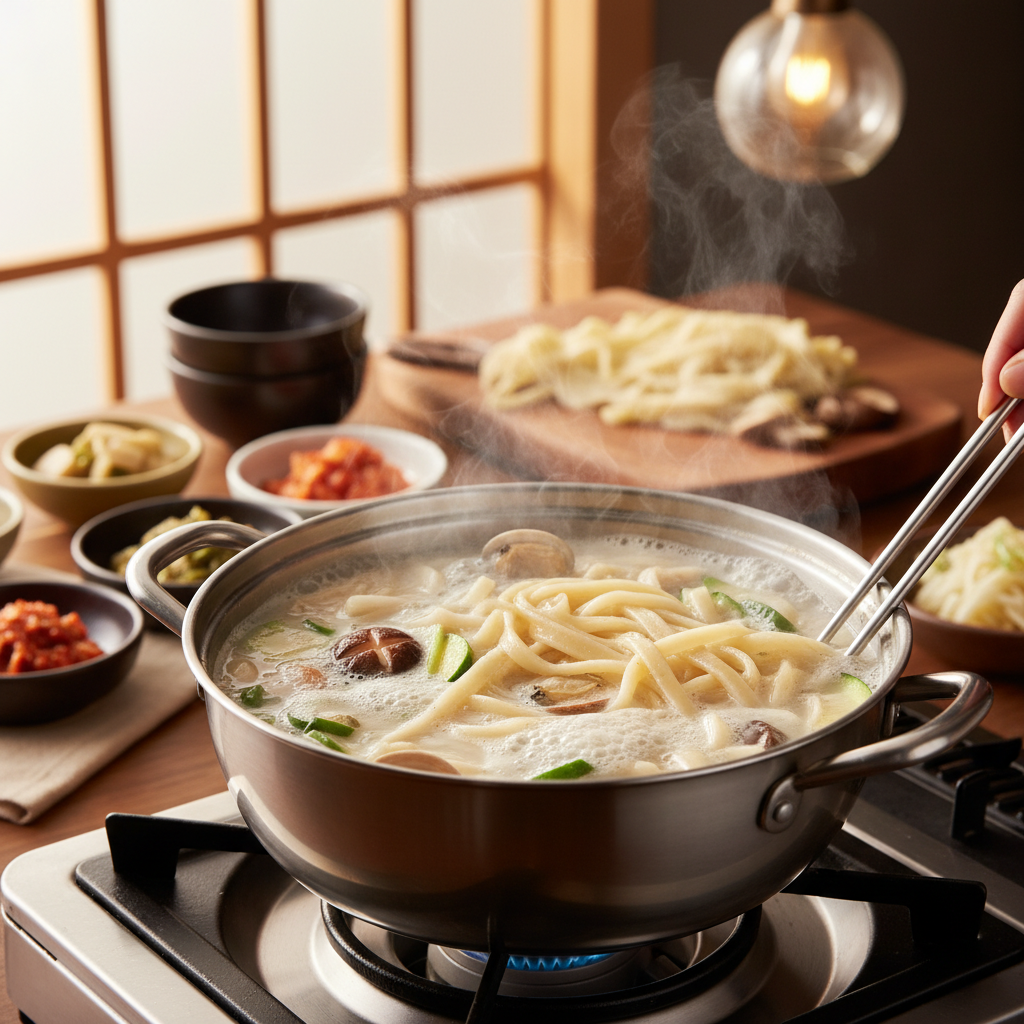
Flavor Characteristics
Kalguksu is celebrated for the harmony between its soft noodles and rich broth. The hand-made noodles are chewy and elastic, offering a delightful texture that pairs exquisitely with the broth. The broth, made from anchovies and kelp, is full of umami, with the sweetness of zucchini and onion adding a clean yet profound taste. Topped with green onions and a hint of pepper, it adds a refreshing aroma, enhancing the overall flavor experience.
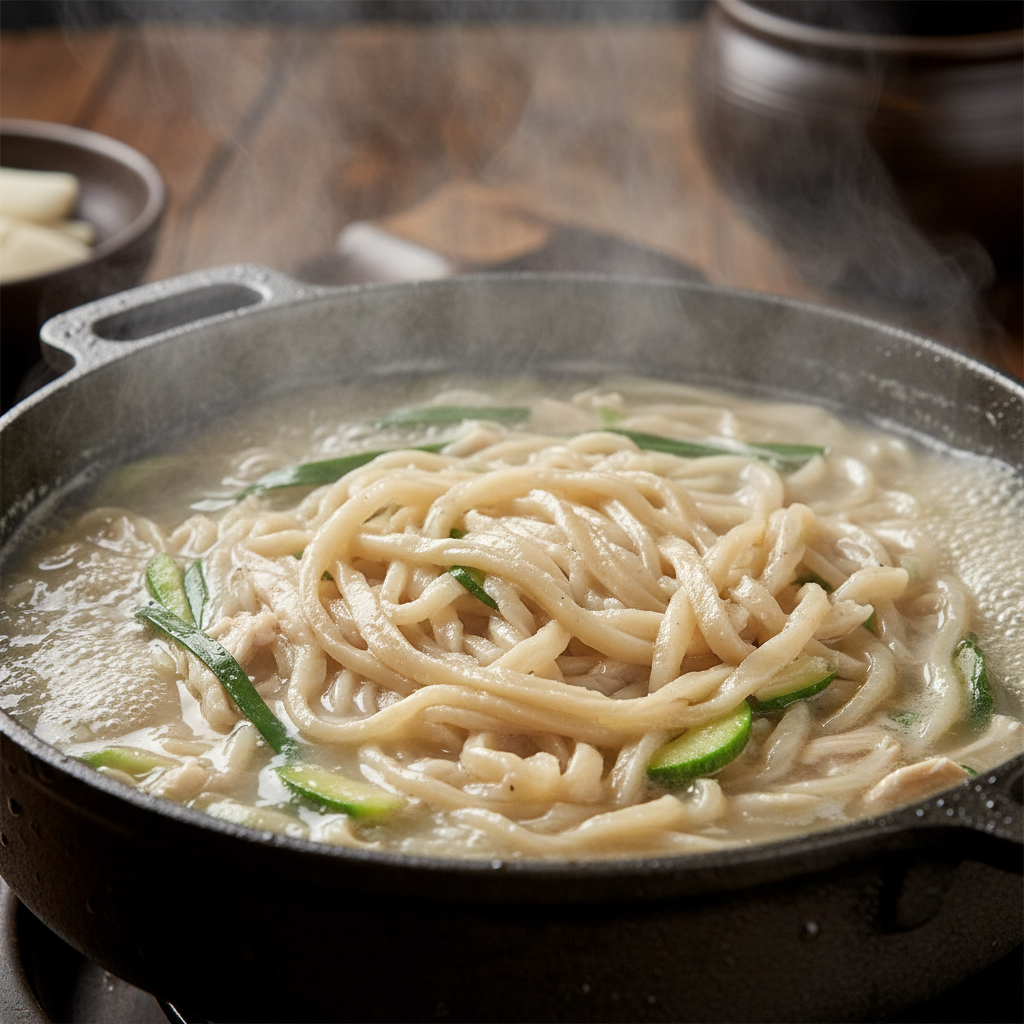
Cooking Tips and Secrets
There are several tips to further enrich the flavor of kalguksu. First, let the noodle dough rest in the refrigerator for half a day or more. This allows the gluten to develop, resulting in chewier noodles. Second, lightly fry the anchovies in oil before adding them to the broth for a deeper flavor. Finally, taste the broth before adding soy sauce to adjust the seasoning with salt, preserving the delicate taste.
Variations on the Recipe
In modern times, kalguksu has been adapted in numerous ways. For seafood lovers, shrimp or clams can be added to create seafood kalguksu. A vegetable-rich version can also be made by adding a variety of vegetables. You can enhance the creaminess by whisking an egg into the broth, or if you prefer a spicy kick, add red pepper flakes or chili peppers for a spicy kalguksu. As a fusion dish, creamy kalguksu using cream sauce is also popular.
Side Dishes and Table Setting
Kalguksu is often enhanced by accompanying side dishes. Fermented vegetables like kimchi or radish kimchi pair well with the rich broth, providing a refreshing contrast. Additionally, dishes like soy sauce marinated crab or simple vegetable side dishes can complete a hearty meal. If you'd like to enjoy it with an alcoholic drink, makgeolli, a traditional Korean rice wine, is recommended as it complements the light taste of kalguksu perfectly. The overall table setting remains simple yet fulfilling, embodying the virtues of Korean cuisine.