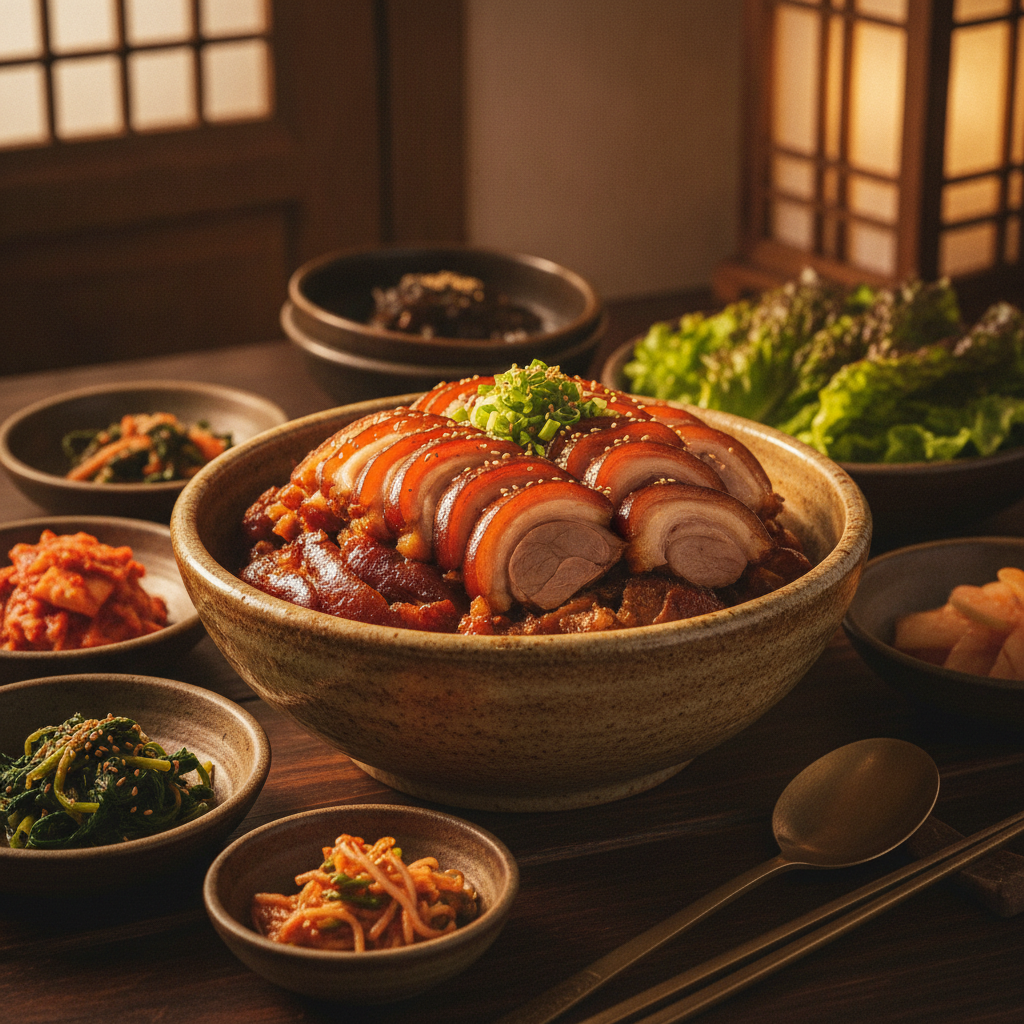
History and Origin of Jokbal
Jokbal is not merely a dish of boiled pig's trotters, but a food deeply rooted in the history and joys and sorrows of the Korean people. While its exact origins are difficult to pinpoint, records of dishes using pig's trotters in Joseon Dynasty literature suggest that it has been enjoyed for a considerable time. Jokbal became a popular dish, as we know it today, particularly after the Japanese colonial period, liberation, and the Korean War, when it served as an important source of protein and nutrition for commoners.
During those economically difficult times, pig's trotters were relatively inexpensive, and by boiling them for a long time with soy sauce and various spices, they became a hearty meal for the whole family. Especially, Seoul's Jangchung-dong Jokbal Alley, formed in the 1950s, became a symbolic space for Korean Jokbal culture. The Jokbal restaurants there evolved from street vendors started by refugees after the war to make a living, gaining fame and love from many for Jokbal's unique chewy texture and savory taste. Jokbal was more than just a dish to fill one's stomach; it was a soul food that offered comfort and joy amidst difficult lives.
Jokbal also held the meaning of a 'feast food' in Korean culinary culture. In the past, it was a rare delicacy, enjoyed only when entertaining honored guests or on special occasions like holidays and birthdays. When a pig was slaughtered, every part was used, but Jokbal, rich in collagen, became particularly popular among women for its purported benefits to skin beauty, and among the elderly for aiding joint health, making it a dish enjoyed by all ages.
Today, Jokbal is synonymous with delivery food, a staple for company dinners, and a popular late-night snack. It provides a convenient yet nutritious meal for busy modern people and serves as a precious medium for sharing affection with friends and family. Each piece of Jokbal embodies the wisdom and warm affection of the Korean people that has been passed down for decades, even centuries.
Authentic Recipe
Ingredients List
- 2 pig front trotters (for Jokbal) (approx. 2.5kg)
- 1 tbsp whole black peppercorns
- 5 bay leaves
- 10 cloves garlic (whole)
- 2 stalks green onion (white parts mostly)
- 1 piece ginger (approx. 30g)
- 1 onion
- 3 dried red chilies (optional)
- 3 liters water
Soy Sauce Seasoning Ingredients
- 1.5 cups soy sauce (300ml)
- 1 cup dark brown sugar (200g)
- 1/2 cup corn syrup (100ml)
- 1/2 cup mirin (100ml)
- 1 tbsp doenjang (fermented soybean paste)
- 1 tsp coffee powder (for odor removal and color)
Detailed Cooking Steps
Prepare and Bleed the Pig's Trotters
Wash the pig's trotters thoroughly under running water, remove any hair, and make incisions to clean deeply. Place the trotters in a large pot, cover with water, and boil for about 10 minutes. Adding 1/2 tbsp whole black peppercorns and 2 bay leaves at this stage is effective for removing gamey odors. After the initial boil, drain the trotters, rinse them thoroughly with cold water to remove impurities, and completely bleed them. This step is crucial for eliminating gamey odors and achieving a clean taste, so soak them in cold water for at least 2 hours, changing the water 2-3 times.
Prepare Aromatic Vegetables
Roughly chop the green onions. Halve the onion, keeping the skin on. Slice the ginger. The whole garlic cloves can be used with their skin.
First Boil of Jokbal
In a large pot, place the prepared trotters, whole black peppercorns, bay leaves, whole garlic, green onions, ginger, onion, and dried red chilies. Pour in 3 liters of water. Bring to a boil over high heat, then reduce to medium heat and simmer for about 1 hour and 30 minutes. During this process, the basic broth for the Jokbal will develop, and the meat will begin to tenderize.
Make Soy Sauce Seasoning
In another pot, combine soy sauce, dark brown sugar, corn syrup, mirin, doenjang, and coffee powder. Mix well. Doenjang and coffee powder play a significant role in eliminating the characteristic gamey smell of pork and adding a deep umami flavor and appetizing color.
Second Boil of Jokbal (with Soy Sauce Seasoning)
Remove the trotters