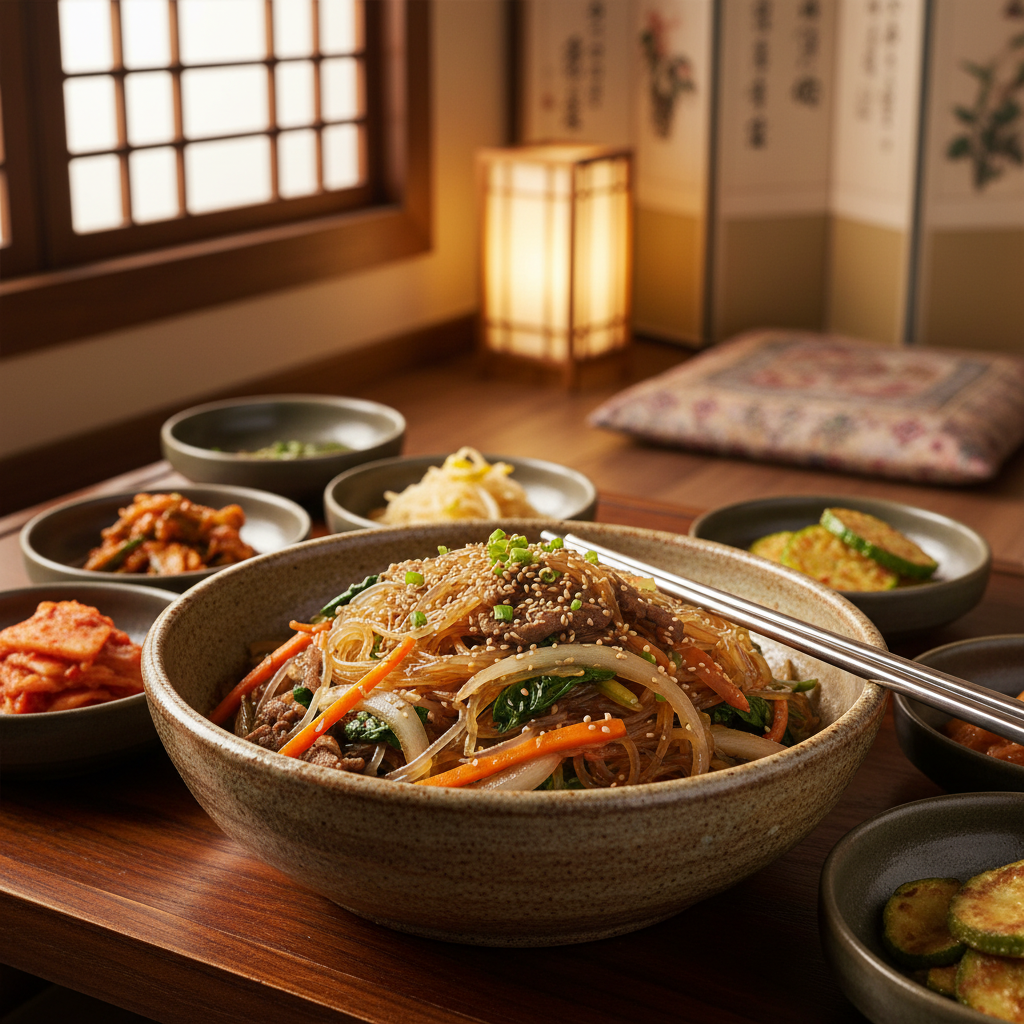
The History and Origins of Japchae
Japchae first appeared during the Joseon Dynasty, originally crafted in the royal court to entertain distinguished guests. Initially, it was a dish combining vegetables and meat, but later, glass noodles were added, forming today's classic version. With its vibrant colors and flavors, Japchae has become an indispensable dish for feasts and special occasions. In Korean cuisine, the name 'Japchae' meaning 'to mix' signifies the harmonious blend of diverse ingredients in this iconic dish.
Authentic Recipe
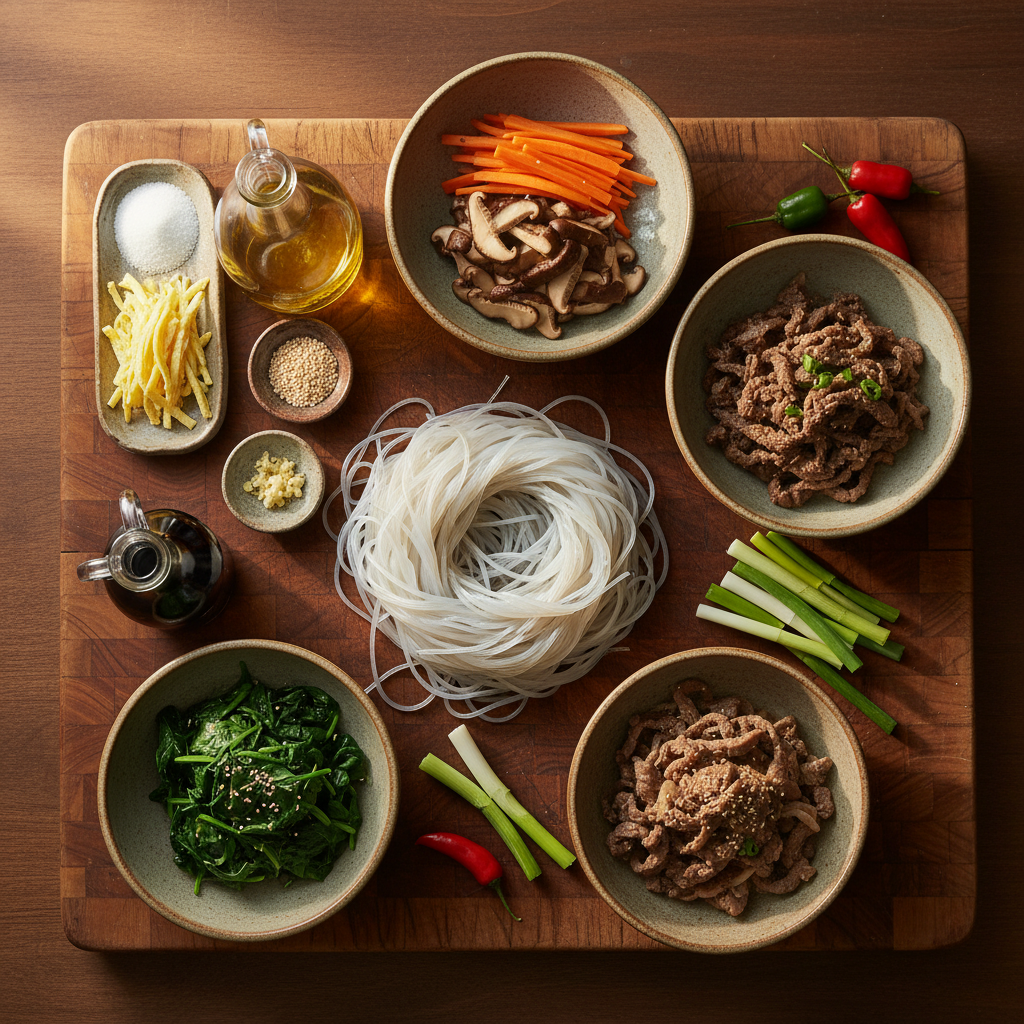
Ingredients
- Glass noodles (Dangmyeon) 200g
- Beef (sliced) 150g
- Spinach 100g
- 1 Carrot
- 1 Bell Pepper
- 1 Onion
- 3 Shiitake Mushrooms
- Soy Sauce 5 tbsp
- Sugar 2 tbsp
- Sesame Oil 2 tbsp
- Minced Garlic 1 tbsp
- Salt, Pepper to taste
- Sesame Seeds for garnish
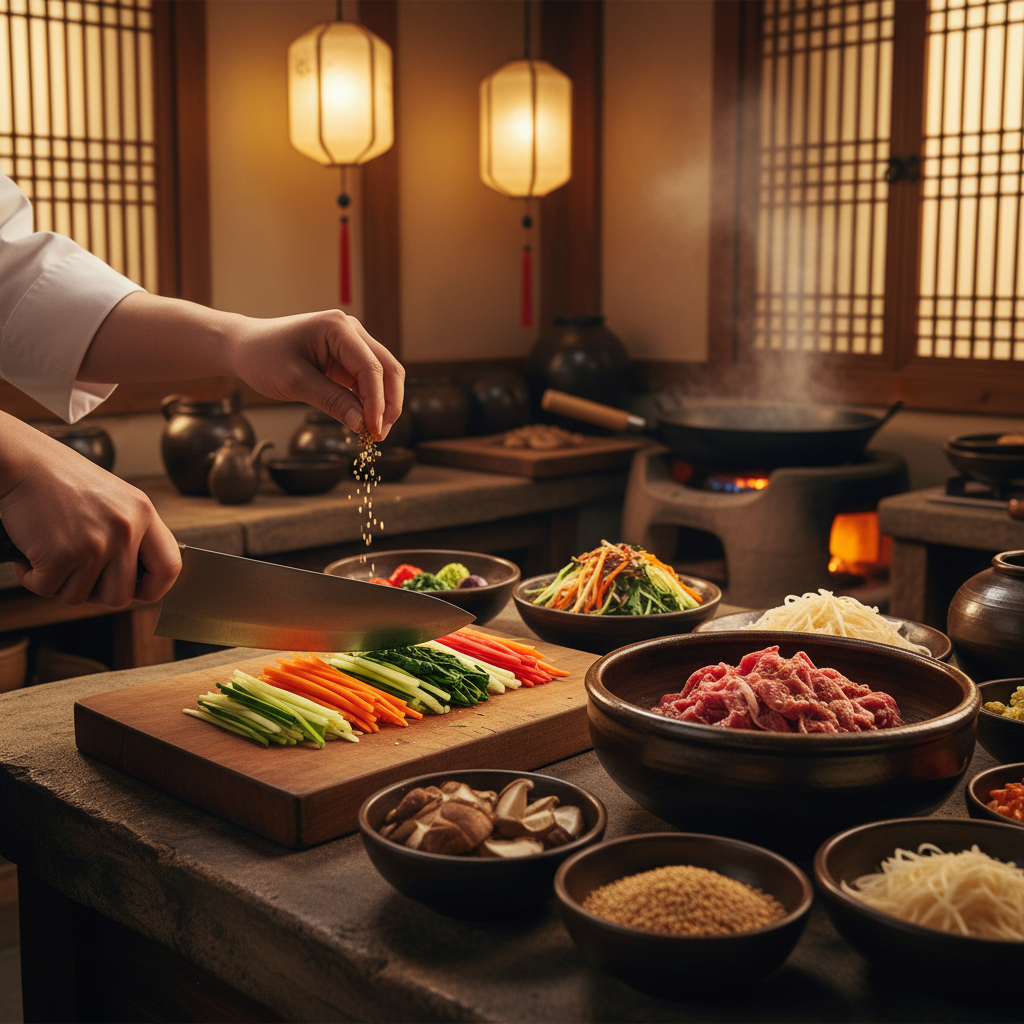
Instructions
- Boil glass noodles in boiling water for about 6-7 minutes, then rinse with cold water and drain.
- Marinate beef with 1 tbsp soy sauce, 1 tsp sugar, and 1 tsp minced garlic.
- Blanch spinach in salted water, squeeze out water, and season with sesame oil and salt.
- Thinly slice the carrot and bell pepper, and slice shiitake mushrooms after removing the stems.
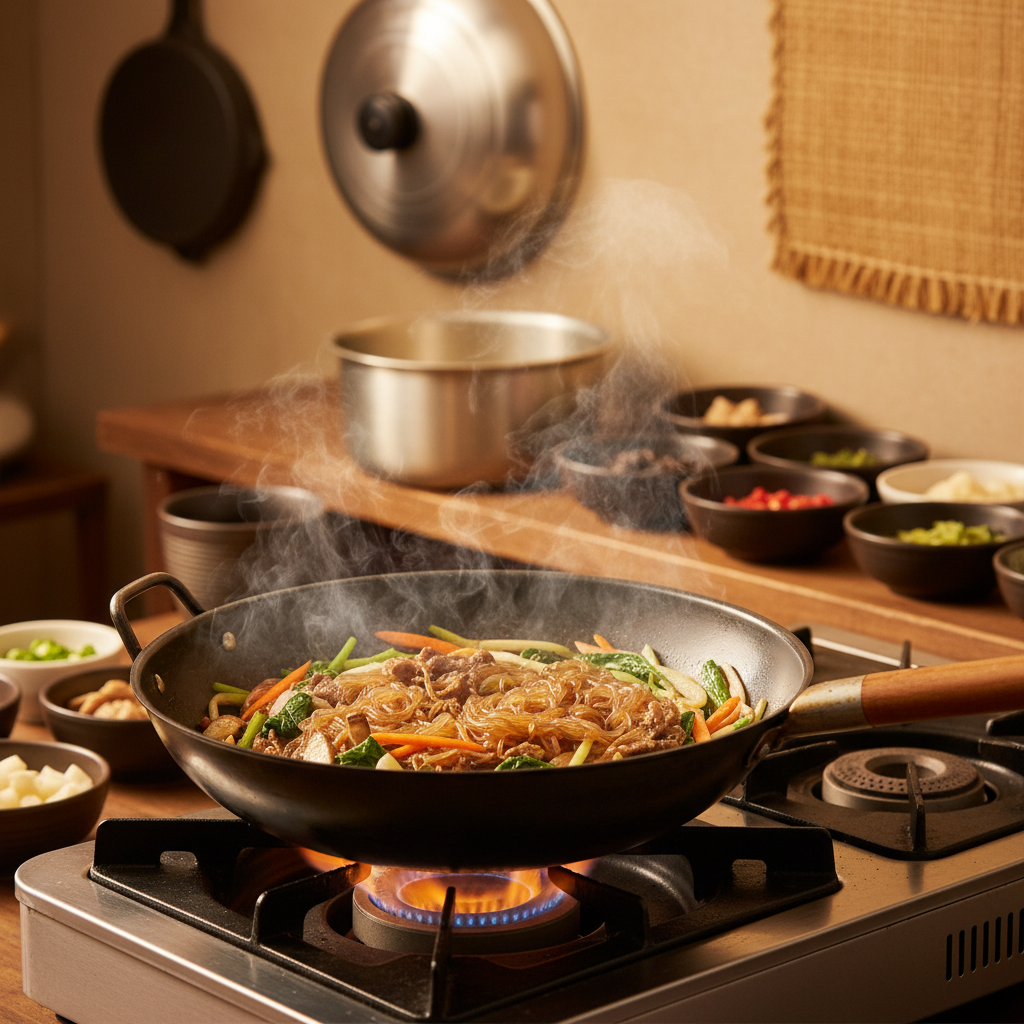
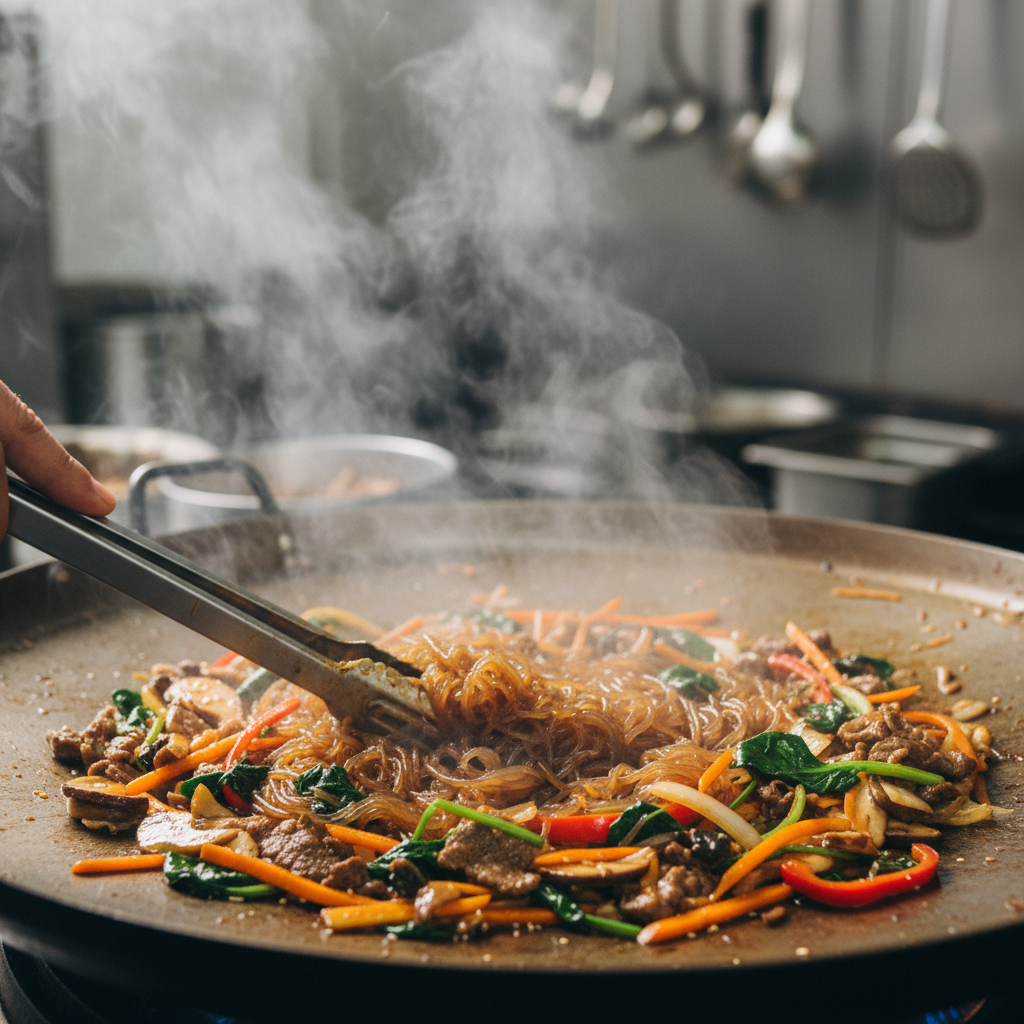
- In a pan, lightly fry the onion, carrot, bell pepper, and shiitake mushrooms separately.
- In the same pan, cook the marinated beef, then combine all ingredients, adding soy sauce, sugar, and sesame oil.
- Finally, add the noodles, mix well, and sprinkle sesame seeds before serving.
Taste Characteristics
Japchae offers a complex blend of flavors with its medley of ingredients. The chewy texture of the noodles harmonizes with the tender beef, complemented by the crispness of various vegetables. The umami of soy sauce and sweetness of sugar merge seamlessly, creating a sophisticated taste, while the nutty aroma of sesame oil brings the entire dish together.
Cooking Tips and Secrets
The secret to an even more delicious Japchae lies in the preparation and cooking sequence of ingredients. Rinsing the noodles in cold water ensures their chewy texture, and separately stir-frying ingredients before combining is key to preserving their distinct flavors. Adding sesame oil at the end enhances its aroma, elevating the dish's overall flavor profile.
Recipe Variations
Modern variations of Japchae can include seafood or tofu to create different flavors. Adding shrimp or squid introduces a seafood twist, while tofu highlights a milder taste. For a healthier option, gluten-free glass noodles can be used, catering to dietary preferences without compromising on taste.
Pairings and Serving Suggestions
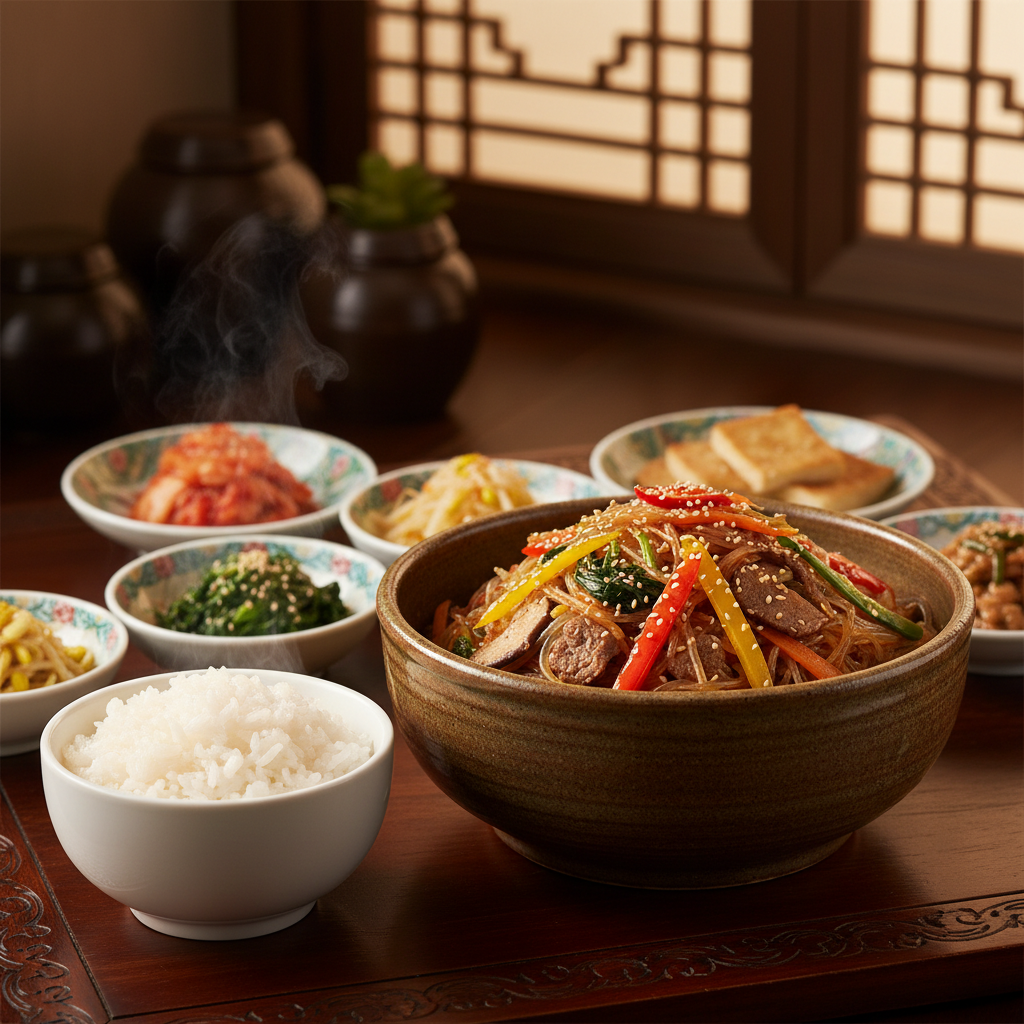
While Japchae is delightful on its own, it pairs well with refreshing side dishes like kimchi or radish salad. It can be enjoyed with rice or, for special occasions, accompanied by traditional Korean liquor. When setting the table, including side dishes of various colors can enhance the visual appeal of the meal, making it a feast for the eyes and the palate.