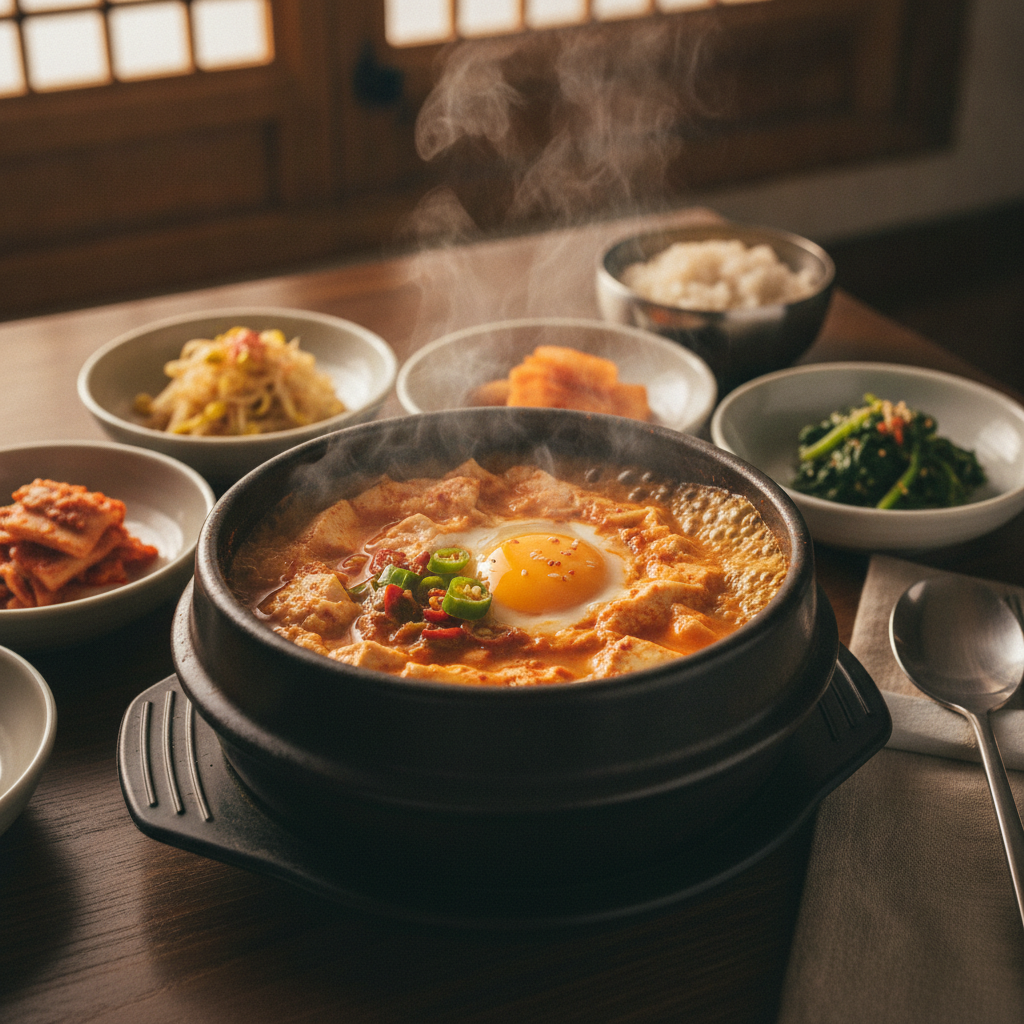
The History and Origin of Sundubu Jjigae
Sundubu Jjigae, as its name suggests, is a stew dish whose main ingredient is 'sundubu' (soft tofu). The history of tofu dates back to the Three Kingdoms period, but the form of Sundubu Jjigae we know today is believed to have been perfected relatively recently. Especially after the 1960s, with economic growth and the development of dining out culture centered in large cities, Sundubu Jjigae, which was inexpensive, nutritious, and hearty, began to gain popularity among common people. Sundubu, the soft, uncoagulated state of tofu during its making process, possesses a naturally savory and mild flavor, making it versatile in various dishes. Sundubu Jjigae maximizes the charm of this soft tofu by cooking it with spicy seasoning, seafood, and meat, establishing itself as a representative common people's food that offers warm comfort and sustenance to those weary from busy daily lives. Beyond just a meal, it holds deep meaning as a soul food that shares the joys and sorrows, and sentiments of Koreans. Especially on a cold winter day, a piping hot bowl of Sundubu Jjigae has a magical power to melt a frozen body and warm the heart. Sundubu Jjigae, which has evolved to suit the Korean palate that loves spicy and salty flavors, is now expanding beyond Korea to become a global Korean dish that captivates taste buds worldwide. The fact that it can be infinitely varied by using local specialties or adding various ingredients according to personal preference is also one of the reasons why Sundubu Jjigae has been loved for a long time. It embodies not just a taste, but the wisdom and daily life of Koreans.
Authentic Recipe
Ingredients List (for 2 servings)
- 1 pack (approx. 350g) soft tofu (sundubu)
- 100g pork (pork neck or front leg, minced or thinly sliced)
- 100g clams (purged)
- 1/4 onion
- 1/2 stalk green onion
- 1 Cheongyang chili pepper
- 1/2 red chili pepper
- 1 egg
- 2 tablespoons cooking oil
- 1 teaspoon sesame oil (optional)
- 300ml water or anchovy-kelp broth
Seasoning Paste Ingredients:
- 2 tablespoons gochugaru (Korean chili powder, 1 coarse, 1 fine)
- 1 tablespoon minced garlic
- 1 tablespoon gukganjang (Korean soup soy sauce)
- 1 teaspoon saeujeot (salted shrimp, or a pinch of salt)
- 1/2 teaspoon sugar
- A pinch of black pepper
Detailed Cooking Steps
- Prepare Ingredients:
Cut pork into bite-sized pieces or prepare as minced meat. Slice the onion, and diagonally slice the green onion, Cheongyang chili pepper, and red chili pepper. Purge the clams in advance. Score the sundubu into appropriate sizes or leave as is.
- Make Seasoning Paste:
In a bowl, combine gochugaru, minced garlic, gukganjang, saeujeot, sugar, and black pepper, then mix well to make the seasoning paste. Using a mix of coarse and fine gochugaru helps achieve both good color and deep flavor.
- Sauté Ingredients:
Heat cooking oil in a ttukbaegi (earthenware pot) or pot over medium heat. Add pork and sauté until the surface is cooked. Then add onions and sauté until translucent. The savory fat from the pork combined with the sweetness of the onions creates a base for a deep flavor.
- Add Seasoning Paste and Vegetables:
Once the pork and onions are sufficiently sautéed, add the prepared seasoning paste and sauté for about 1 minute to create chili oil. Be careful not to burn the gochugaru by adjusting the heat. Once the seasoning is well mixed, add green onion, Cheongyang chili pepper, and red chili pepper and sauté lightly to enhance their aroma.
- Pour Broth and Boil:
Pour in water or anchovy-kelp broth and bring to a boil over high heat. Once the broth starts to boil, add clams and cook until they open, adding a refreshing taste. Be careful not to overcook the clams as they can become tough.
- Add Sundubu and Finish:
When the clams are cooked, gently add the sundubu. After adding sundubu, avoid stirring too much to prevent it from breaking apart and to maintain its soft texture. Simmer for a bit longer to allow the sundubu to absorb the seasoning. Finally, taste and adjust seasoning with saeujeot or salt if needed. Optionally, drizzle 1 teaspoon of sesame oil for enhanced aroma. Crack an egg into the stew just before turning off the heat, allowing it to cook with the residual heat. This completes the authentic Sundubu Jjigae.
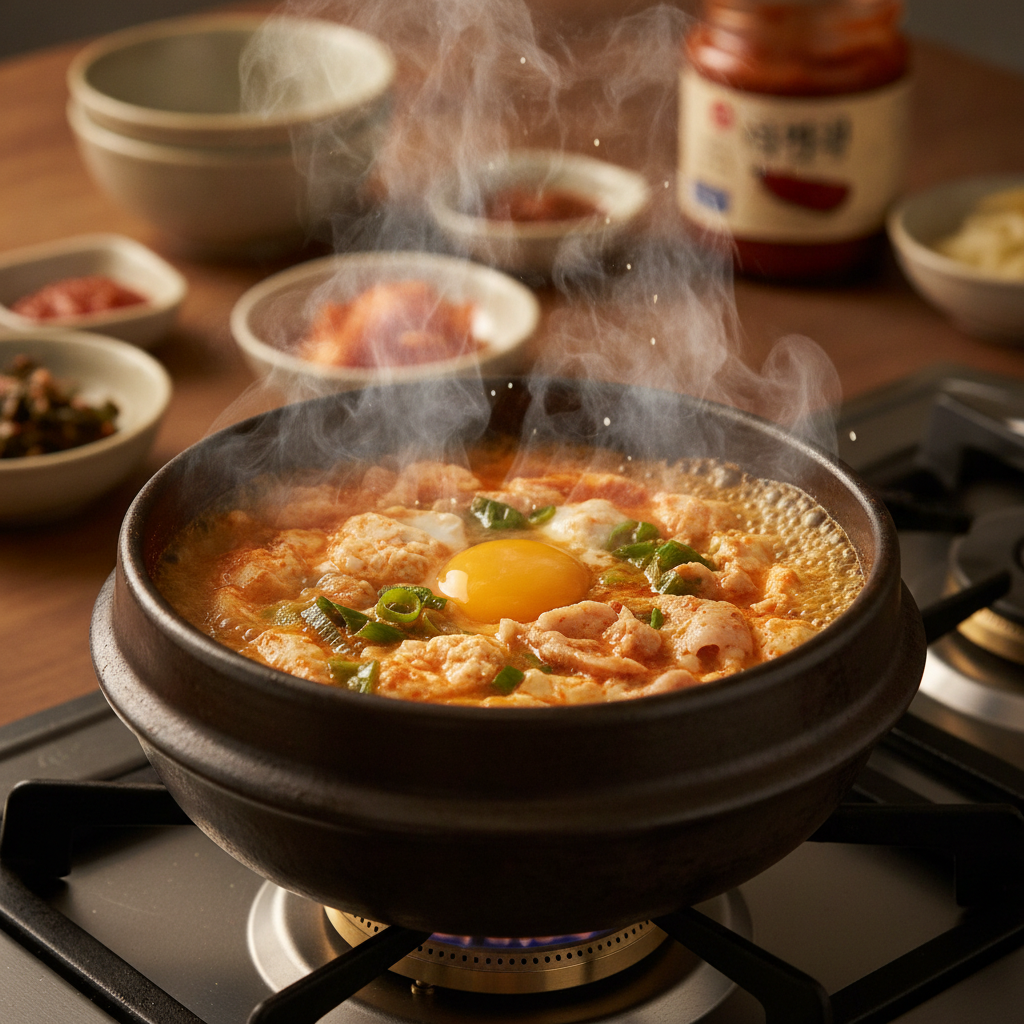
Flavor Characteristics
A freshly cooked bowl of Sundubu Jjigae is an ecstatic experience that stimulates all five senses. The hot steam rising from the earthenware pot carries a spicy yet savory aroma, and the pure white soft tofu blossoming over the reddish broth is mouth-watering just to look at. Taking a spoonful, the first thing you notice is its tenderness. The incredibly soft texture of the sundubu, melting like a cloud, tickles the tongue and brings a sense of comfort. This is followed by a spicy yet deeply savory broth that fills the mouth, with the spiciness of gochugaru perfectly harmonizing with the rich broth extracted from pork and clams. The subtle sweetness hidden within the spiciness and the refreshing taste of seafood further enrich the layers of flavor, making you anticipate the next spoonful. The savory pork, chewy clams, crisp onions and green onions, and refreshing Cheongyang chili pepper create a symphony of diverse textures, adding to the joy of eating. Especially, the egg yolk cracked in at the end maximizes the tenderness and adds richness, balancing the spicy flavor while making it even smoother. The combination of all these flavors, along with the warm heat, helps you forget the fatigue of a tiring day and offers a magical experience of deep, warm comfort. It's not just a spicy taste, but a deep and rich umami, soft texture, and warmth that envelops the whole body, truly embodying the Korean spirit.
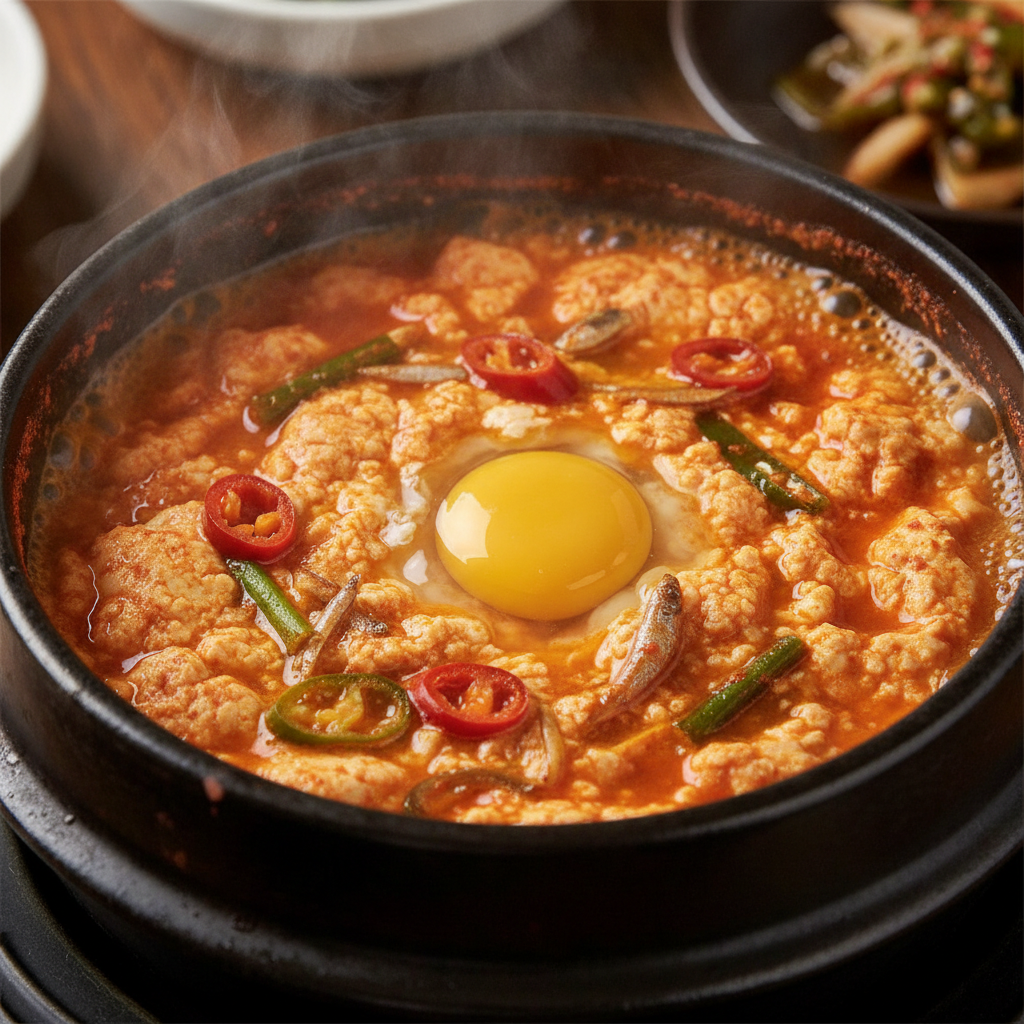
Cooking Tips and Secrets
I'm revealing my secrets to making Sundubu Jjigae even more delicious. First, it's crucial to properly make 'chili oil'. When sautéing the seasoning paste, take enough time to sauté the gochugaru. This allows the aroma and color of the chili to infuse into the oil, deepening the stew's flavor and color. Be careful not to let the heat be too high, as the gochugaru can burn and create a bitter taste; medium-low heat is key. Second, the use of 'broth'. Instead of plain water, using anchovy-kelp broth can elevate the deep flavor of Sundubu Jjigae by another level. Broth made with kelp and anchovies is a treasure trove of umami, and adding dried shiitake mushrooms to it can further enhance its rich aroma. Third, adjusting the seasoning with 'saeujeot' (salted shrimp). Saeujeot is a versatile seasoning in Korean cuisine that adds deep umami beyond just saltiness. Seasoning with saeujeot instead of salt can create a refreshing, clean, yet deep flavor. Fourth, it's best to add the 'egg' just before turning off the heat or after turning it off, allowing it to cook with residual heat, rather than during the main boiling process. When the yolk is soft-boiled and mixed with the broth, the richness and tenderness are maximized, allowing you to enjoy an even more delicious Sundubu Jjigae. Lastly, I recommend cooking it in a 'ttukbaegi' (earthenware pot). A ttukbaegi retains heat for a long time, allowing you to enjoy every last spoonful warm and delicious. Cooking in a ttukbaegi also helps the flavors of the ingredients to leach out better, creating a deeper taste. These small secrets will transform an ordinary Sundubu Jjigae into a special dish. Add these tips to your carefully prepared ingredients to bring warm delight to your family and friends.
"Cooking is more than just filling your stomach; it's an art of sharing hearts and creating memories. A bowl of Sundubu Jjigae truly achieves its genuine taste only when it embodies the cook's sincerity and wisdom."
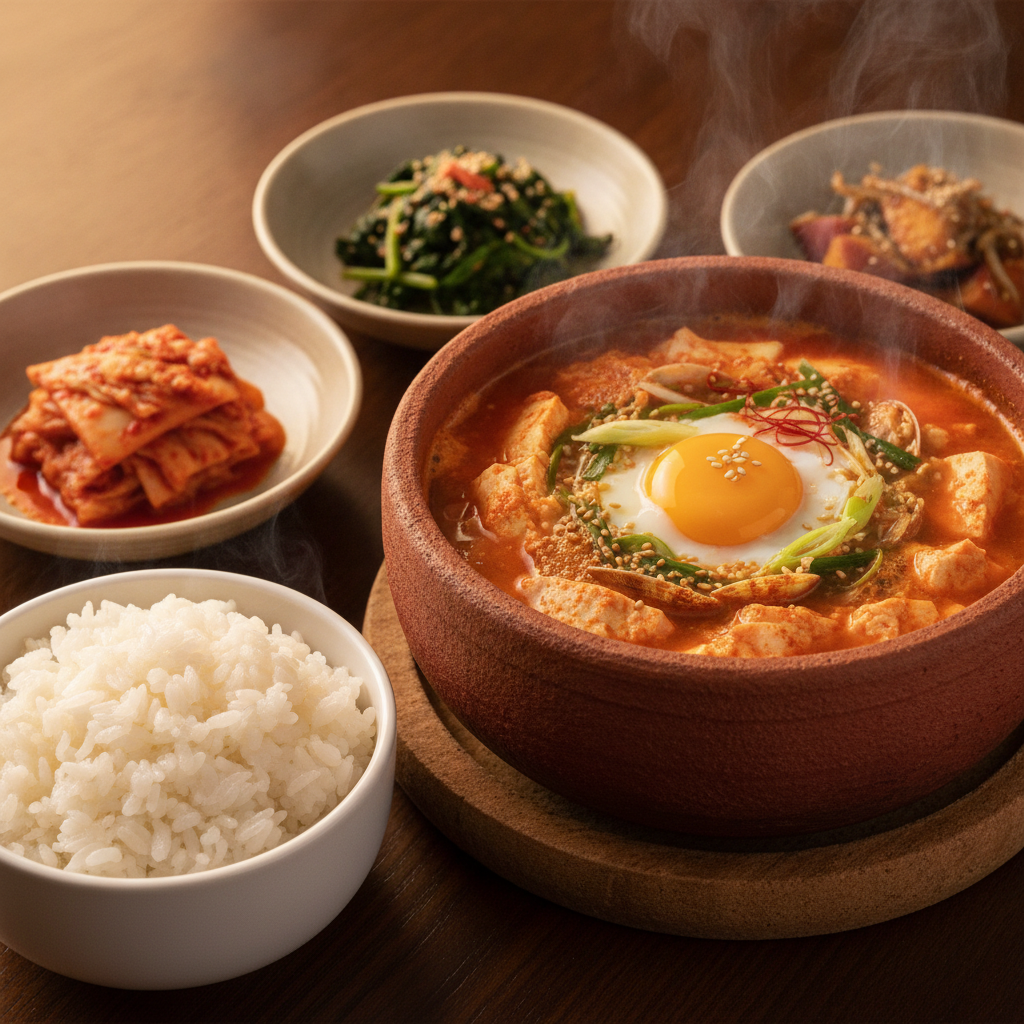
Variations of the Recipe
Sundubu Jjigae, while excellent in its basic form, possesses the charm of being infinitely adaptable to personal tastes or situations. First, 'Seafood Sundubu Jjigae' maximizes the refreshing and clean taste of seafood by adding shrimp, squid, mussels, etc., in addition to clams. The umami released from the seafood further enriches the broth, highly recommended for seafood lovers. Next, 'Beef Sundubu Jjigae' uses beef (brisket, flank, etc.) instead of pork, adding a deep, rich beef flavor. Chuck flap, in particular, infuses its savory fat into the broth, offering an even richer and smoother taste. For children or those who can't handle spicy food, 'White Sundubu Jjigae' is a variation cooked without gochugaru. It's seasoned with saeujeot, minced garlic, and gukgan