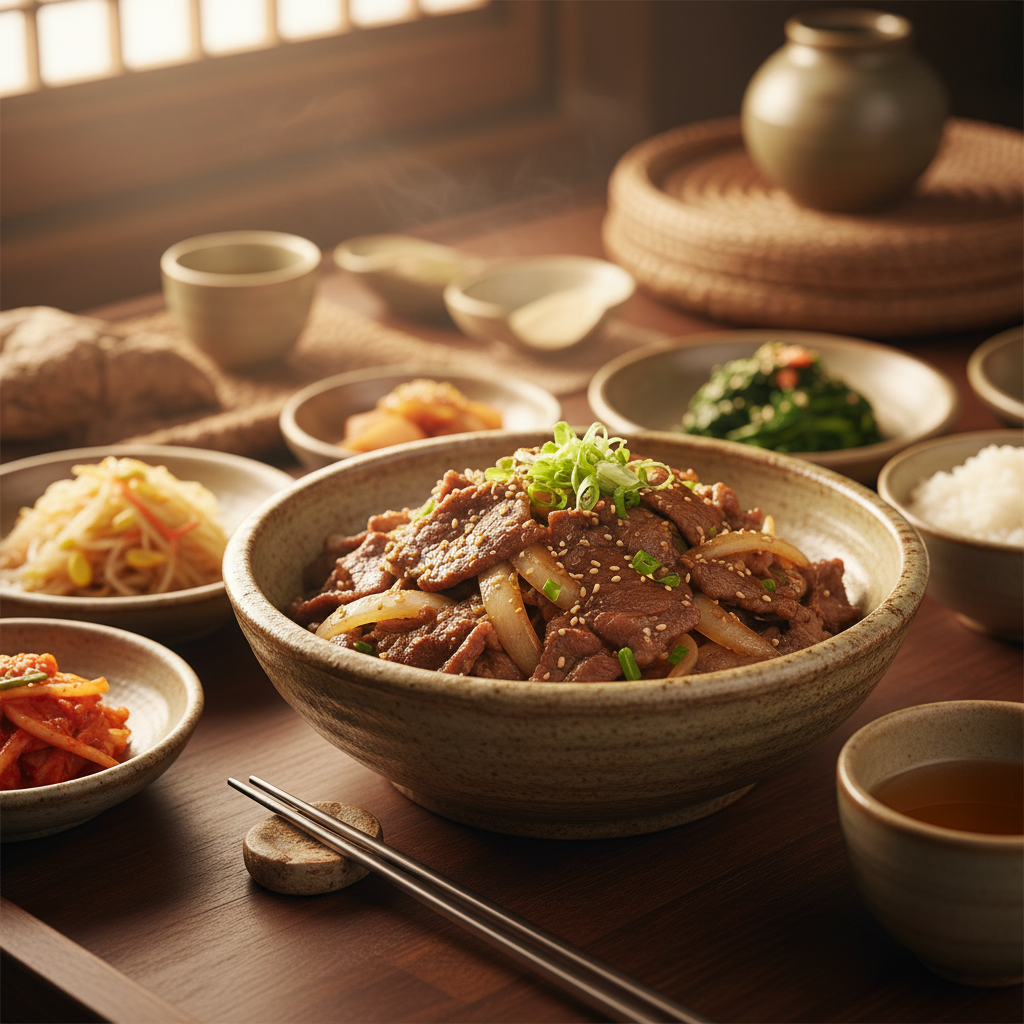
History and Origin of Bulgogi
Bulgogi is a representative traditional Korean dish with origins dating back to the ancient Three Kingdoms period. The word 'bul' means fire, and 'gogi' means meat, literally translating to 'fire meat.' Initially, meat was grilled directly over a brazier, but as time went on, the method evolved to cooking with marinade in a pan. Bulgogi has established itself as an important family meal in Korean culinary culture and is traditionally used for special occasions or to entertain guests.
Authentic Recipe
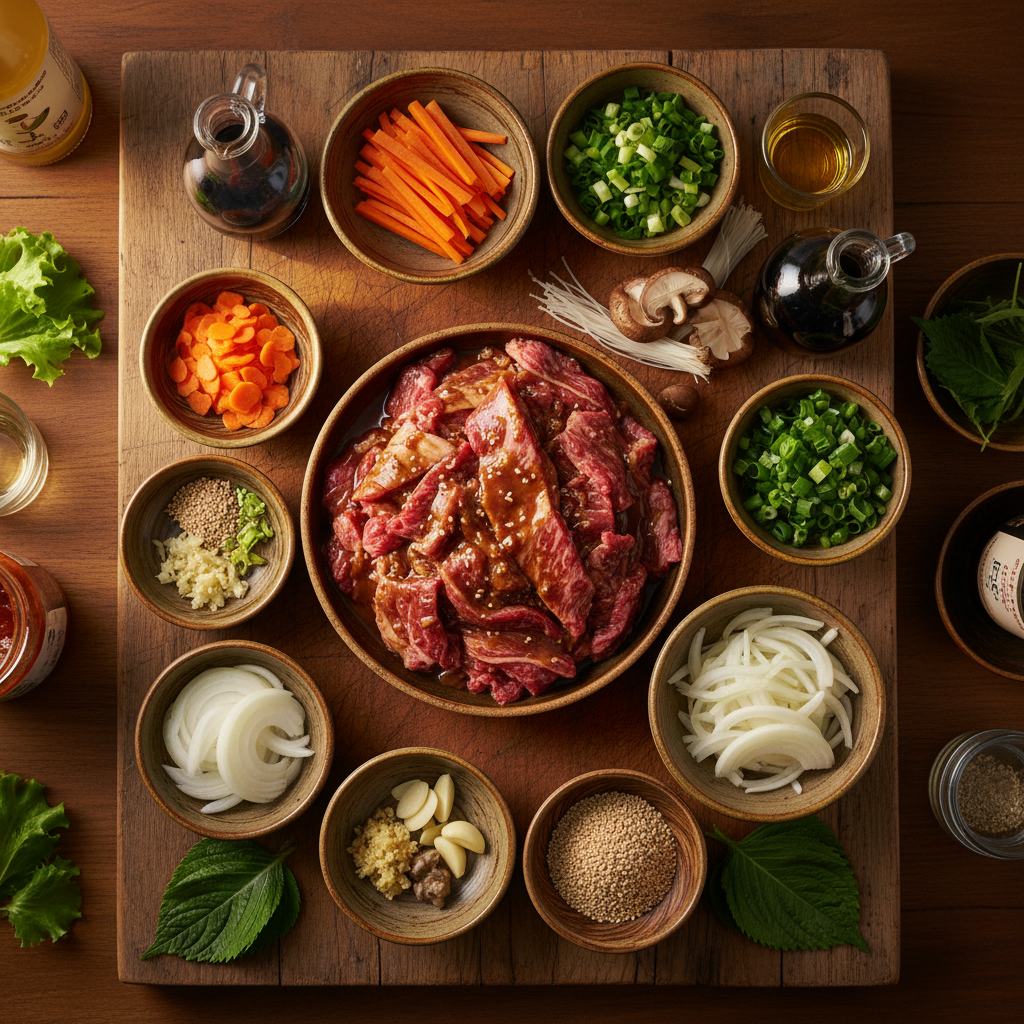
Ingredients
- 500g beef sirloin
- 6 tablespoons soy sauce
- 2 tablespoons sugar
- 1 tablespoon minced garlic
- 2 tablespoons sesame oil
- A pinch of pepper
- 1 onion (sliced)
- 2 green onions (chopped)
- 1/2 pear (grated)
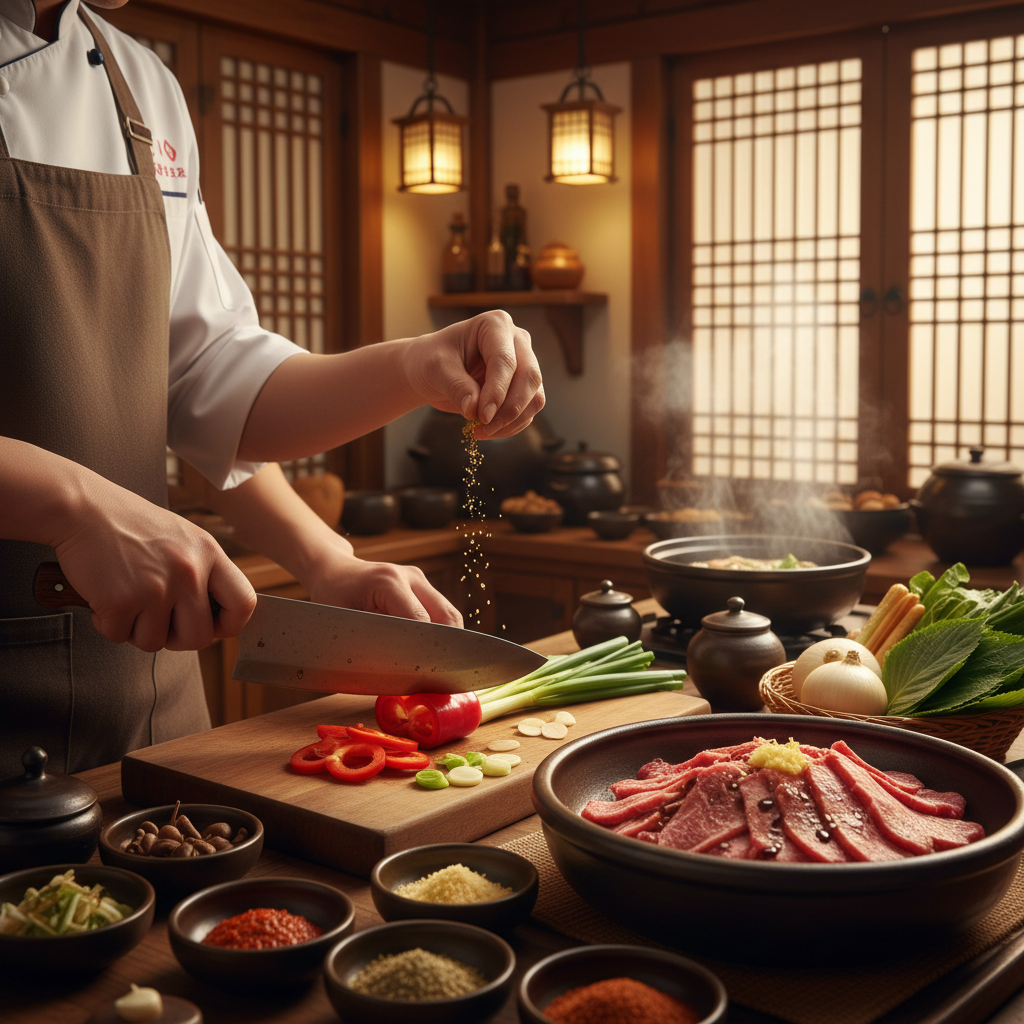
Cooking Steps
- Thinly slice the beef sirloin.
- Mix soy sauce, sugar, minced garlic, sesame oil, and pepper to make the marinade.
- Add the beef to the marinade and mix well; let it sit for at least 30 minutes.
- Add onion, green onions, and grated pear to the marinated beef, mix well, and let it sit for another 10 minutes.
- In a heated pan, quickly stir-fry the marinated beef and vegetables on high heat.
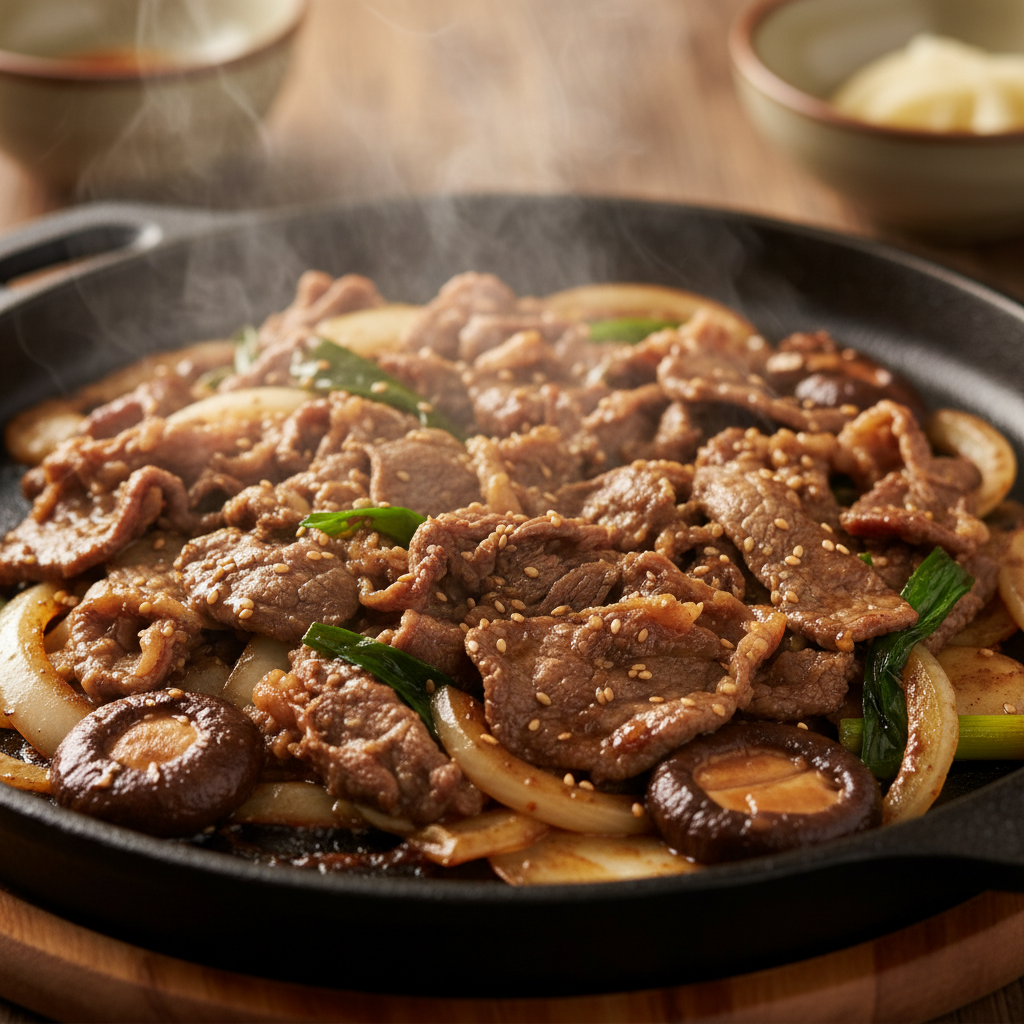
- Cook until the meat is done and glossy, then remove from heat and serve on a plate.
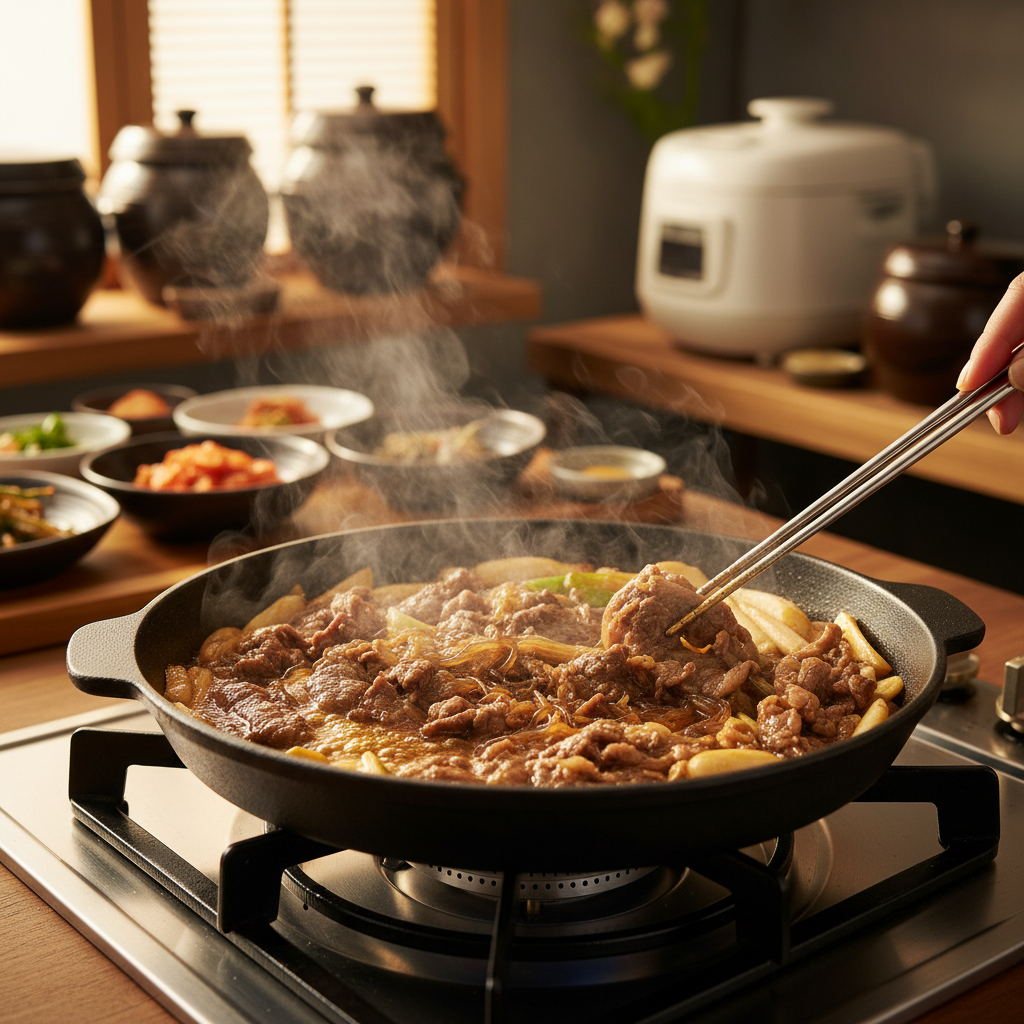
Taste Characteristics
Bulgogi offers a harmonious blend of sweet and savory flavors, with the tender texture of the meat being a highlight. Cooked with fresh vegetables, it provides a refreshing taste and aroma. The subtle scent of sesame oil enhances the meat's flavor, and the deep umami of soy sauce adds a rich taste. The quick stir-frying process allows the meat juices and marinade to meld together, creating a more robust flavor.
Cooking Tips and Secrets
The key to making delicious bulgogi is the thinness of the meat slices. Thin slices allow the marinade to penetrate better, enhancing the flavor. Using pear adds natural sweetness and tenderizes the meat. It's important to marinate the ingredients thoroughly in the refrigerator to allow the flavors to deepen. Finally, quickly stir-frying the meat in the pan helps retain the meat's juices, resulting in a juicier bulgogi.
Variations
Modern variations of bulgogi include using tofu instead of meat for a vegetarian version, or adding gochujang to make a spicy version. Using a grill instead of a pan can also impart a smoky flavor. For a quick version, pre-sliced and marinated beef can be used for convenient cooking. These variations cater to diverse tastes and make it easy to enjoy bulgogi even in a busy lifestyle.
Pairings and Serving Suggestions
Bulgogi pairs excellently with warm rice. Accompaniments like kimchi, namul (seasoned vegetables), and radish salad enhance the meal's richness and balance. Drink pairings like soju or beer complement the meal well, with traditional rice wine, makgeolli, being a great choice too. The serving setup can be simple yet satisfying, with bulgogi, rice, and side dishes creating a wholesome meal.