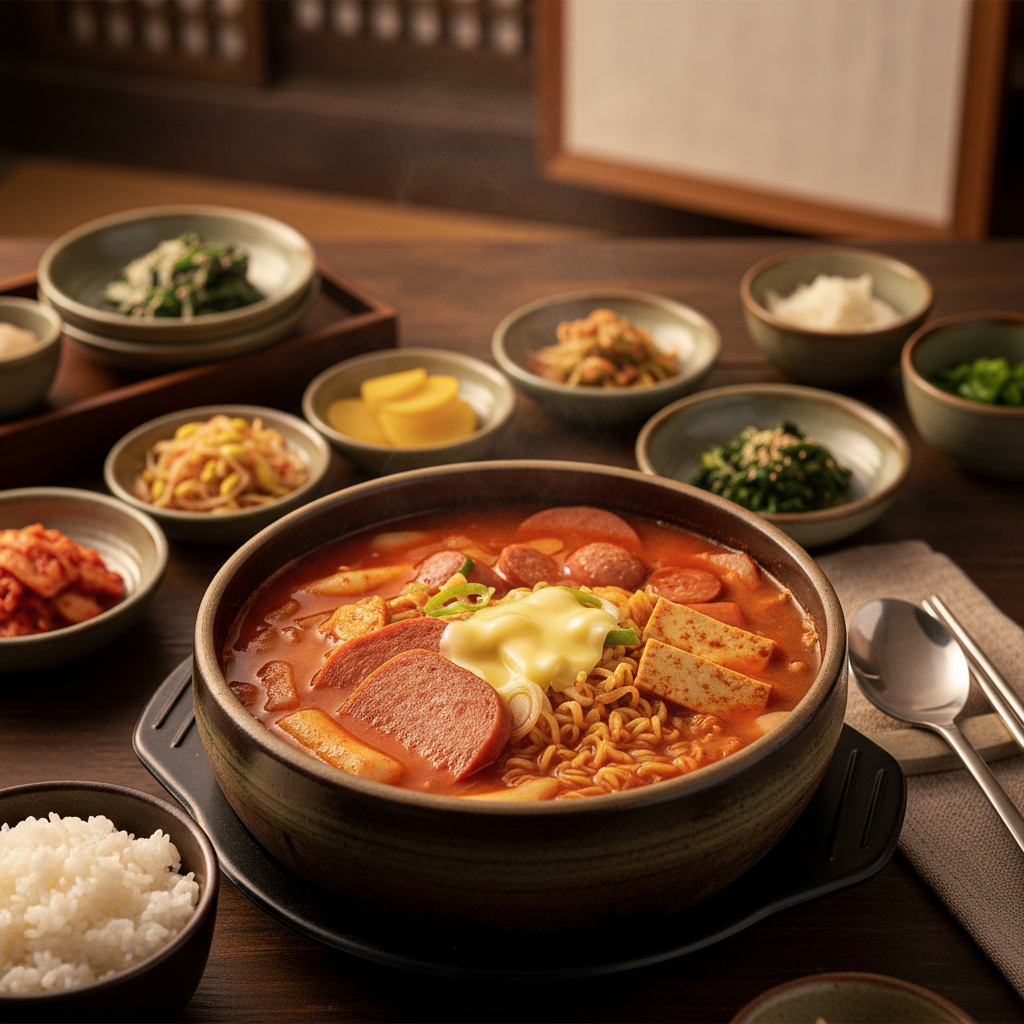
History and Origin of Budae Jjigae
Budae Jjigae, also known as "Army Base Stew," originated after the Korean War during a time of food scarcity. It emerged from the cultural exchanges between Koreans and the U.S. military stationed on the peninsula. Excess military food supplies like spam and sausages were combined with traditional Korean ingredients like kimchi, tofu, and gochujang. This unique fusion resulted in a stew that captured the hearts of Koreans nationwide. Today, it is cherished as a symbol of harmony in Korean culinary culture, where diverse ingredients come together to create a singular flavor.
Traditional Recipe
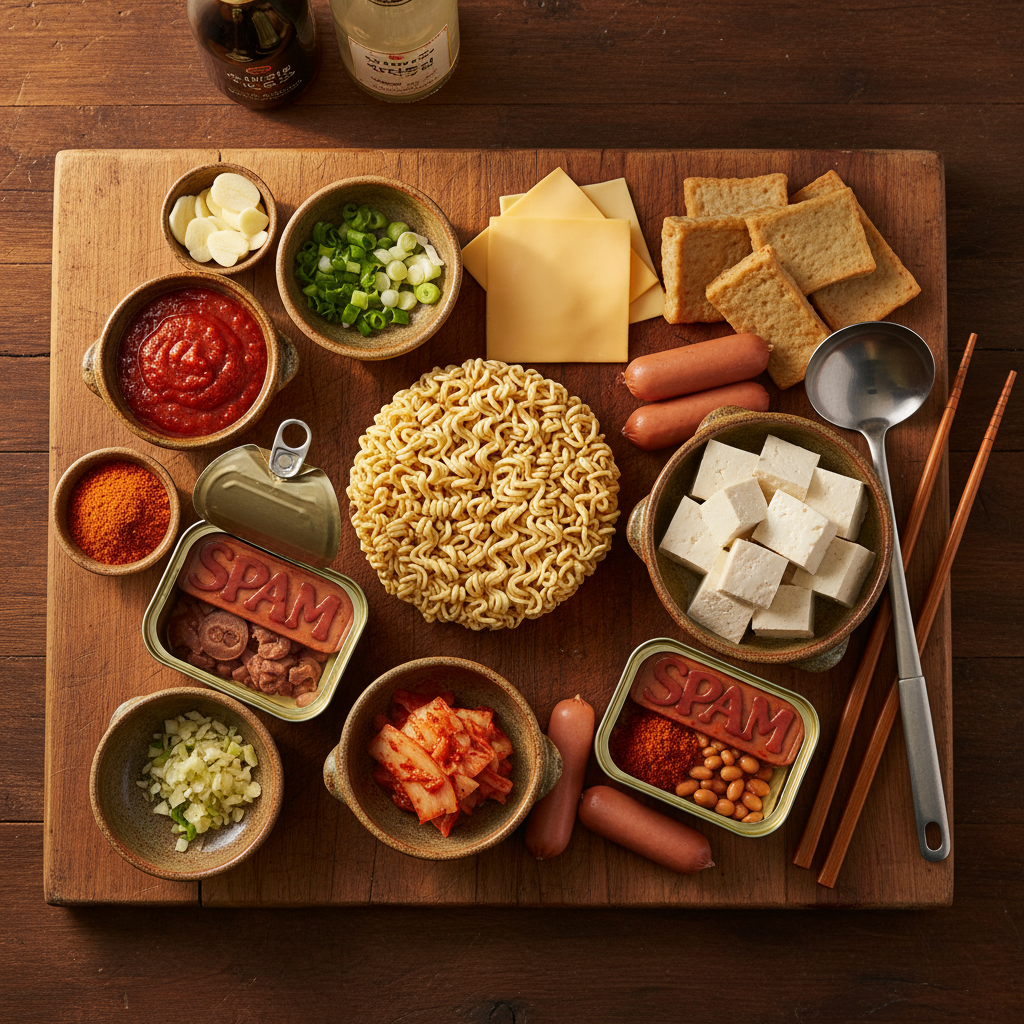
Ingredients
- 200g ham
- 150g sausage
- 200g kimchi
- 1 block of tofu
- 2 tablespoons gochujang
- 1 tablespoon doenjang
- 1 tablespoon soy sauce
- 3 cloves garlic
- 1 tablespoon gochugaru
- 4 cups kelp broth
- 1 pack of ramen noodles
- 1 green onion
- 1 slice of cheese
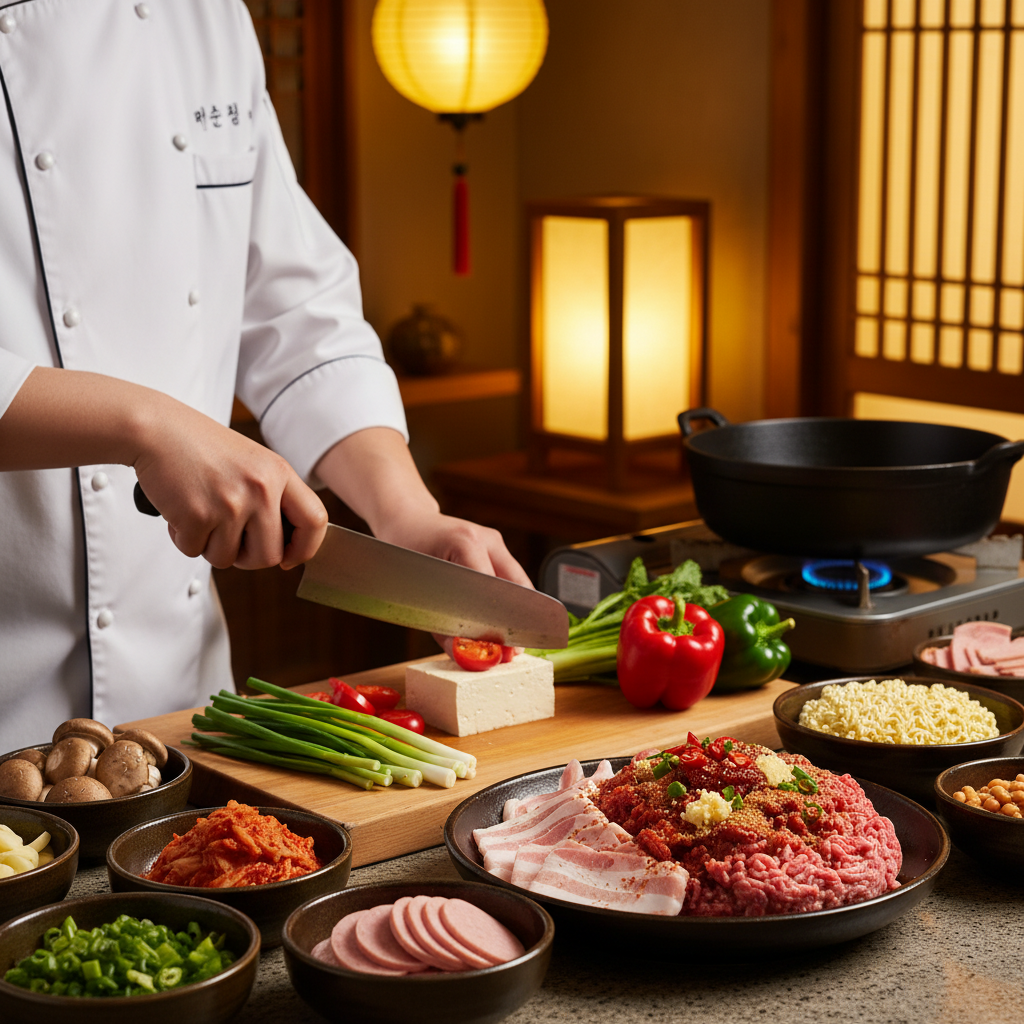
Cooking Steps
1. Slice the ham and sausage thinly. Cut the tofu into similar-sized pieces.
2. Pour the kelp broth into a pot and bring it to a boil. Add kimchi, gochujang, doenjang, and soy sauce, then simmer for about 10 minutes.
3. Add the prepared ham, sausage, and tofu to the pot. Mince the garlic and sprinkle in the gochugaru.
4. Let all ingredients simmer together on medium heat for another 15 minutes.
5. Finally, add the ramen noodles and let them cook. Top with green onion and a slice of cheese to finish.
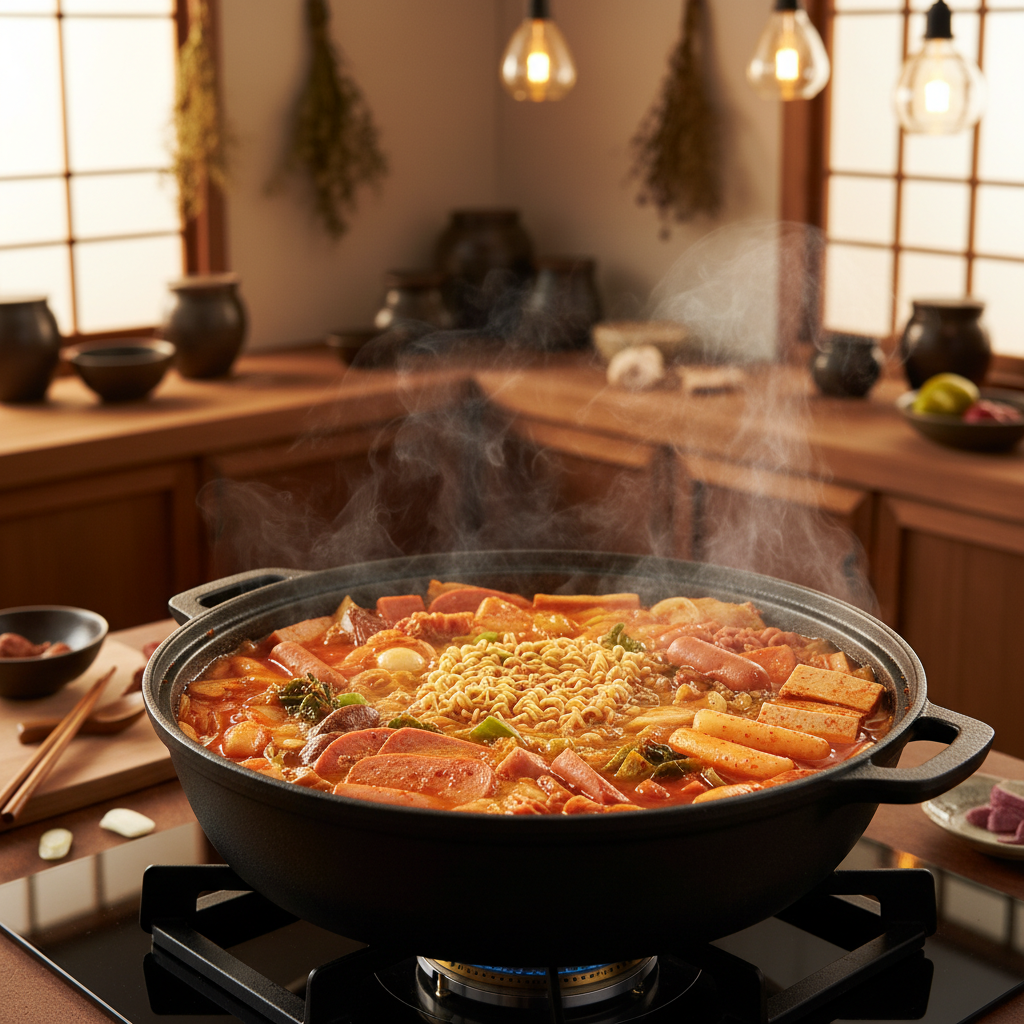
Taste Characteristics
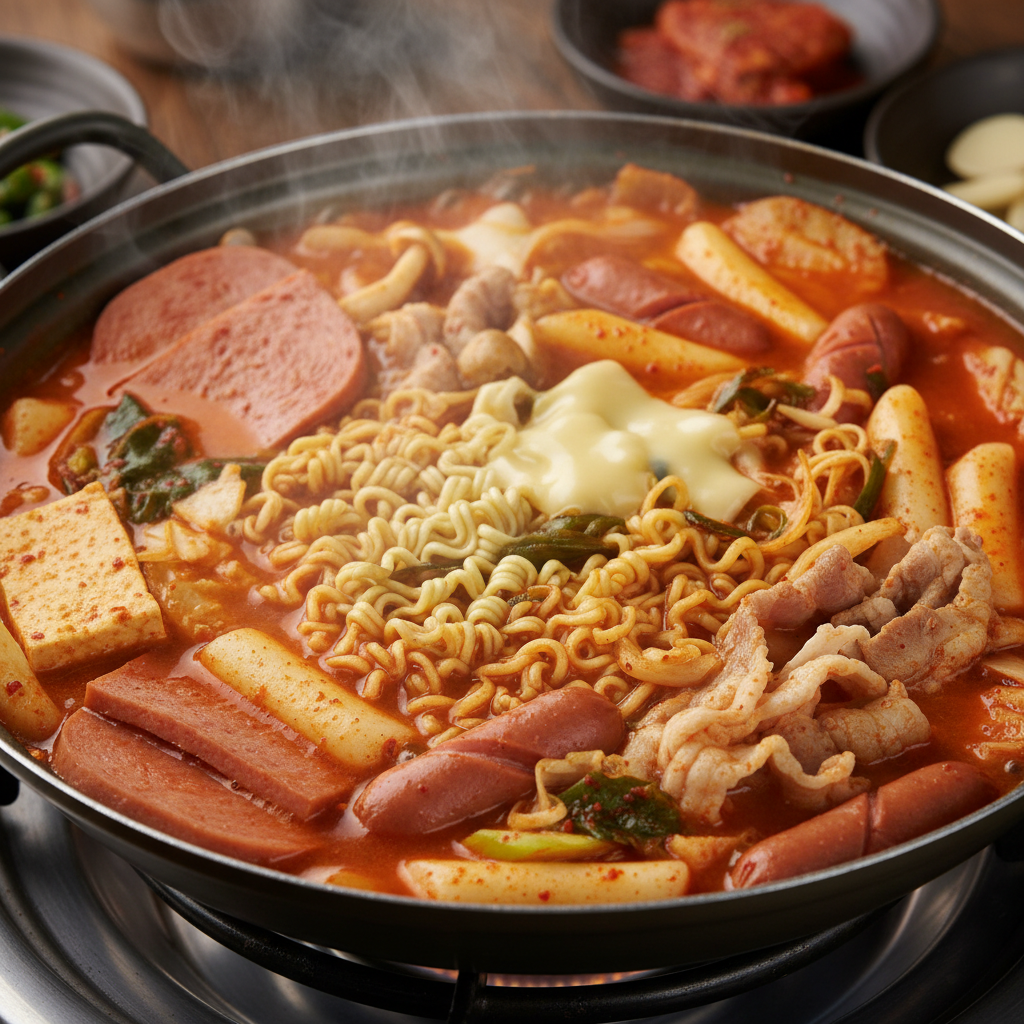
Budae Jjigae is known for its rich and hearty flavor profile, achieved by the harmonious blend of its diverse ingredients. The broth, enhanced by gochujang and doenjang, is spicy and umami-rich, while the saltiness from the ham and sausage deepens the flavor. The tanginess of the kimchi balances the overall taste, and the tofu and noodles add a soft texture. The cheese, added at the end, enhances the creaminess of the soup.
Cooking Tips and Secrets
For a more flavorful Budae Jjigae, the key is in the broth. Using kelp broth provides a deep umami base. If pressed for time, anchovy broth can be a good alternative. It's also best to use well-fermented kimchi, as it contributes significantly to the stew's umami depth. Lastly, be cautious with the cheese, as one slice is sufficient to add a soft, creamy taste without overpowering the stew.
Variations of the Recipe
In modern times, Budae Jjigae has been reimagined in various ways to introduce new flavors. For instance, adding seafood like shrimp or clams transforms it into a refreshing seafood Budae Jjigae. To make it more convenient, pre-made Budae Jjigae seasoning can significantly reduce preparation time. For a fusion twist, try using mozzarella instead of cheddar cheese or adding sweet elements like sweet potatoes or corn.
Pairings and Table Setting
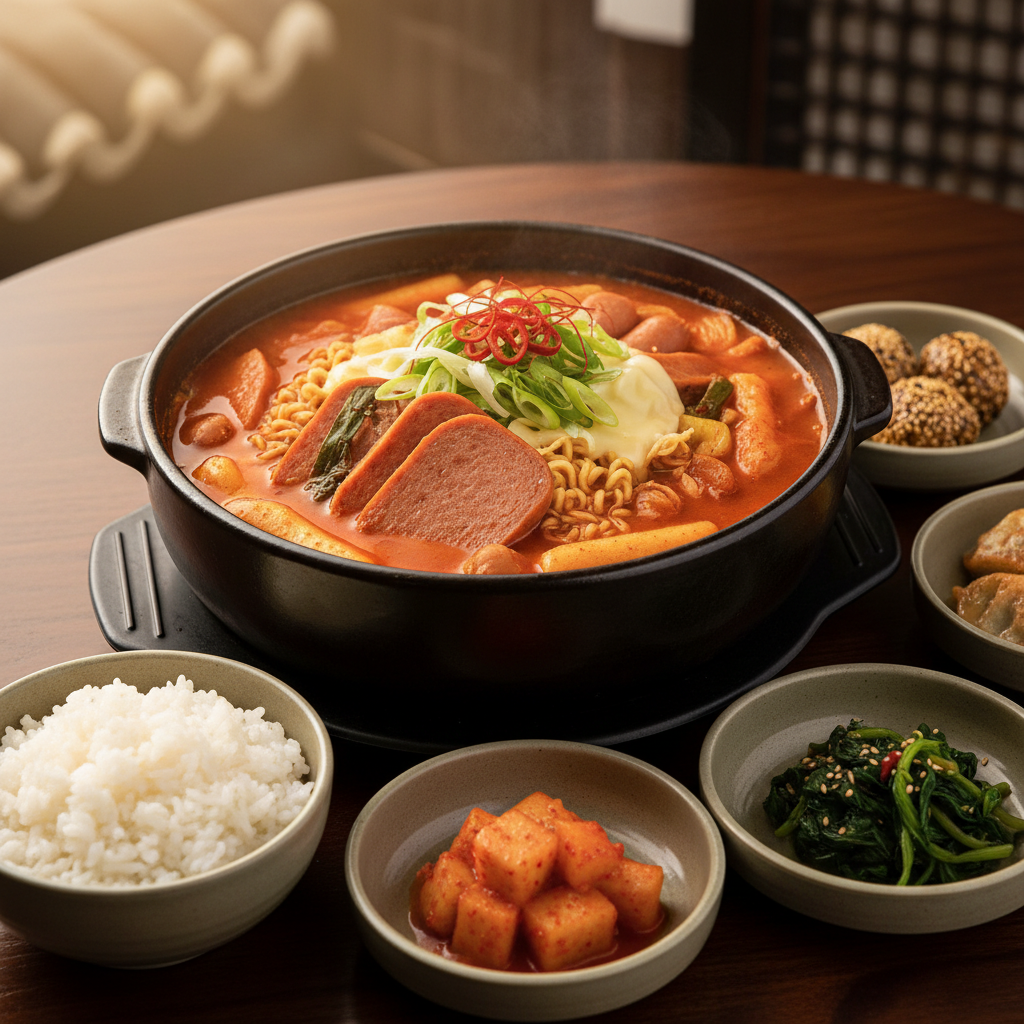
Budae Jjigae can be a satisfying meal on its own, but it pairs wonderfully with various side dishes for a more complete dining experience. Fresh kimchi varieties like kimchi, cubed radish kimchi, and spicy cucumber kimchi complement the stew well. Steamed white rice is the ideal accompaniment. Additionally, Korean rice wine (makgeolli) or soju can be served alongside to mellow the spiciness and enhance the Korean dining experience.