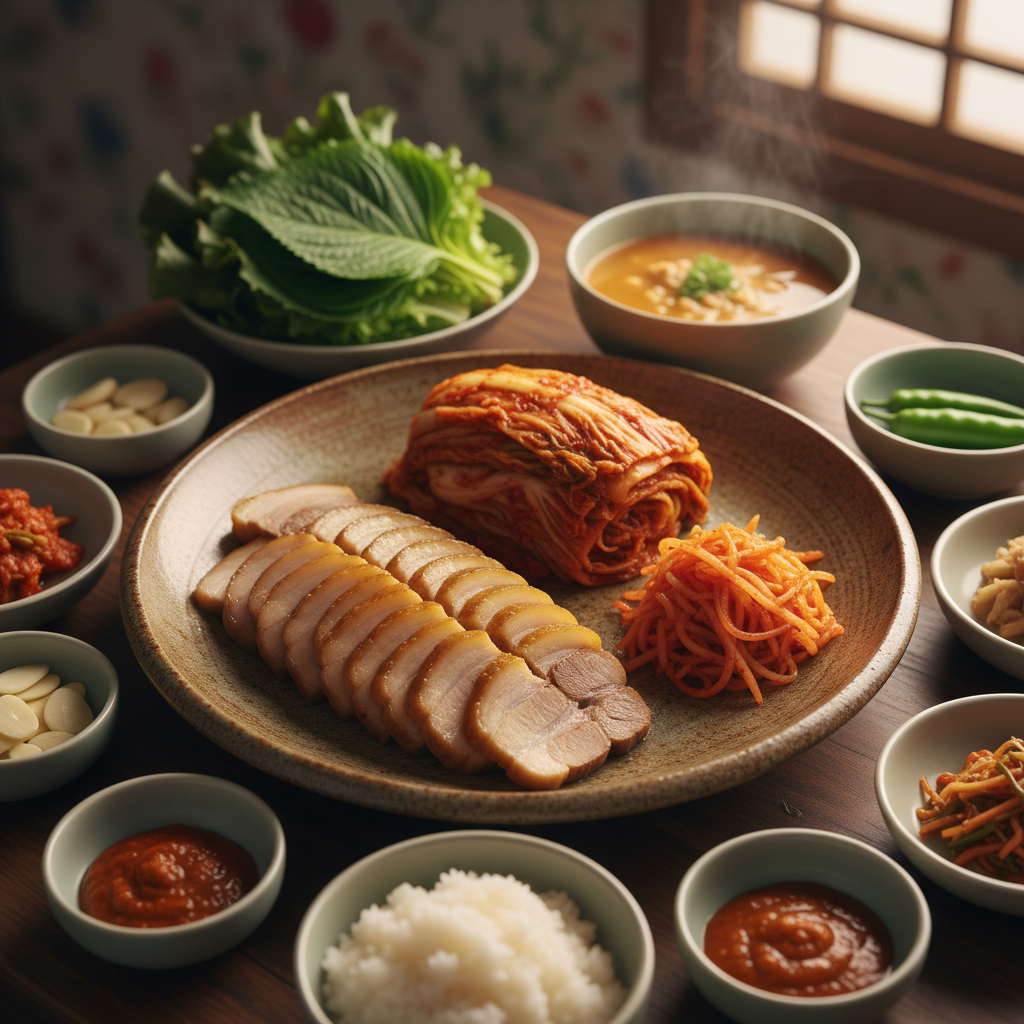
The History and Origin of Bossam
Bossam is a traditional Korean pork dish, typically enjoyed with kimchi during the kimchi-making season. Its origins date back to the Three Kingdoms period, but it took its current form during the mid-Joseon Dynasty. Back then, to avoid greasy foods, pork was boiled or steamed, and it was mainly served to entertain esteemed guests. This tradition continues today, with bossam being a special dish for holidays and celebrations.
Authentic Recipe
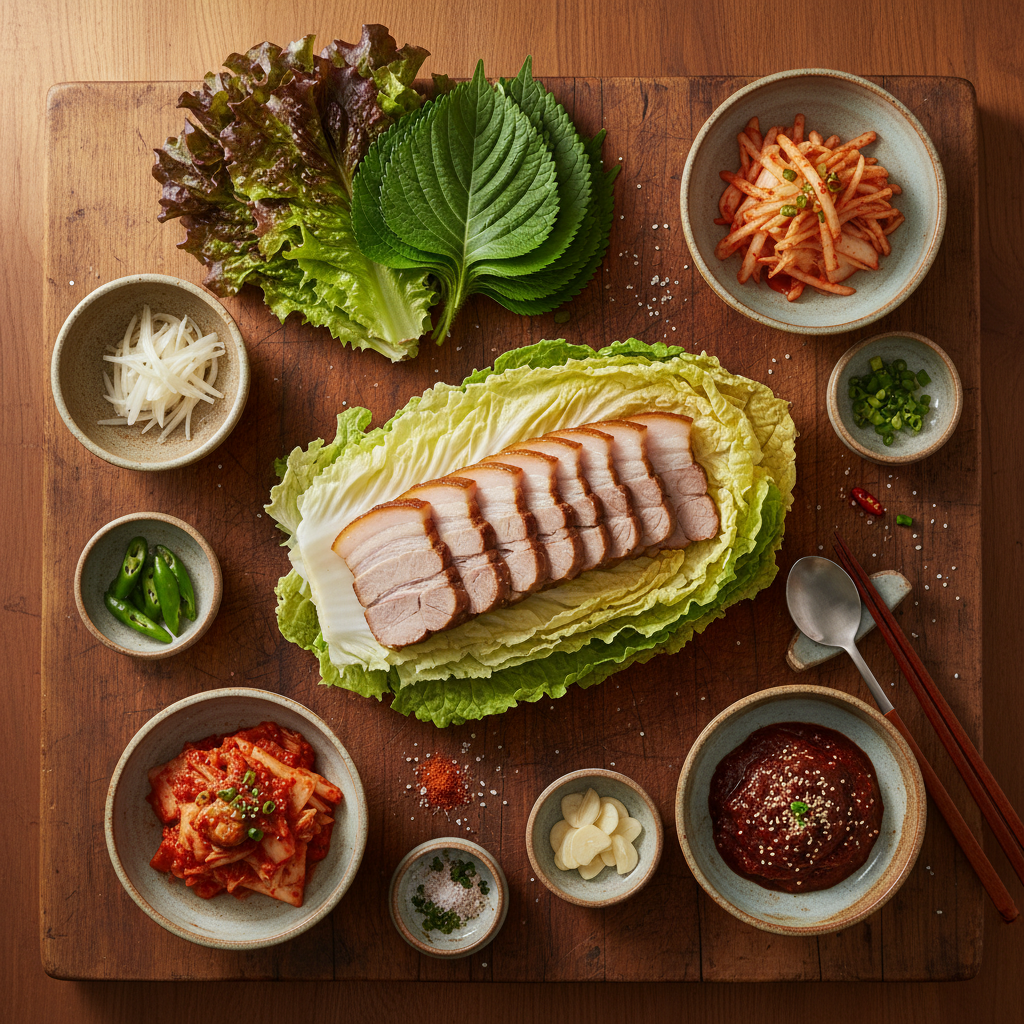
Ingredients
- 1 kg pork belly
- 2 liters of water
- 2 tablespoons of soybean paste (doenjang)
- 10 cloves of garlic
- 5 cm piece of ginger
- 1 stalk of green onion
- 1 onion
- 2 bay leaves
- 1 tablespoon of whole black peppercorns
- Ssamjang, salted shrimp sauce, and leafy greens (lettuce, perilla leaves, etc.)
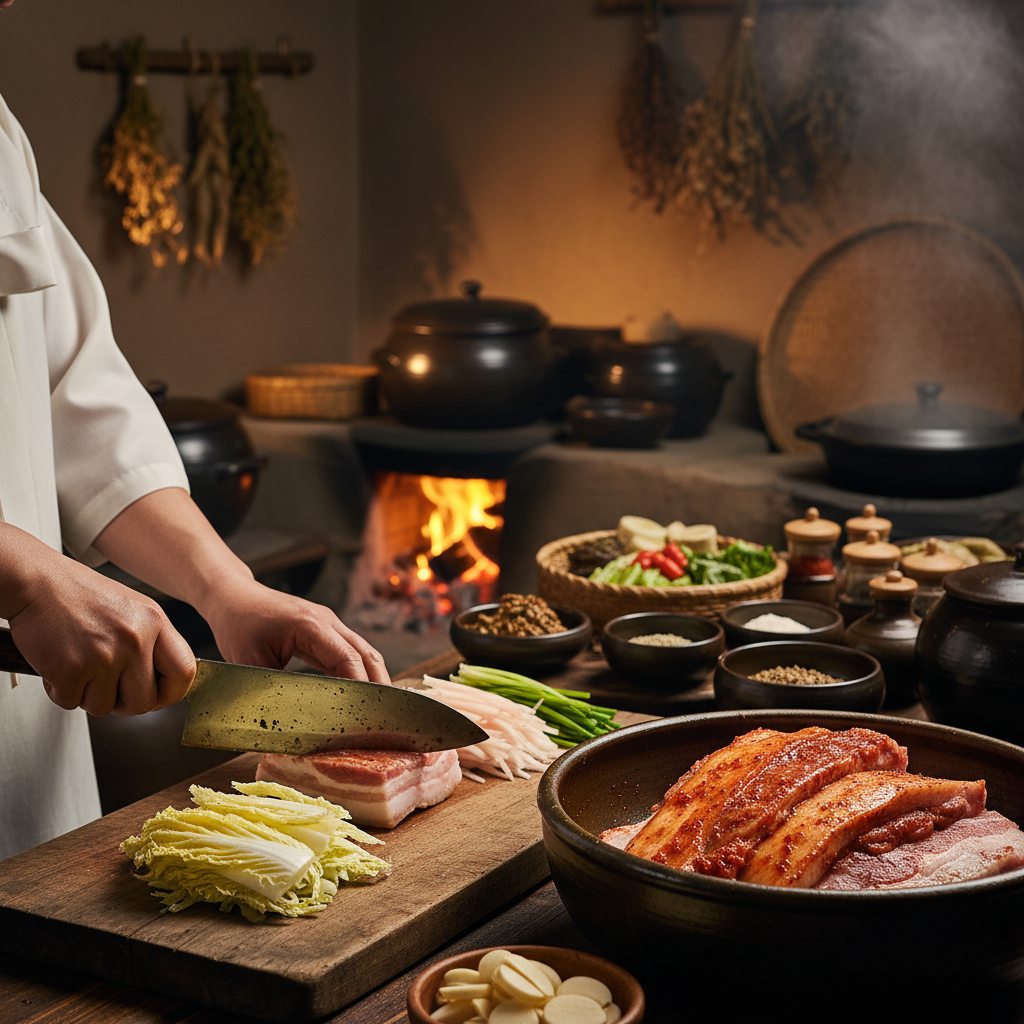
Cooking Method
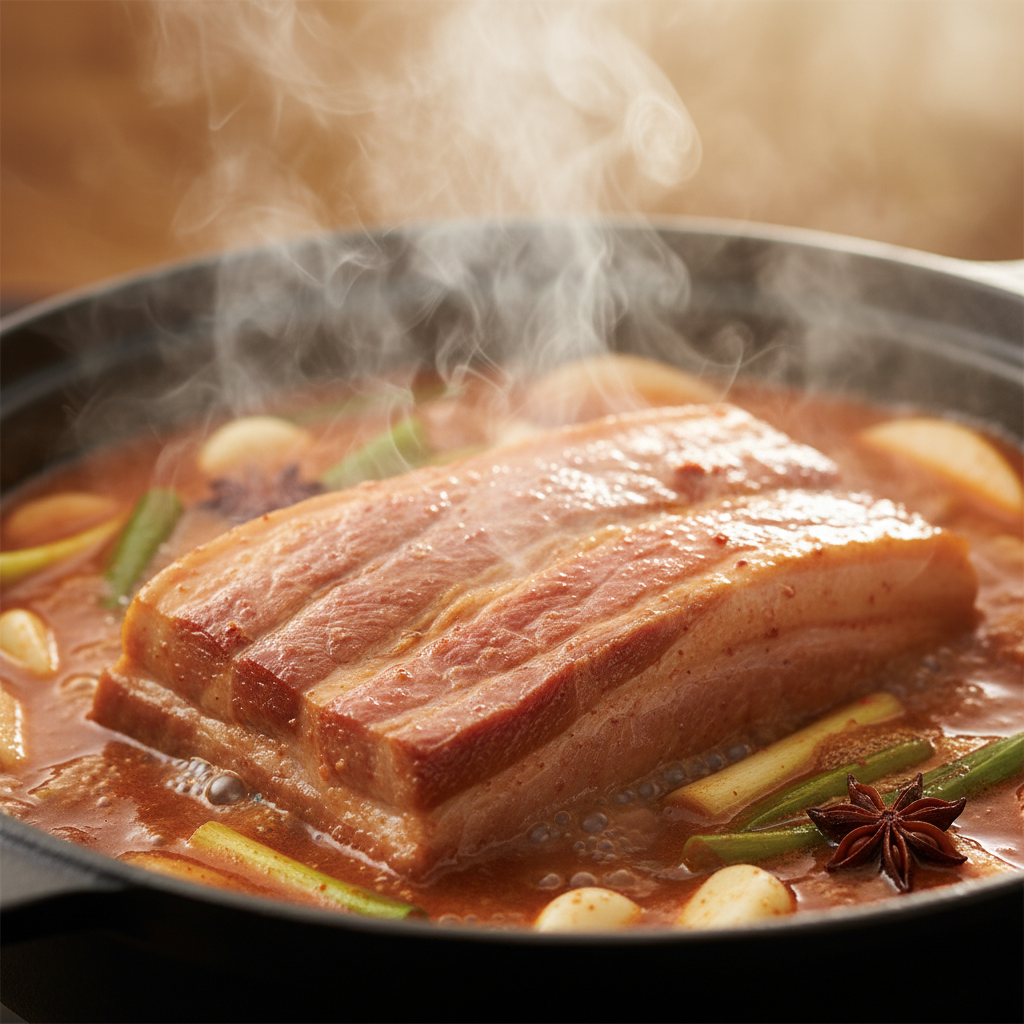
- In a large pot, add water, soybean paste, garlic, ginger, green onion, onion, bay leaves, and black peppercorns, and bring to a boil.
- Once boiling, add the pork belly and simmer over medium heat for about 1 hour.
- Remove the cooked pork, let it cool, and slice it thinly.
- Serve with ssamjang and salted shrimp sauce alongside leafy greens.
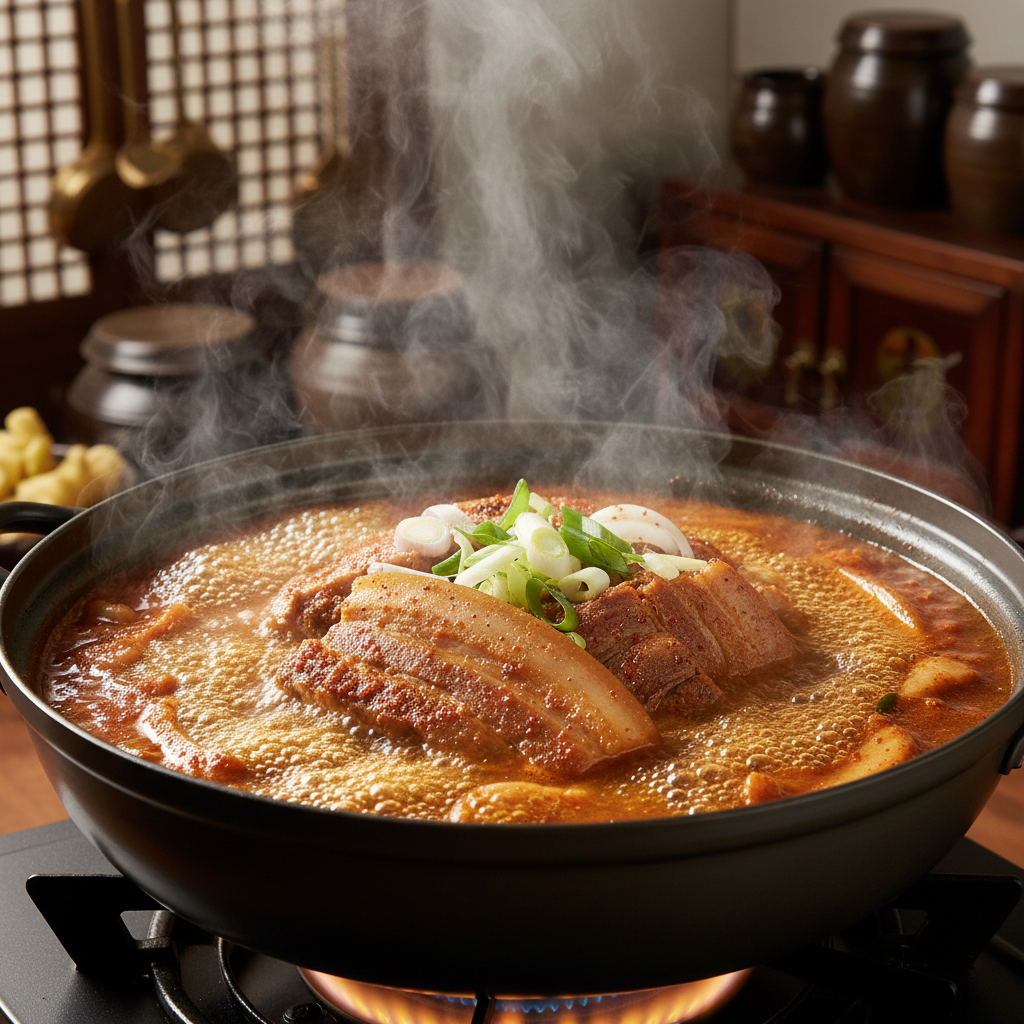
Flavor Characteristics
Bossam is renowned for its tender and moist pork texture. The broth infused with soybean paste and various spices adds depth to the meat, while the savory taste of ssamjang and salted shrimp sauce enhances the pork's flavor. When eaten with fresh leafy greens, the harmonious blend of flavors and aromas fills the palate.
Cooking Tips and Secrets
To make the best bossam, the thickness of the meat and cooking time are crucial. Thinly slicing the pork allows the seasonings to penetrate better, and slow simmering over medium heat ensures the meat remains tender and moist. Using bay leaves and black peppercorns during boiling helps eliminate any unpleasant pork odor.
Variations
Modern bossam variations include using fusion-style ssamjang. For instance, a sauce made with gochujang mixed with olive oil and balsamic vinegar offers an innovative twist. Alternatively, chicken or beef can be used instead of pork. For a quicker version, a pressure cooker can be employed to reduce cooking time.
Side Dishes and Presentation
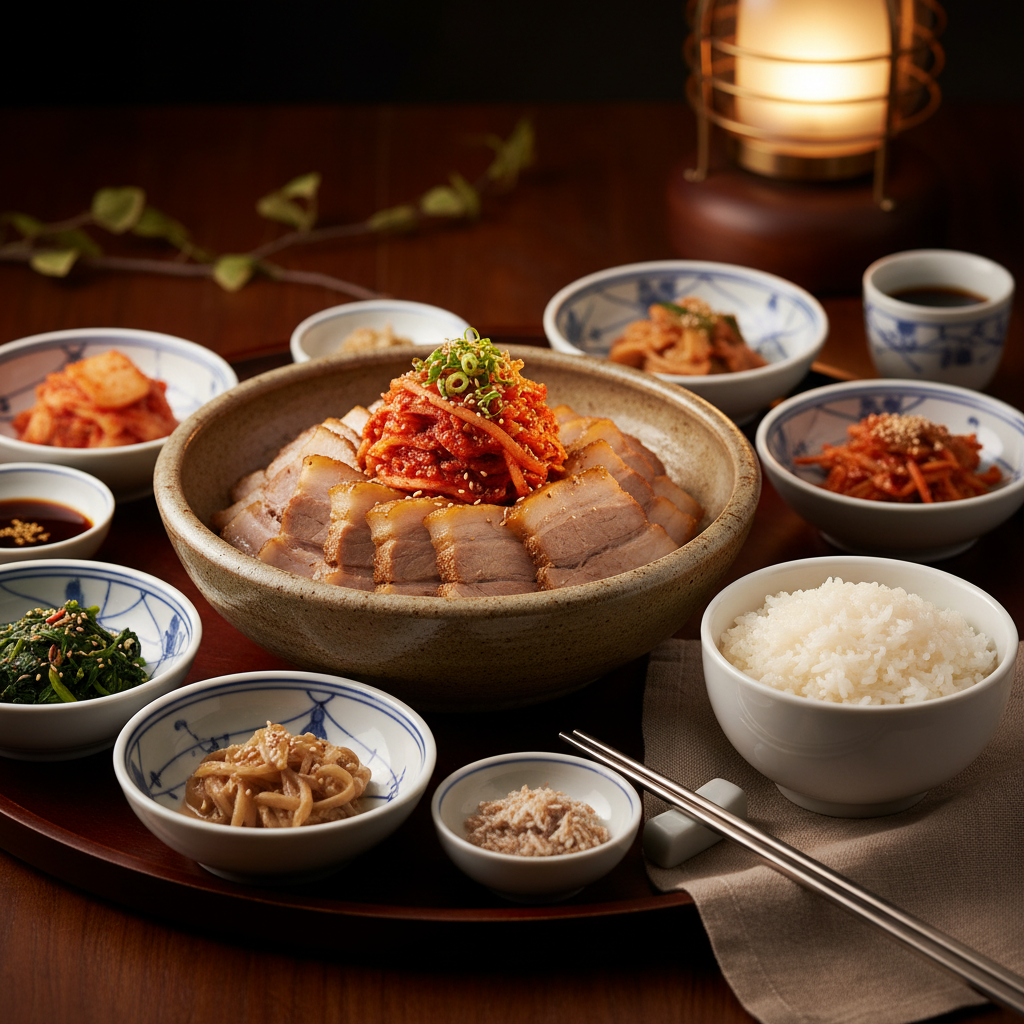
Bossam is typically served with leafy greens, ssamjang, and salted shrimp sauce. Additionally, it pairs well with side dishes like napa cabbage kimchi, mustard leaf kimchi, or dried radish strips. Soju or makgeolli are recommended drinks, and warm white rice complements the meal. This arrangement enhances the flavor of bossam and provides a rich dining experience.