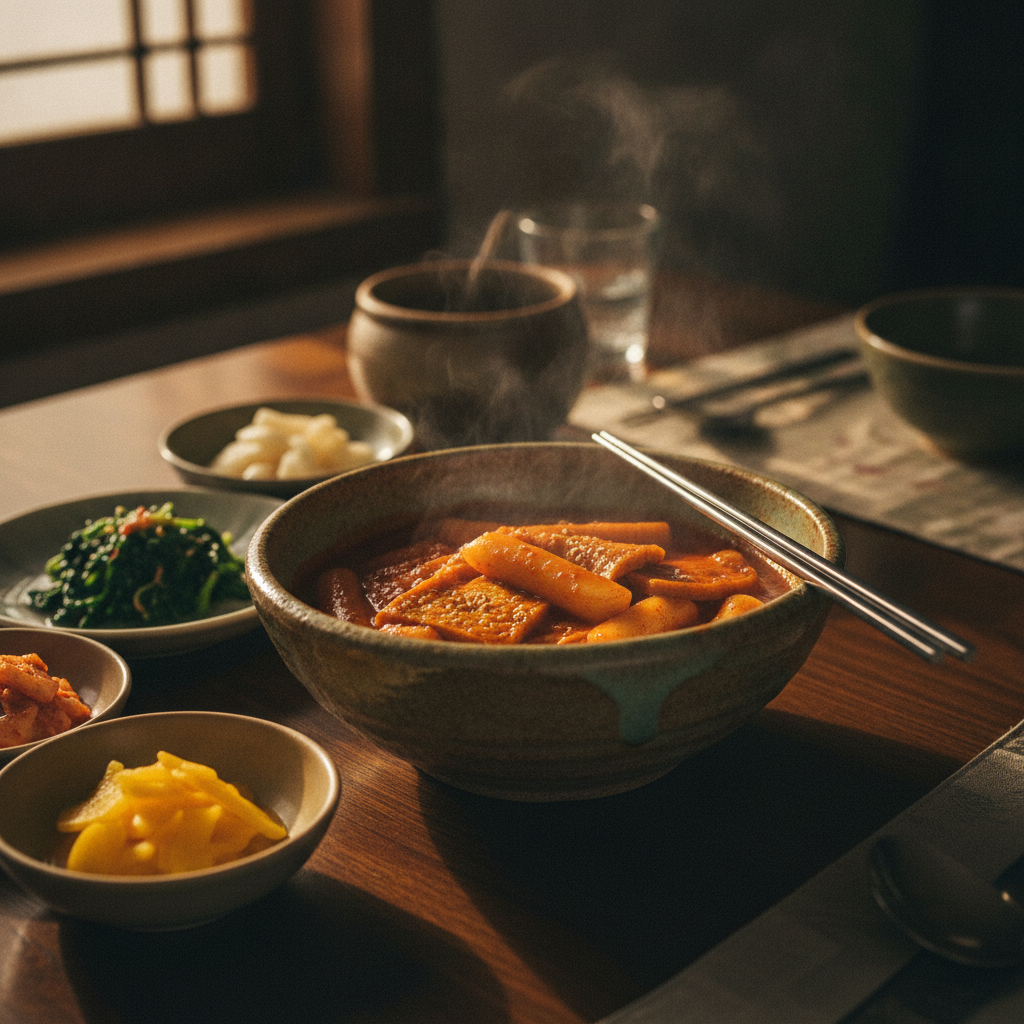
Tteokbokki, Spicy and Affectionate Korean Soul Food: An In-depth Exploration by a Korean Food Research Chef
1. The History and Origin of Tteokbokki
Hello everyone, I am a food research chef dedicated to exploring the profound flavors of Korean cuisine. Today, I'd like to introduce you to a spicy yet heartwarming Korean soul food: 'Tteokbokki'. Tteokbokki is more than just a dish of chewy rice cakes and spicy sauce; it's a special food that fully encapsulates the lives, joys, and changing times of the Korean people.
The origins of Tteokbokki are much deeper than one might imagine. Its first appearance in the form of 'gungjung tteokbokki' (royal court tteokbokki) was recorded in a cookbook called 『Siui Jeonseo (是議全書)』 from the late 17th century, under the name 'byeonggwa (餠果)'. At that time, Tteokbokki was completely different from the spicy version we know today. It was a luxurious royal court dish, stir-fried with a sweet and savory soy sauce base, beef, shiitake mushrooms, carrots, cucumbers, and various other vegetables. It was a precious dish served on the king's table, renowned for the delightful harmony of chewy rice cakes and diverse ingredients. This gungjung tteokbokki is an important record, showcasing the essence of culinary techniques using rice cakes in an era when gochugaru (chili powder) was not yet common.
The 'gochujang tteokbokki' that we widely enjoy today emerged after the Korean War, dating back to the late 1950s. It is said to have originated in Sindang-dong, Seoul, where it was accidentally created by boiling rice cakes in gochujang sauce and sold. In the difficult post-war period, as the demand for affordable and filling food grew, the spicy and stimulating flavor was enough to captivate the tired palates of ordinary people. The spiciness of gochujang, in particular, played a role in relieving stress and invigorating people, quickly gaining widespread popularity. Since then, tteokbokki has become a symbol of snack bars in front of schools and street food stalls, serving as a cheap way to satisfy hunger and create memories with friends. In Korean food culture, tteokbokki has become more than just a meal; it symbolizes childhood nostalgia, friendship, and sometimes the emotional bond of overcoming difficult times together.
2. Authentic Recipe
Now, I will reveal the authentic tteokbokki recipe, imbued with Korean sentiment. This is a recipe I have refined over years of research and countless trials and errors, capturing the most authentic Korean flavors. I've focused on the inherent taste of the ingredients and the harmony of the seasoning, rather than complex techniques. You surely won't regret making it with this recipe.
Ingredients (Serves 4)
- Rice cakes (tteok) or wheat cakes (mill-tteok): 600g (wheat cakes for chewiness, rice cakes for stickiness)
- Fish cakes (eomuk): 300g (Using high-quality fish cakes like Busan eomuk will result in a deeper flavor)
- Onion: 1/2 (thickly sliced)
- Green onion: 1 stalk (diagonally sliced)
- Cabbage: 100g (cut into large pieces)
- Boiled eggs: 4 (optional)
- Water or kelp & anchovy broth: 800ml
Seasoning Ingredients
- Gochujang (Korean chili paste): 4 tablespoons (recommended to use taeyangcho gochujang)
- Gochugaru (Korean chili powder): 3 tablespoons (1 tablespoon hot chili powder, 2 tablespoons regular chili powder mixed)
- Sugar: 3 tablespoons (use brown sugar or oligosaccharide)
- Soy sauce: 2 tablespoons
- Minced garlic: 1.5 tablespoons
- Corn syrup: 2 tablespoons (adds gloss and sweetness)
- Black pepper: a pinch
Cooking Instructions
- Prepare rice cakes: If using rice cakes, soak them in water for about 30 minutes to soften. Wheat cakes do not need pre-soaking; just rinse them under running water.
- Prepare broth: Pour 800ml of water into a pot, add 2 pieces of kelp (10x10cm) and 10 dried anchovies for broth, and boil for 10 minutes. Remove the kelp and anchovies. (Plain water can be used if short on time, but broth will yield a much deeper flavor.)
- Make sauce: In a large bowl, combine gochujang, gochugaru, sugar, soy sauce, minced garlic, corn syrup, and black pepper, and mix well to create the seasoning paste. Using aged gochujang will provide a deeper umami flavor.
- Cook ingredients: Pour the broth into a pot, and once it starts boiling, dissolve the seasoning paste in it. Once the seasoning is well dissolved, add the prepared rice cakes, fish cakes, onion, and cabbage, and bring to a boil over high heat.
- Simmer: Reduce heat to medium-low and simmer until the sauce thickens and the rice cakes are soft. Stir occasionally to prevent sticking. The flavor of tteokbokki deepens as the sauce thoroughly soaks into the ingredients during simmering.
- Finish: Finally, add the green onions and cook for another 1-2 minutes before turning off the heat. Optionally, add boiled eggs for an even better dish.
3. Flavor Characteristics
When faced with a freshly made plate of tteokbokki, all five senses immediately prepare for a feast. The first thing that tickles the nose is the sweet yet pungent aroma of the gochujang sauce. It's not just a spicy smell; it's a deep, rich fragrance of aged gochujang blended with the fresh scent of garlic and green onions, stimulating the salivary glands