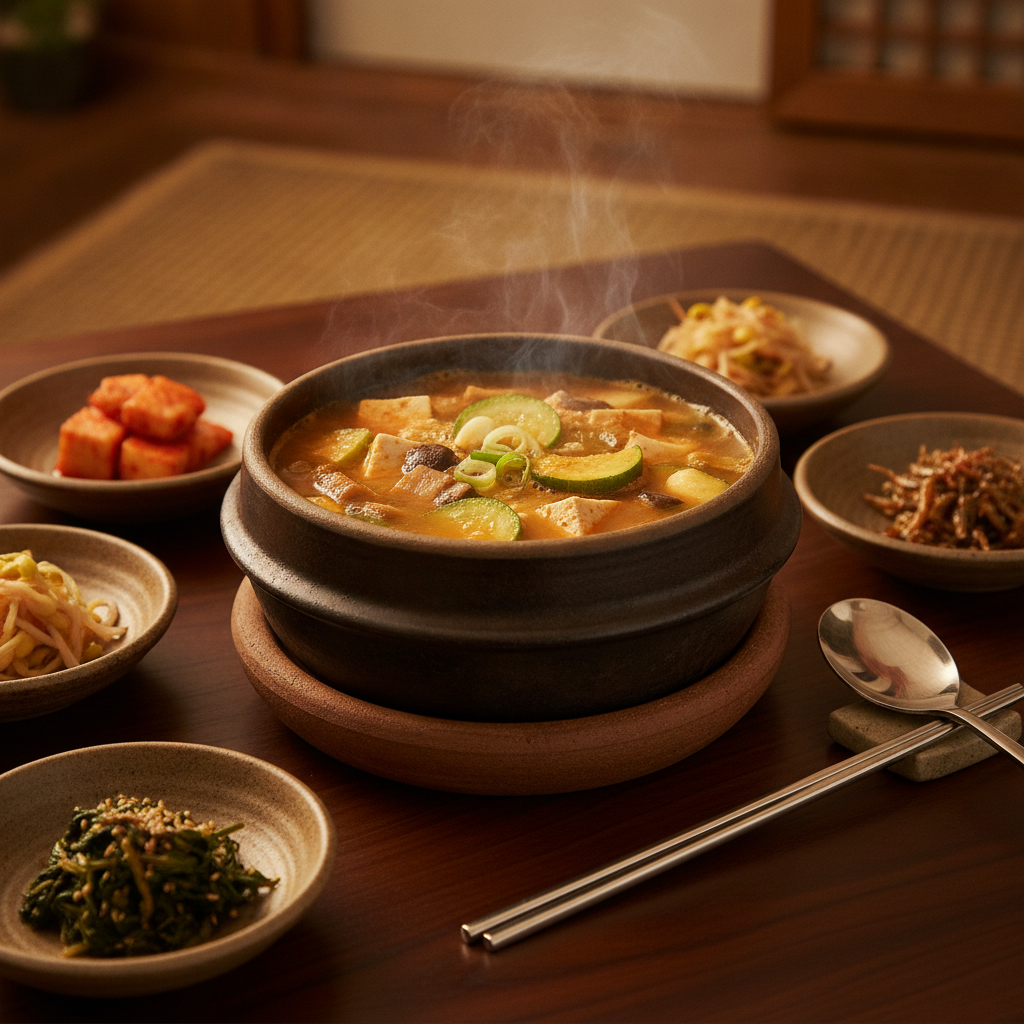
Doenjang-jjigae, Korean's Comfort Food: The Taste of Tradition and Modernity
1. History and Origin of Doenjang-jjigae
Doenjang-jjigae is not just a simple soup; it embodies a profound history and philosophy reflecting the lives and sorrows of our people. Its origins can be traced back to before the Three Kingdoms period, where the technique of fermenting soybeans to make paste already formed a crucial part of the culinary culture on the Korean Peninsula. The 『Samguk Sagi』 records that Jang (fermented paste) was already being made in the Silla Dynasty, supporting the long history of doenjang. Soybeans, in particular, grew well even in barren lands, so our ancestors cleverly used them to supplement nutrition and enhance preservation. Doenjang gains its unique umami and deep flavor as microorganisms break down soybean protein into amino acids and peptides. This fermentation aesthetic is fully captured in doenjang-jjigae.
Doenjang-jjigae has long been a soul food that has graced the tables of common people and has become an indispensable symbol on Korean dining tables. Since it could be cooked with just vegetables and tofu found at home, even during times of poverty, it provided a comforting and warm meal. Doenjang-jjigae, made with a mother's touch, was more than just food; it signified a heartfelt meal wishing for the family's health and happiness. Like the time doenjang spends ripening in a Jangdokdae (earthenware pot stand), a bowl of doenjang-jjigae contains layers of Korean perseverance, wisdom, and warm communal spirit. Even today, doenjang-jjigae remains a beloved comfort food, soothing the tired bodies and minds of busy modern people.
2. Authentic Recipe
Authentic Doenjang-jjigae, though not flashy, is characterized by the deep umami created by the harmonious blend of basic ingredients. The most important thing is to use good quality doenjang. While commercial doenjang is fine, using traditionally made guk-doenjang (homemade-style doenjang) will result in an even deeper and richer flavor. It's crucial to use anchovy broth as a base to add a refreshing taste without overpowering the doenjang.
Ingredients List (for 4 servings)
- Traditional Doenjang: 3 tablespoons (adjust according to the saltiness of your doenjang)
- Gochujang (Korean chili paste): 0.5 tablespoon (optional, for a spicier taste)
- Rice water or Anchovy-Kelp Broth: 800ml
- Korean zucchini (Aehobak): 1/3 piece
- Tofu: 1/2 block (approx. 150g)
- Onion: 1/2 piece
- Green onion: 1/2 stalk
- Cheongyang chili pepper: 1 piece (optional, to taste)
- Red chili pepper: 1/2 piece (for color, optional)
- Shiitake mushrooms: 2 pieces (can be omitted)
- Potato: 1/2 piece
- Minced garlic: 1/2 tablespoon
- Cooking oil: a small amount
Detailed Cooking Steps
- Prepare Ingredients: Cut aehobak, tofu, onion, and potato into bite-sized pieces. Slice green onion and chili peppers diagonally. Remove stems from shiitake mushrooms and slice thinly.
- Prepare Broth: Prepare rice water, or in a pot, add 1 liter of water, 1 sheet of kelp (10x10cm), and 10 dried anchovies for broth. Boil for 15 minutes to make anchovy-kelp broth. Once done, remove the kelp and anchovies.
- Dissolve Doenjang: Pour 800ml of the prepared broth into a pot and dissolve the doenjang by straining it through a sieve. It's important to dissolve the doenjang well to avoid lumps. Adding gochujang at this stage can give a spicier and deeper flavor.
- Add Ingredients and Boil: When the broth boils, add potatoes and onions first and continue to boil. When potatoes are half-cooked, add aehobak and shiitake mushrooms and continue boiling.
- Add Tofu, Garlic, and Chili Peppers: Once the vegetables are somewhat cooked, add tofu, minced garlic, and Cheongyang chili pepper, and boil for a little longer.
- Adjust Seasoning and Finish: Finally, add green onion and red chili pepper and boil for another 2-3 minutes. Taste and adjust seasoning; if bland, add a little more doenjang or adjust with guk-ganjang (Korean soy sauce for soup). If too salty, add a bit more rice water or broth. Simmer over medium-low heat for a sufficient time to allow the flavors of the ingredients to fully develop, which will result in a deeper taste.
3. Flavor Characteristics
A well-cooked Doenjang-jjigae is a complex feast for the senses. The moment you scoop a spoonful into your mouth, the first thing you feel is a profound savory depth. The unique fermented aroma of doenjang, imbued with thousands of years of wisdom, wafts through your nose, and the rich umami that fills your mouth is a natural taste that no artificial seasoning can replicate. This savory depth is not just saltiness; it's a subtle harmony created by the myriad amino acids and peptides produced as soybeans ferment.
Following this is a refreshing coolness. The clean taste derived from anchovy broth and various vegetables lightens the rich depth of doenjang, leaving a clean aftertaste without any heaviness. When spicy Cheongyang chili peppers are added, the refreshing quality is further enhanced, resulting in a delightfully spicy and clean flavor.
The texture is also an indispensable pleasure. Softly cooked tofu melts in your mouth, and fluffy potatoes yield a savory sweetness with each chew. Crunchy aehobak and chewy mushrooms add diverse textures, making each spoonful rich and never boring. The steaming Doenjang-jjigae warms the heart just by looking at it, and its aroma has a magical power to envelop the entire house in a comforting embrace. Mixed with rice, it's a true Korean soul food that rivals any delicacy.
4. Cooking Tips and Secrets
Here are some professional tips to elevate Doenjang-jjigae from a simple meal to a memorable culinary masterpiece. These small differences will contribute to a deeper and richer flavor.
- The Importance of Doenjang Selection: The most crucial ingredient is doenjang. Use traditional doenjang (jaeraesik doenjang), and if possible, homemade doenjang. Mixing different types of doenjang is also a good idea. For example, combining savory homemade doenjang with a refreshing commercial doenjang in a 1:1 ratio can deepen the flavor. Since the saltiness and taste of doenjang vary from home to home, it's important to start with a small amount and adjust to taste.
- Depth of Broth: Anchovy-kelp broth is the basic foundation. However, adding shiitake mushroom stems or radish pieces when simmering the broth can create an even deeper and more refreshing flavor. Simmering the broth over low heat for a long time allows the umami of the ingredients to fully extract, building a strong base for the doenjang-jjigae's flavor.
- Order of Adding Ingredients: Add ingredients that take longer to cook, like potatoes, first. Add quick-cooking ingredients like aehobak or tofu later to ensure all ingredients maintain an appropriate texture. Tofu, in particular, should be added at the end and not overcooked to preserve its tender texture.
- Utilizing Rice Water: If you don't have anchovy broth, try using rice water. Rice water helps to neutralize the slightly bitter taste of doenjang and adds a savory depth. Its starchy content also makes the doenjang-jjigae thicker and richer.
- The Role of Garlic: Minced garlic is a key ingredient that adds umami and aroma to doenjang-jjigae. Add garlic just before turning off the heat or at the very end and cook briefly to preserve its distinct aroma.
- A Pinch of Chili Powder: