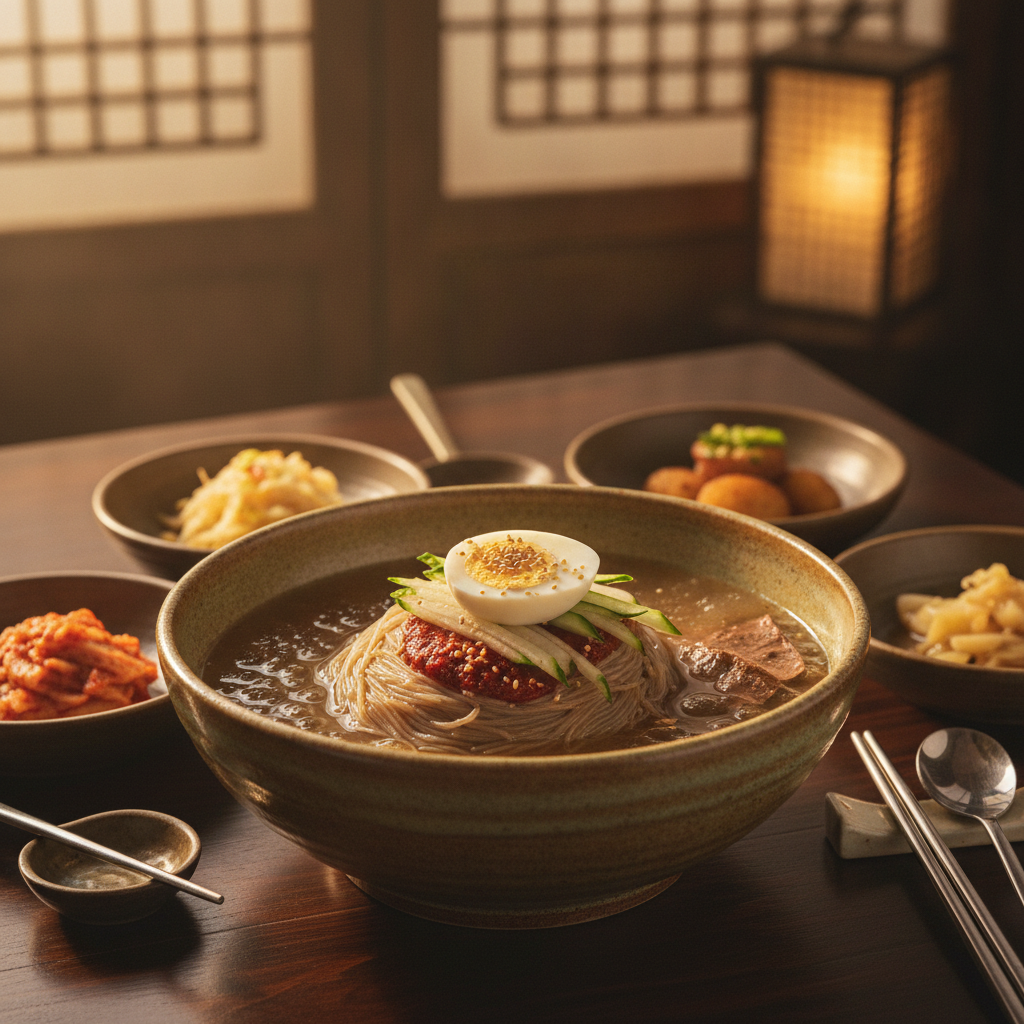
A Refreshing Bowl Embodying the Korean Spirit: The Complete Guide to Authentic Naengmyeon
1. The History and Origin of Naengmyeon
The harmonious blend of cold noodles and a refreshing broth, Naengmyeon is more than just a dish; it's a precious legacy imbued with the lives and sorrows of the Korean people. Its origins can be traced back to the Three Kingdoms period, but the form of Naengmyeon we know today is generally believed to have begun in the Goryeo Dynasty. Particularly, the culture of enjoying icy cold Naengmyeon in a warm ondol room on a cold winter night developed primarily in the northern regions of Korea, especially Pyongyang and Hamhung. Buckwheat, being a resilient crop that grows well in barren lands, played a crucial role in supplementing the scarce food supply during winter. Thus, Naengmyeon was not merely a meal to fill one's stomach but carried the meaning of overcoming the winter cold and wishing for abundance in the coming year.
During the Joseon Dynasty, records in various historical texts like "Dongguksesigi" and "Gyeongdojapji" indicate that Naengmyeon was enjoyed even in the royal court. It is evident that the method of boiling buckwheat noodles, rinsing them in cold water, and then serving them in dongchimi (radish kimchi) broth or beef broth was already common at that time. Through the Japanese colonial period and the Korean War, many North Korean refugees fled to the South, and Naengmyeon finally established itself as a nationwide dish. The longing for home and the hope for a new life were embodied in a bowl of Naengmyeon, leading to the emergence of Pyongyang Naengmyeon and Hamhung Naengmyeon specialty restaurants across the country. This was a significant turning point, making it a beloved delicacy for Koreans today. Naengmyeon is not merely a cold dish; it is a living record that vividly encapsulates the history, culture, and emotions of the Korean people.
2. Authentic Recipe: Pyongyang Naengmyeon (Serves 2)
Experience the most authentic Korean coolness with Pyongyang Naengmyeon, made right in your own kitchen.
Ingredients:
- Buckwheat Noodles (fresh): 300g (with over 60% buckwheat content)
- Beef Brisket: 300g
- Water: 2L
- Radish: 50g
- Green Onion: 1 stalk
- Garlic: 3 cloves
- Ginger: 1 piece (thumb-sized)
- Korean Soup Soy Sauce (Gukganjang): 2 tablespoons
- Salt: 1 teaspoon (adjust to taste)
- Sugar: 1/2 teaspoon
- Vinegar: 1 tablespoon
- Dongchimi Broth: 200ml (optional, mix with beef broth)
Garnishes:
- Boiled Beef Slices (Pyeonyuk): appropriate amount
- Boiled Egg: 1 (halved)
- Cucumber: 1/4 (julienned)
- Korean Pear: 1/8 (julienned)
- Pickled Radish: appropriate amount (Pickled Radish Recipe: 100g radish, 1/2 tsp salt, 1 tsp sugar, 1 tbsp vinegar)
Detailed Cooking Steps:
- Making the Broth:
Soak the beef brisket in cold water for about 30 minutes to remove blood. In a pot, add 2L of water, the blood-drained brisket, radish, green onion, garlic, and ginger. Bring to a boil over high heat. Once boiling, skim off impurities, reduce heat to medium-low, and simmer for 1 hour 30 minutes to 2 hours until the meat is tender. Remove the meat and let it cool. Strain the broth through a cheesecloth to make it clear. Season the strained broth with Korean soup soy sauce, salt, sugar, and vinegar. Let it cool completely and refrigerate. (Refrigerate for at least 4 hours to make it very cold. If using dongchimi broth, mix beef broth and dongchimi broth in a 7:3 ratio.)
- Preparing the Garnishes:
Slice the cooled, boiled brisket thinly to make pyeonyuk. Boil the egg until hard-boiled and halve it. Julienne the cucumber and Korean pear finely. Slice the radish thinly and pickle it with salt, sugar, and vinegar to make sweet and sour pickled radish.
- Boiling the Noodles:
Bring a generous amount of water to a rolling boil in a pot. Add the buckwheat noodles and cook for about 1 to 1 minute 30 seconds. (Adjust time according to noodle type.) As soon as the noodles are cooked, immediately rinse them thoroughly under cold water, rubbing to remove all starch, then squeeze out excess water. The colder the noodles, the better.
- Assembling the Dish:
Arrange the cold noodles neatly in a bowl. Place the prepared beef slices, boiled egg, julienned cucumber, Korean pear, and pickled radish attractively on top. Gently pour the chilled broth over the noodles. You may add vinegar or mustard to taste, if desired.
3. Characteristics of the Flavor
A bowl of authentic Pyongyang Naengmyeon is less a simple dish and more a work of art. The primary characteristic of its flavor is its 'subtlety'. The first taste is not aggressive but a gentle, lingering beef aroma. The broth, made by slowly simmering beef, is as clear and transparent as stream water, with a deep umami that glides down the throat. Filled only with the inherent flavors of its ingredients, without the aid of artificial seasonings, this broth leaves a subtle aftertaste, unfolding a delicate symphony of flavors that awakens the palate.
The buckwheat noodles are another main character. Their rough yet tender texture, which breaks easily, fills the mouth with the characteristic nutty flavor of buckwheat. Rather than chewiness, the charm of the soft, easily-broken noodles in the cold broth adds to the pleasure of chewing. As the coolness of the broth and the nuttiness of the noodles harmonize, the garnishes play their roles perfectly. The thinly sliced beef pyeonyuk releases savory juices with every bite, while crisp cucumber and sweet pear add a refreshing zest. The sweet and sour pickled radish invigorates a flavor that might otherwise be too plain, and the boiled egg completes the overall harmony with its gentle taste. The symphony of flavors created by all these elements combined leaves a deep, unforgettable impression once tasted. It is a taste as refreshing as a summer shower and as profound as autumn foliage.
4. Cooking Tips and Secrets
"Naengmyeon is the aesthetics of waiting. The best taste is hidden in every step, from the care put into the broth to the chilling of the noodles." - Korean Food Expert Chef
Broth Secrets:
- Selecting the Best Ingredients: 80% of the broth's flavor comes from good quality beef brisket. Choose fresh brisket with an appropriate amount of fat, and removing the blood is essential. Boiling it once and discarding the first water before re-boiling can result in an even cleaner broth.